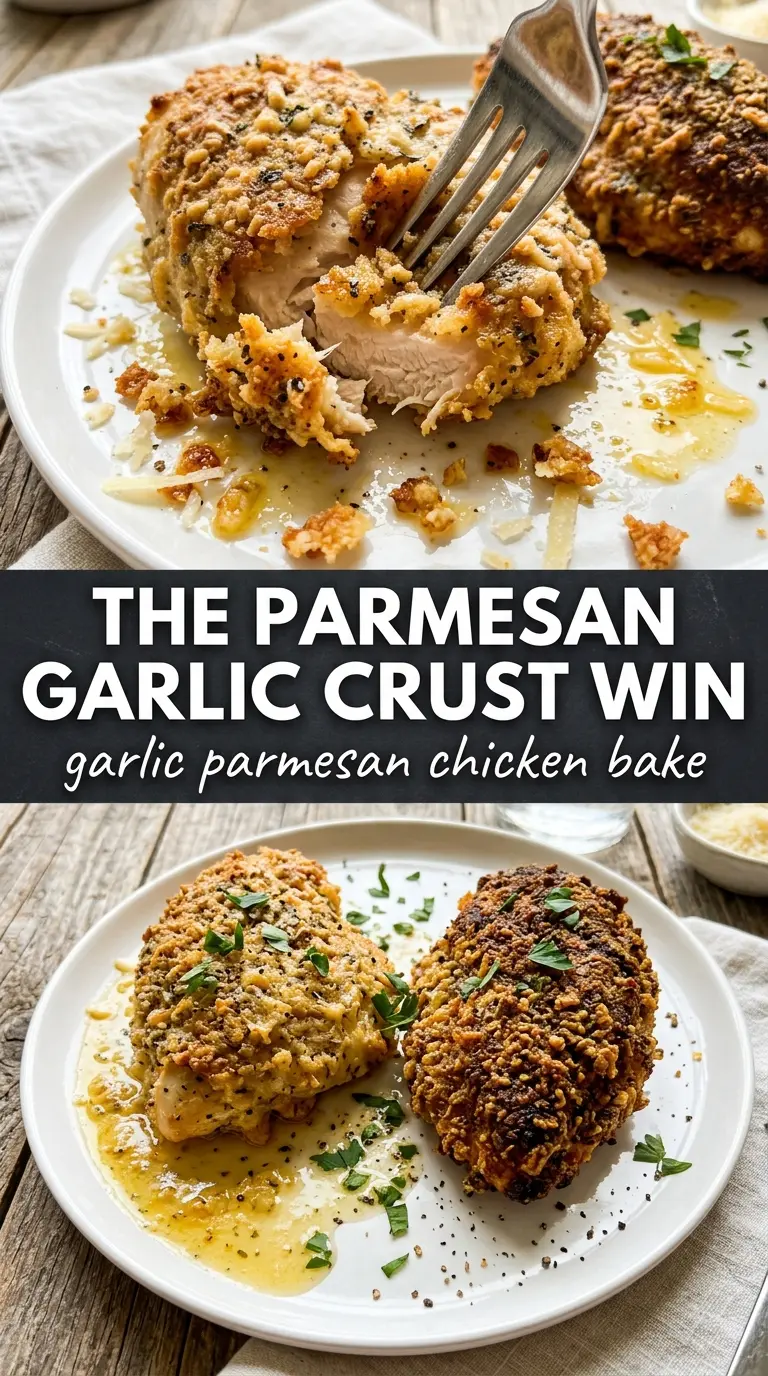
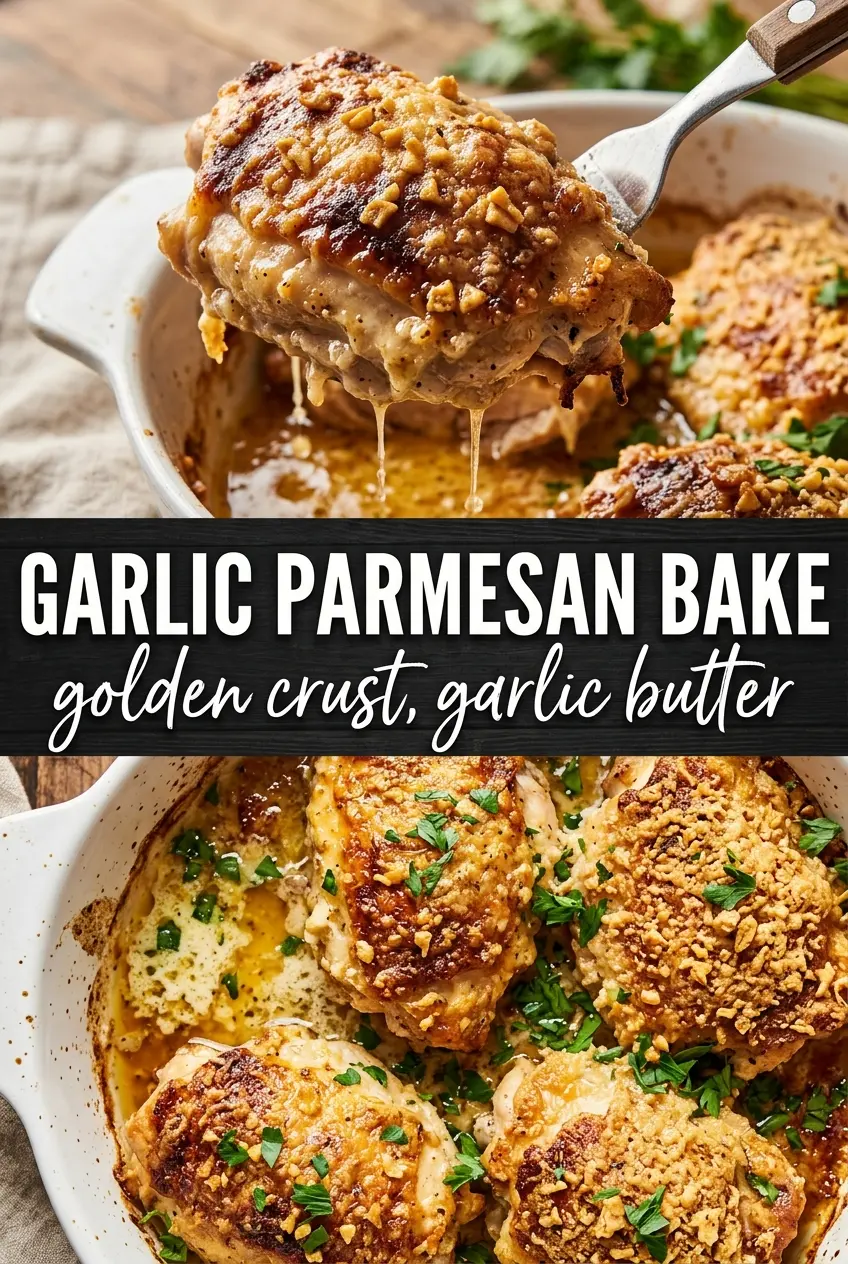
Chicken breasts turn from plain to craveable fast when they’re blanketed in a thick garlic butter and Parmesan crust. The top bakes into a crackled, golden layer that tastes savory, nutty, and a little toasted at the edges, while the chicken underneath stays juicy if you keep an eye on the bake time. It’s the kind of dinner that looks like you spent more effort than you did.
This version works because the butter carries the garlic into every bite and gives the topping something rich to cling to. Freshly grated Parmesan matters here; it melts and browns in a way the shelf-stable stuff never quite does. Panko adds the light crunch that keeps the crust from turning heavy or pasty, and pressing the mixture onto the chicken helps it bake into one cohesive layer instead of sliding off.
Below you’ll find the little details that make the crust set up properly, plus a few smart swaps if you need to adjust for what’s in the fridge. The goal is a deep golden top, not dried-out chicken, and the method is built around that balance.
The crust got deeply golden and crisp, and the chicken stayed juicy instead of drying out. I loved how the garlic butter soaked into the topping without making it soggy.
Like this garlic Parmesan chicken bake? Save it to Pinterest for the nights when you want a golden crust and juicy chicken with almost no cleanup.
The Difference Between a Crisp Crust and a Greasy Blanket
The main mistake with this kind of baked chicken is using too much topping and not pressing it on firmly enough. When the Parmesan mixture sits loosely on top, it melts in patches, slides around, and can go oily before it browns. You want a tight layer that actually adheres to the buttered chicken so the oven can toast it into a crust instead of just warming it into a paste.
Chicken breast thickness matters too. If one side is much thicker than the other, the thin end dries out before the thick end is done. Pound the breasts lightly to an even thickness or slice extra-large ones in half horizontally so they cook at the same pace and finish juicy under the crust.
What Each Ingredient Is Actually Doing in This Dish
- Chicken breasts — Boneless, skinless breasts give you a clean base for the crust and cook quickly enough for a weeknight. If yours are large, split them so they don’t dry out before the topping browns.
- Butter — This is what carries the garlic and helps the Parmesan mixture brown. Olive oil can work in a pinch, but the crust won’t taste as rich or toast as deeply.
- Fresh garlic — Minced garlic gives the bake its real punch. Garlic powder won’t replace that fresh aroma, though you can add a little extra powder to the seasoning if your cloves are small.
- Freshly grated Parmesan — This is the ingredient worth spending a little more on. Pre-shredded Parmesan often has anti-caking agents that keep it from melting into that crackled, browned top.
- Panko breadcrumbs — Panko keeps the crust light and crisp. Regular breadcrumbs work, but the topping will be denser and less shattery.
- Italian seasoning, dried parsley, and smoked paprika — These round out the crust so it tastes seasoned all the way through, not just salty and cheesy. The paprika also nudges the color toward a deeper golden brown.
Building the Crust Before the Chicken Overcooks
Season the chicken first
Lay the chicken in a greased 9×13 dish and season both sides with salt, pepper, and garlic powder. That first layer of seasoning matters because the topping is rich; without seasoning on the meat itself, the chicken can taste flat under all the cheese and butter. If the breasts are very thick, flatten the thicker end slightly so the whole batch cooks evenly.
Brush on the garlic butter
Mix the melted butter with the minced garlic and brush it generously over each breast. The butter should coat the surface, not pool in the bottom of the dish, or the topping will slide off and get greasy instead of crisping. If the garlic sits in cold butter for too long, stir it again before brushing so you don’t leave all the garlic behind in one spoonful.
Press on the Parmesan topping
Combine the Parmesan, panko, Italian seasoning, parsley, and smoked paprika, then press the mixture firmly over the buttered chicken. Pressing is the part most people skip, and it’s the difference between a crust and a loose sprinkle. You want every piece to cling to the surface so it browns as one layer in the oven.
Bake until the top is deeply golden
Bake at 400°F for 25 to 30 minutes, watching for the topping to turn deep gold and the edges to look crisp. The safest check is internal temperature: pull the dish when the chicken hits 165°F in the thickest part. If the crust is browning too fast before the chicken is done, loosely tent the dish with foil for the last few minutes.
How to Adapt the Crust for Different Kitchens and Dietary Needs
Gluten-Free Version
Swap the panko for gluten-free panko or finely crushed gluten-free crackers. You still get a crisp top, but the texture may be a touch more fragile, so press it on well and don’t overbake it trying to deepen the color.
Dairy-Free Swap
Use a plant-based butter and a dairy-free Parmesan-style topping. The crust will brown less aggressively and taste a little less nutty, so lean on a well-seasoned breadcrumb mix and don’t skip the paprika.
Chicken Thighs Instead of Breasts
Boneless thighs stay juicier and bring a little more richness, but they usually need a few extra minutes in the oven. The topping works the same way, though the surface may brown a little more unevenly because thighs don’t sit as flat.
Storage and Reheating
- Refrigerator: Store leftovers in an airtight container for up to 3 days. The crust softens a bit, but the flavor holds up well.
- Freezer: It freezes, but the crust loses some crunch. For best results, freeze the baked chicken tightly wrapped, then thaw overnight in the fridge before reheating.
- Reheating: Warm in a 350°F oven until heated through, loosely covered for the first few minutes if the top is getting too dark. The microwave will heat the chicken, but it turns the crust soft instead of crisp.
Answers to the Questions Worth Asking
Garlic Parmesan Chicken Bake
Ingredients
Equipment
Method
- Preheat the oven to 400°F and grease a 9x13 baking dish with a light coating. The dish should be ready for the chicken as soon as the oven comes to temperature.
- Season the chicken breasts with salt, pepper, and garlic powder, then place them in the prepared dish. Arrange them in a single layer so each breast can bake evenly.
- Mix melted butter with minced garlic, then brush the mixture generously over each chicken breast. Aim for full coverage so the crust adheres across the entire surface.
- Combine Parmesan cheese, panko breadcrumbs, Italian seasoning, dried parsley, and smoked paprika, then press the mixture firmly over the buttered chicken. The topping should look packed-on and evenly distributed.
- Bake at 400°F for 25-30 minutes, until the Parmesan crust is deeply golden and the cheese looks browned and crackled. Insert an instant-read thermometer into the thickest part to confirm an internal temperature of 165°F.
- Let the chicken rest briefly, then garnish with fresh parsley and serve with lemon wedges. The lemon helps brighten the browned, garlicky crust right before eating.