Glossy, sticky chicken thighs with bronzed skin and a sauce that clings instead of pooling are the whole point here. The brown sugar caramelizes in the oven, the soy sauce brings depth, and the garlic-ginger marinade turns a short ingredient list into something that tastes like you put in a lot more work than you did.
Bone-in, skin-on thighs earn their keep in this recipe because they stay juicy while the glaze reduces and darkens. The trick is giving the marinade enough time to season the meat, then baking hot enough to get color without drying out the chicken. A quick broil at the end pushes the glaze into that lacquered, takeout-style finish.
Below, I’ll walk through the one step that keeps the glaze from tasting flat, what to watch for as the chicken bakes, and the simplest swaps if you need to adjust the heat or the sweetness.
The glaze thickened beautifully in the oven and the skin turned sticky and caramelized without burning. I marinated it for just an hour and it still had tons of flavor.
Save these glazed soy sauce brown sugar chicken thighs for a sticky, caramelized dinner with almost no cleanup.
The Marinade Needs Time to Season, Not Just Soak
The biggest mistake with soy-brown-sugar chicken is treating the marinade like a sauce you can hurry. It needs time on the chicken so the salt from the soy penetrates the meat and the sugar starts pulling everything into balance. Thirty minutes works in a pinch, but a few hours gives you a deeper, rounder result.
Keep the glaze thin at the beginning. If it gets too thick before it goes in the oven, it tends to scorch on the surface before the thighs are cooked through. The oven heat will do the reducing for you.
What Each Ingredient Is Actually Doing in This Dish
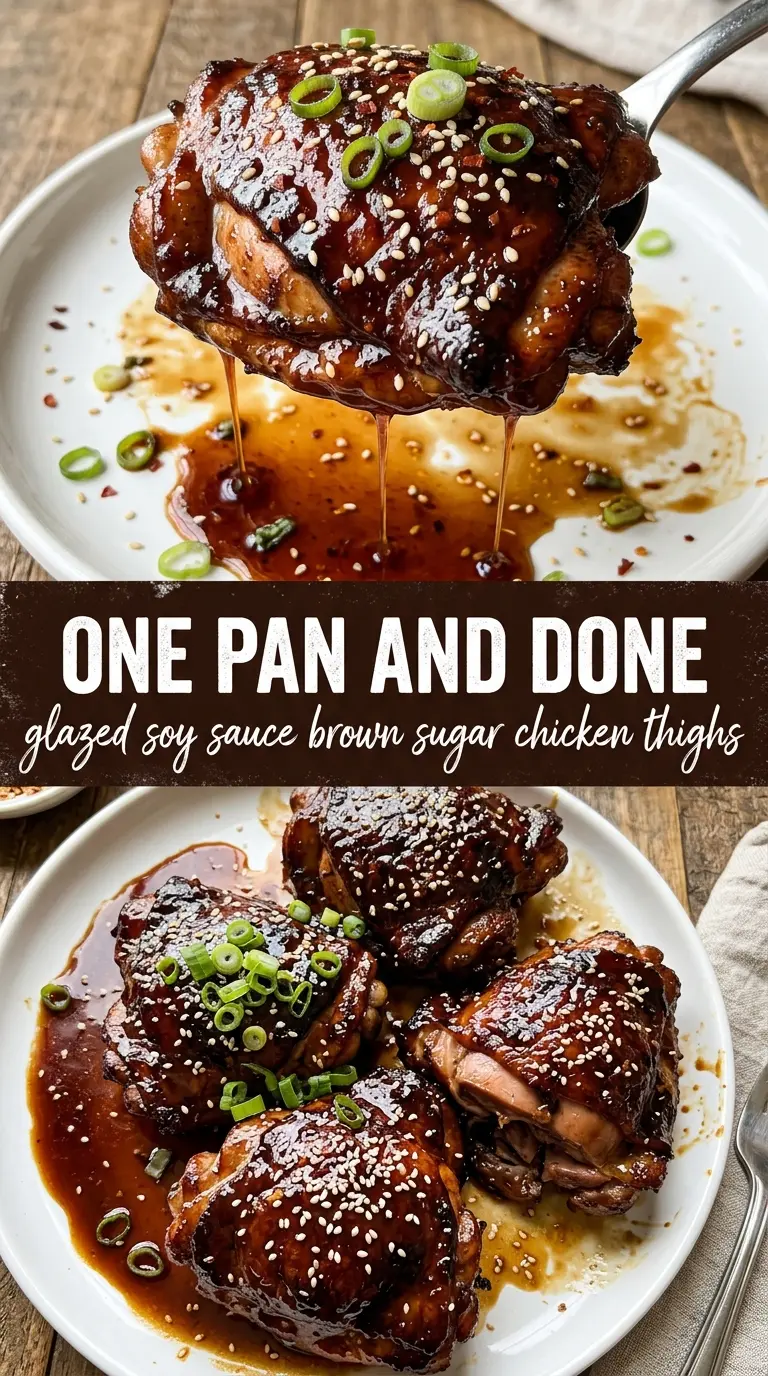
- Bone-in, skin-on chicken thighs — These stay juicy under high heat and give you the best chance at crisp skin with a sticky glaze. Boneless thighs work too, but they cook faster and won’t give you the same rich finish.
- Soy sauce — This is the salt and the backbone of the glaze. Use a standard all-purpose soy sauce here; low-sodium is fine if that’s what you keep, but don’t replace it with something much sweeter or lighter in body.
- Brown sugar — This is what turns the marinade into a lacquer. Packed brown sugar matters because it dissolves into a thicker glaze and helps the edges caramelize in the oven.
- Garlic, ginger, and red pepper flakes — These keep the sauce from tasting one-note. Fresh ginger gives a brighter finish than powdered, and the red pepper flakes add enough heat to keep the sweetness in check.
- Apple cider vinegar — A small amount sharpens the glaze and keeps it from tasting heavy. Lime juice works in a pinch, but vinegar holds up better during baking.
- Olive oil — It helps the marinade coat the chicken evenly and keeps the glaze from tightening up too aggressively in the oven. A neutral oil works if that’s what you have.
How to Get the Skin Brown Without Burning the Glaze
Building the Marinade
Whisk the soy sauce, brown sugar, oil, garlic, vinegar, ginger, and red pepper flakes until the sugar looks mostly dissolved. A few grains are fine, but a thick, gritty marinade will leave uneven patches on the chicken. Pour it over the thighs and coat every piece well, then turn the chicken once or twice during marinating so the skin picks up seasoning evenly.
Baking Hot and Steady
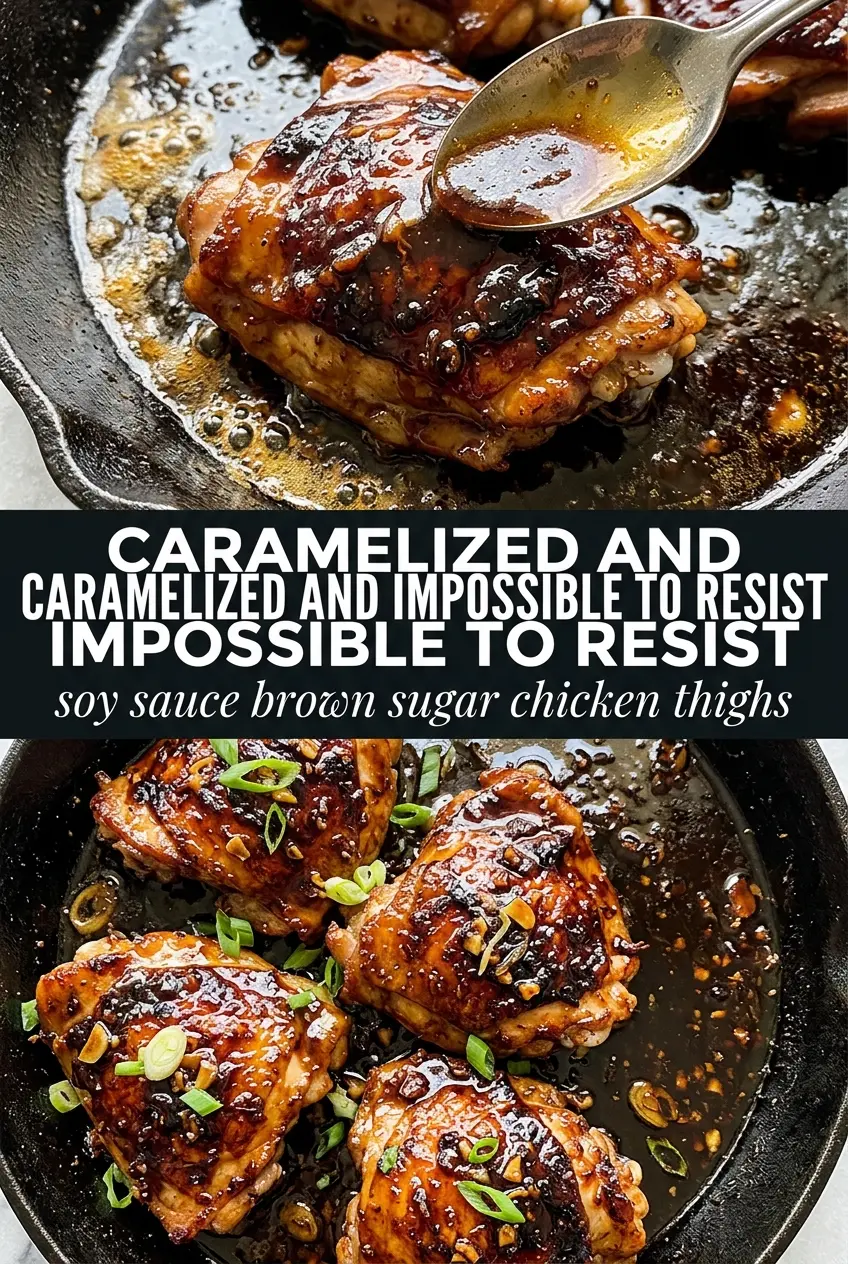
Set the chicken skin-side up in a baking dish and leave space around each thigh so the hot air can move. Crowding the pan traps steam and gives you soft skin instead of a glazed crust. Bake at 425F until the skin starts to deepen and the thighs are nearly cooked through, then baste with the reserved marinade and return them to the oven for the final stretch.
Finishing Under the Broiler
The broiler is for color, not for cooking the chicken through. Watch closely during those last 2 to 3 minutes, because the sugar can go from glossy to burned fast once it gets direct heat. Pull the pan as soon as the glaze looks dark mahogany and the edges start to bubble.
Three Ways to Make These Chicken Thighs Fit Your Table
Make it gluten-free
Swap in tamari or a certified gluten-free soy sauce at a 1:1 ratio. The flavor stays close to the original, and the glaze still reduces and caramelizes the same way.
Dial back the sweetness
Use 2 to 3 tablespoons of brown sugar instead of a full quarter cup if you want a sharper, more savory glaze. The sauce will still brown, but it won’t set quite as thick or sticky on the skin.
Use boneless thighs or drumsticks
Boneless thighs cook faster, so start checking them earlier to avoid drying them out. Drumsticks work too, but the glaze will cling best if you rotate them once during baking so all sides catch some of the caramelization.
Add more heat
Increase the red pepper flakes or add a spoonful of chili crisp to the marinade. That pushes the dish toward sweet-heat territory without changing the texture of the glaze.
Storage and Reheating
- Refrigerator: Store leftovers in an airtight container for up to 4 days. The skin softens, but the glaze stays flavorful.
- Freezer: Freeze cooked thighs for up to 2 months. Wrap them well and freeze with a little of the sauce so the meat doesn’t dry out after thawing.
- Reheating: Reheat in a 350F oven, covered loosely with foil at first, then uncover for the last few minutes to bring back some color. The microwave works, but it tends to make the skin limp and the glaze tacky in the wrong way.
Answers to the Questions Worth Asking
Glazed Soy Sauce Brown Sugar Chicken Thighs
Ingredients
Equipment
Method
- In a bowl, whisk soy sauce, brown sugar, olive oil, garlic, apple cider vinegar, ginger, and red pepper flakes until the sugar dissolves and the mixture looks glossy.
- Transfer the marinade to a container, then set aside for later basting.
- Add chicken thighs to the marinade and turn to coat thoroughly, then cover and refrigerate for at least 30 minutes or up to 24 hours.
- Preheat oven to 425°F and place chicken skin-side up in a baking dish, reserving the marinade for basting.
- Bake for 20 minutes, then baste with the reserved marinade and return to the oven for 10–15 more minutes until caramelized and cooked through.
- Broil for 2–3 minutes to intensify the caramelization and help the glaze cling to the skin.
- Sprinkle sesame seeds and sliced green onions over the hot chicken, then serve immediately.