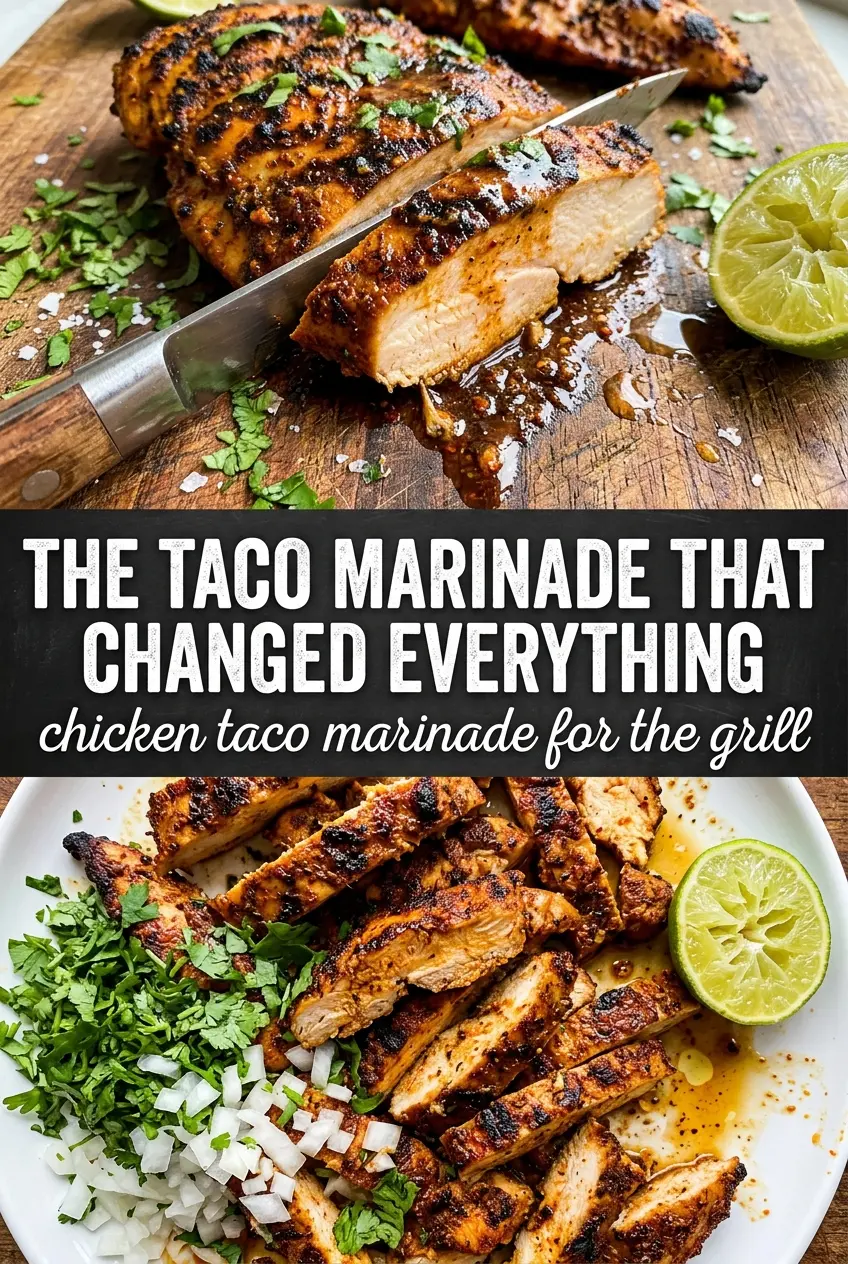
Chicken taco marinade earns its place in the regular dinner rotation because it does two jobs at once: it seasons the meat all the way through and sets up that charred, taco-stand edge on the outside. The chicken comes off the grill or skillet juicy, deeply spiced, and brightened with lime instead of tasting flat or one-note. Sliced thin and tucked into warm tortillas, it’s the kind of dinner that disappears fast.
What makes this version work is the balance of acid, oil, and spice. Lime juice wakes everything up, but it needs olive oil to carry the spices across the chicken instead of letting them clump up and taste harsh. Smoked paprika and cumin give you that savory, cooked-all-night backbone, while cilantro goes in the marinade for a fresh finish that holds up even after high heat.
The few details below matter more than they look at first glance: how long to marinate, how hard to cook the chicken, and why slicing against the grain changes the final bite. If you’ve had chicken tacos turn dry or bland before, the fix is in here.
The chicken had a deep lime-garlic bite and the edges caramelized beautifully in my cast iron. I let it marinate overnight and it sliced so tender for tacos.
Save this chicken taco marinade for juicy, charred taco chicken with lime, garlic, and smoky spice.
The Reason This Chicken Stays Juicy Instead of Going Dry
Chicken dries out fastest when the marinade leans on acid without enough fat or when the heat is too high for too long. This recipe avoids both problems. The lime juice seasons and tenderizes, but the olive oil softens the edges of the spice blend and helps the chicken brown instead of steaming. That matters especially if you’re using breasts, which cook faster and punish overcooking immediately.
The other thing that saves the texture is the rest after cooking. If you slice the chicken the moment it comes off the pan, the juices run out onto the board instead of staying in the meat. A short rest and a clean slice against the grain keep each piece tender enough for tacos without turning stringy.
- Chicken thighs — These stay juicier and forgive a little extra heat, which makes them the safest choice if you want big char without drying out the meat.
- Chicken breasts — Leaner and a little less forgiving, but still excellent here if you stop at 165°F and rest the chicken before slicing.
- Lime juice — Fresh lime gives the brightest result. Bottled juice works in a pinch, but it tastes flatter and less clean, so use it only when you have to.
- Smoked paprika — This is what gives the marinade that grilled, savory depth even before the chicken hits the heat. Regular paprika won’t bring the same color or smokiness.
What the Marinade Is Doing Before the Chicken Hits the Pan

- Olive oil — This carries the spices and helps the surface of the chicken brown instead of drying into a leathery crust. A neutral oil also works, but olive oil gives a rounder finish.
- Garlic — Fresh minced garlic matters here. Garlic powder won’t give the same bite or aroma, especially once the chicken starts to char.
- Chili powder, cumin, oregano, onion powder, cayenne — This blend builds the taco flavor from the inside out. If you want less heat, cut the cayenne in half, but keep the chili powder and cumin for balance.
- Cilantro — It adds a fresh, green note that keeps the marinade from tasting heavy. If you’re one of the people who doesn’t love cilantro, leave it out and finish the tacos with extra lime instead.
How to Get Deep Char Without Overcooking the Chicken
Whisking the Marinade Until It Looks Unified
Start by whisking the lime juice, oil, garlic, spices, and cilantro until the mixture looks evenly speckled and the oil no longer sits in a separate slick on top. That tells you the spices are suspended well enough to coat the chicken evenly. If the bowl looks streaky, the first few pieces of chicken will get too much garlic and spice while the rest stay underseasoned.
Letting the Chicken Sit Long Enough to Take on Flavor
Two hours is the minimum here, and overnight is even better if you want the seasoning to reach deeper into the meat. Keep the chicken covered in the refrigerator while it marinates. Don’t push it much past 24 hours, especially with breasts, or the lime can start to make the texture a little too soft on the outside.
Cooking Over Medium-High Heat for the Right Kind of Browning
Grill or sear the chicken over medium-high heat until you get visible char marks and the internal temperature hits 165°F. If the pan smokes aggressively the second the chicken goes in, the heat is too high and the spices will darken before the meat cooks through. You want active sizzling, not scorching. Thicker pieces may need a minute or two more per side, and that’s better than cutting the heat and losing the crust.
Resting and Slicing for Taco-Ready Texture
Let the chicken rest for 5 minutes before slicing. That short pause matters more than people think, because the juices settle back into the meat instead of spilling out. Slice thinly against the grain, and you’ll get tender strips that fold neatly into tortillas instead of chewy chunks that tug when you bite down.
How to Adjust This for Different Tastes and Dinner Plans
Use chicken thighs for the juiciest result
Thighs handle the marinade and the heat better than breasts, so they’re the best choice if you want the richest texture and the most margin for error. They also keep their bite after slicing, which is useful when you’re loading them into tacos with salsa and avocado.
Make it milder for kids or heat-sensitive eaters
Cut the cayenne completely and use a mild chili powder. You’ll still get smoky, taco-style seasoning without the sharp burn, and the lime, garlic, and cumin will keep the chicken lively.
Make it dairy-free and gluten-free without changing a thing
The marinade itself is naturally dairy-free and gluten-free. Keep the serving side simple with corn tortillas and fresh toppings, and skip any packaged taco seasoning blends that might sneak in flour or milk powder.
Storage and Reheating
- Refrigerator: Store cooked chicken in an airtight container for up to 4 days. It stays usable for tacos, rice bowls, or salads, though the char will soften a bit.
- Freezer: Freeze the cooked sliced chicken for up to 2 months. Wrap it well and press out as much air as possible so the spices don’t pick up freezer flavor.
- Reheating: Rewarm gently in a skillet over medium-low heat with a splash of water or broth. High heat dries out the slices fast, especially if they’re already cut thin.