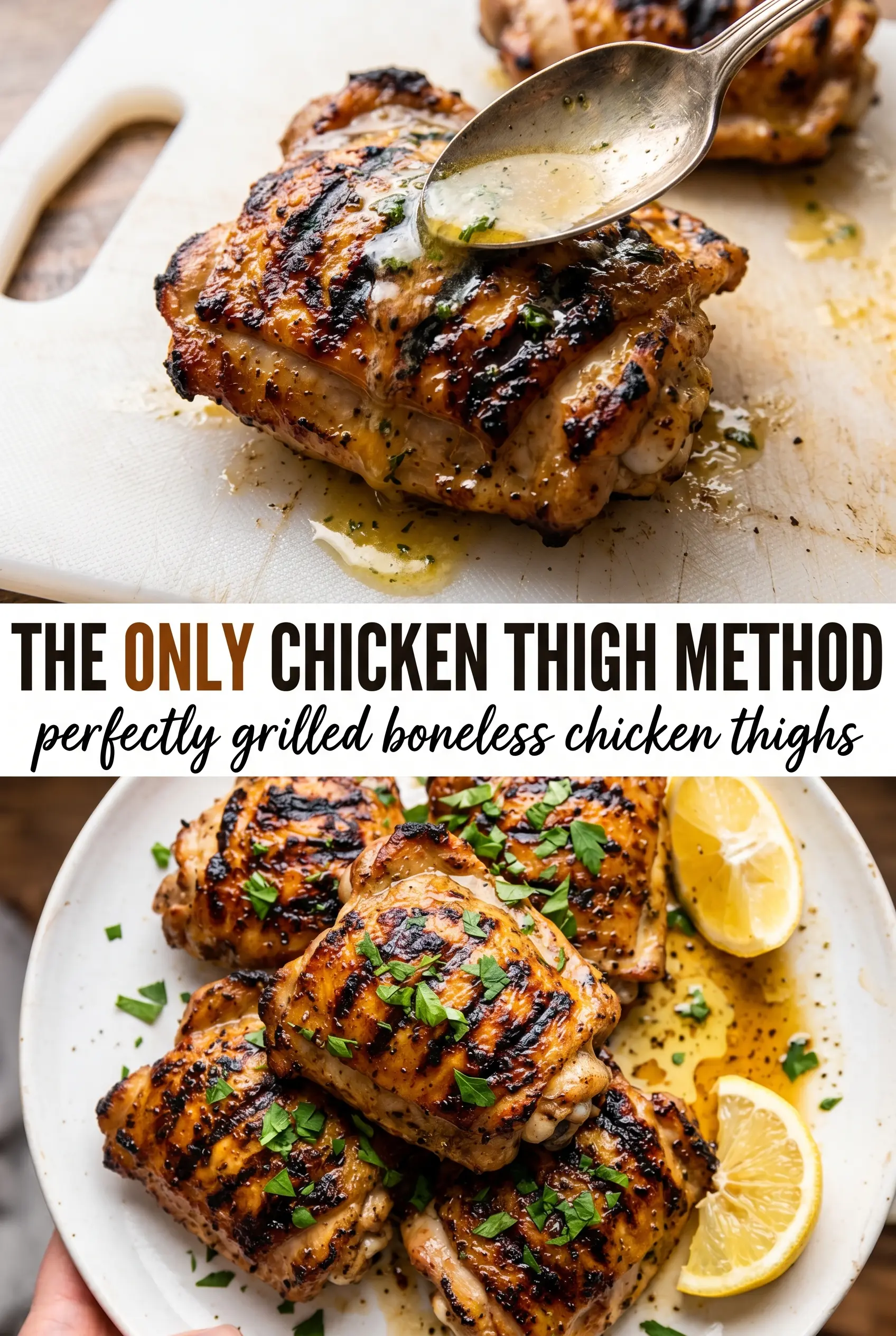
Grilled boneless chicken thighs earn a permanent spot in the dinner rotation because they stay juicy, pick up smoke fast, and take on bold seasoning without drying out on the grill. The edges caramelize, the skinless thighs get a deep char in the best spots, and the meat stays tender enough to slice cleanly instead of shredding apart.
The trick here is a simple marinade that does more than add flavor. Olive oil helps the spices coat evenly and keeps the surface from sticking, while lemon juice adds just enough brightness without turning the meat mushy. Smoked paprika gives you that grilled-backyard depth even if your grill fire is a little tame, and the short marinating window keeps the chicken seasoned without making the texture soft.
Below, you’ll find the timing that gives you strong grill marks without overcooking the thighs, plus the small detail that keeps the chicken from clinging to the grates when it’s time to flip.
The marinade gave the chicken such a good crust, and the thighs stayed juicy even after I left them on the grill a minute too long. The lemon at the end made the whole thing pop.
Save these grilled boneless chicken thighs for the nights when you want smoky grill marks, juicy meat, and a fast lemon-garlic finish.
The Grill Marks Start Before the Chicken Hits the Grates
Most grilled chicken thighs go wrong in the first minute, not the last. If the grill isn’t hot enough, the chicken steams and sticks before it has a chance to sear. If the grates aren’t oiled, you lose the crust when you try to turn it. The goal is to get a clean, confident sear immediately so the thighs release on their own after a few minutes.
Boneless thighs are forgiving, but they still need even contact with the heat. Pressing them flat with a spatula at the start helps the surface meet the grates instead of curling upward at the edges. That’s what gives you those dark, defined lines instead of patchy color.
- High heat on clean grates — this is what creates the marked exterior. A medium grill leaves you with pale chicken and no real browning.
- Oil on the grates, not just the chicken — the oil in the marinade helps, but a little extra on the grates is what keeps the first flip from tearing the surface.
- Room-temperature marinating — 30 minutes at room temp gives the chicken a better head start on the grill. If you refrigerate longer, let it sit out briefly before cooking so it isn’t ice-cold in the center.
What Each Ingredient Is Actually Doing in This Recipe

- Primary ingredient (the star) — Quality matters most. Choose the best you can find.
- Cooking medium (oil, butter, or broth) — This carries flavors and prevents dryness.
- Seasonings (salt, pepper, spices, herbs) — Layer flavors so nothing overpowers. Build depth gradually.
- Aromatics (garlic, onion, herbs) — Cook with fat to bloom flavors. Become the foundation.
- Supporting ingredients — Complement the main ingredient without overpowering it.
- Sauce or liquid (if applicable) — Brings flavors together. Balance richness with acid.
- Acid (lemon, vinegar, wine, or other) — Brightens and prevents flat-tasting results.
- Final finish (garnish, glaze, or sauce) — Prevents one-dimensional taste and adds visual appeal.
What the Marinade Is Doing Besides Adding Flavor
Each part of the marinade earns its place. The olive oil carries the spices and helps the chicken brown instead of drying out. Garlic, paprika, and Italian seasoning build a savory crust, while the lemon juice keeps the flavor bright enough to cut through the richness of the thighs.
You can swap a few things without wrecking the recipe, but the balance matters. If you skip the oil, the seasoning won’t cling as well. If you use a stronger acid like vinegar, the chicken can take on a sharper edge and the surface may tighten up too fast on the grill.
- Boneless skinless chicken thighs — these stay juicy on direct heat better than breasts. If you use chicken breasts, pound them to an even thickness and pull them sooner or they’ll dry out.
- Smoked paprika — this gives the grilled flavor a deeper, almost wood-fired note. Regular paprika works, but the result tastes flatter.
- Olive oil — use a decent everyday olive oil here. It doesn’t need to be fancy, but it does need to be flavorful enough to help the marinade taste round instead of thin.
- Lemon juice — fresh lemon juice is best because it tastes clean and sharp. Bottled juice works in a pinch, but use the lower end of the amount so it doesn’t dominate.
Getting Juicy Thighs and Clean Flip Marks Off the Grill
Mix the Marinade Until It Looks Glossy
Whisk the olive oil, garlic, lemon juice, and spices until the mixture looks evenly speckled and slightly thickened. You’re looking for a marinade that coats the back of a spoon, not one with clumps of garlic sitting in the bottom. If the garlic is left in a big pile, it burns on the grill before the chicken has time to color.
Coat the Chicken and Let It Rest Long Enough to Matter
Turn the thighs in the marinade until every surface is coated, then let them sit for 30 minutes at room temperature or up to 8 hours in the fridge. That short rest gives the seasonings time to settle into the meat without softening it into a mush. If you refrigerate them, pull the chicken out while the grill heats so it doesn’t go on ice-cold.
Grill for Color Before You Chase the Temperature
Lay the thighs on a hot, oiled grill and leave them alone for the first few minutes. When the meat has real grill marks and releases without tugging, flip it and cook the second side. If it sticks, it needs another minute; forcing it early tears off the crust and leaves the pan-looking side behind.
Finish at 165F, Then Let the Juices Settle
Use an instant-read thermometer and pull the chicken when the thickest part reaches 165F. Boneless thighs can handle a little extra time, but once they cross that mark by much, they lose the juicy bite that makes them worth grilling. Rest them for 5 minutes before serving so the juices stay in the meat instead of running all over the plate.
How to Adapt These Grilled Chicken Thighs Without Losing the Good Parts
Make It Dairy-Free and Gluten-Free Without Changes
This recipe already fits both of those diets as written, which is part of why it’s such a reliable weeknight main. Just check that your spices are pure and not blended with anti-caking agents or seasoning mixes that sneak in additives. The texture and flavor stay the same.
Swap the Grill for a Grill Pan or Broiler
A cast-iron grill pan gives you strong char lines indoors, though you’ll want good ventilation because the marinade can smoke a bit. Under the broiler, place the thighs on a foil-lined rack and watch closely, since they can go from browned to burnt fast. You won’t get the same outdoor flavor, but the spice crust still turns out excellent.
Turn It into a Bigger Batch for Meal Prep
Double the marinade and cook the thighs in batches so the grill stays hot and the meat doesn’t crowd. Crowding drops the temperature and gives you gray, steamed chicken instead of a good sear. These reheat well for bowls, salads, and wraps, so the extra effort pays off over several meals.
Storage and Reheating
- Refrigerator: Store cooked chicken thighs in an airtight container for up to 4 days. They stay juicy, though the crust softens a bit.
- Freezer: Freeze for up to 2 months. Wrap tightly and thaw overnight in the refrigerator so the texture stays tender instead of watery.
- Reheating: Warm in a 300F oven, covered loosely with foil, until heated through. The common mistake is blasting them in the microwave, which tightens the meat and wipes out the grilled edges.
Answers to the Questions Worth Asking
Grilled Boneless Chicken Thighs
Ingredients
Equipment
Method
- Whisk olive oil, garlic, lemon juice, smoked paprika, garlic powder, onion powder, Italian seasoning, salt, and pepper together until evenly combined.
- Coat the boneless skinless chicken thighs completely in the marinade, then let them rest 30 minutes at room temperature or up to 8 hours refrigerated.
- Preheat the grill to medium-high and oil the grates well to prevent sticking.
- Grill the chicken thighs 6–7 minutes per side, pressing flat with a spatula for even contact and to help form consistent grill marks.
- Continue grilling until the internal temperature reaches 165°F and prominent grill marks form on both sides.
- Rest the chicken 5 minutes before serving so the juices redistribute, then serve with lemon wedges and fresh parsley.