Chimichurri chicken thighs land with crackly skin, smoky edges, and that sharp, herb-packed sauce that wakes up every bite. The chicken gets enough heat to char without drying out, and the chimichurri stays bright instead of muddling into something flat and oily. It’s the kind of dinner that tastes like you did a lot more work than you actually did.
The trick is splitting the chimichurri in two roles: a little goes on the chicken before it cooks, and the rest stays fresh for the finish. That keeps the herbs vivid and the garlic punchy while still giving the meat a head start on flavor. Bone-in, skin-on thighs matter here because they stay juicy over direct heat and give you enough fat to crisp the skin properly.
Below, I’ll walk through the one part people usually rush — building a chunky chimichurri and grilling the thighs without scorching the herbs on the skin. I’ve also added a few practical swaps and the storage notes you’ll actually use later.
The chimichurri stayed bright even after grilling, and the chicken skin got properly crispy without burning the garlic. I marinated it for just 30 minutes like the recipe said and it still had tons of flavor.
Save these chimichurri chicken thighs for the night you want crispy grilled chicken with a bright, garlicky herb sauce.
The Part Everyone Gets Wrong: Saving the Fresh Chimichurri for the End
Chimichurri is at its best when it tastes sharp, grassy, and alive. The mistake is letting all of it cook on the chicken from the start, which dulls the herbs and can turn the garlic harsh. Here, only a couple tablespoons go on the thighs before grilling, just enough to season the meat and carry flavor into the skin.
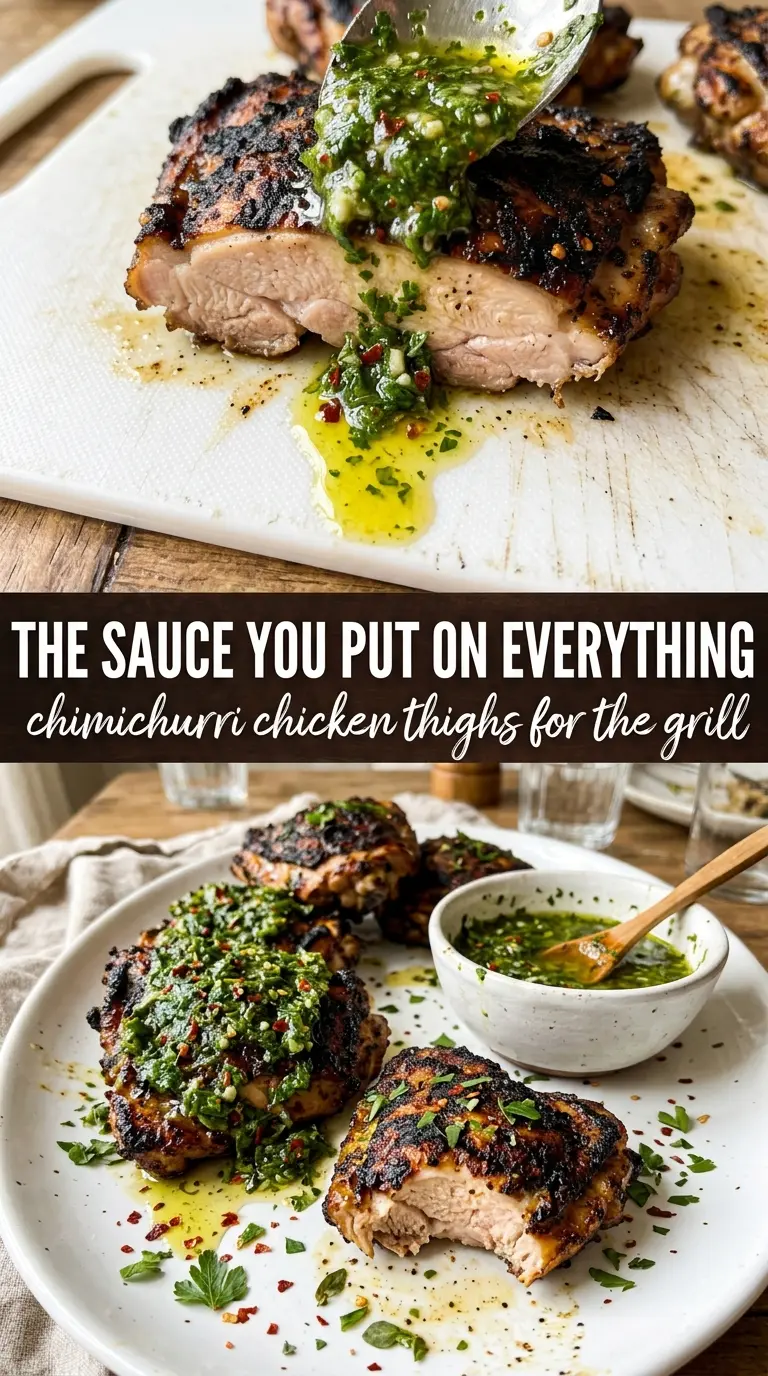
The rest stays raw and gets spooned over the chicken after it rests. That one move keeps the sauce vivid and gives you contrast: crisp skin underneath, cool herb sauce on top, and little pockets of vinegar and oil that soak into the meat. If your chimichurri looks too smooth, pulse it less. Chunky sauce clings better and gives the finished dish more texture.
What the Chicken, Herbs, and Vinegar Are Each Doing
- Bone-in, skin-on chicken thighs — These stay juicy over direct heat and give you enough fat in the skin to crisp properly. Boneless thighs cook faster, but you lose some of that deep, grilled texture.
- Flat-leaf parsley — This is the backbone of chimichurri. Curly parsley works in a pinch, but it tastes flatter and gives a less tender sauce.
- Cilantro — Optional, but it adds a softer green note and a little extra complexity. If you’re not a cilantro person, skip it and increase the parsley slightly.
- Red wine vinegar — This is what keeps the sauce sharp and cuts through the richness of the chicken. Lemon juice can work, but it changes the chimichurri into something brighter and less classic.
- Olive oil — Use one you actually like the taste of, because the sauce is mostly oil and herbs. A harsh or bitter oil will show up here.
- Garlic — Fresh cloves matter. Jarred garlic tastes dull and can make the sauce muddy instead of punchy.
Getting the Skin Crisp Before the Sauce Goes On
Build the Chimichurri First
Pulse the parsley, cilantro if you’re using it, and garlic until you have small pieces, not a puree. Then add the oil, vinegar, red pepper flakes, salt, and pepper and pulse just enough to combine. If you run the processor too long, the sauce turns pasty and the herbs lose their texture. You want a loose, spoonable sauce with visible flecks of green and garlic.
Season and Marinate Briefly
Rub the thighs with olive oil, salt, and pepper, then coat them with just 2 tablespoons of the chimichurri. Thirty minutes is enough. Longer isn’t better here because the vinegar can start to tighten the surface of the chicken and the herbs will darken before they ever hit the grill. Keep the rest of the sauce covered in the fridge until serving.
Grill to Deep Char, Not to Dryness
Preheat the grill to medium-high and start skin-side down. You want sizzling skin that releases on its own when it’s ready, with deep brown char in spots and no pale, rubbery patches left behind. Flip once and finish the second side until the thighs reach 175°F; thighs are more forgiving than breast meat, and that extra bit of doneness is what makes them tender instead of stringy. Let them rest before saucing so the juices stay in the meat instead of running onto the cutting board.
How to Adapt These Chimichurri Chicken Thighs Without Losing the Point
Oven-Broiled Version for Rainy Days
If you don’t have a grill, broil the thighs on a foil-lined sheet pan skin-side up. Keep them a few inches from the heat and watch closely, because the skin can go from browned to burnt fast under the broiler. You’ll lose a little of that charcoal edge, but the chicken still gets crisp and the chimichurri still brings the same bright finish.
Dairy-Free and Naturally Gluten-Free
This recipe already fits both of those boxes as written. The important part is keeping the sauce clean and simple: herbs, garlic, vinegar, oil, and heat. That means no hidden thickeners, no cream, and no breading to interfere with the skin.
No Cilantro, More Parsley
If cilantro tastes soapy to you, leave it out and add more flat-leaf parsley. The sauce will taste cleaner and more classic, with a slightly less rounded green note. Nothing else needs to change.
Make It Milder or Spicier
Use less red pepper flakes for a softer sauce, or add a pinch more if you want the heat to stand up to the char. The pepper flakes don’t just add spice; they also give the chimichurri a little visual energy and a subtle bite that helps cut the chicken fat.
Storage and Reheating
- Refrigerator: Store the chicken and chimichurri separately for up to 3 days. The chicken stays juicy, while the sauce may darken a bit but will still taste good.
- Freezer: The cooked chicken freezes well for up to 2 months. Freeze without the fresh chimichurri, then make a new batch of sauce when you’re ready to serve.
- Reheating: Warm the chicken in a 325°F oven until heated through, loosely covered so the skin doesn’t go leathery. Microwave reheating softens the skin, which is the first thing people regret with this dish.
Answers to the Questions Worth Asking

Chimichurri Chicken Thighs
Ingredients
Equipment
Method
- Pulse the fresh flat-leaf parsley, fresh cilantro (if using), and garlic in a food processor until finely chopped. Drizzle in the olive oil while pulsing, then add the red wine vinegar, red pepper flakes, salt, and black pepper and blend until it stays chunky.
- Rub the bone-in skin-on chicken thighs with 2 tablespoons olive oil, salt, and black pepper until evenly coated. Coat the thighs with 2 tablespoons of the chimichurri, then marinate for 30 minutes.
- Preheat the grill to medium-high heat. Grill the thighs skin-side down for 8-10 minutes until the skin is crispy and deeply charred.
- Flip the thighs and grill for 8-10 minutes more until the internal temperature reaches 175F. Keep the heat steady so the skin continues to blister and char.
- Rest the grilled chicken for 5 minutes. Spoon fresh chimichurri generously over the top so it pools around the thighs and clings to the charred skin.