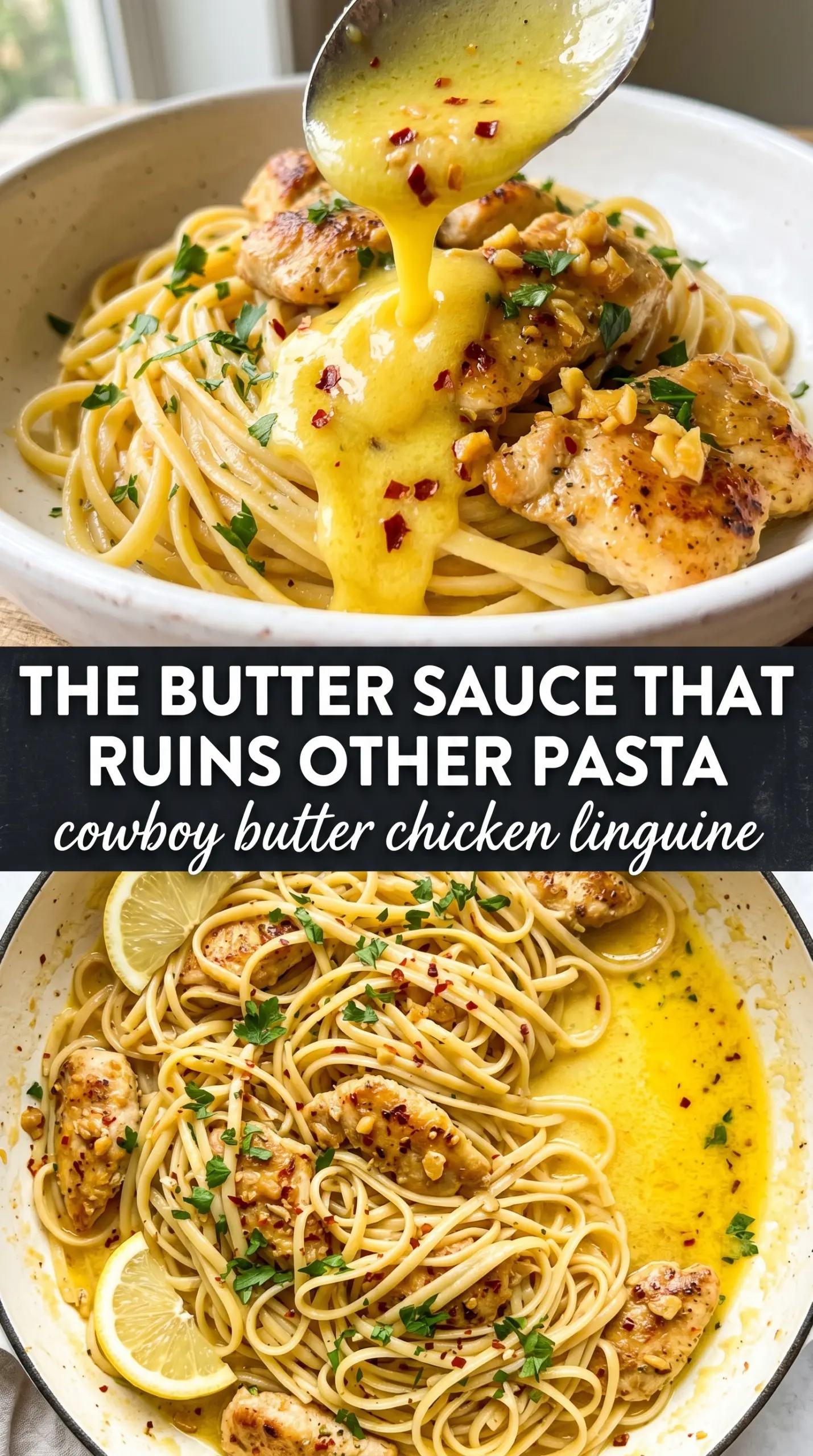
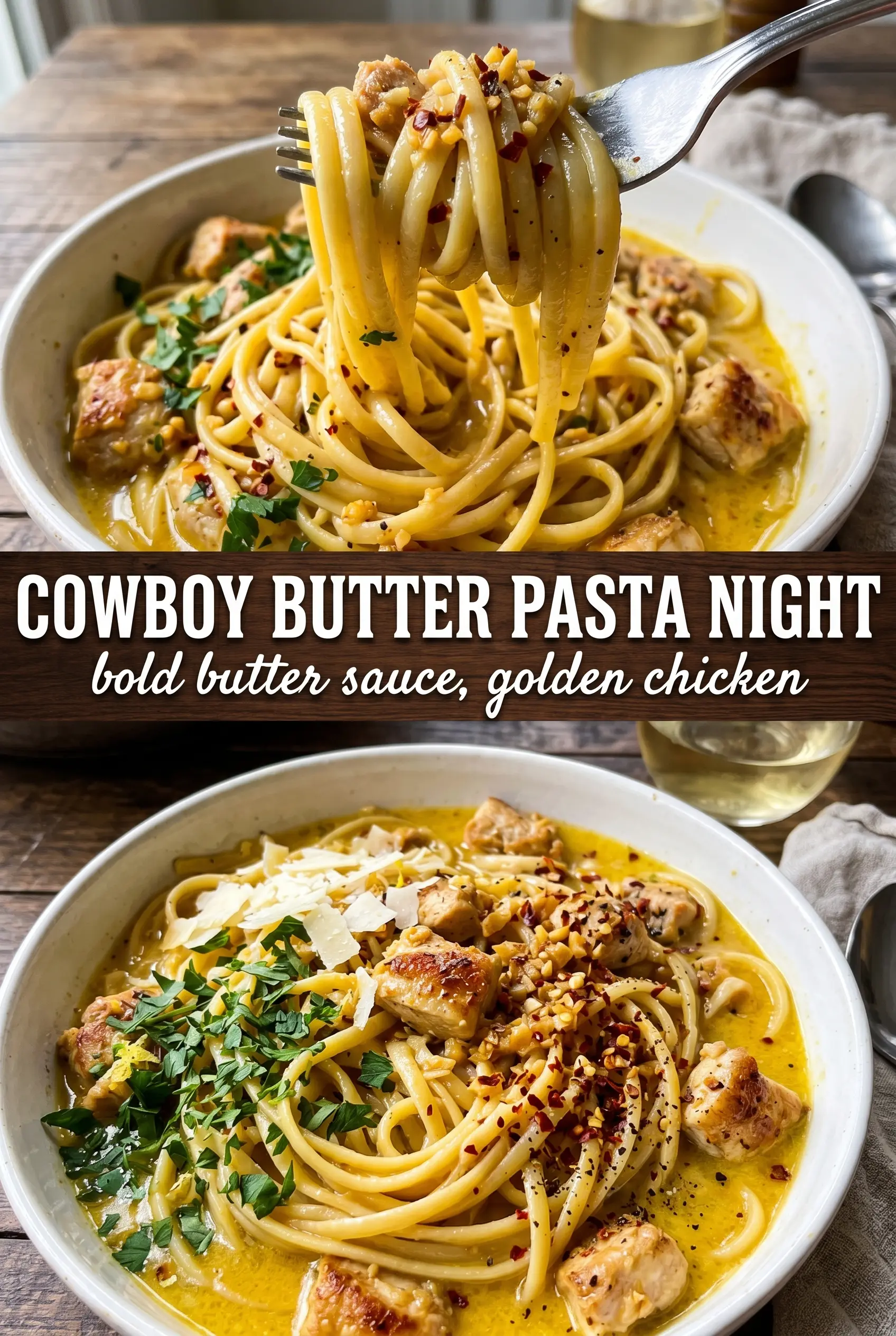
Cowboy Butter Chicken Linguine lands with that first forkful of glossy pasta, seared chicken, and a sauce that tastes bright, smoky, and just a little wild. The butter clings to every ribbon of linguine, while the Cajun-spiced chicken brings enough char to keep the whole bowl from feeling heavy. It’s the kind of dinner that looks like you worked on it all night, even though it comes together fast.
What makes this version work is the way the sauce is built in the same skillet as the chicken. Those browned bits left behind after searing are the backbone of the flavor, and the lemon juice goes in at the end so the butter stays smooth instead of turning greasy or dull. A little pasta water helps the sauce emulsify and coat the linguine instead of pooling underneath it.
Below, I’ll walk you through the exact moment to add the herbs, how to keep the garlic from burning, and the small adjustment that keeps the sauce silky if the pan gets a little too hot.
The chicken stayed juicy, and the sauce coated the linguine instead of turning oily. I added a splash of pasta water at the end and it came together perfectly.
Save this Cowboy Butter Chicken Linguine for a fast pasta night with seared chicken, lemony butter sauce, and just enough heat.
The Trick to Keeping Cowboy Butter Sauce Smooth Over Pasta
The part that trips people up here is treating the sauce like a regular pan sauce and letting it get too hot. Butter-based sauces break when the garlic browns too far or the heat is high enough to separate the fat from the lemon juice. Keep the skillet at medium once the chicken comes out, and the sauce stays glossy instead of turning slick.
The other thing that matters is timing. The pasta should go into the sauce while it’s still warm and a little wet, because that starchy coating helps the butter cling to the noodles. If you drain the linguine too far ahead of time, the sauce has nothing to grab and you end up with seasoned butter at the bottom of the bowl instead of a coating on the pasta.
- Chicken strips — Cutting the chicken into strips gives you more browned surface area, which means more flavor in less time. Thick chunks take longer to cook and can dry out before they pick up any color.
- Cajun seasoning — This is where the pasta gets its backbone. Different brands vary in saltiness, so season lightly at first and adjust after the sauce is built.
- Butter — Use real butter here. Margarine won’t give you the same silky finish or the same clean melt in the pan.
- Lemon juice — Fresh lemon juice matters. Bottled juice can taste flat and makes the sauce lose some of its brightness.
- Pasta water — Don’t skip it. The starch helps bind the sauce to the linguine, especially if the pan looks tight or the butter starts to separate.
What Each Ingredient Is Actually Doing in This Recipe
- Primary ingredient (the star) — Quality matters most. Choose the best you can find.
- Cooking medium (oil, butter, or broth) — This carries flavors and prevents dryness.
- Seasonings (salt, pepper, spices, herbs) — Layer flavors so nothing overpowers. Build depth gradually.
- Aromatics (garlic, onion, herbs) — Cook with fat to bloom flavors. Become the foundation.
- Supporting ingredients — Complement the main ingredient without overpowering it.
- Sauce or liquid (if applicable) — Brings flavors together. Balance richness with acid.
- Acid (lemon, vinegar, wine, or other) — Brightens and prevents flat-tasting results.
- Final finish (garnish, glaze, or sauce) — Prevents one-dimensional taste and adds visual appeal.
Building the Sauce in the Same Pan as the Chicken
Getting Color on the Chicken First
Season the chicken strips with salt, pepper, and Cajun seasoning, then sear them in hot olive oil in a large skillet until they’re deeply browned at the edges and cooked through. You’re looking for a little char, not pale, steamed chicken. If the pan is crowded, the chicken will sweat instead of sear, so cook in batches if you need to. Once the pieces are done, pull them out right away so they stay juicy while you build the sauce.
Waking Up the Butter
Melt the butter in the same skillet over medium heat and add the garlic. Stir it for about a minute, just until it smells fragrant and takes on a light golden edge. If the garlic browns hard, the sauce turns bitter fast, and there’s no fixing that after the fact. Keep the heat moderate and move straight into the spices as soon as the garlic is ready.
Finishing With Acid and Herbs
Stir in the Dijon, smoked paprika, red pepper flakes, and cayenne, then let everything cook for about 30 seconds so the spices bloom in the butter. Add the lemon juice, parsley, and chives last so they stay fresh and bright. Toss the cooked linguine into the skillet with a splash of pasta water, and keep turning it until the sauce looks creamy and evenly coated. Add the chicken back on top and serve immediately while the sauce is still silky.
How to Adapt Cowboy Butter Chicken Linguine Without Losing the Point
Make it dairy-free
Use a good-quality plant-based butter that melts cleanly and has a neutral flavor. You’ll still get the buttery coating and the spice, but the sauce may need a little extra pasta water to emulsify because dairy-free butter can behave differently in the pan.
Turn down the heat without flattening the flavor
Cut the cayenne in half and use a lighter hand with the red pepper flakes. The lemon, Dijon, and smoked paprika still give the sauce plenty of character, so you won’t lose the cowboy butter feel — you’ll just get a gentler finish.
Swap the linguine
Spaghetti, fettuccine, or even rotini all work here. Long noodles give you the smoothest sauce pull, while short pasta catches more of the herbs and pepper flakes in the ridges.
Storage and Reheating
- Refrigerator: Store leftovers in an airtight container for up to 3 days. The pasta will absorb some sauce as it sits.
- Freezer: I don’t recommend freezing this one. Butter sauces and cooked pasta both lose their texture after thawing.
- Reheating: Warm gently in a skillet over low heat with a splash of water or broth. High heat can make the sauce separate and dry out the chicken before the pasta loosens up.
Answers to the Questions Worth Asking
Cowboy Butter Chicken Linguine
Ingredients
Equipment
Method
- Season the chicken strips with salt, pepper, and Cajun seasoning. Heat olive oil in a large skillet over high heat and sear for 4-5 minutes until charred and cooked through, then remove.
- Melt the butter in the same skillet over medium heat. Add the minced garlic and cook for 1 minute, until fragrant.
- Stir in the Dijon mustard, smoked paprika, red pepper flakes, and cayenne pepper. Cook for 30 seconds to bloom the spices.
- Add fresh lemon juice, parsley, and chives to the skillet. Toss cooked linguine with the sauce and add reserved pasta water as needed until glossy and evenly coated, using a quick stirring motion as the sauce clings.
- Top the pasta with the seared chicken strips. Serve immediately while the sauce is glistening.