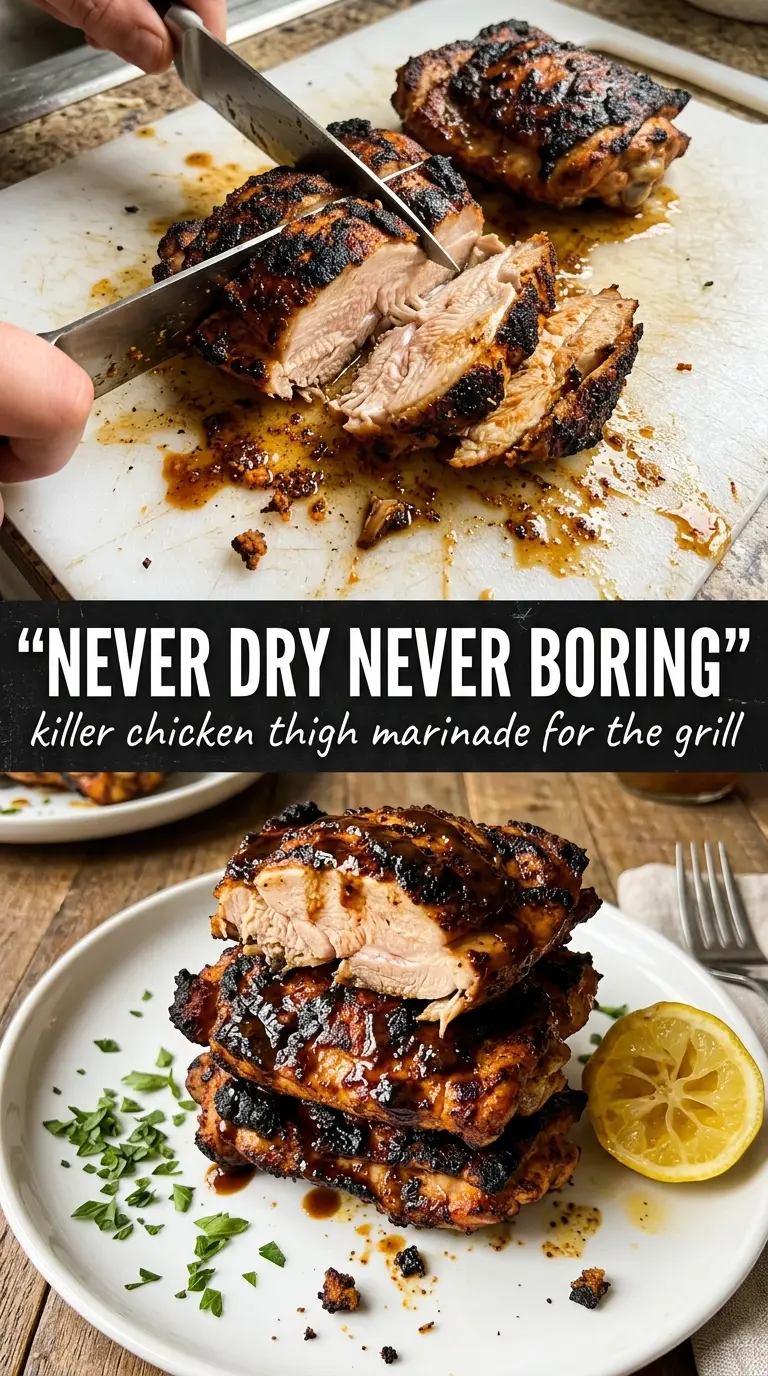
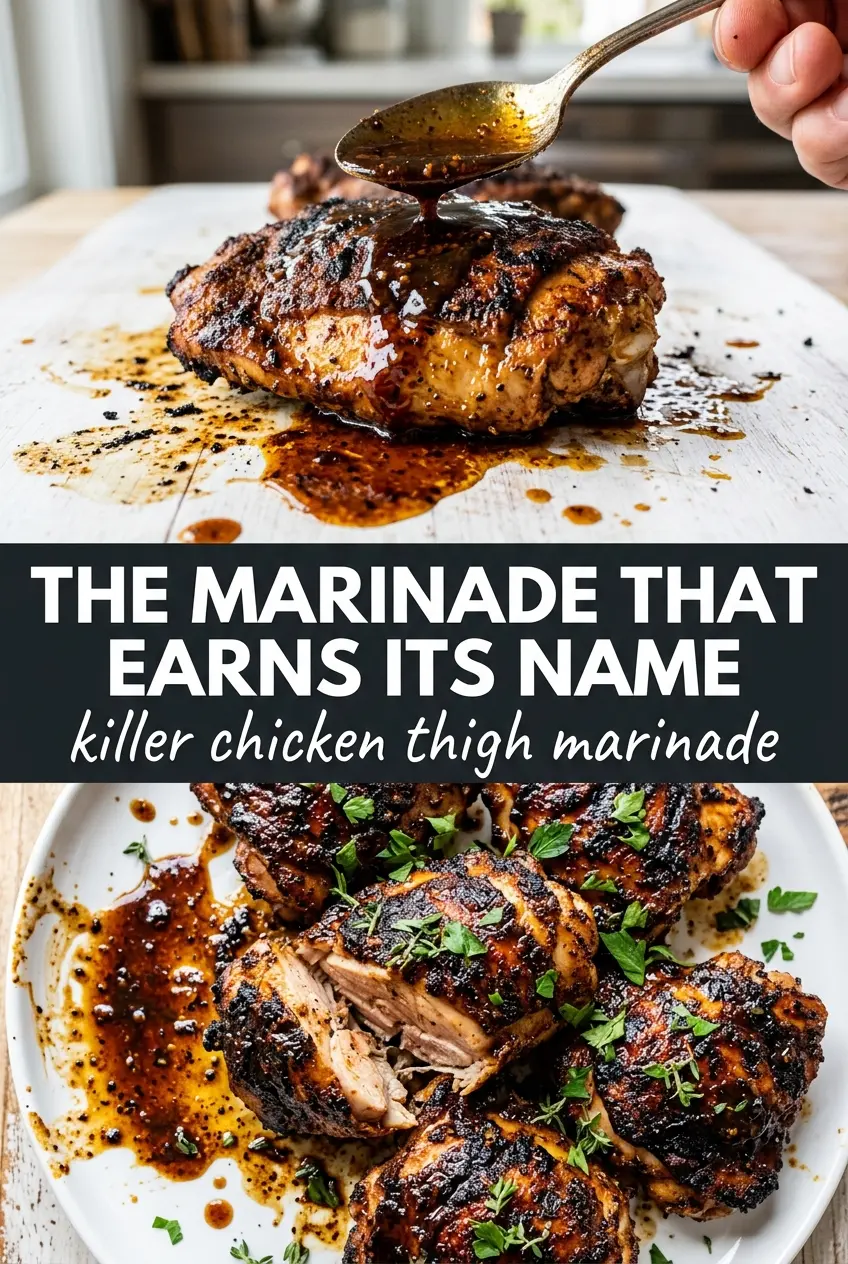
Chicken thighs take to marinade better than lean cuts ever will, and this one lands with a dark, sticky crust that tastes like it had all day on the grill even when it didn’t. The soy, balsamic, Worcestershire, and brown sugar build a savory-sweet coating that caramelizes instead of drying out, while the Dijon and garlic give the whole thing a sharp, punchy edge. It’s the kind of chicken that comes off the pan with browned bits clinging to the surface and juices still locked in.
The real trick is balance. There’s enough acid to season the meat and enough oil to carry the spices, but not so much vinegar that the chicken turns mushy while it sits. I tested this with both grilling and baking, and the result holds up either way as long as the thighs get a proper rest in the marinade and the heat is high enough to create color fast. If you rush the marinating or cook on weak heat, you’ll miss the best part: that deeply bronzed crust.
Below, I’ve included the small details that matter most, including what happens if you skip the sugar, how to get a better char, and the easiest swaps if you want to adjust the heat or make it gluten-free.
The chicken came out with the best caramelized edges, and the marinade clung beautifully instead of sliding off. I baked it at 425 and the thighs stayed juicy while the top got that deep golden crust we all wanted.
Save these sticky, caramelized chicken thighs for the nights when you want bold flavor without a long ingredient list.
The Marinade Needs Time to Coat, Not Just Flavor
With chicken thighs, the difference between a good marinade and a forgettable one is how well it clings before the heat hits. This mixture has enough oil, sugar, and mustard to coat the meat in a thin, even layer, which helps the surface brown instead of steaming. If you dump everything together and cook too soon, the flavor stays on the outside in a thin film and never has time to settle in.
The second mistake is overloading on acid. Balsamic and Worcestershire bring depth, but they also need balance from oil and sugar or the chicken can take on a harsh edge after a long soak. Four hours is the sweet spot for strong flavor without weird texture, and overnight works too as long as you’re using thighs rather than breasts.
- Chicken thighs — Boneless, skinless thighs stay juicy through high heat and tolerate a stronger marinade better than lean cuts. If you use breasts, shorten the marinating time and watch the cook time closely.
- Balsamic vinegar — This is what gives the finished chicken that dark, glossy sweetness. A cheaper balsamic is fine here because it’s getting cooked down, not served raw.
- Dijon mustard — Dijon helps emulsify the marinade so the oil and vinegar stay combined long enough to coat the meat evenly. Yellow mustard won’t give the same depth.
- Brown sugar — This is what helps the outside caramelize. If you leave it out, the chicken will still be savory, but you’ll lose that sticky lacquered finish.
What Each Ingredient Is Actually Doing in This Recipe
- Primary ingredient (the star) — Quality matters most. Choose the best you can find.
- Cooking medium (oil, butter, or broth) — This carries flavors and prevents dryness.
- Seasonings (salt, pepper, spices, herbs) — Layer flavors so nothing overpowers. Build depth gradually.
- Aromatics (garlic, onion, herbs) — Cook with fat to bloom flavors. Become the foundation.
- Supporting ingredients — Complement the main ingredient without overpowering it.
- Sauce or liquid (if applicable) — Brings flavors together. Balance richness with acid.
- Acid (lemon, vinegar, wine, or other) — Brightens and prevents flat-tasting results.
- Final finish (garnish, glaze, or sauce) — Prevents one-dimensional taste and adds visual appeal.
Getting the Char Before the Marinade Burns
Whisking the Marinade Until It Looks Unified
Start by whisking until the brown sugar dissolves and the mixture looks glossy instead of grainy. That matters because undissolved sugar can sit in patches and scorch before the chicken has a chance to brown evenly. You want a marinade that coats the back of a spoon and smells punchy with garlic, vinegar, and paprika.
Coating the Chicken Evenly
Add the thighs and turn them until every surface is slick with marinade. If there’s a dry spot, that spot won’t caramelize the same way and can end up pale and underseasoned. Refrigerate for at least 4 hours, and if you go overnight, keep it covered so the garlic and acid don’t overwork the surface.
Cooking Over the Right Heat
For grilling, medium-high heat is the sweet spot: hot enough to char the outside, but not so hot that the sugar blackens before the center cooks. For baking, 425F gives you enough heat to brown the thighs instead of just roasting them gray. Pull them when the thickest part hits 165F and let them rest for 5 minutes so the juices settle back into the meat.
Finishing So the Crust Stays Crisp
If you’re serving straight from the grill or oven, resist the urge to slice immediately. Cutting too soon lets the juices run out and softens the crust you worked for. A short rest keeps the exterior sticky and the interior tender.
How to Adapt the Marinade Without Losing the Sticky Finish
Gluten-Free Swap
Use tamari or a certified gluten-free soy sauce in place of regular soy sauce. The flavor stays deep and salty, and the marinade still browns well because the sugar and balsamic are doing the caramelizing.
Lower-Sugar Version
Cut the brown sugar to 2 teaspoons if you want less sweetness, but don’t remove it completely. That little bit of sugar helps the chicken brown and gives the surface that lacquered finish instead of a flat savory crust.
Milder Heat
Leave out the red pepper flakes if you want the marinade more kid-friendly or less sharp. You’ll still get plenty of boldness from the garlic, mustard, paprika, and Worcestershire sauce.
Storage and Reheating
- Refrigerator: Store cooked chicken in an airtight container for up to 4 days. The crust softens a bit as it sits, but the flavor stays strong.
- Freezer: Freeze cooked thighs for up to 2 months, wrapped tightly and sealed well. Thaw overnight in the refrigerator so the texture stays juicy instead of watery.
- Reheating: Reheat in a 350F oven until warmed through, or use a skillet over medium-low heat with a splash of water and a lid for a few minutes. The common mistake is blasting them in the microwave, which makes the sugars tough and the edges rubbery.
Questions I Get Asked About This Recipe
Killer Chicken Thigh Marinade
Ingredients
Equipment
Method
- Whisk olive oil, soy sauce, balsamic vinegar, Worcestershire sauce, Dijon mustard, and brown sugar until the sugar dissolves.
- Whisk in minced garlic, smoked paprika, dried Italian herbs, garlic powder, onion powder, salt, black pepper, and red pepper flakes until evenly combined.
- Coat boneless skinless chicken thighs completely in the marinade so every piece is covered.
- Marinate at least 4 hours or overnight in the refrigerator for the deepest flavor.
- Grill over medium-high heat for 6-7 minutes per side until caramelized and cooked through to 165F.
- Alternatively, bake on a sheet pan at 425F for 20-25 minutes until deeply golden.
- Rest the cooked chicken thighs for 5 minutes before serving.