Golden seared chicken breasts tucked into a glossy garlic Parmesan sauce earn their place on the dinner rotation fast. The chicken stays juicy because it gets a hard sear first, and the sauce finishes thick enough to cling to every slice instead of pooling sadly at the bottom of the pan. It’s the kind of skillet dinner that feels a little richer than a basic weeknight chicken, but it still comes together without any fussy steps.
The key is building the sauce in the same pan after the chicken comes out. Those browned bits from the sear bring depth, while the garlic, wine, cream, and fresh Parmesan work together to make a sauce that tastes layered instead of flat. Freshly grated Parmesan matters here because the pre-shredded stuff can turn grainy and refuse to melt smoothly.
Below, I’m walking through the part that keeps the sauce silky, the ingredient choices that actually matter, and a few ways to adapt this skillet dinner if you need to work with what’s in the kitchen.
The sauce thickened up beautifully and stayed smooth, and the chicken was still juicy after simmering. I used the wine, and it gave the whole skillet a richer taste without being too strong.
Like this creamy garlic Parmesan chicken? Save it to Pinterest for a skillet dinner with a velvety sauce and golden seared chicken breasts.
The Sear Is What Keeps the Chicken Juicy
Most skillet chicken turns dry because it gets rushed straight into the sauce without building any color first. Here, the sear does two jobs at once: it locks in a little structure on the outside and leaves behind browned bits that season the sauce from the start. If the chicken sticks when you first try to lift it, it needs another minute. It will release when the crust is ready.
The other mistake is crowding the pan. If all four breasts sit too close together, they’ll steam instead of sear and the sauce will taste flatter because the pan never develops good fond. Give the chicken space, and use medium-high heat only for the sear, then back off once the sauce ingredients go in. That shift is what keeps the cream from getting pushed too hard.
What the Garlic, Cream, and Parmesan Each Bring to the Pan
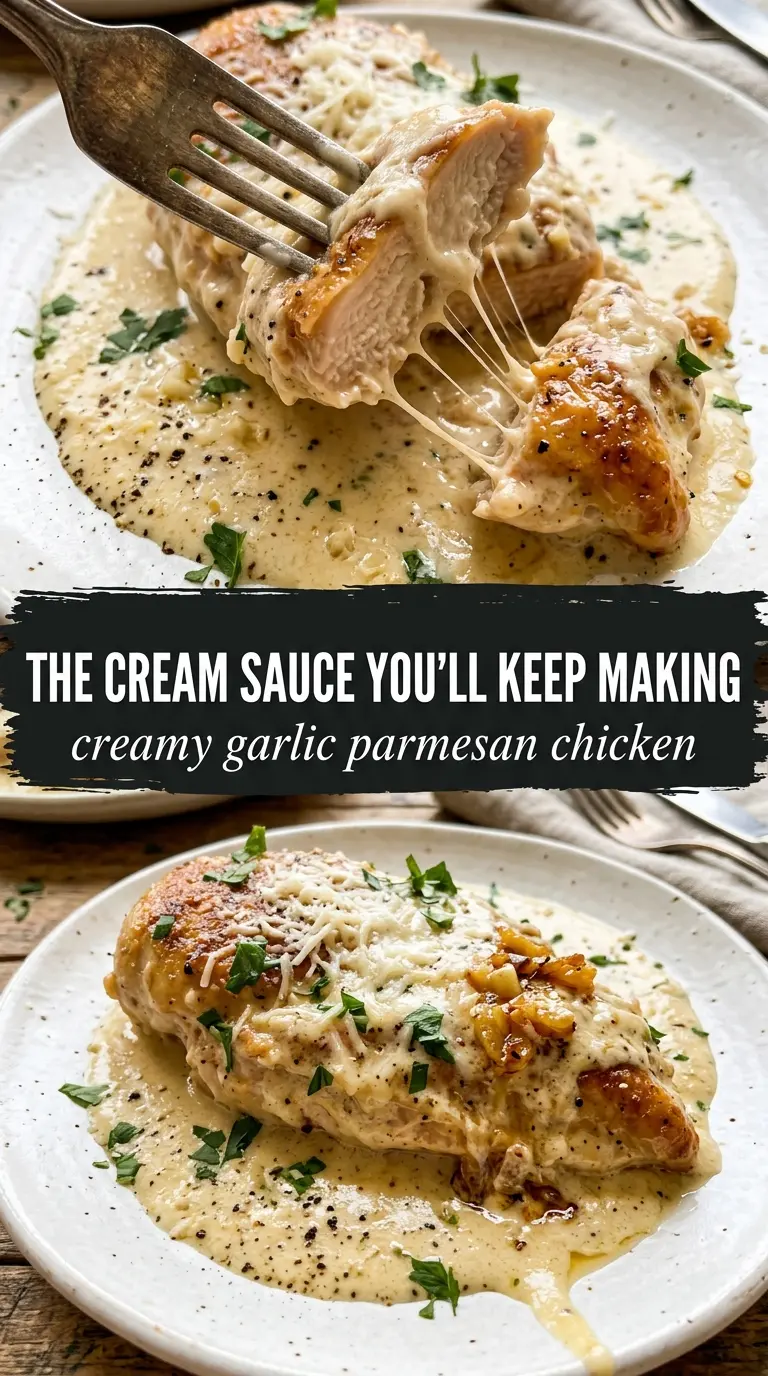
- Chicken breasts — Boneless, skinless breasts work because they sear quickly and slice neatly for serving. If yours are very thick, pound them to an even thickness so the outside doesn’t overcook before the center hits 165°F.
- Fresh garlic — Six cloves sounds bold because it is, and that’s what gives the sauce its backbone. Garlic powder can’t replace the fresh sweetness here, but you can add a pinch along with the seasoning if you want a little extra depth.
- Dry white wine or chicken broth — Wine gives the pan a brighter, more layered finish, while broth makes the dish a little softer and more pantry-friendly. If you use broth, let it simmer a minute longer so the sauce still picks up some concentration before the cream goes in.
- Heavy cream and freshly grated Parmesan — This is the texture maker. Heavy cream thickens into a silky sauce without splitting as easily, and freshly grated Parmesan melts smoothly instead of clumping. If you need a lighter version, half-and-half can work, but the sauce will be looser and needs gentler heat.
- Butter and olive oil — The olive oil handles the high heat of the sear, while the butter adds flavor once the garlic goes in. That combination keeps the pan from tasting one-note.
Building the Sauce Without Curdling It
Getting the Chicken Brown First
Season the chicken generously before it hits the pan, then sear it in hot olive oil until the outside is a deep golden color and the inside reaches 165°F. Pull it from the skillet and let it rest on a plate while you build the sauce. If the pan looks dark at this point, that’s a good thing; those browned bits are the flavor base.
Blooming the Garlic in Butter
Drop the heat to medium and add the butter, then the garlic. Cook just until fragrant, about a minute, because garlic goes bitter fast once it starts taking on color. If you smell it turn sharp or see it browning, move straight to the liquid.
Deglazing and Simmering the Cream
Pour in the wine or broth and scrape the bottom of the pan with a wooden spoon until the stuck-on bits loosen. Let it bubble for a couple of minutes so the alcohol cooks off if you used wine and the liquid reduces slightly. Stir in the cream, broth, Parmesan, and Italian seasoning over low heat, then simmer until the sauce coats a spoon. If it looks thin at first, give it time; cream sauces thicken as they reduce, not as they boil harder.
Finishing the Chicken in the Sauce
Slide the chicken back into the skillet and spoon the sauce over the top. Let it warm through for a couple of minutes, just enough for the flavors to settle together without overcooking the meat. Finish with thyme and parsley right before serving so the herbs stay fresh and bright against the rich sauce.
How to Adapt This Chicken Skillet Without Losing the Good Part
Use chicken thighs for a richer, more forgiving version
Boneless thighs stay juicier than breasts and handle a little extra simmering without drying out. They bring a deeper, more savory flavor to the skillet, though the final dish will feel a touch heavier. Keep the sear a little gentler since thighs render more fat as they cook.
Make it gluten-free without changing the method
This recipe is naturally gluten-free as written if your broth and Parmesan are certified gluten-free. Keep the same cooking method and you won’t lose any texture, since the sauce thickens from reduction and dairy, not flour.
Skip the wine and use broth for a milder pan sauce
Chicken broth keeps the sauce family-friendly and pantry-based, but it makes the flavor a little softer. To keep the sauce from tasting flat, let the broth reduce before adding the cream so the final skillet still tastes concentrated.
Store leftovers for a second-night dinner
- Refrigerator: Store in an airtight container for up to 3 days. The sauce will thicken as it chills.
- Freezer: The chicken freezes okay, but the cream sauce can separate after thawing, so I don’t recommend freezing the finished dish.
- Reheating: Warm gently on the stove over low heat with a splash of broth or cream, stirring often. High heat is what makes the sauce break and turns the chicken dry.
Answers to the Questions Worth Asking
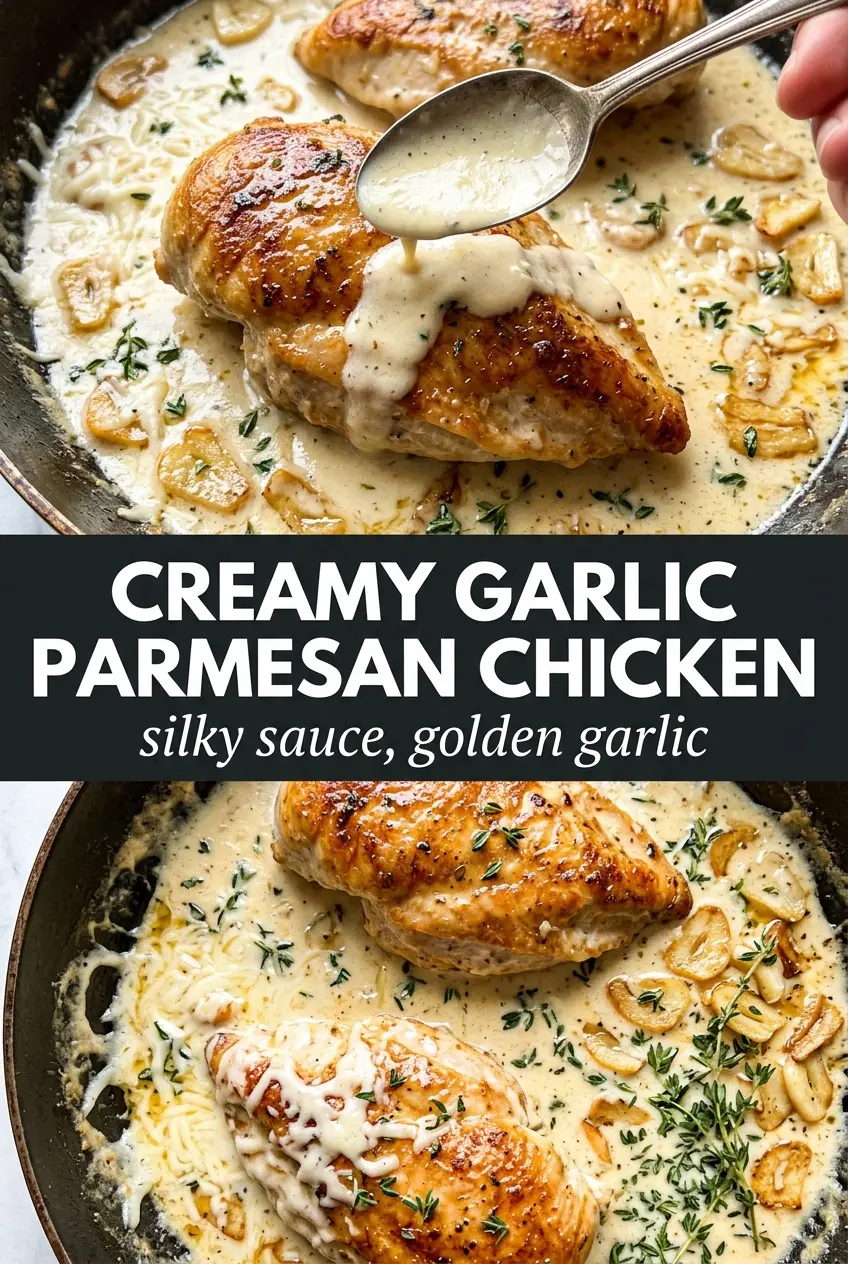
Creamy Garlic Parmesan Chicken
Ingredients
Equipment
Method
- Season the chicken breasts generously on both sides with salt, pepper, garlic powder, and smoked paprika. Let them sit while you heat the skillet so the seasonings adhere.
- Heat olive oil in a large skillet over medium-high heat and sear the chicken for 5-6 minutes per side until golden and internal temperature reaches 165°F; remove. Transfer the chicken to a plate while you build the sauce.
- Add butter and minced garlic to the same pan and cook for 1 minute until fragrant. Scrape up any browned bits stuck to the pan.
- Deglaze with white wine and cook for 2 minutes. Reduce slightly so the pan liquid loses the sharp alcohol smell.
- Stir in heavy cream, chicken broth, Parmesan cheese, and Italian seasoning; simmer for 4-5 minutes until the sauce is thick and glossy. Keep the heat at a steady simmer and stir until smooth.
- Return the chicken to the pan and spoon the sauce over each breast. Let it warm through briefly in the sauce for best coating.
- Garnish with fresh thyme and parsley and serve. Serve with extra sauce from the skillet over the chicken.