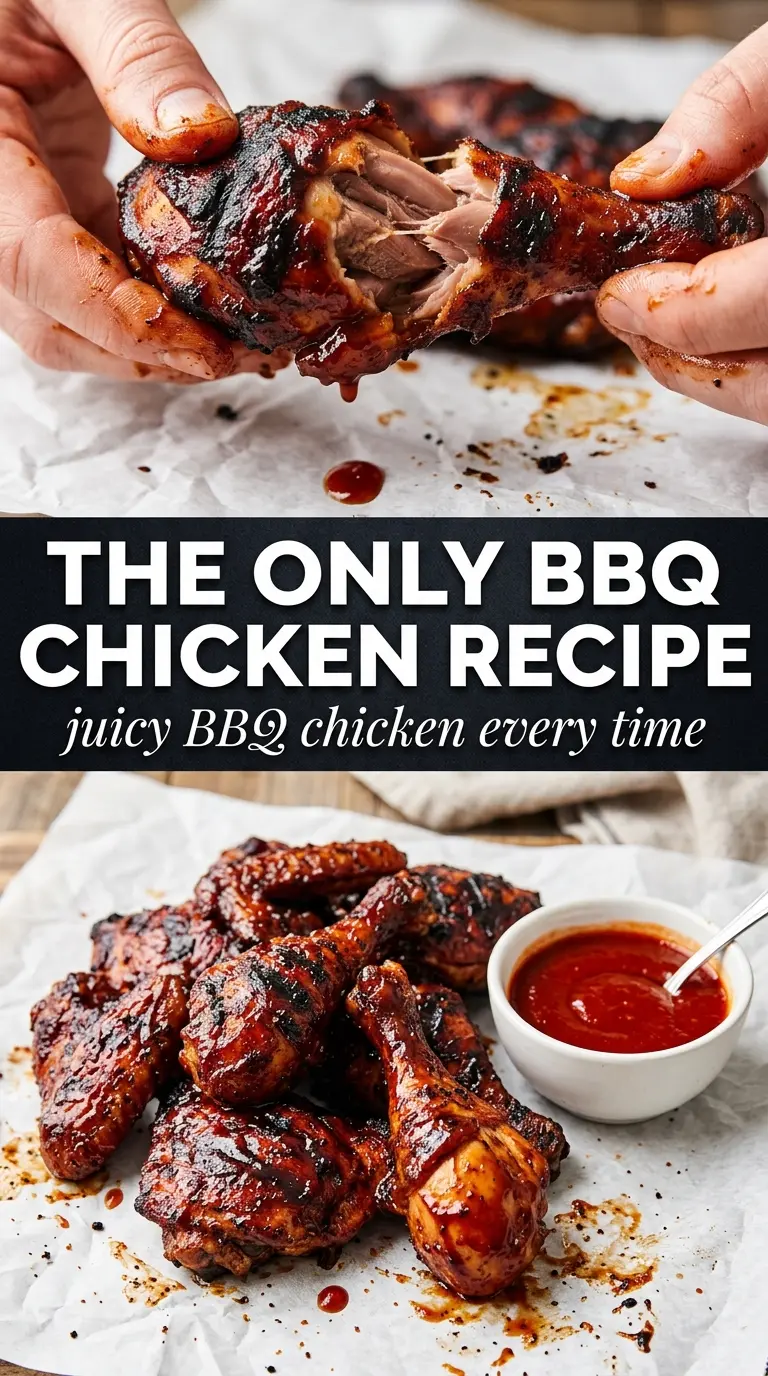
BBQ chicken earns its place on the table when the skin turns blistered and the sauce cooks down into a sticky, lacquered glaze that clings to every ridge of the meat. The best version has a little char at the edges, juicy meat underneath, and just enough smoke and sweetness to keep you going back for another piece. Bone-in chicken gives you that contrast. It stays tender through the grill time and holds up to repeated brushing without drying out.
The trick is patience. A quick sauce coating at the start can burn before the chicken is cooked through, so most of the grilling happens first without sauce. That gives the skin time to render and pick up color before the BBQ sauce goes on for the final stretch, where it thickens and caramelizes instead of scorching. The result is a glossy finish with real depth, not a sticky shell that tastes bitter.
Below, I’ve included the timing that keeps the chicken juicy, the ingredient swaps that still work, and the small adjustments that matter if you’re using thighs, legs, or breasts. Once you’ve made it this way, the order of operations makes perfect sense.
The sauce turned sticky and caramelized right at the end, and the chicken stayed juicy instead of drying out. I used thighs and the bone-in pieces were done right on time at 30 minutes.
Love the sticky, caramelized finish on this BBQ Chicken? Save it to Pinterest for the next night you want grilled chicken with a glossy sauce and real char.
The Sauce Goes on Last for a Reason
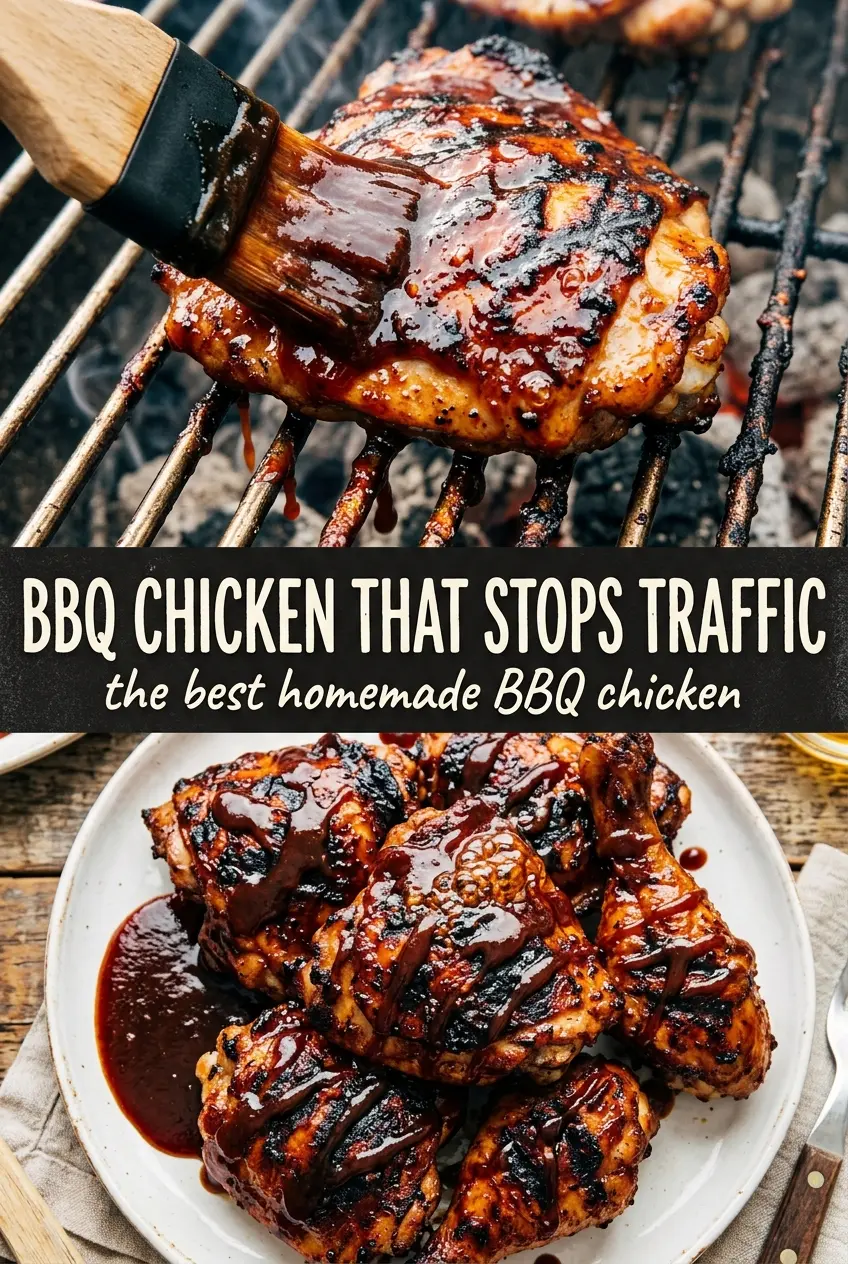
BBQ sauce is the part that most people rush, and that’s where grilled chicken goes wrong. Sugary sauce burns fast, especially over medium heat, so the chicken needs time on the grill first to cook through and pick up color before the glaze goes on. If you start basting too early, the outside darkens before the inside is done and the sauce can taste scorched instead of caramelized.
Bone-in, skin-on pieces help a lot here because they stay juicy long enough to finish over the grill without turning dry. The skin protects the meat, and the bone gives you a little extra forgiveness if the heat runs uneven. I cook with the lid closed between turns to keep the heat steady and let the chicken move toward doneness without constant flare-up stress.
- Bone-in, skin-on chicken — Thighs and legs are the most forgiving because they stay juicy even if the grill runs a little hot. Breasts work too, but they need closer attention and should come off as soon as they hit 165F.
- BBQ sauce, divided — A portion goes into the marinade, and the rest is brushed on at the end. Use a sauce you actually like eating on its own, since the flavor concentrates as it cooks.
- Smoked paprika — This adds a grill-smoke note even if your grill doesn’t give you much of one. Regular paprika won’t give you the same depth.
- Olive oil — This helps the seasonings spread evenly and keeps the surface from sticking when the chicken first hits the grill. Any neutral oil works if that’s what you have.
- Fresh parsley — It’s not required, but that final hit of green brightens all the sticky sauce. Skip it if you want, though the plate looks and tastes a little more finished with it.
What Each Ingredient Is Actually Doing in This Recipe
- Primary ingredient (the star) — Quality matters most. Choose the best you can find.
- Cooking medium (oil, butter, or broth) — This carries flavors and prevents dryness.
- Seasonings (salt, pepper, spices, herbs) — Layer flavors so nothing overpowers. Build depth gradually.
- Aromatics (garlic, onion, herbs) — Cook with fat to bloom flavors. Become the foundation.
- Supporting ingredients — Complement the main ingredient without overpowering it.
- Sauce or liquid (if applicable) — Brings flavors together. Balance richness with acid.
- Acid (lemon, vinegar, wine, or other) — Brightens and prevents flat-tasting results.
- Final finish (garnish, glaze, or sauce) — Prevents one-dimensional taste and adds visual appeal.
Getting the Chicken Cooked Through Without Burning the Glaze
Season and Marinate
Rub the chicken with olive oil, garlic powder, onion powder, smoked paprika, salt, and pepper until the surface looks evenly coated and lightly brick-red from the paprika. Add 1/2 cup of the BBQ sauce and turn the pieces until they’re fully coated, then let them marinate at least 1 hour or overnight. If you rush this step, the flavor will sit mostly on the surface; the resting time lets the sauce start doing its work before the chicken ever hits the grill.
Set Up the Grill Heat
Preheat the grill to medium heat and clean the grates well so the skin doesn’t tear when you turn the chicken. You want steady heat, not screaming-hot flames. If the grill is too hot, the sugar in the sauce will burn the second it gets near the grates, and the skin will blacken before the meat has time to cook.
Grill First, Sauce Later
Place the chicken bone-side down first and turn it every 8 to 10 minutes so it cooks evenly and doesn’t sit long enough in one spot to scorch. Grill for 25 to 30 minutes without sauce, keeping the lid closed between turns as much as possible. At this stage you’re looking for browned skin, some rendered fat, and chicken that’s starting to firm up but isn’t finished yet.
Brush on the Glaze at the End
During the last 10 minutes, brush on the remaining BBQ sauce and turn the pieces every time you baste. The sauce should go from shiny to sticky to deeply caramelized, with a lacquered look and a few charred edges. If it starts to smoke heavily or turn black before the chicken reaches 165F, move it to a cooler part of the grill and keep going there.
Rest Before Serving
Take the chicken off the grill when it reaches 165F in the thickest part, then let it rest for 5 minutes before serving. That short rest keeps the juices from running out the second you cut in. Warm the extra BBQ sauce and spoon it over the top if you want an even glossier finish.
How to Adjust This BBQ Chicken for Different Grills and Preferences
For Chicken Thighs or Legs
Thighs and legs are the easiest choice here because they stay juicy while the sauce finishes. They can take a little extra color, so don’t pull them early just because the skin looks dark. The bone helps them cook evenly and gives you a more forgiving window if your grill heat runs uneven.
For Boneless, Skinless Chicken
Boneless pieces cook faster and won’t give you the same smoky, lacquered finish, but they work in a pinch. Grill them over medium heat and start checking much earlier, because they dry out fast once they pass 165F. Keep the sauce light until the very end or the sugars will burn before the chicken is cooked through.
For a Gluten-Free Plate
Use a gluten-free BBQ sauce and check the label on the seasonings if you’re using a seasoning blend instead of single spices. The method stays the same, and the final texture doesn’t change. This is one of the easiest ways to keep the dish gluten-free without sacrificing the sticky finish.
For a Spicier Finish
Add cayenne, chipotle powder, or a few dashes of hot sauce to the seasoning rub or the final brush-on sauce. Put the heat in the last layer if you want it to stay bright; mix it into the marinade if you want a deeper, slower burn. Either way, taste the sauce before it goes on so you don’t overshoot the heat level.
Storage and Reheating
- Refrigerator: Store leftover BBQ chicken in an airtight container for up to 4 days. The sauce will thicken and the skin will soften, but the flavor holds up well.
- Freezer: It freezes well, especially if you pull the meat off the bone first. Wrap tightly and freeze for up to 2 months.
- Reheating: Reheat covered in a 325F oven with a spoonful of extra sauce or a splash of water until hot. Microwaving on high tends to dry the meat and toughen the sauce, so use lower power if that’s your only option.
Questions I Get Asked About This Recipe
BBQ Chicken
Ingredients
Equipment
Method
- Rub the chicken with olive oil, garlic powder, onion powder, smoked paprika, salt, and black pepper. Make sure every piece is evenly coated for consistent flavor.
- Marinate the chicken in 1/2 cup BBQ sauce for at least 1 hour or overnight. Cover and refrigerate while the sauce lightly clings to the surface.
- Preheat the grill to medium heat. Place the chicken on the grate bone-side down to start with even rendering and grill marks.
- Grill the chicken bone-side down and turn it every 8-10 minutes. Continue until it has cooked through without additional sauce.
- Cook for a total of 25-30 minutes without sauce, turning regularly. The exterior should set and brown before glazing.
- In the last 10 minutes, brush generously with the remaining BBQ sauce and turn the chicken. Baste each time so the surface becomes sticky and lacquered.
- Cook until the BBQ chicken is deeply caramelized, sticky, and the internal temperature reaches 165°F. Aim for char at the edges while avoiding burning the sauce.
- Rest the BBQ chicken for 5 minutes before serving. This helps the juices redistribute so the meat stays tender.
- Serve with extra warmed BBQ sauce. Garnish with fresh parsley for a fresh finish.