Campfire nachos hit fast and disappear even faster when the chips stay crisp underneath the cheese and the toppings land in the right order. The skillet comes off the heat with bubbling, melted layers and those edges where a few chips have picked up a little toast, which is exactly what makes a pan of nachos worth guarding with a spatula.
The trick is not piling everything on at once. Half the chips go down first, then half the hot fillings and cheese, then the second layer. That keeps some chips protected and gives you a better mix of crunchy and loaded in every scoop. Cooking the beef before it ever hits the skillet matters too, because the campfire only has to melt the cheese and warm everything through instead of trying to cook raw meat outdoors.
Below, I’ve included the one layering step that keeps nachos from turning soggy, plus a few smart swaps for making this work in a skillet, aluminum pan, or right over a fire.
The layers held up beautifully over the fire, and the cheese melted into every corner without the bottom chips going soggy. I added a little extra lime at the end and everyone went back for seconds.
Campfire Nachos Supreme are the kind of bubbling skillet nachos worth saving for your next cookout.
The Trick to Keeping the Bottom Chips Crisp Under the Cheese
Nachos fail when the hot toppings sit on the chips too long before the cheese melts. The bottom layer starts steaming, and once that happens, you lose the crunch that makes the whole skillet work. Layering half the chips first, then repeating the toppings, gives you pockets of crisp chips even after the cheese softens and binds everything together.
The other thing that matters here is heat. Medium heat over a campfire grate is enough to melt the cheese without scorching the chips underneath. If the fire is too hot, the skillet bottoms out fast and the chips at the edge go from toasted to bitter before the center is ready.
What the Beef, Beans, and Cheese Each Bring to the Skillet
- Ground beef — Cook it and season it before it goes into the skillet. That keeps the campfire job simple: melting cheese and warming toppings, not trying to brown meat over uneven fire heat. Lean beef works fine, but drain off excess fat so the chips don’t get greasy.
- Mexican cheese blend — This is the glue. It melts smoothly and gives you those stretchy, bubbly strands that hold the skillet together. Pre-shredded is fine here, but if you grate your own, it melts a little silkier.
- Black beans and corn — These add bulk and give the nachos enough body to feel like a meal. Canned beans and corn are perfect as long as they’re drained well; extra liquid is what turns the bottom layer soft.
- Tomatoes, guacamole, sour cream, and cilantro — These belong on top after the skillet comes off the heat. If you add them earlier, the tomatoes weep and the cold toppings stop the cheese from settling into that glossy finish.
Building the Skillet So Everything Melts at the Same Time
Lay Down the First Crunch Layer
Start with half the chips in a large cast iron skillet or aluminum pan. You want a loose layer, not a packed one, so heat can move between the chips. If the chips are crushed before they go in, the whole base turns dusty and the nachos lose their structure.
Stack the Hot Fillings and Cheese
Spoon on half the beef, beans, corn, and cheese, then repeat with the remaining chips and toppings. Try to scatter everything evenly to the edges, because bare spots in the skillet become the chips that burn first. The cheese should cover a lot of the surface, but it doesn’t need to hide every chip.
Let the Fire Melt, Don’t Roast
Set the skillet over medium heat for 12 to 15 minutes and watch for the cheese to go fully melted and bubbling around the edges. If the chips start darkening fast before the cheese is soft, pull the skillet higher from the flame or move it to a cooler part of the grate. The goal is molten cheese and warmed toppings, not a second round of cooking.
Finish Cold and Fresh
Take the skillet off the heat and top it with tomatoes, jalapeños, sour cream, guacamole, cilantro, and lime wedges. Those fresh toppings wake everything up and cut through the richness of the beef and cheese. Serve it right away; nachos wait for no one, and after a few minutes the bottom chips start to soften.
How to Change the Skillet Without Losing the Best Part
Turkey or chorizo instead of beef
Ground turkey works if you want something lighter, but it needs a little extra taco seasoning or salt because it brings less flavor on its own. Chorizo gives you a spicier, richer skillet and melts into the cheese beautifully, though you’ll want to drain off some fat before layering so the chips don’t turn greasy.
Vegetarian campfire nachos
Skip the beef and add an extra can of beans or some sautéed peppers and onions instead. The flavor changes from hearty and meaty to more bean-forward and smoky, but the layering method stays the same and the nachos still hold up well over the fire.
Make it dairy-free
Use a good melting dairy-free shreds-style cheese and skip the sour cream, or replace it with a thick dairy-free cashew or avocado-based topping. The texture won’t stretch quite the same way, but the skillet still gets that cohesive, loaded feel if you keep the toppings balanced.
Storage and Reheating
- Refrigerator: Store leftovers in an airtight container for up to 2 days. The chips will soften, so don’t expect the same crunch.
- Freezer: Not a good freezer recipe. The chips and fresh toppings break down badly after thawing.
- Reheating: Warm leftovers in a skillet or oven until heated through, then add fresh sour cream, guacamole, and cilantro after reheating. The common mistake is microwaving everything at once, which turns the chips limp and the toppings watery.
Questions I Get Asked About This Recipe
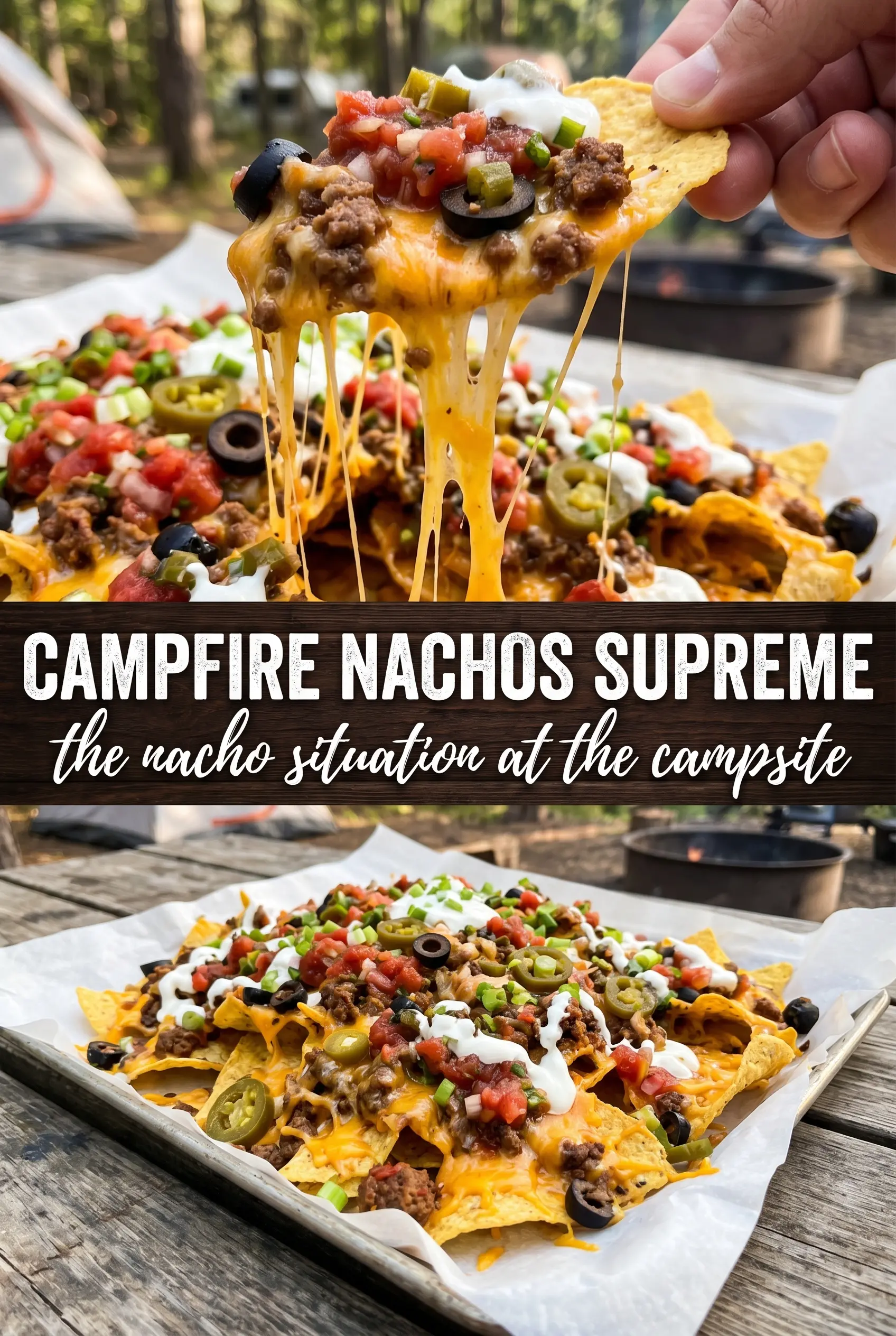
Campfire Nachos Supreme
Ingredients
Equipment
Method
- Layer half the tortilla chips in a large cast iron skillet or aluminum pan, spreading them into an even pile for melting coverage.
- Top with half the cooked ground beef, black beans, corn, and shredded Mexican cheese blend so the cheese forms a binder between layers.
- Add the remaining tortilla chips and repeat with the remaining beef, beans, corn, and cheese for a high stack.
- Place the skillet on a campfire grate over medium heat for 12-15 minutes until the cheese melts and turns bubbly with light browning at the edges.
- Remove from the heat and immediately top with diced tomatoes, sliced jalapeño, sour cream, guacamole, and chopped cilantro for fresh contrast.
- Serve immediately with lime wedges on the side for squeezing over the top.