Clear broth, tender shredded chicken, and egg noodles that hold their bite make stovetop chicken noodle soup one of those rare bowls that tastes steady and comforting without feeling heavy. This version keeps the broth bright and clean instead of muddy, and the vegetables stay distinct instead of cooking down into mush. The result is a soup with enough body to satisfy, but still light enough that you’ll want a second bowl.
The trick is building flavor in layers. Sautéing the onion, carrots, and celery first gives the broth a deeper base, and adding the chicken whole lets it stay juicy while the soup simmers. The noodles go in only after the chicken is cooked and shredded, which keeps them from turning soft and bloated before dinner even hits the table.
Below, you’ll find the timing that keeps the chicken tender, the one optional ingredient that adds surprising depth, and the small finishing step that makes the whole pot taste finished instead of flat.
The broth stayed clear and the noodles were still springy when I added them back in. My husband said it tasted like the chicken noodle soup he grew up on, only better.
Save this stovetop chicken noodle soup for the nights when you want a clear, savory broth and tender noodles without waiting all afternoon.
The reason this soup stays clear instead of cloudy
Cloudy chicken noodle soup usually comes from boiling too hard, too early. A hard boil agitates the broth, breaks the chicken down unevenly, and can push starch and foam into the liquid before you’ve had a chance to skim or settle it. This version keeps the first simmer gentle, which gives the chicken time to cook through without shredding itself in the pot.
The second thing that matters is when the noodles go in. Egg noodles release starch fast, and if they simmer for too long, they thicken the broth and turn soft at the edges. Cooking them at the very end keeps the texture clean and keeps the soup tasting like broth with noodles, not noodle porridge.
- Low to medium simmer, not a rolling boil — steady bubbles are enough to cook the chicken and keep the broth clean.
- Whole chicken breasts first — they stay juicier than pre-shredded meat dumped in at the start.
- Noodles last — they only need a short cook and will keep their shape if they’re not left sitting in hot broth.
- Salt at the end — broth brands vary a lot, and final seasoning is what brings the soup into focus.
What the carrots, celery, and celery seed are doing here

The vegetables are more than filler. Onion, carrot, and celery give the broth its savory backbone, and cooking them in olive oil first helps pull out flavor before the broth goes in. The garlic only needs a minute; any longer and it can turn sharp or bitter once the liquid is added.
Celery seed is optional, but it gives the soup that old-fashioned chicken noodle taste people remember from deli soup or a good diner bowl. If you don’t have it, leave it out rather than trying to replace it with more celery stalks. The stalks add freshness and texture; the seed adds a deeper, slightly herbal note that lives underneath the broth.
- Chicken broth — use one you’d drink on its own. If yours is underseasoned, the soup will taste thin no matter how good the chicken is.
- Chicken breast — lean and easy to shred. Thighs work too, but they make the broth a little richer and less clean-tasting.
- Egg noodles — they have the right soft-but-springy texture for this soup. Other pasta works, but it changes the bowl into something sturdier and less classic.
- Fresh parsley — added at the end, it lifts the whole pot and keeps the finish from tasting flat.
Building the broth and chicken in the right order
Sweating the vegetables first
Warm the olive oil over medium heat, then cook the onion, carrots, and celery until they soften and the onion starts to look translucent at the edges. You’re not looking for browning here; you want the vegetables to release flavor into the oil without darkening the broth. If the pan runs dry or the vegetables start to stick, lower the heat a touch.
Adding the broth and chicken together
Stir in the garlic for just a minute, then pour in the broth and add the thyme, garlic powder, onion powder, and celery seed. Nestle the chicken breasts into the liquid and bring everything up to a boil only long enough to get the temperature moving, then lower it to a simmer. If it boils hard for the whole cook, the chicken can turn stringy on the outside before the center is done.
Shredding and finishing with noodles
Pull the chicken out once it reaches 165°F and shreds easily with two forks. Return the soup to a boil only for the noodles, since they need active heat to cook through in 6 to 8 minutes. Add the chicken back at the end so it warms through without overcooking, then season generously with salt and pepper until the broth tastes rounded and full.
How to adapt this soup when you need a different version
Gluten-Free Chicken Noodle Soup
Swap the egg noodles for a gluten-free pasta that holds its shape well, then cook it just until tender. Rice noodles can work, but they soften fast and can cloud the broth more than a sturdy corn- or rice-based pasta.
Using Chicken Thighs Instead of Breast
Thighs give you a richer broth and a softer, more forgiving shred. They take the same simmer time, but the finished soup will taste a little deeper and less lean than the breast version.
Dairy-Free as Written
This recipe already skips dairy, which is part of why the broth stays clean and light. If you want a little more richness without cream, add a splash of extra olive oil at the end or use a more full-bodied broth.
Make It Ahead for Lunches
If you know you’ll be storing leftovers, cook the noodles separately and add them to each bowl instead of the whole pot. That keeps them from soaking up too much broth and turning soft by the next day.
Storage and Reheating
- Refrigerator: Store for up to 4 days in a sealed container. The noodles will keep soaking up broth, so the soup will thicken a bit.
- Freezer: Freeze the soup without the noodles for the best texture. Add freshly cooked noodles after thawing and reheating.
- Reheating: Warm gently on the stove over medium-low heat until steaming. If it boils hard, the chicken dries out and the noodles turn mushy fast.
Answers to the questions worth asking
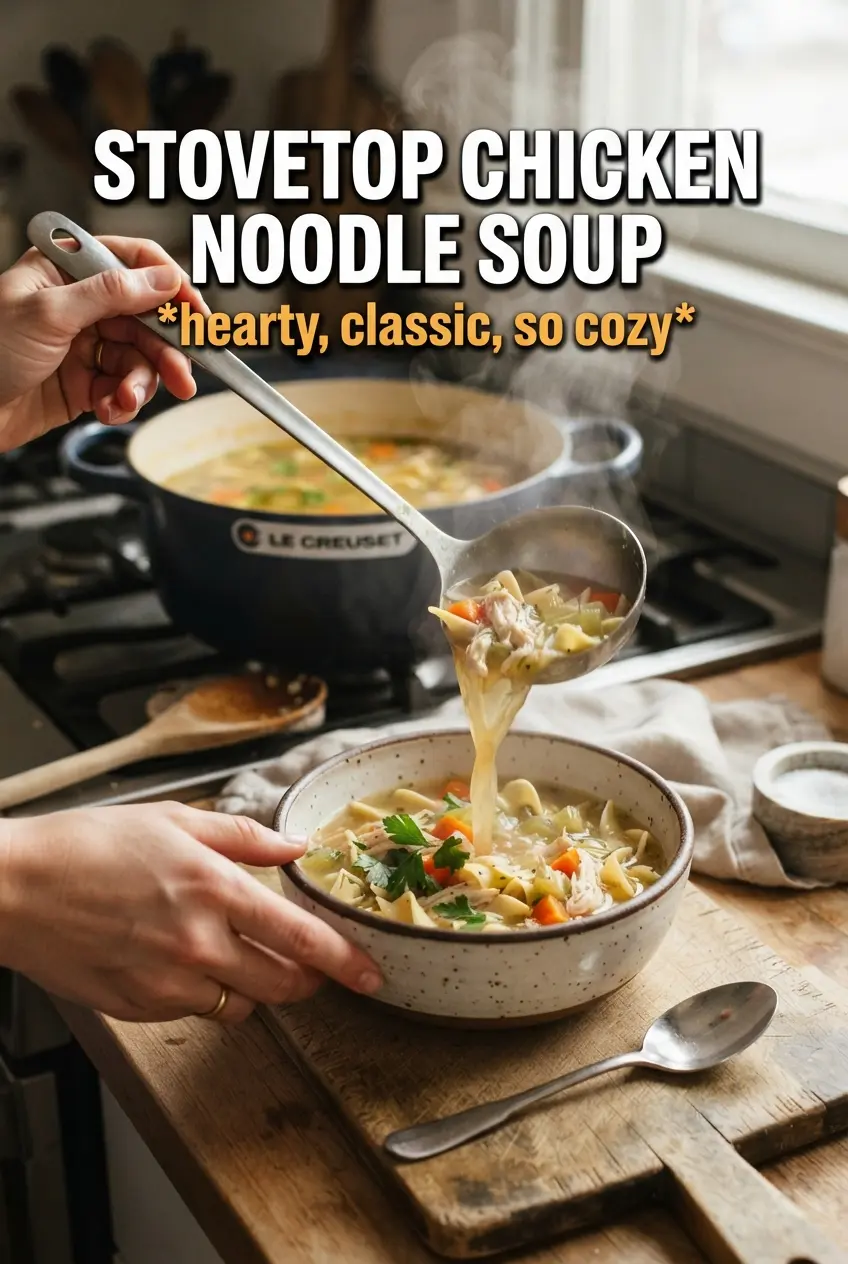
Stovetop Chicken Noodle Soup
Ingredients
Equipment
Method
- Heat olive oil in a large heavy-bottomed pot over medium heat, then sauté onion, carrots, and celery for 5 minutes until softened and fragrant.
- Add garlic and cook for 1 minute, stirring constantly, until fragrant but not browned.
- Add chicken broth, dried thyme, garlic powder, onion powder, and celery seed to the pot and stir to combine.
- Place whole chicken breasts into the pot and bring the soup to a boil.
- Reduce heat to a gentle simmer and cook for 18-20 minutes, until the chicken is fully cooked through and no longer pink in the center.
- Remove the chicken breasts from the pot and shred with two forks.
- Bring the soup back to a boil, then add egg noodles and cook for 6-8 minutes until tender.
- Return the shredded chicken to the pot and simmer briefly to warm through.
- Season generously with salt and pepper, then garnish with fresh parsley and serve hot.