Chicken noodle and wild rice soup lands in that sweet spot between hearty and comforting without turning heavy. The broth stays silky and golden, the wild rice gives it a little chew, and the egg noodles soften just enough to feel like a proper bowl of soup instead of a thin chicken stew. It’s the kind of pot that disappears fast because every spoonful has a little bit of everything.
The trick is building body in two ways: simmering the chicken right in the broth for flavor, then stirring in a quick roux so the finished soup feels creamy without tasting gluey. Wild rice needs a longer simmer than the noodles, so it goes in first with the vegetables. The noodles come at the end, once the broth has already picked up all that chicken and herb flavor, so they stay tender instead of mushy.
Below, I’ve included the small details that matter most, including how to keep the cream smooth and what to do if your wild rice blend takes a little longer than expected.
The roux made the broth turn silky instead of grainy, and the wild rice stayed pleasantly chewy even after reheating the next day.
Save this chicken noodle and wild rice soup for the nights when you want a creamy broth, tender chicken, and chewy wild rice in one pot.
The Reason This Soup Stays Creamy Instead of Thin and Watery
The broth needs structure before the cream goes in. If you dump cream into a weak, underdeveloped pot, it tastes flat and the soup reads as thin even when the ingredients are good. This version gets body from the starch in the wild rice, the flour-butter roux, and the noodles releasing just enough starch at the end to round everything out.
The most common mistake is rushing the wild rice. A wild rice blend needs time to open up and soften, and the chicken benefits from that same gentle simmer. Pull the chicken once it’s cooked through, shred it, and return it to the pot so it stays juicy instead of stringy. If the soup ever seems too loose at the end, give it five more minutes over low heat before you decide it needs more thickener.
What Each Ingredient Is Doing in the Pot
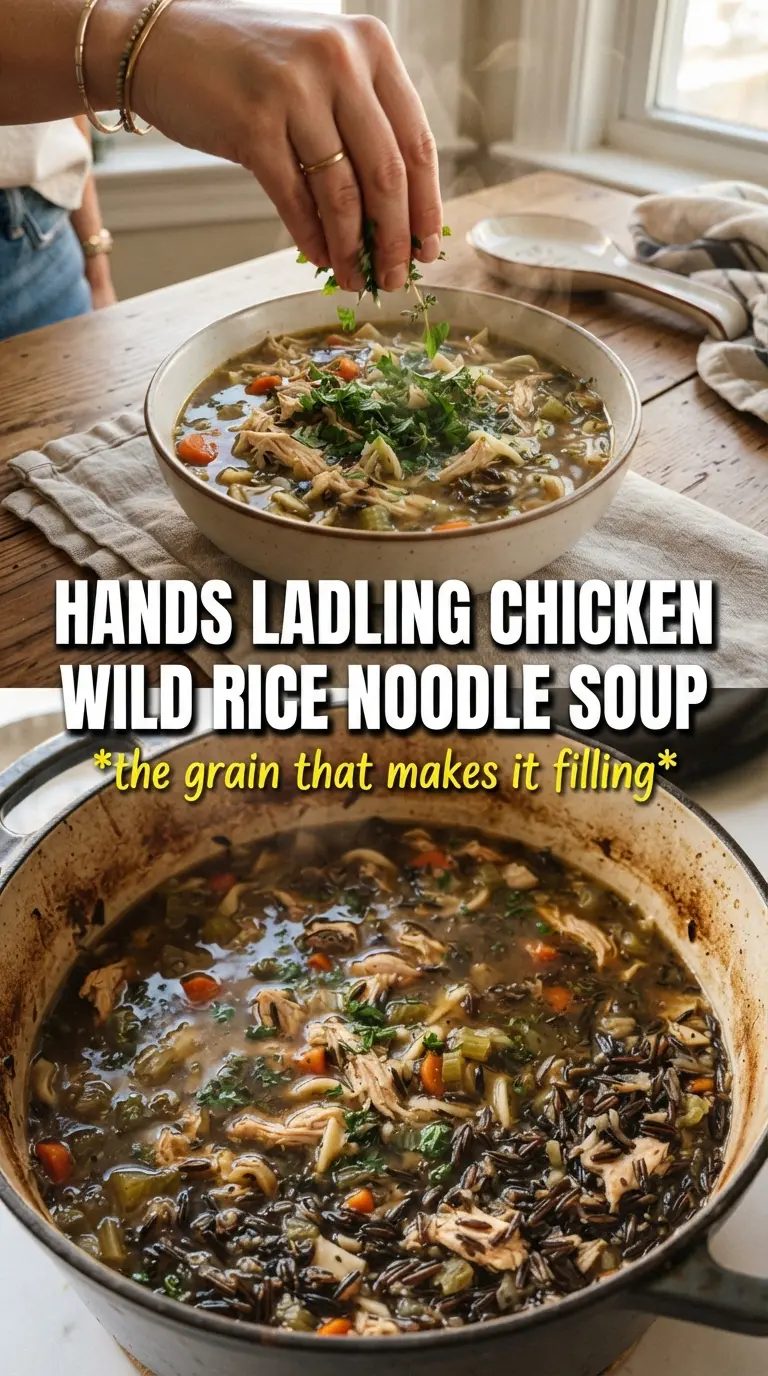
- Chicken breast — Simmering it directly in the broth keeps the meat tender and gives the soup a cleaner chicken flavor than pre-cooked chicken usually does. Thighs work too if you want a richer finish, and they’re a good swap if you don’t mind a slightly deeper, more savory result.
- Wild rice blend — This is what gives the soup its chew and makes it feel substantial. A blend is usually easier to find than pure wild rice and cooks a little more evenly, which matters in a soup that also has noodles. Don’t add it late; it needs that full simmer to soften.
- Butter and flour — Together they make the roux that gives the broth its body. That step matters more than people think because it keeps the cream from just floating on top of a thin base. Cook the flour for a minute or two so the soup doesn’t taste pasty.
- Heavy cream — This finishes the soup with a smooth, velvety texture. Half-and-half will work in a pinch, but the broth will be lighter and a little less stable. Add it after the roux is fully incorporated and keep the heat gentle so it stays smooth.
- Egg noodles — They soften fast and bring that classic chicken noodle comfort. Add them at the very end or they’ll swell and turn soft while the rest of the soup finishes. If you know you’ll have leftovers, cooking the noodles separately is the best way to protect the texture.
Building the Soup in the Right Order
Starting the Simmer with the Longest-Cooking Ingredients
Add the chicken, wild rice, carrots, celery, onion, garlic, thyme, parsley, and broth to the pot and bring it up to a gentle simmer. You want steady bubbles, not a hard boil, or the chicken can get tough and the broth can look cloudy in an unappealing way. After about 30 minutes, the chicken should be cooked through and the wild rice should be just shy of tender.
Shredding the Chicken Before It Gets Dry
Lift the chicken out onto a plate and shred it while it’s still hot enough to pull apart easily. If it looks a little underdone in the center, give it another few minutes in the broth before shredding. Return it to the pot right away so it finishes soaking up flavor instead of drying out on the counter.
Whisking the Roux Into a Smooth Base
Melt the butter in a small pan, whisk in the flour, and cook it for 1 to 2 minutes until it smells a little nutty and looks like a smooth paste. Then whisk in 1 cup of the hot broth slowly until it turns silky. If it turns lumpy, the heat was too high or the broth went in too fast; keep whisking off the heat until it smooths out, then stir it back into the soup.
Adding Cream and Noodles at the End
Stir in the heavy cream, then add the egg noodles and cook just until tender, usually 6 to 8 minutes. The soup should look creamy and cohesive, with noodles that still hold their shape. Taste at the end and season with salt and pepper only after the noodles have finished cooking, since they change how the broth tastes.
How to Change This Soup Without Losing the Comfort Factor
Make it dairy-free with a creamy finish
Swap the butter for olive oil or a plant-based butter and use canned coconut milk or an unsweetened dairy-free cream substitute instead of heavy cream. The soup will be a little less rich and the flavor will be slightly different, but the roux still helps the broth feel full and comforting.
Use chicken thighs for a deeper, richer broth
Thighs can replace the breast in a straight swap, and they stay tender even if the soup simmers a little longer than planned. The finished bowl will taste more savory and a little richer, which is a good move if you want a more old-fashioned chicken soup feel.
Make it gluten-free without losing body
Use a gluten-free flour blend for the roux and swap the egg noodles for a gluten-free noodle that holds up in broth. The texture will be slightly different, and some gluten-free noodles soften faster, so add them near the very end and stop cooking as soon as they’re tender.
Skip the noodles if you want a rice-forward bowl
Leaving out the noodles gives you a thicker, more stew-like soup with the wild rice as the main texture. If you do this, add a splash more broth at the end if needed, because the noodles normally absorb some of the liquid and their absence makes the soup feel denser.
Storage and Reheating
- Refrigerator: Store in an airtight container for up to 4 days. The noodles and rice will keep soaking up broth, so it gets thicker by the next day.
- Freezer: It freezes well without the noodles. For the best texture, freeze the soup before adding the egg noodles, then cook fresh noodles into the reheated soup.
- Reheating: Warm it gently on the stovetop over medium-low heat, adding a splash of broth or water if needed. Don’t boil it hard or the cream can separate and the noodles can turn too soft.
Answers to the Questions Worth Asking

Chicken Noodle and Wild Rice Soup
Ingredients
Equipment
Method
- Add chicken breast, wild rice blend, carrots, celery, onion, garlic, dried thyme, dried parsley, and chicken broth to a Dutch oven. Bring to a simmer over medium-high heat, then reduce to a steady simmer and cook for 30 minutes until the wild rice is nearly tender.
- Remove the chicken breast from the pot and shred it. Return the shredded chicken to the pot.
- Melt butter in a separate small pan over medium heat. Whisk in the flour and cook for 1-2 minutes, until it smells lightly toasty.
- Whisk in 1 cup of the hot broth until the roux is smooth. Stir the roux back into the pot until fully blended.
- Stir in the heavy cream and bring the soup back to a gentle simmer. Add egg noodles and cook for 6-8 minutes until tender.
- Season the soup with salt and pepper to taste. Stir well and simmer 1-2 minutes more if needed to fully bring the flavors together.