Clear, fragrant Chinese chicken noodle soup has a way of tasting like it simmered all day, even when it’s on the table in under an hour. The broth stays light but still tastes deep, the chicken turns tender instead of stringy, and the noodles keep their bite instead of going limp in the pot.
What makes this version work is the order. Ginger and garlic bloom in the hot broth first, which gives the soup backbone before the chicken goes in. The noodles are cooked separately, so they don’t soak up all the broth and turn soft by the time you serve it. A little sesame oil, rice vinegar, and white pepper at the end keeps the flavor clean and balanced.
Below, I’ve included the little details that matter most: when to add the bok choy so it stays bright, how to keep the broth from tasting flat, and the best way to serve it if you want every bowl to taste fresh.
The broth had that clean, savory taste I was hoping for, and keeping the noodles separate meant they stayed springy in every bowl. My husband kept going back for more of the ginger and sesame flavor.
Save this Chinese chicken noodle soup for the nights when you want a clear, gingery broth with springy noodles and tender chicken.
The Part That Keeps the Broth Clear, Not Cloudy
The broth stays clean because the noodles never cook in it. Once starch hits the pot, the soup turns murky and heavier, and the noodles keep drinking liquid until they’re bloated. Cooking them separately gives you a clearer broth and a better texture in the bowl.
The other thing that matters is gentle simmering. If the broth is boiling hard when the chicken goes in, the meat tightens up fast and loses that soft bite you want in soup. Keep the heat at a steady simmer and let the chicken cook through without thrashing around in the pot.
- Chicken breast — Thin slices cook quickly and stay tender. If you cut them too thick, the outside overcooks before the center is done.
- Shiitake mushrooms — They bring a deeper, woodsy flavor than button mushrooms. Thin slices release their flavor into the broth without turning the soup muddy.
- White pepper — This gives the soup that classic Chinese takeout-style finish. Black pepper works in a pinch, but it changes the look and the flavor.
What Each Ingredient Is Actually Doing in the Bowl
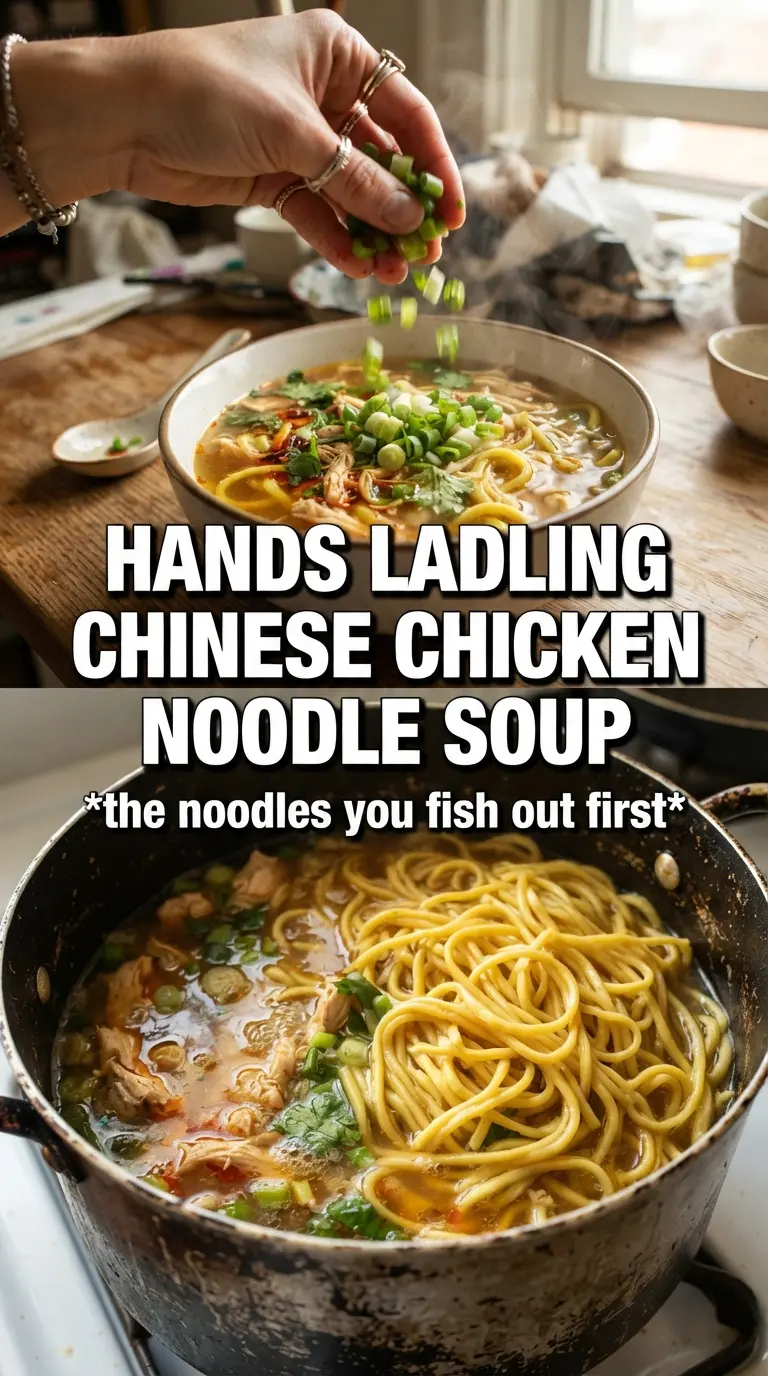
- Thin Chinese wheat noodles or rice noodles — Either one works, but thin wheat noodles give more chew while rice noodles keep the soup lighter. Cook them just to tender, because they soften a little more once the broth hits the bowl.
- Chicken broth — This is the base of the whole soup, so use one that tastes good on its own. If yours is low-sodium, you’ll have more control when you season at the end.
- Sesame oil and rice vinegar — Sesame oil adds nuttiness, and rice vinegar keeps the broth from tasting flat. Add them early enough to blend, but save the final adjustment for the end so the flavor stays bright.
- Bok choy — It only needs a few minutes. Longer than that and it turns drab and soft, which makes the soup feel tired instead of fresh.
Building the Soup So Every Bowl Stays Bright
Starting the Aromatics in the Broth
Bring the broth to a steady simmer before the garlic and ginger go in. That gives the aromatics enough heat to open up without scorching, and the soup picks up flavor fast. Stir them around for the full 5 minutes so the broth tastes fragrant, not raw.
Cooking the Chicken Without Toughening It
Add the sliced chicken and mushrooms directly to the simmering broth. The chicken should turn opaque and just cooked through in about 10 to 12 minutes; if the broth is boiling hard, it will tighten and go dry at the edges. The mushrooms should soften and darken, and the broth will pick up some of their color and savoriness.
Keeping the Noodles Separate
Cook the noodles in a second pot according to the package directions, then drain them well and divide them into bowls. This is the step that keeps leftovers from turning gluey. If you drop them straight into the soup, they’ll keep absorbing liquid and steal the broth from the bowls sitting on the table.
Finishing With the Greens and Garnish
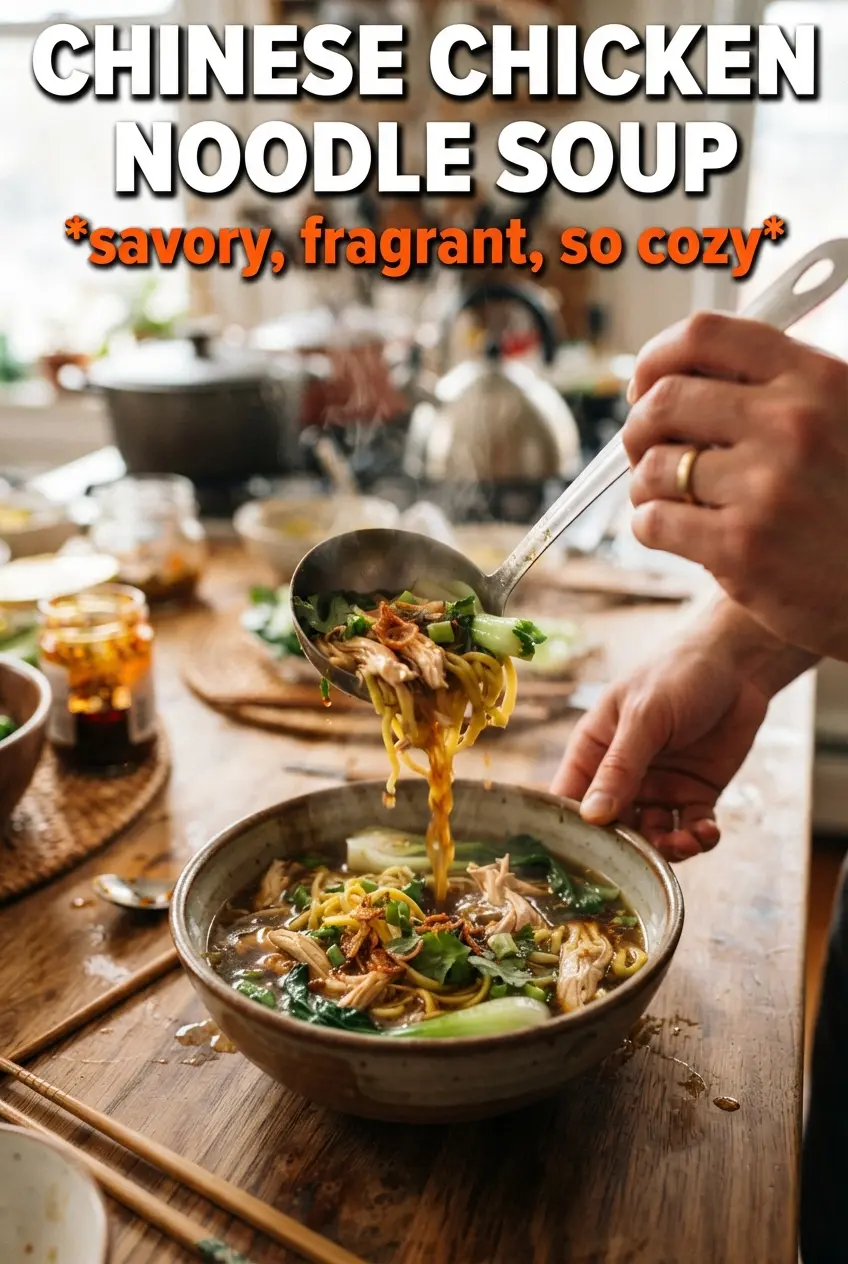
Stir the bok choy into the broth at the very end and cook just until wilted, about 3 minutes. Ladle the soup over the noodles, then finish with white pepper, salt, green onions, cilantro, and a drizzle of chili oil. The last drizzle matters; it gives the top of the soup a little heat and aroma right before serving.
How to Adapt This for Different Pans, Diets, and Leftovers
Use rice noodles for a gluten-free bowl
Rice noodles keep this soup naturally gluten-free as long as your broth and soy sauce are certified gluten-free. They soften faster than wheat noodles, so cook them carefully and serve right away for the best texture.
Make it with chicken thighs for richer broth
Boneless chicken thighs stay a little juicier and give the soup a fuller taste. They take about the same time to cook in thin slices, but the broth will taste a touch richer and less lean.
Swap in napa cabbage when bok choy is unavailable
Napa cabbage softens more than bok choy and gives the soup a sweeter, gentler finish. Slice it thin and add it a minute or two earlier so it has time to wilt without staying crunchy.
Storage and Reheating
- Refrigerator: Store the broth, chicken, and vegetables for up to 4 days. Keep the noodles separate so they don’t soak up the soup overnight.
- Freezer: The broth and chicken freeze well for up to 3 months, but the noodles and bok choy don’t hold up well after thawing. Freeze the soup base on its own and add fresh noodles when you reheat it.
- Reheating: Warm the broth gently on the stove until steaming, not boiling. Add the noodles at the very end or place them in each bowl before ladling in the hot soup, or they’ll go soft fast.
Answers to the Questions Worth Asking
Chinese Chicken Noodle Soup
Ingredients
Equipment
Method
- Bring the chicken broth to a simmer in a large pot over medium-high heat, then add the minced garlic and grated ginger. Cook for 5 minutes, simmering gently until the broth is fragrant.
- Stir in the soy sauce, sesame oil, and rice vinegar. Simmer 1 minute, then adjust the flavor to taste so the broth has a balanced salty-sour aroma.
- Add the sliced chicken and sliced shiitake mushrooms to the simmering broth. Simmer for 10-12 minutes until the chicken is cooked through and the mushrooms are tender.
- Cook the thin Chinese wheat noodles or rice noodles separately according to the package directions. Drain and divide the noodles into bowls so they stay springy and not overcooked.
- Add the chopped bok choy to the broth and simmer for 3 minutes. Cook just until the bok choy is wilted and bright green.
- Ladle the hot soup over the drained noodles in each bowl. Season with white pepper and salt to taste for a clean, savory finish.
- Garnish each bowl with the sliced green onions, cilantro, and a drizzle of chili oil. Serve immediately while the broth is steaming.