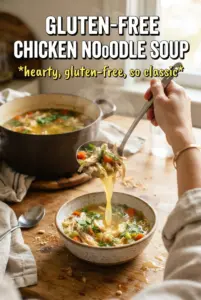
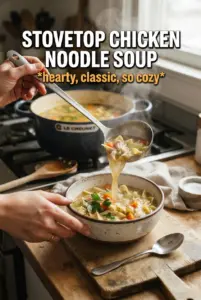
Gluten-free chicken noodle soup should still taste like the bowl you remember: clear golden broth, tender chicken, soft carrots and celery, and noodles that hold their shape instead of turning to mush. The best versions don’t announce themselves as gluten-free first. They just land with that familiar cozy broth-and-noodle comfort, finished with enough parsley and black pepper to keep every spoonful lively.
The trick is choosing a gluten-free pasta that can handle a little simmering without breaking apart. Brown rice rotini and gluten-free egg noodles both work well, but they need watching toward the end because they go from done to overcooked fast. A certified gluten-free broth matters here too, since that’s where most of the flavor lives; if the broth tastes thin, the whole soup will taste thin.
Below, I’ve included the small details that keep the noodles intact, the broth clean-tasting, and the chicken tender. There’s also a simple storage note for making a batch ahead without ending up with swollen noodles the next day.
The broth stayed clear, the chicken shredded right in the pot, and the gluten-free noodles held up for dinner without getting gummy. My kids didn’t even notice it was gluten-free.
Save this gluten-free chicken noodle soup for a clear, comforting bowl with tender chicken and noodles that stay intact.
The Part That Keeps Gluten-Free Noodles From Turning to Mush
The broth can simmer for the chicken, but the noodles should never be left to guess. Gluten-free pasta keeps cooking after you turn off the heat, and it softens faster than wheat pasta, especially in a hot broth. That’s why this soup works best when the chicken cooks first, gets shredded, and the pasta goes in at the very end.
If you’ve had gluten-free noodle soup turn thick and pasty after ten minutes, the pasta was probably added too early or left in the pot too long. Cook it just until tender, then move the pot off the heat if you’re not serving right away. The broth stays cleaner, and the noodles hold their shape instead of shedding starch into the soup.
- Chicken breast — Lean chicken breast cooks quickly in the broth and shreds neatly. Thighs work too if you want a richer finish, but they’ll make the soup a little darker and heavier.
- Certified gluten-free broth — This is the backbone of the soup, so buy one that tastes good on its own. If you use boxed broth that tastes flat, add a pinch more salt at the end rather than trying to fix it with extra herbs.
- Gluten-free pasta — Brown rice rotini, GF egg noodles, or rice noodles all work, but each has a different timing window. Keep the package nearby and start checking a minute or two before the suggested time.
- Carrots, celery, and onion — These build the classic soup base and give the broth sweetness and body. Dice the onion and slice the vegetables evenly so they soften at the same pace.
What Each Ingredient Is Actually Doing in This Recipe
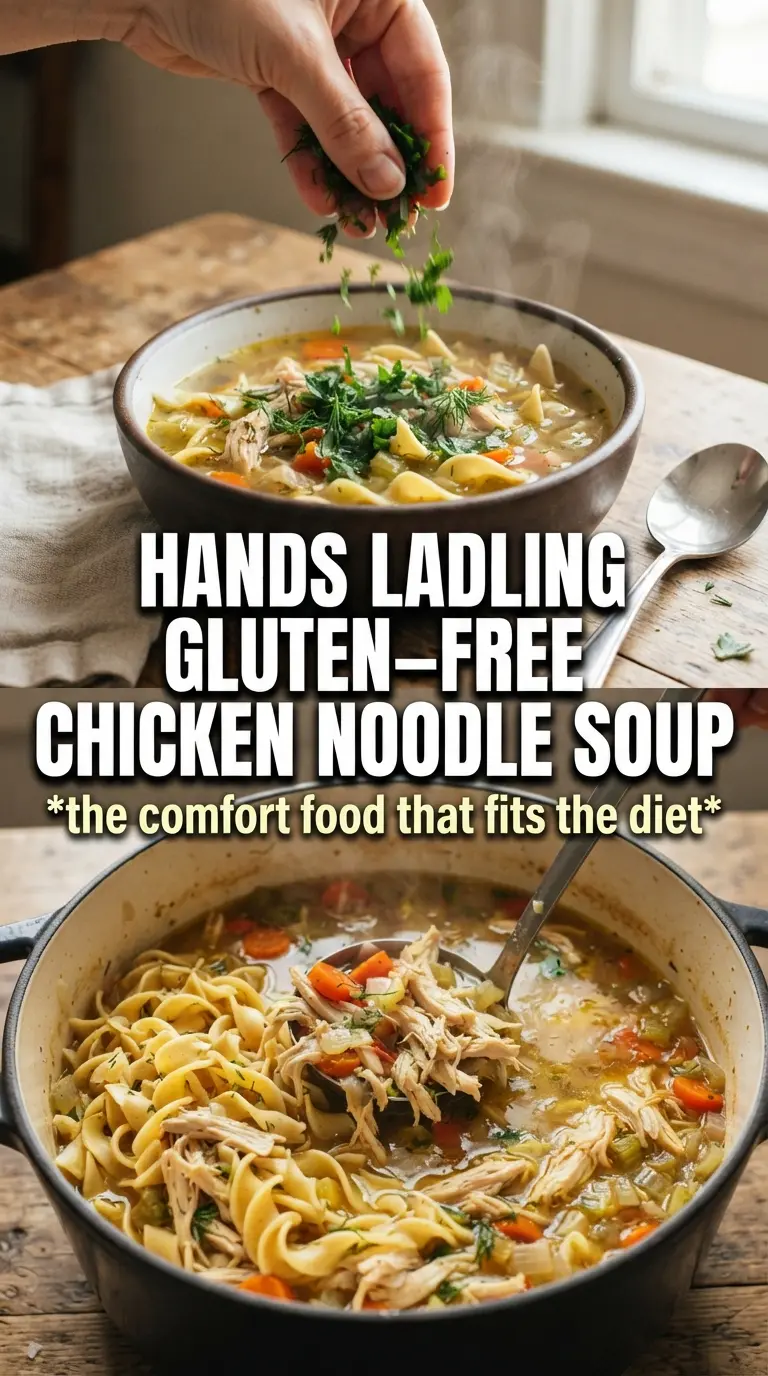
- Primary ingredient (the star) — Quality matters most. Choose the best you can find.
- Cooking medium (oil, butter, or broth) — This carries flavors and prevents dryness.
- Seasonings (salt, pepper, spices, herbs) — Layer flavors so nothing overpowers. Build depth gradually.
- Aromatics (garlic, onion, herbs) — Cook with fat to bloom flavors. Become the foundation.
- Supporting ingredients — Complement the main ingredient without overpowering it.
- Sauce or liquid (if applicable) — Brings flavors together. Balance richness with acid.
- Acid (lemon, vinegar, wine, or other) — Brightens and prevents flat-tasting results.
- Final finish (garnish, glaze, or sauce) — Prevents one-dimensional taste and adds visual appeal.
Building the Broth, Shredding the Chicken, and Adding the Noodles at the Right Time
Softening the Vegetables First
Start by cooking the onion, carrots, and celery in olive oil until the onion turns translucent and the carrots just begin to lose their raw edge. That first sauté gives the broth a deeper, sweeter base than dumping everything into the pot at once. If the vegetables brown hard, the soup can taste a little harsh, so keep the heat at medium and stir often.
Simmering the Chicken in the Broth
Add the garlic for just a minute, then pour in the broth and herbs before the chicken goes in. The soup should come up to a boil, then settle into a steady simmer, not a rolling one; hard boiling can tighten the chicken and cloud the broth. Cook until the chicken reaches 165°F and pulls apart easily in the center.
Shredding Before the Final Finish
Take the chicken out once it’s cooked through and shred it while it’s still hot enough to fall apart cleanly. If it sits too long, the fibers tighten and the shreds get stringy instead of tender. Return it to the pot before the noodles go in so every strand gets coated in broth.
Cooking the Gluten-Free Pasta Last
Add the pasta only after the chicken is back in the pot. Watch it closely and test early, because gluten-free noodles can go from pleasantly tender to bloated and fragile in a narrow window. When they’re just tender, season generously with salt and pepper, then finish with fresh parsley right before serving.
How to Adapt This Soup When You Need a Different Noodle or a Bigger Batch
Dairy-Free and Gluten-Free as Written
This soup is naturally dairy-free if you use a certified gluten-free broth and skip any butter-based finishing. The texture stays light and brothy, which is what keeps it tasting like classic chicken noodle soup instead of a creamy variation.
Using Rotisserie Chicken Instead of Cooking Raw Chicken
Shred about 3 to 4 cups of cooked rotisserie chicken and add it after the broth has simmered with the vegetables. Since the chicken is already cooked, it only needs a few minutes in the hot soup to warm through, which keeps it from drying out.
Making It with Rice Noodles
Rice noodles cook fast and keep the soup very light, but they soften faster than gluten-free egg noodles or rotini. Add them at the very end and serve right away, or they’ll keep absorbing broth and turn too soft.
Storage and Reheating
- Refrigerator: Store for up to 4 days. The noodles will keep soaking up broth, so the soup thickens a bit each day.
- Freezer: Freeze the soup without the noodles for the best texture. Gluten-free pasta gets soft after thawing, so add a fresh batch when you reheat.
- Reheating: Warm gently on the stove over medium-low heat. If you boil it hard, the chicken can dry out and the noodles can break apart, especially if they’ve already sat in the broth overnight.
Answers to the Questions Worth Asking
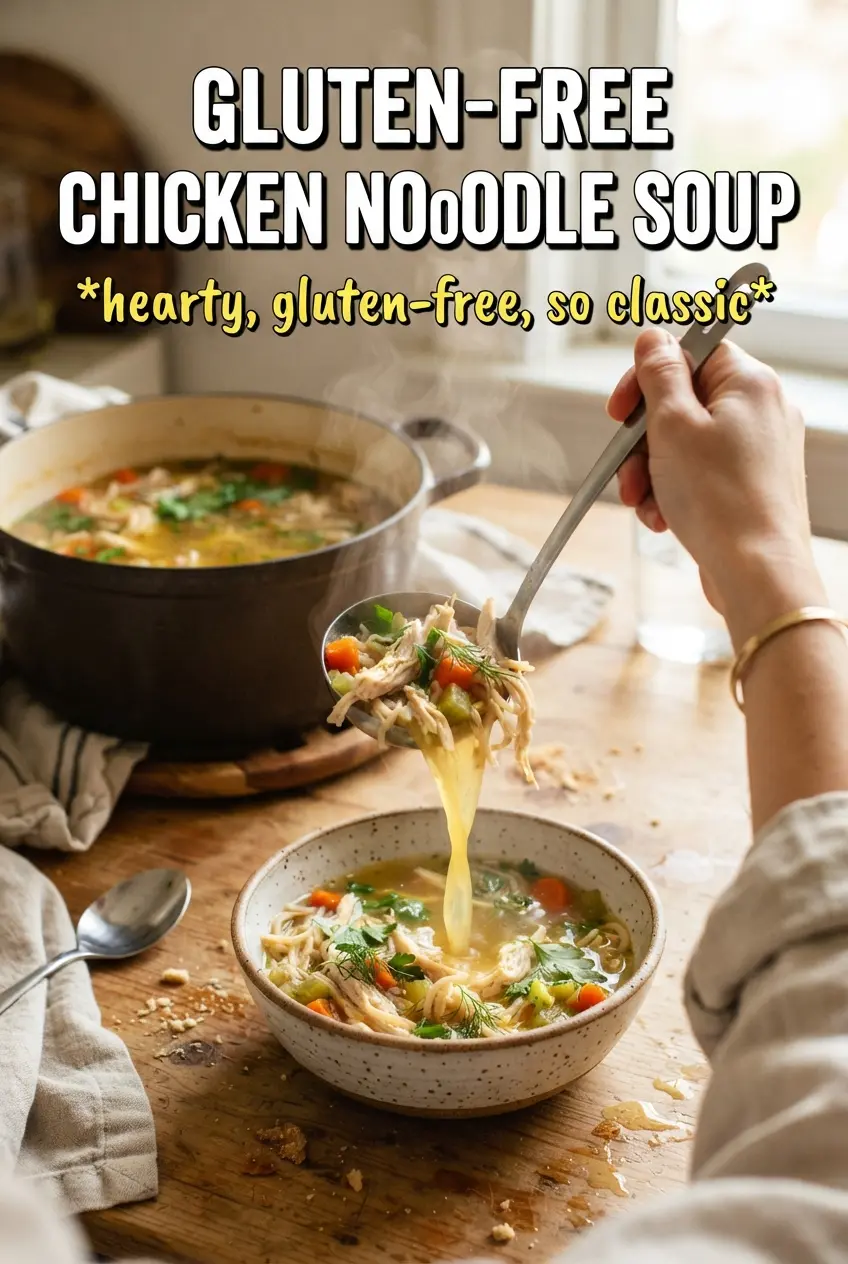
Gluten-Free Chicken Noodle Soup
Ingredients
Equipment
Method
- Heat olive oil in a large Dutch oven over medium heat. Sauté onion, carrots, and celery for 5 minutes, stirring until the onion looks slightly softened and the vegetables start to smell fragrant.
- Add garlic and cook for 1 minute, stirring constantly until fragrant. Add certified GF chicken broth, dried thyme, dried parsley, garlic powder, and chicken, then bring the pot to a boil.
- Once boiling, reduce to a steady simmer and cook for 18-20 minutes until the chicken is cooked through. You should see gentle bubbles and the chicken should shred easily when tested.
- Remove the chicken from the pot and shred it, then return the shredded chicken to the broth. Stir to distribute the chicken evenly, keeping the soup at a light simmer.
- Add the gluten-free pasta and cook according to package instructions, checking frequently since GF pasta can overcook. Stir occasionally and stop cooking when the noodles are tender but not mushy.
- Season generously with salt and pepper to taste. Stir well and taste once more for balance before serving.
- Garnish with fresh parsley and serve hot. Finish with a visible sprinkle of green so it looks classic in the bowl.