Slow Cooker Beef Stroganoff Stew settles into that sweet spot between comfort food and practical weeknight cooking: tender beef, earthy mushrooms, and a creamy sauce that clings to egg noodles instead of sliding off them. It tastes like the stovetop version everyone loves, but the slow cooker does the long, patient work so the beef turns spoon-tender without babysitting.
The key is building the flavor before the dairy goes in. Beef chuck needs hours to soften, and mushrooms release enough moisture to help make a rich broth as they cook down with onion, garlic, Dijon, Worcestershire, and smoked paprika. The sour cream and cream cheese go in at the end for a reason. Heat them too hard and the sauce can turn grainy or split; stirred in off the heat, they melt into a smooth, tangy finish.
Below, I’ve included the small technique details that matter most, plus the swaps that keep this stew working even if you need to adjust for what’s in the fridge.
The beef came out fall-apart tender and the sauce thickened up beautifully after the slurry went in. I was nervous about adding the sour cream, but stirring it in at the end kept everything smooth and the flavor was perfect over egg noodles.
Save this slow cooker beef stroganoff stew for the kind of dinner that turns chuck roast into a creamy, noodle-ready meal with almost no hands-on time.
The Reason This Stew Stays Creamy Instead of Turning Grainy
Stroganoff breaks when the dairy gets treated like part of the long braise. Sour cream and cream cheese want low heat and a gentle hand. If they boil, the texture turns loose and speckled instead of smooth and velvety.
The other piece people miss is how much flavor the mushrooms and onions add while they cook down with the beef. Cremini mushrooms bring a deeper, meatier base than white button mushrooms, and they also help stretch the sauce so it tastes fuller without needing extra cream. The cornstarch slurry at the end is what gives this stew that spoon-coating consistency without muddying the flavor during the long cook.
- Beef chuck — This cut has the fat and connective tissue that turn soft during a long cook. Leaner stew meat can work in a pinch, but it won’t give you the same silky, shreddable texture.
- Cremini mushrooms — They hold their shape better than button mushrooms and taste a little more savory. Slice them thick so they don’t disappear after hours in the slow cooker.
- Dijon mustard and Worcestershire sauce — These are the quiet backbone of the sauce. Dijon adds sharpness, and Worcestershire adds depth; both matter more here than they would in a simpler soup.
- Sour cream and cream cheese — Use full-fat here if you can. Lower-fat versions are more likely to curdle and they don’t melt into the same smooth finish.
What Each Ingredient Is Actually Doing in This Recipe
- Primary ingredient (the star) — Quality matters most. Choose the best you can find.
- Cooking medium (oil, butter, or broth) — This carries flavors and prevents dryness.
- Seasonings (salt, pepper, spices, herbs) — Layer flavors so nothing overpowers. Build depth gradually.
- Aromatics (garlic, onion, herbs) — Cook with fat to bloom flavors. Become the foundation.
- Supporting ingredients — Complement the main ingredient without overpowering it.
- Sauce or liquid (if applicable) — Brings flavors together. Balance richness with acid.
- Acid (lemon, vinegar, wine, or other) — Brightens and prevents flat-tasting results.
- Final finish (garnish, glaze, or sauce) — Prevents one-dimensional taste and adds visual appeal.
Building the Sauce in the Right Order
Seasoning the Beef Before It Goes In
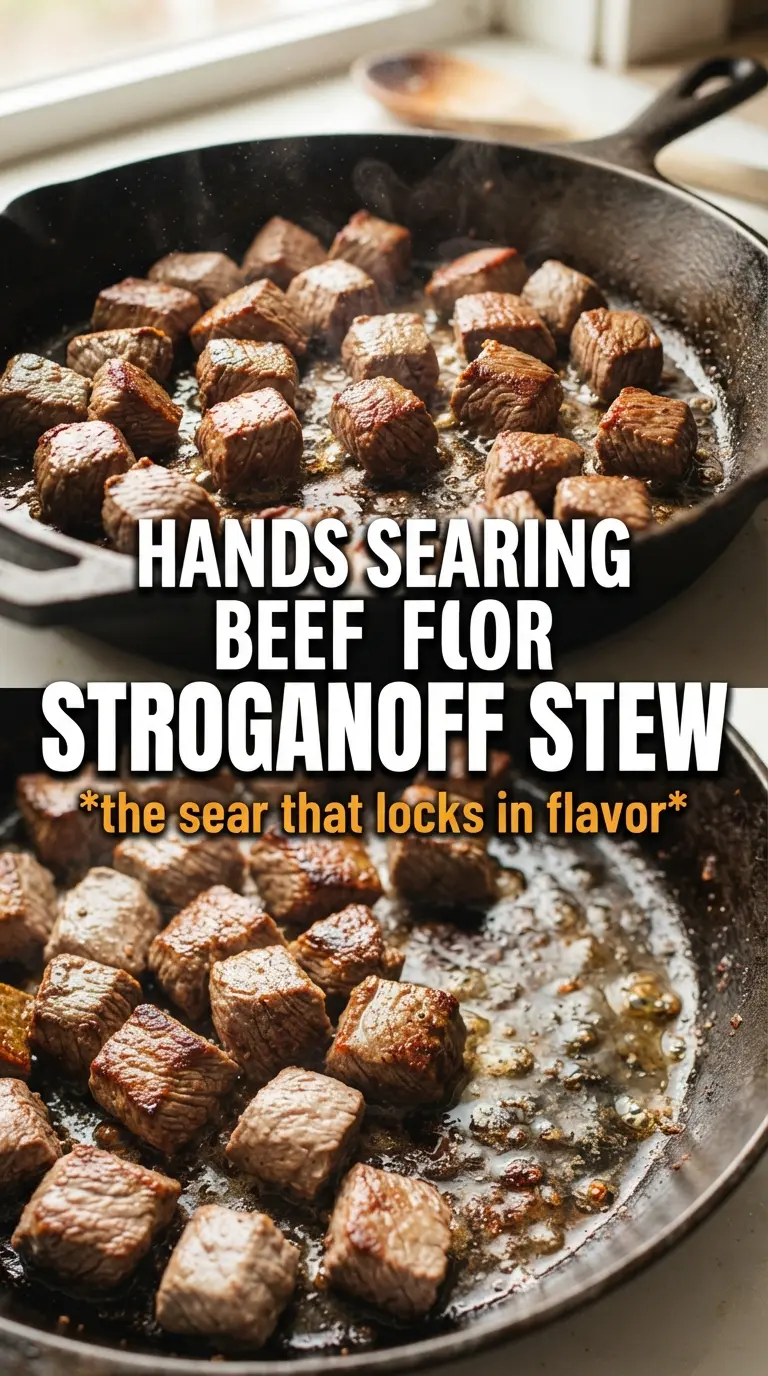
Salt and pepper the beef before it enters the slow cooker so the meat itself tastes seasoned, not just the sauce around it. Once everything cooks together, the beef should still have its own flavor instead of tasting boiled. The best cue is simple: every cube should be evenly coated, not drowning in seasoning.
Letting the Slow Cooker Do the Long Work
Add the beef, mushrooms, onion, garlic, broth, Worcestershire, Dijon, paprika, and thyme all at once, then leave it alone. The onions soften into the broth, the mushrooms give up liquid, and the beef slowly relaxes into tenderness. If you lift the lid too often, you lose heat and add time to the cook.
Thickening Before the Dairy
When the beef is tender, stir in the cornstarch slurry and cook on High for about 20 minutes until the sauce turns glossy and lightly coats the back of a spoon. If you add the dairy before this step, you risk thinning the sauce back down or stressing the cream. A properly thickened base looks a little loose at first but tightens as it heats.
Finishing Off the Heat
Stir in the sour cream and cubed cream cheese at the end until the sauce looks smooth and creamy. If the cream cheese is cold from the fridge, cube it small so it melts faster and doesn’t leave little lumps behind. Taste at the very end and adjust salt and pepper after the sauce comes together, because the dairy softens the seasoning.
How to Adapt It Without Losing the Comfort Food Feel
Make It Gluten-Free
This stew is already close to gluten-free, but check your Worcestershire sauce because some brands contain malt vinegar or other gluten ingredients. Serve it over gluten-free noodles, mashed potatoes, or rice and the texture still works beautifully because the sauce is naturally rich and sturdy.
Use Greek Yogurt Instead of Sour Cream
Plain full-fat Greek yogurt can stand in for the sour cream if that’s what you have. Stir it in at the very end with the heat turned low or off, and expect a slightly tangier finish with a less classic stroganoff richness.
Swap in Beef Tips or Stew Meat
Any well-marbled beef cut for braising will work, but the cubes need to be similar in size so they finish at the same time. If the pieces are larger or tougher than chuck, lean on the full 8 hours on Low and don’t rush the tenderizing stage.
Make It Dairy-Free
Use a dairy-free sour cream and a plain dairy-free cream cheese with a neutral flavor. The sauce will still thicken and feel creamy, but it will taste a little brighter and less rounded than the original.
Storage and Reheating
- Refrigerator: Store leftovers in an airtight container for up to 4 days. The sauce thickens as it chills, so it may look heavier the next day.
- Freezer: It freezes, but the dairy can separate a little on thawing. For the best texture, freeze the beef and sauce before adding sour cream and cream cheese, then stir those in after reheating.
- Reheating: Warm gently on the stove or in the microwave at reduced power, adding a splash of broth if needed. High heat can make the dairy split and turn the sauce oily.
Questions I Get Asked About This Recipe
Slow Cooker Beef Stroganoff Stew
Ingredients
Equipment
Method
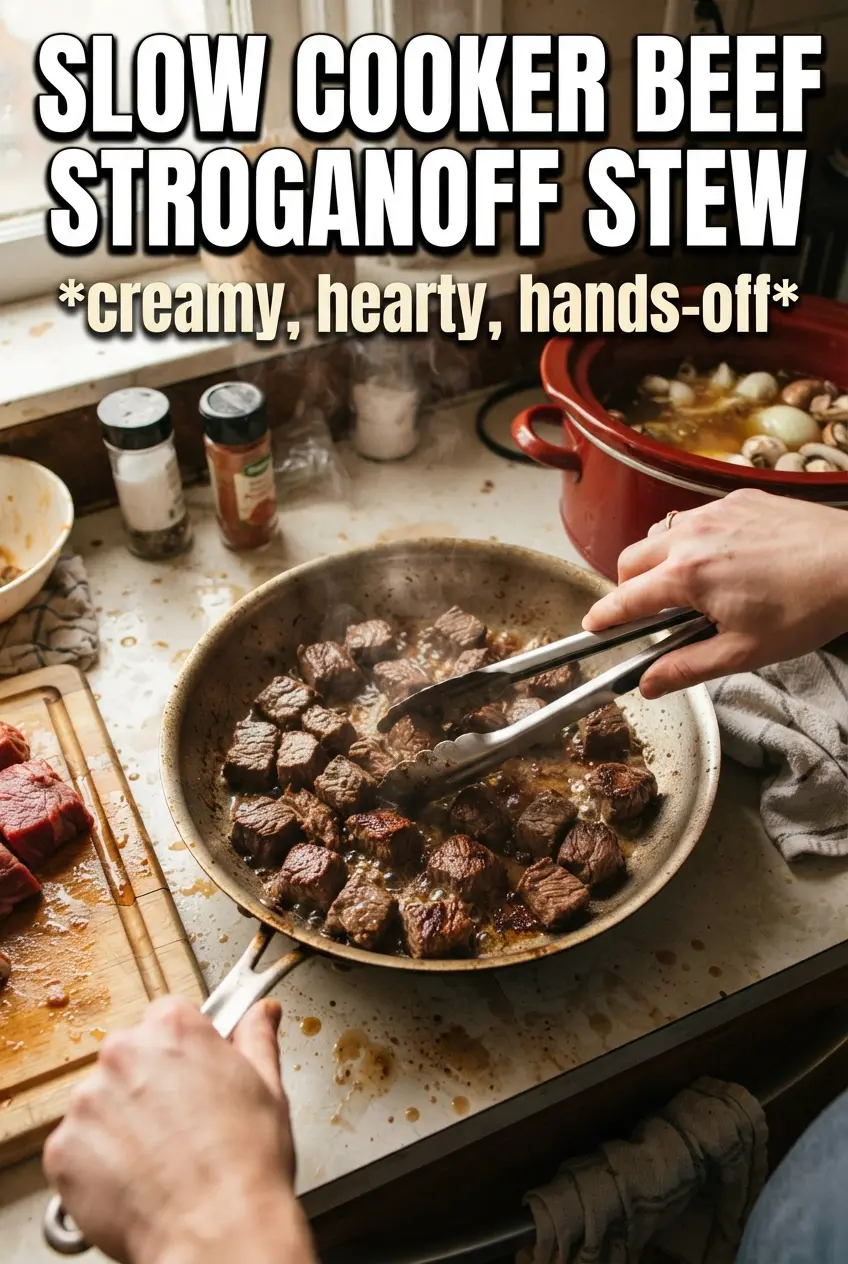
- Season the beef chuck cubes with salt and pepper, then place them in the slow cooker with the mushrooms, onion, garlic, beef broth, Worcestershire sauce, Dijon mustard, smoked paprika, and dried thyme. Make sure the beef is distributed so it cooks evenly, visible under the liquid.
- Cook on Low for 7-8 hours until the beef is very tender, or on High for 4-5 hours, keeping the lid on to maintain heat. The beef should break apart when pressed with a spoon.
- Stir cornstarch slurry (cornstarch mixed with water) into the slow cooker. Increase to High and cook for 20 minutes until the sauce visibly thickens and clings to the back of a spoon.
- Stir in the sour cream and cream cheese until melted, then season again with salt and pepper. The sauce should turn smooth and creamy with no visible cream cheese lumps.
- Serve the stroganoff stew over egg noodles and top with fresh parsley. The sauce should fully coat the noodles, with green parsley visible on top.