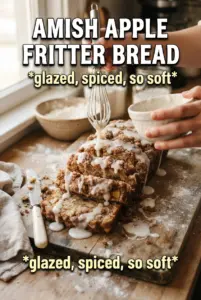
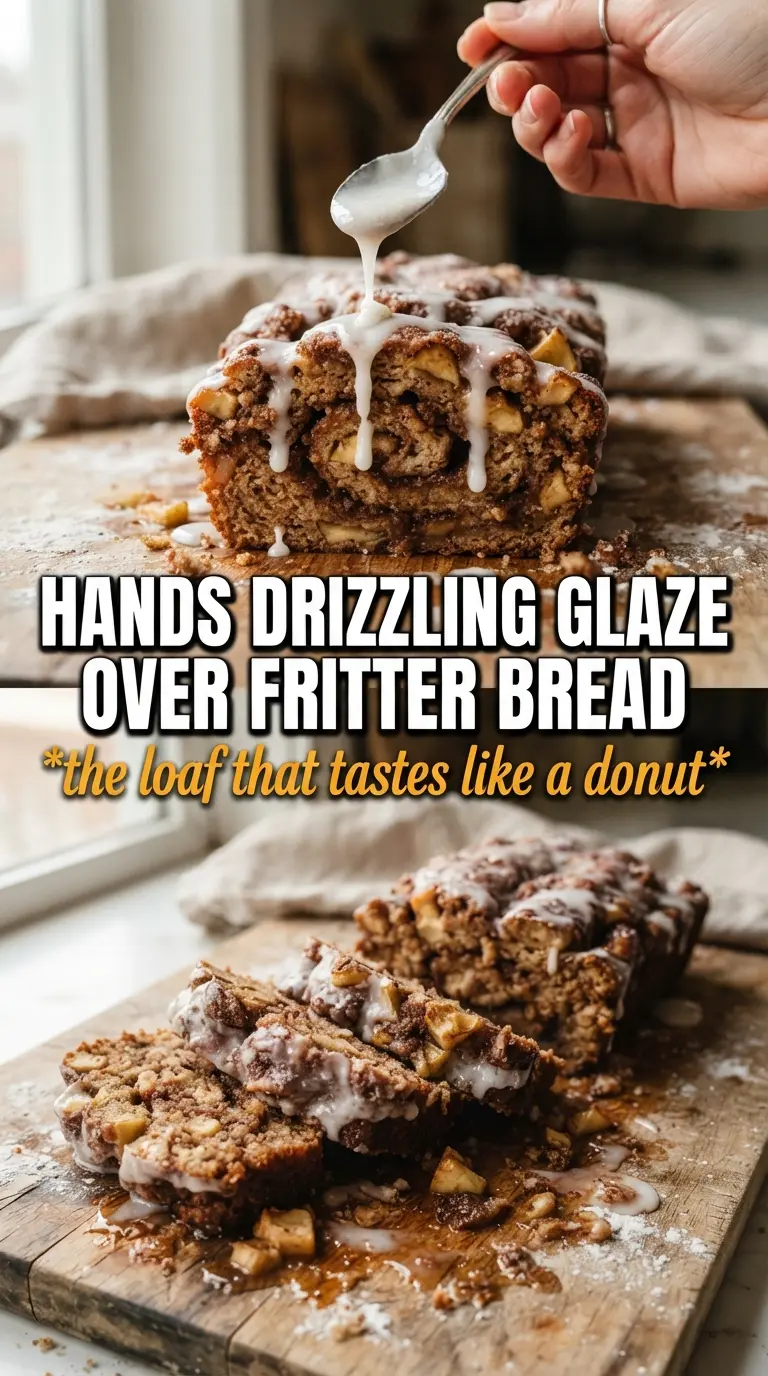
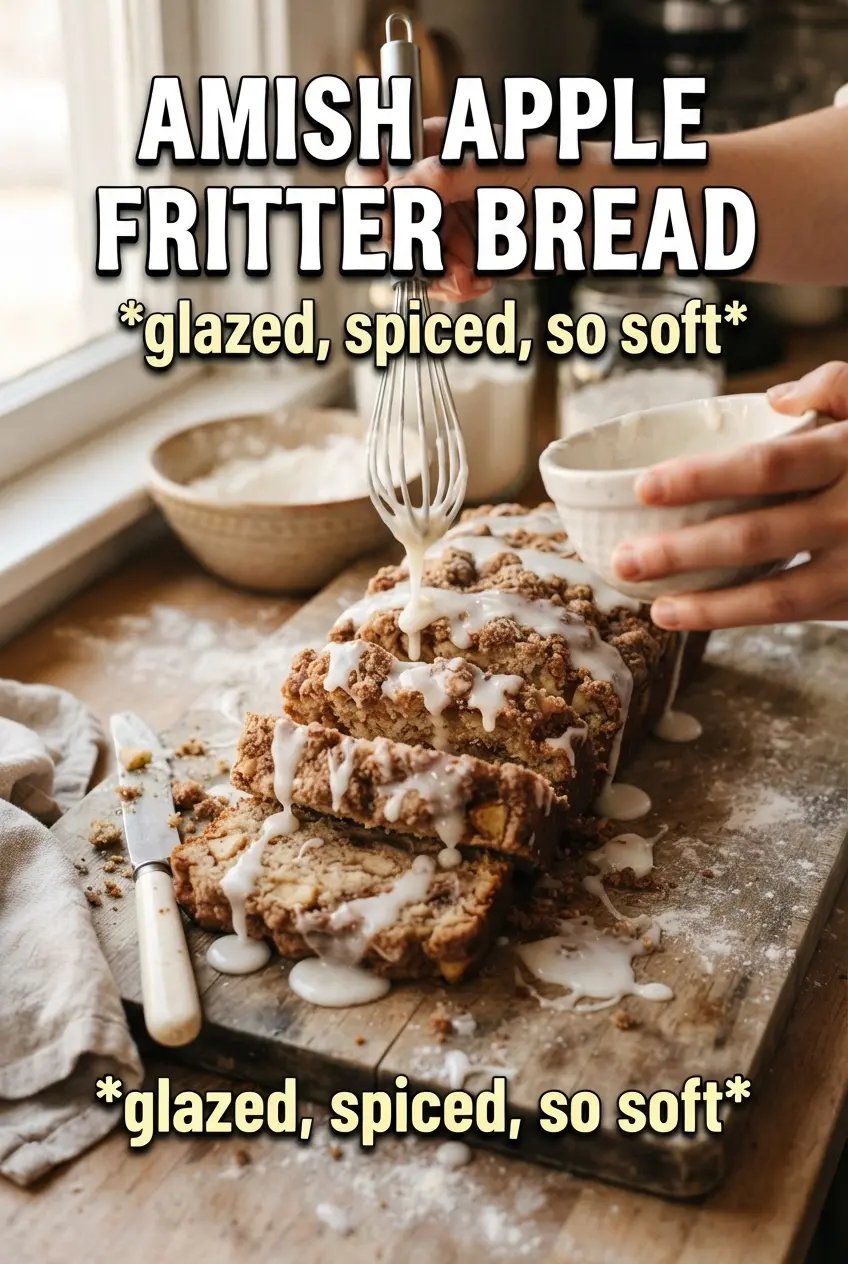
Amish apple fritter bread bakes up with a tender, cake-like crumb, sweet cinnamon apples in every slice, and a crackly brown sugar layer that gives each piece that unmistakable fritter feel. The best part is the contrast: soft loaf, caramelized pockets of apple, and a thin glaze that soaks into the top without making it soggy.
What makes this version work is the layering. Some of the apples get tossed with cinnamon sugar first, which pulls out just enough juice to keep the fruit flavorful without turning the batter wet. The butter and sugar get beaten until light before the eggs go in, which gives the loaf lift and keeps the texture from landing dense. The dry ingredients and milk are added alternately so the batter stays smooth and the crumb stays tender.
Below, I’ve included the small details that matter most: how to keep the apples from sinking, what the glaze should look like when it goes on, and the easiest swaps if you want to use a different apple or make it dairy-free.
The cinnamon-sugar apples stayed right in the loaf instead of sinking, and the glaze set up with that perfect sticky finish on top. I had a slice warm from the pan and it tasted like a bakery apple fritter without the frying mess.
Love the cinnamon-sugar swirl and tender crumb in this Amish apple fritter bread? Save it to Pinterest for the next time you want a glazed apple loaf that tastes like a bakery fritter.
The Layering Trick That Keeps the Apples From Disappearing
This loaf looks simple, but the order of the batter and apples matters more than people expect. If you stir all the apples into the batter at once, the pieces can sink and the sugar coating dissolves into the loaf instead of creating those caramel-like pockets on top and in the middle. Layering half the batter, then half the apples, then the cinnamon sugar, then repeating the pattern keeps the fruit distributed and gives you the same kind of sweet streaks you’d expect from a good fritter.
The other thing that saves this bread is the batter’s thickness. It should be scoopable, not pour-thin. That thicker base helps suspend the apples and keeps the loaf from collapsing around the fruit as it bakes.
- Brown sugar and cinnamon — This is the flavor engine. The brown sugar melts into the apples as they bake and gives you that sticky fritter-style layer. Don’t swap in white sugar here if you want the same depth.
- Apples — Peel and dice them small so they soften evenly and don’t tear through the loaf. A firm baking apple holds its shape better than a mealy one.
- Butter — Softened butter beaten with sugar adds air and tenderness. Cold butter won’t cream properly, and melted butter changes the texture into something heavier.
- Milk — Whole milk keeps the crumb soft without thinning the batter too much. Lower-fat milk works, but the loaf won’t taste as rich.
What Each Ingredient Is Actually Doing in This Loaf
Flour, baking powder, and baking soda work together to give the loaf lift without making it cakey in a dry way. The baking powder handles the rise, while the baking soda reacts with the brown sugar and helps the crumb brown and stay tender. If you use old leaveners, the loaf can bake up flat and a little heavy in the center.
- All-purpose flour — This gives enough structure to hold the apple layers without turning gummy. Cake flour makes the loaf too fragile.
- Eggs — They bind the batter and set the crumb as it bakes. Room-temperature eggs mix in more smoothly and help the batter emulsify.
- Vanilla — It rounds out the cinnamon and apple and keeps the loaf tasting full, not just sweet.
- Powdered sugar glaze — The glaze should be thin enough to drizzle but not watery. If it’s too loose, it slides right off the loaf instead of setting in that pretty shiny finish.
Building the Loaf So the Crumb Stays Tender
Mix the Cinnamon Apples First
Toss the diced apples with the cinnamon-sugar mixture before anything else goes into the pan. That coating pulls a little moisture from the fruit and gives the apples a head start on caramelizing in the oven. If the apples sit too long, they’ll release extra liquid, so keep them aside only while you build the batter.
Cream the Butter Until It Turns Pale
Beat the butter and granulated sugar until the mixture looks fluffy and lighter in color. That step traps air and gives the loaf lift without needing a fancy mixing method. If the butter is too cold, the mixture will stay grainy and the batter won’t come together smoothly.
Alternate the Dry Ingredients and Milk
Add the flour mixture in portions, alternating with the milk, and stop mixing as soon as the batter looks combined. Overmixing tightens the crumb and turns the loaf tough around the edges. The finished batter should be thick, smooth, and just stiff enough to hold the apple layers in place.
Watch for the Center to Set
Bake until a toothpick comes out clean or with a few moist crumbs, not wet batter. The top will be deep golden and the edges will pull slightly from the pan. If the top browns too fast, lay a loose piece of foil over it for the last 15 minutes so the center can finish without burning the crust.
How to Adapt This for Different Apples, Dietary Needs, and Leftovers
Use Granny Smith for a sharper finish
Granny Smith apples keep their shape and give the loaf a brighter, less sweet bite. If you use a sweeter apple like Fuji or Honeycrisp, the bread will taste softer and sweeter, which works well if you want a dessert-leaning loaf.
Make it dairy-free without changing the structure
Use a plant-based butter that bakes like real butter and swap the milk for an unsweetened non-dairy milk. The loaf still rises and slices cleanly, but the flavor will be a little less rich, so don’t skip the vanilla.
Add nuts for more crunch
A handful of chopped pecans folded into the apple layer gives you a stronger fritter-shop feel and a little contrast against the soft crumb. Toast them first if you want the flavor to stand out instead of disappearing into the loaf.
Storage and Reheating
- Refrigerator: Store covered for up to 4 days. The crumb stays moist, though the glaze softens a little.
- Freezer: Freeze slices tightly wrapped for up to 2 months. Thaw at room temperature before warming so the glaze doesn’t melt off immediately.
- Reheating: Warm slices in the microwave for 10 to 15 seconds or in a low oven until just heated through. Too much heat dries out the loaf and makes the apples tough.
Questions I Get Asked About This Recipe
Amish Apple Fritter Bread
Ingredients
Equipment
Method
- Preheat oven to 350F, then grease a 9x5 loaf pan so the loaf releases cleanly.
- Mix brown sugar and cinnamon together, then toss half with the diced apples and set both the apple mixture and remaining topping aside.
- Beat the softened butter and granulated sugar until light and fluffy, using a visual cue of pale, aerated texture.
- Add eggs and vanilla extract, mixing until smooth and glossy, scraping down if needed.
- Whisk all-purpose flour, baking powder, baking soda, and salt in a separate bowl to evenly distribute the leaveners.
- Alternate adding the dry mixture and whole milk to the butter mixture, mixing just until combined and thick.
- Pour half the batter into the prepared pan, spreading it to the corners for even baking.
- Layer half the apple mixture over the batter, then sprinkle remaining cinnamon-brown sugar topping across the surface.
- Add the remaining batter and top with the remaining apples so pieces are visible and evenly distributed.
- Bake for 55-60 minutes at 350F until a toothpick comes out clean, with a golden top and set center.
- Stir powdered sugar with 2 tablespoons milk to form a drizzle, then apply while the loaf is still warm so the glaze sinks slightly.