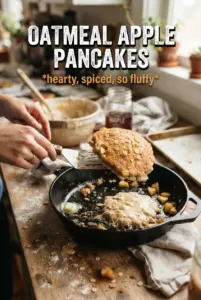
Oatmeal apple pancakes land with the kind of breakfast texture that keeps people reaching for another stack: tender in the middle, lightly crisp at the edges, and dotted with little pockets of apple that soften just enough on the griddle. The oats give them a little more body than a standard buttermilk pancake, so they eat like a real breakfast instead of something flimsy that disappears under syrup.
What makes this version work is the balance. The oats are only pulsed coarsely, which keeps some chew instead of turning the batter pasty. Brown sugar and cinnamon bring out the apples without making the pancakes heavy, and the buttermilk plus baking soda gives enough lift for a fluffy crumb. Grated apple melts into the batter a bit more, while diced apple gives you visible bites. Either way, the fruit needs a short rest in the batter so the oats can hydrate and the pancakes cook up with a better structure.
Below, I’ve included the small details that matter most: how to keep the batter from getting dense, which apple prep changes the texture, and what to do if you want to make these dairy-free without losing that soft, tall middle.
The oats softened just enough and the apple pieces stayed juicy instead of disappearing. I let the batter rest for 5 minutes like you said, and the pancakes cooked up thick with those crisp golden edges.
Love the cozy oat texture and caramelized apple bits in these pancakes? Save this stack for slow mornings when you want a breakfast that feels hearty without being heavy.
The One Mistake That Makes Oat Pancakes Turn Heavy
The biggest trap with oat pancakes is grinding the oats too fine or overmixing the batter until it turns gluey. Coarsely pulsed oats keep a little structure, which gives the pancakes a tender, nubby bite instead of a dense, bready one. Once the wet ingredients go in, stop stirring as soon as the dry streaks disappear. A few lumps are a good sign here.
The other failure point is heat. If the pan is too hot, the outside browns before the oats and apples have time to cook through. Medium heat gives you the best balance: bubbles on top, set edges, and a surface that turns deep gold without scorching. If the first pancake darkens too fast, lower the heat before the rest of the batter hits the pan.
What Each Ingredient Is Actually Doing in These Pancakes
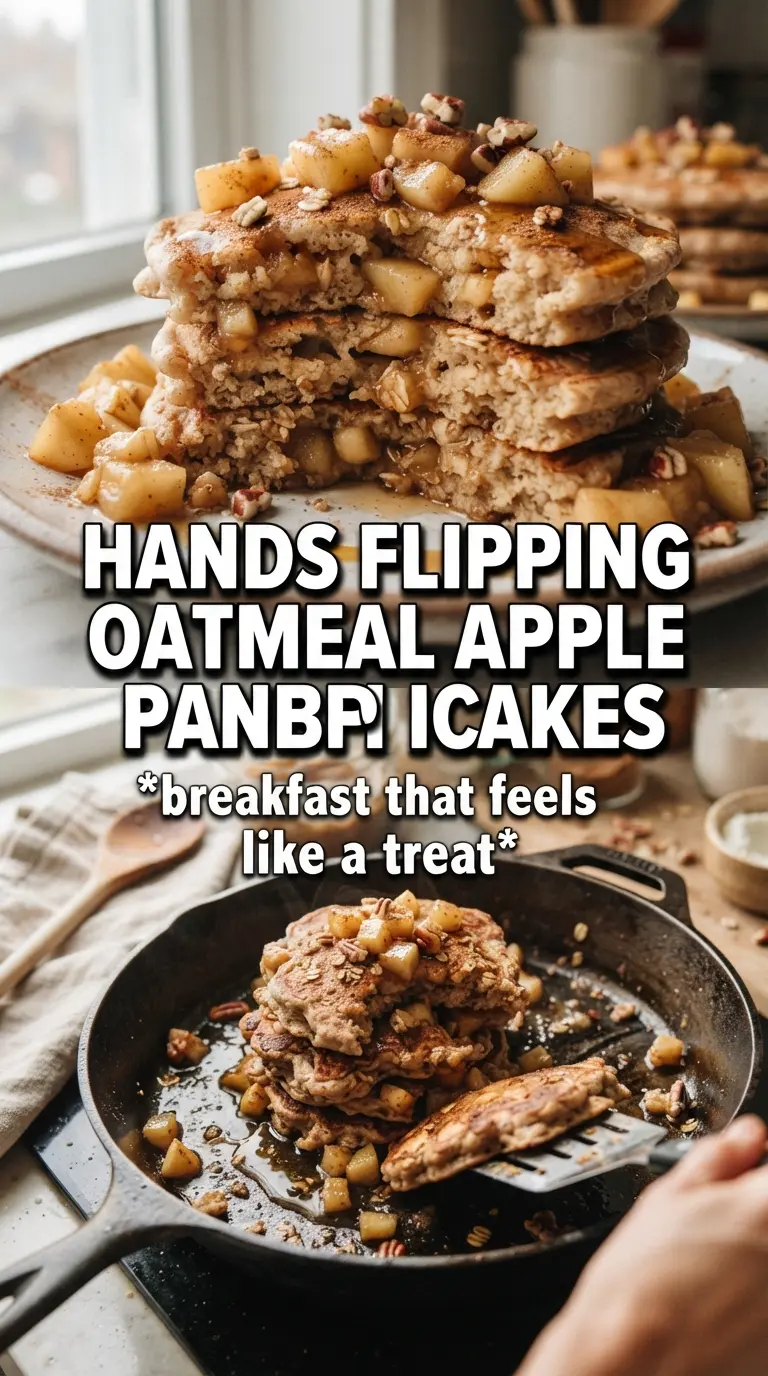
- Rolled oats — These bring the hearty texture that makes the pancakes feel substantial. Pulse them only a few times so they soften in the batter without disappearing into flour.
- Buttermilk — This adds tang and works with the baking soda for lift. If you’re out, use milk mixed with 1 tablespoon lemon juice or vinegar per cup, then let it sit 5 minutes before mixing.
- Apples — Grated apple blends into the batter and makes the pancakes softer, while diced apple gives distinct bites. Use a firm apple like Honeycrisp, Fuji, or Granny Smith so the pieces hold some shape on the griddle.
- Cinnamon and nutmeg — These warm the batter and make the apple taste fuller. Don’t push the nutmeg much harder than listed; it can take over fast.
- Butter — Melted butter gives flavor and a more tender crumb. Neutral oil works in a pinch, but the pancakes lose a little richness.
Getting the Batter and Griddle to Work Together
Coarsely Grinding the Oats
Pulse the oats only 5 to 6 times. You want a mix that looks like rough meal with a few larger flecks still visible, not a powder. If the oats become too fine, they absorb liquid too aggressively and the pancakes turn pasty. That coarse texture is part of what makes these taste hearty without feeling dense.
Mixing Just Until Combined
Whisk the wet ingredients separately, then fold them into the dry ingredients with a light hand. As soon as the flour disappears, stop stirring. Overmixing develops the flour and tightens the batter, which gives you flat pancakes instead of fluffy ones. The batter should look thick and a little lumpy.
Letting the Apples and Oats Rest
After the apples go in, let the batter sit for 5 minutes. The oats take up some liquid, which helps the pancakes set without spreading too thin on the pan. This rest also gives grated apple a chance to loosen the batter slightly in a good way. If it sits much longer than that, the batter can get too thick, so cook it soon after the rest.
Cooking for Color Without Burning
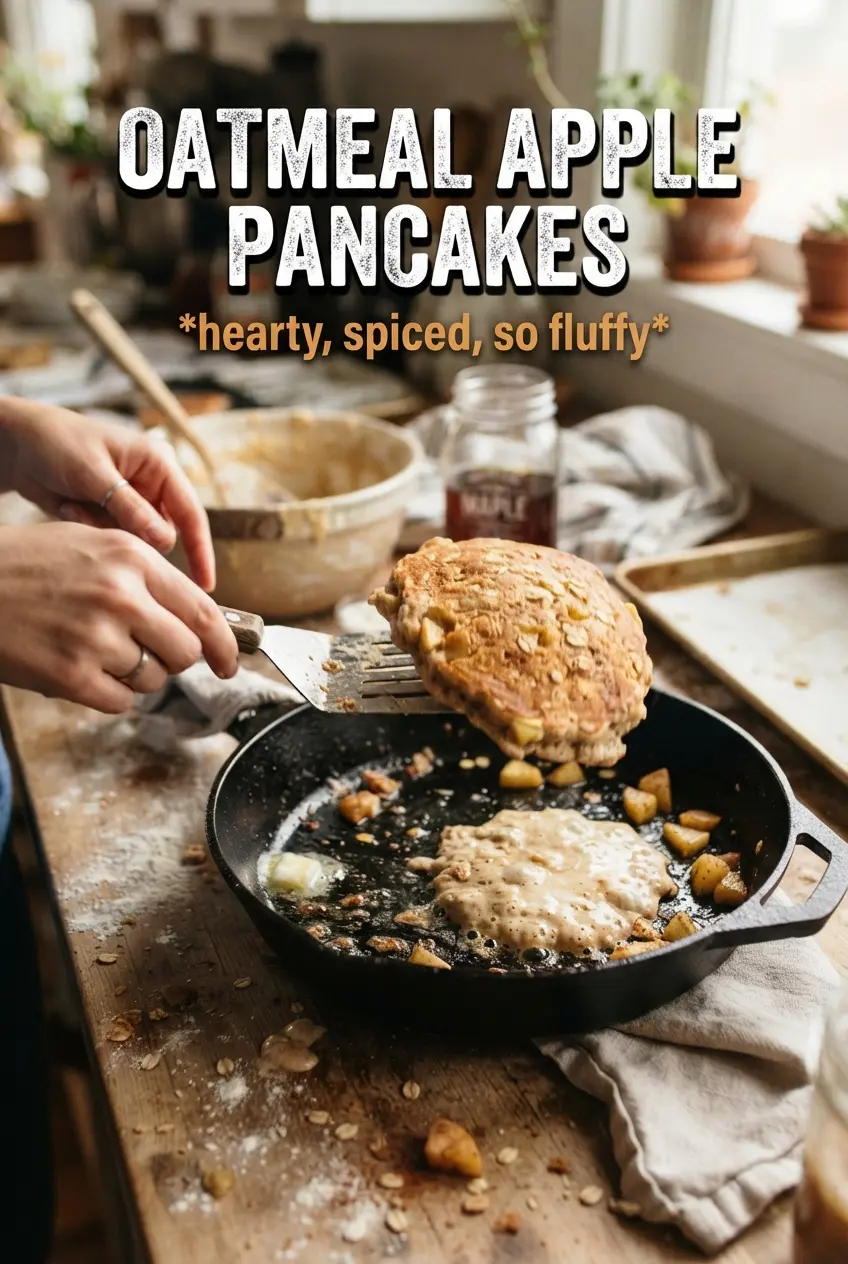
Use a lightly greased skillet over medium heat and portion about 1/3 cup batter for each pancake. When bubbles form and the edges look set, the first side is ready to flip. The second side usually needs about 2 minutes. If you’re getting dark bottoms before the tops set, lower the heat and give the pan another minute to settle.
How to Adapt These for Different Kitchens and Different Mornings
Dairy-Free Pancakes
Use a plain unsweetened non-dairy milk mixed with 1 tablespoon lemon juice or vinegar to replace the buttermilk, and swap the butter for melted coconut oil or neutral oil. You’ll still get lift and tenderness, though the flavor will be a little less rich than the original.
Gluten-Free Version
Replace the all-purpose flour with a 1:1 gluten-free baking blend that includes xanthan gum. The oats already bring a lot of body, so this swap works well, but the batter may need a minute or two longer on the griddle to set cleanly.
Grated Apple for Softer Pancakes
Grate the apple if you want a softer, more integrated texture with less visible fruit. The pancakes will feel a little moister and more even throughout, while diced apple gives a bigger bite and a more obvious apple presence.
Storage and Reheating
- Refrigerator: Keep leftovers in an airtight container for up to 3 days. They soften a little as they sit, but the flavor stays good.
- Freezer: These freeze well. Cool completely, then layer with parchment and freeze in a sealed bag for up to 2 months.
- Reheating: Reheat in a 325°F oven or toaster oven until warm, or use a skillet over low heat for the best texture. The mistake to avoid is the microwave on high, which makes the oats rubbery and the apples watery.
Answers to the Questions Worth Asking
Oatmeal Apple Pancakes
Ingredients
Equipment
Method
- Pulse rolled oats in a food processor 5-6 times until coarsely ground, taking care not to make fine flour.
- Combine ground oats with all-purpose flour, brown sugar, baking powder, baking soda, cinnamon, nutmeg, and salt.
- Whisk buttermilk, eggs, melted unsalted butter, and vanilla extract until smooth.
- Fold the wet mixture into the dry ingredients until just combined, leaving small lumps.
- Fold in the diced or grated apple and then rest the batter 5 minutes.
- Heat a griddle or cast iron skillet over medium heat and grease lightly.
- Pour about 1/3 cup batter per pancake and cook until bubbles form and the edges look set, about 3 minutes.
- Flip the pancakes and cook 2 more minutes, until golden.
- Serve pancakes warm with maple syrup and extra apple slices, with powdered sugar on top if desired.