Golden chicken thighs, blistered tomatoes, and a glossy balsamic glaze are the kind of pan dinner that makes a regular weeknight feel a little more pulled together. The chicken stays juicy under crisp skin, and the sauce cooks down until it clings to every bite instead of pooling thinly at the bottom of the skillet. That balance is what keeps this one on repeat.
The trick is using bone-in, skin-on thighs and giving them enough time skin-side down to render properly. If you rush that first sear, the skin stays rubbery and the sauce never gets the same depth. The balsamic, honey, and broth reduce together with the browned bits from the pan, which gives you a sauce that tastes built, not poured on at the end.
Below you’ll find the exact cues I watch for so the chicken cooks through without drying out, plus the small finishing step that makes the glaze look restaurant-level instead of sticky in a heavy way.
The skin got deeply crisp and the balsamic sauce reduced into a thick glaze instead of staying thin. I served it with rice and the whole pan disappeared.
Save this one pan balsamic chicken for nights when you want crisp chicken thighs and a glossy cherry tomato glaze in one skillet.
The Part Most People Rush: Getting the Chicken Skin Actually Crispy
The biggest mistake with a skillet chicken dinner is moving the thighs too soon. Skin needs steady contact with the hot pan so the fat can render out before the surface starts browning too fast. If the pan is crowded or the heat is too low, the chicken steams in its own moisture and you lose that crisp, crackly top layer.
Cast iron helps here because it holds heat when the cold chicken hits the pan. Start skin-side down and leave it alone for 7 to 8 minutes until the skin is deep golden and pulls away easily from the skillet. If it sticks, it isn’t ready yet. Once it releases, the color is where it should be and the fat has done its job.
What Each Ingredient Is Actually Doing In This Dish
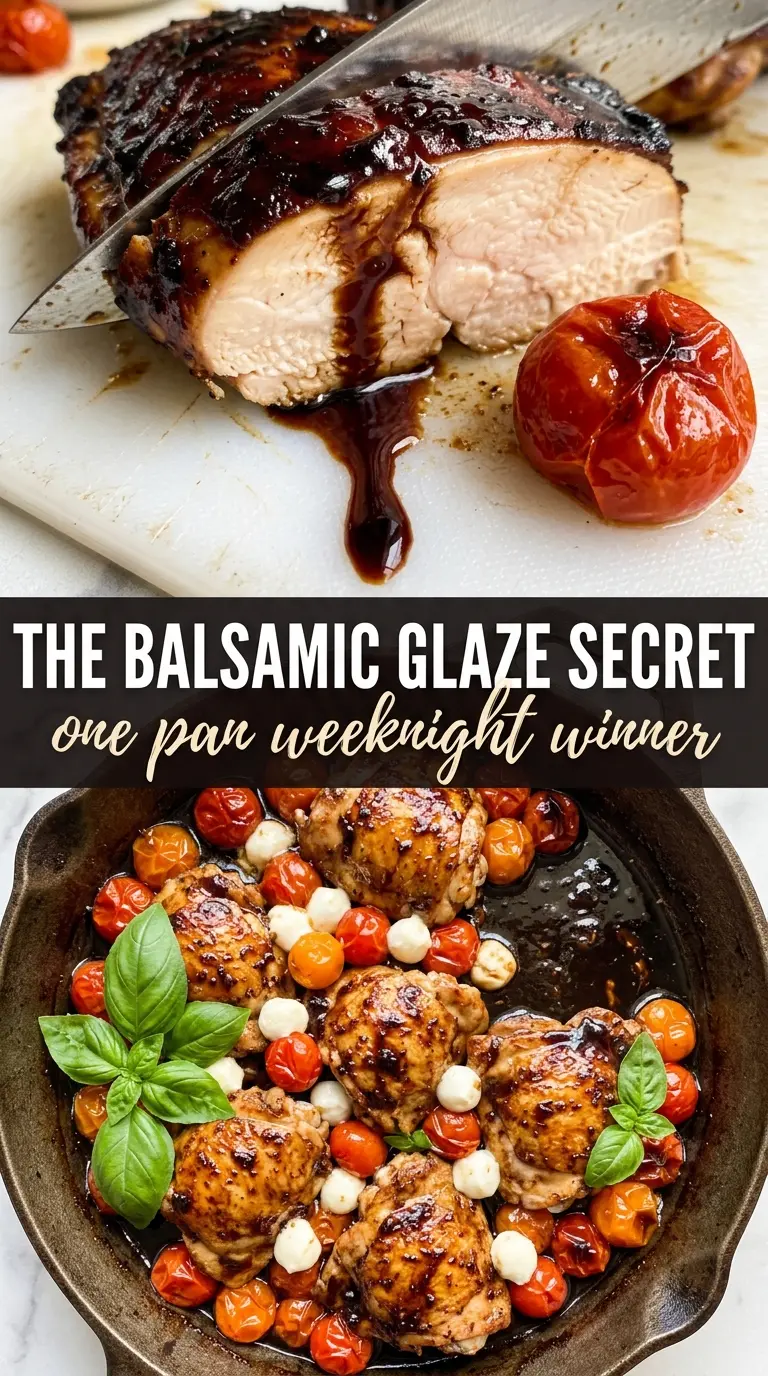
- Bone-in, skin-on chicken thighs — These hold up to the long skillet cook and stay juicy while the skin crisps. Boneless thighs will work in a pinch, but they cook faster and you lose some of the rich texture that makes this dish stand out.
- Balsamic vinegar — This is the backbone of the sauce. Use a balsamic you’d actually want to taste on its own; the cheap, harsh stuff can turn sharp once it reduces.
- Honey — Just enough to round out the vinegar and help the glaze get syrupy. If you want to swap in maple syrup, use the same amount and expect a slightly deeper, less bright sweetness.
- Chicken broth — It loosens the sauce at the start so the balsamic doesn’t reduce too fast and burn. Water works in an emergency, but broth gives the glaze more body and a savory edge.
- Whole garlic cloves — Keeping them whole lets them soften and sweeten in the pan without turning bitter. If you slice or mince them, they can scorch before the tomatoes finish blistering.
- Butter — Stirred in at the end, it smooths the glaze and gives it a glossy finish. Don’t add it early or it can separate while the sauce reduces.
Building the Glaze So It Clings Instead of Running Thin
Seasoning and Searing the Thighs
Season the chicken generously on both sides before it hits the pan. The surface should look well coated, not patchy, because the seasoning helps build the crust and carries through the glaze. Lay the thighs skin-side down into hot olive oil and listen for an immediate sizzle. If the pan is only lightly hot, the skin gives off moisture before it crisps, and you’ll miss the deep golden color that makes this dish taste finished.
Blistering the Tomatoes and Softening the Garlic
Once the chicken comes out, add the garlic and tomatoes to the same skillet. The tomatoes should start to split and wrinkle at the edges, and the garlic should smell sweet, not sharp. This short stage pulls flavor from the leftover chicken fat and browned bits. If the garlic starts to brown too fast, lower the heat for a minute before adding the liquids so it doesn’t turn bitter.
Reducing the Balsamic Sauce
Pour in the balsamic, honey, and broth, then scrape the pan well. Those stuck-on bits dissolve into the sauce and give it the depth you’d never get from a plain simmered glaze. Bring it to a boil first so the vinegar mellows and the mixture starts reducing, then return the chicken skin-side up. The sauce should bubble around the thighs and slowly turn darker and thicker as the chicken finishes cooking.
Finishing With Butter and Basil
When the chicken reaches 165°F, the sauce should coat the back of a spoon and leave a trail when you drag a spoon through the skillet. Stir in the butter off the direct heat so it melts into a smooth sheen instead of breaking. Fresh basil goes on at the end for a clean, bright finish that cuts through the glaze. Serve straight from the skillet while the skin is still crisp.
How to Change This Skillet Dinner Without Losing the Good Part
Make It Dairy-Free
Skip the butter at the end and finish with a small drizzle of olive oil instead. You lose a little of the silky gloss, but the sauce still reduces into a proper glaze and the balsamic flavor stays clean.
Use Boneless Chicken Thighs
Boneless thighs cook faster and are easier to portion, but they won’t give you the same crackly skin. Cut the braising time down and start checking early, because they can dry out before the sauce finishes reducing.
Swap in Chicken Breasts
This works, but the texture changes a lot. Use smaller breasts or pound them to an even thickness, sear briefly, then finish gently so they don’t go dry while the sauce reduces.
Storage and Reheating
- Refrigerator: Store leftovers in an airtight container for up to 3 days. The skin softens as it sits, but the flavor deepens.
- Freezer: It freezes well without the basil. Cool completely, freeze in a sealed container for up to 2 months, and thaw overnight in the fridge.
- Reheating: Warm gently in a covered skillet over low heat with a splash of broth. High heat can tighten the chicken and make the glaze sticky instead of glossy.
Answers to the Questions Worth Asking
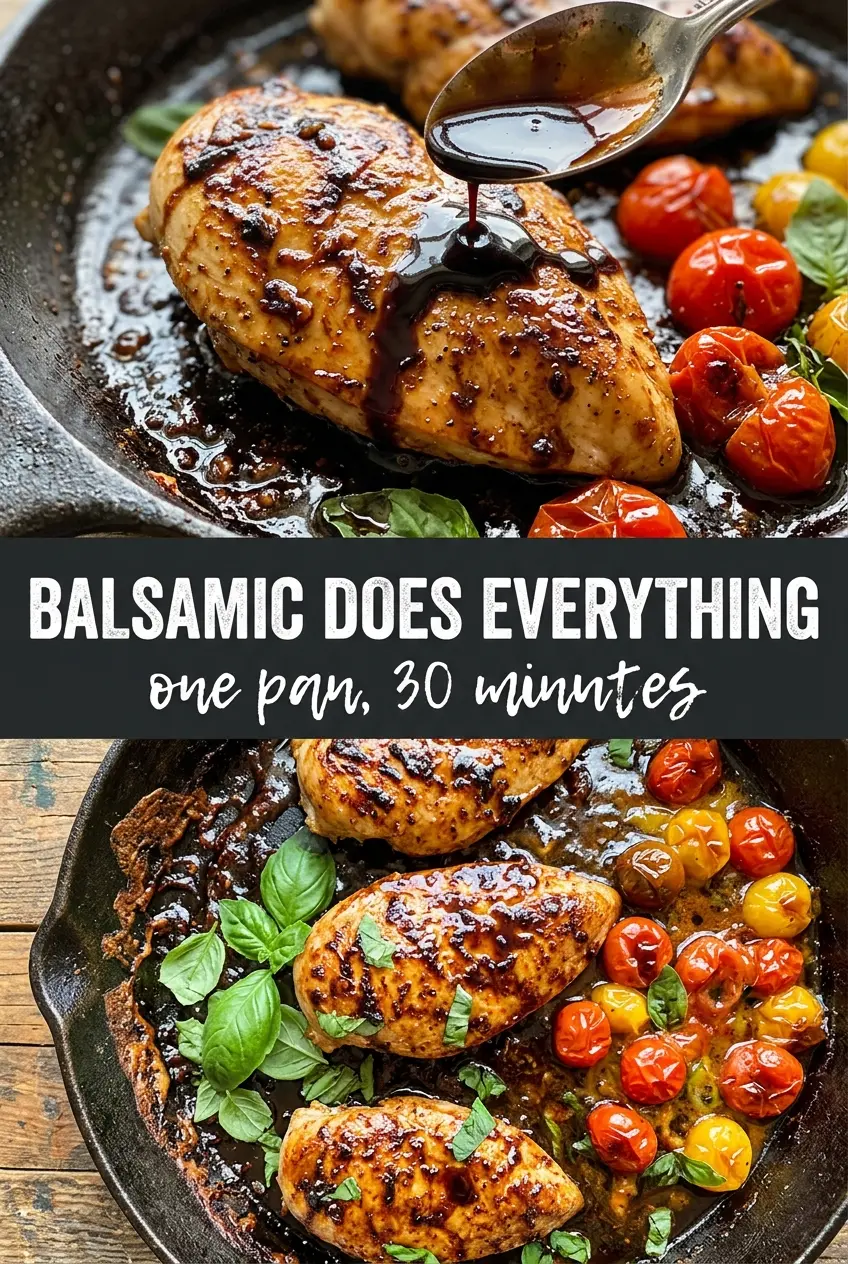
One Pan Balsamic Chicken
Ingredients
Equipment
Method
- Season chicken thighs generously on both sides with salt, pepper, garlic powder, and Italian seasoning.
- Heat olive oil in a large cast iron skillet over medium-high heat and sear chicken skin-side down for 7-8 minutes until the skin is deeply golden and crispy; flip and sear 3 more minutes, then remove.
- Add whole garlic cloves and cherry tomatoes to the skillet and cook for 2 minutes until tomatoes begin to blister.
- Pour in balsamic vinegar, honey, and chicken broth; stir and bring to a boil, scraping up any browned bits.
- Return chicken skin-side up and cook over medium heat for 12-15 minutes until chicken reaches 165°F and the balsamic sauce reduces to a thick glaze.
- Stir in butter until melted, scatter fresh basil over the top, and serve straight from the skillet.