Chicken Parmesan pasta takes everything people love about classic chicken parm and turns it into a baked pasta dinner that lands on the table with a bubbling, cheesy top and plenty of saucy noodles underneath. You get crispy breaded chicken on top, but the pasta underneath stays coated in marinara instead of drying out in the oven, which is where a lot of versions fall short. When it’s done right, each forkful gives you crunch, sauce, and that stretchy mozzarella pull all at once.
The part that makes this version work is doing the chicken separately before it goes into the baking dish. That quick pan-fry sets the coating and gives it color, so it doesn’t turn soft the second the marinara hits the pan. The pasta is also mixed with sauce before baking, which keeps the casserole from going dry around the edges while the cheese melts on top.
Below, I’ll walk through the little details that keep the breading crisp-ish, the sauce balanced, and the cheese browned without overbaking the chicken. I’ve also included the substitutions that actually make sense here, because this is one of those dinners that should work with what’s already in the pantry.
The chicken stayed crisp on top even after baking, and the pasta underneath soaked up the marinara without turning mushy. I used a little extra mozzarella and the whole pan disappeared fast.
Save this chicken Parmesan pasta for the night you want crispy chicken, bubbling mozzarella, and a baked pasta dinner in one pan.
The Reason the Chicken Stays Crispy Under All That Cheese
The biggest mistake with chicken Parmesan pasta is treating it like a regular casserole and baking everything together from the start. That sounds easier, but it gives you soggy coating and chicken that tastes steamed instead of browned. Here, the chicken gets fully cooked in the skillet first, which locks in color and gives the breadcrumbs a head start before they ever meet the sauce.
The other thing that matters is keeping the pasta sauced before it goes into the oven. Dry noodles under a layer of cheese will grab moisture from the sauce as they bake, and if you start with too little marinara, the edges end up tight and sticky. This dish needs enough sauce to coat the pasta generously, but not so much that the breaded chicken sinks and softens completely.
What Each Ingredient Is Actually Doing in This Dish
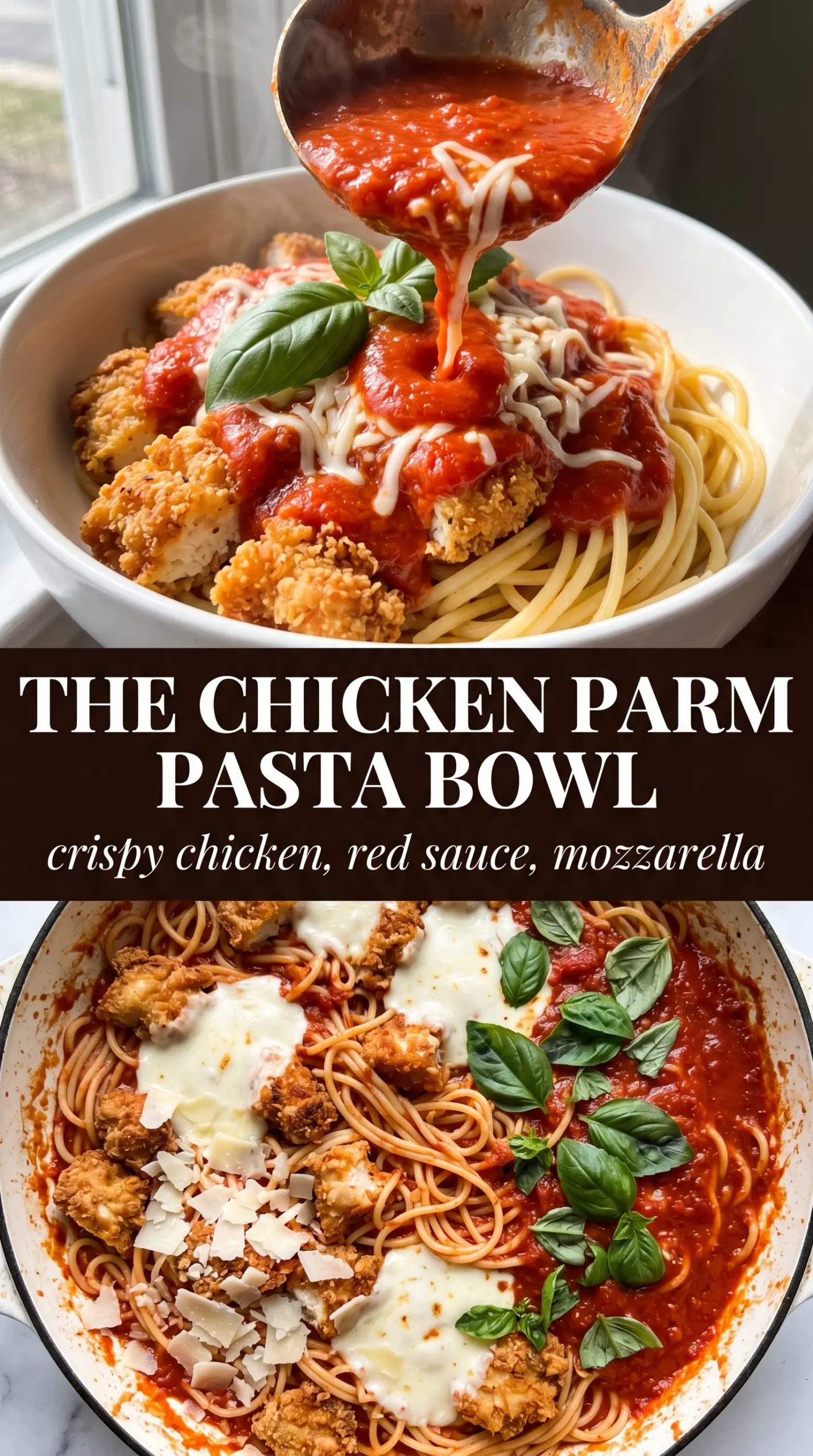
- Chicken breasts — Bite-sized pieces cook fast and give you more golden edges than whole cutlets. If you use chicken thighs, they’ll stay juicier, but the coating won’t look quite as neat and the dish will feel richer.
- Italian breadcrumbs — These bring seasoning and a finer, even crust that bakes up well. Plain breadcrumbs work, but you’ll need to season them more aggressively, and panko will be crunchier rather than Parmesan-style.
- Parmesan — It’s doing double duty: flavoring the coating and adding saltiness to the topping. Freshly grated is best here because the bagged stuff can clump and melt less smoothly.
- Marinara sauce — Use a jar you actually like eating on its own, because this is the backbone of the dish. If the sauce tastes flat in the jar, it’ll taste flat after baking too.
- Mozzarella — Shredded low-moisture mozzarella gives you the best melt and those browned spots on top. Fresh mozzarella releases too much water for this version and can make the top loose.
Building the Chicken Parmesan Pasta Without Losing the Crunch
Coating the Chicken
Set up the flour, egg, and breadcrumb mixture before you start coating so the chicken doesn’t sit around getting damp. The flour gives the egg something to cling to, and the egg helps the breadcrumbs form a shell that browns in the pan. Press the crumbs on lightly but firmly; if the coating looks patchy before it hits the skillet, it’ll come off while frying.
Pan-Frying for Color
Cook the chicken in hot olive oil over medium-high heat until the coating is deep golden and the centers are cooked through. If the oil is too cool, the breading absorbs it and turns heavy; if it’s too hot, the outside burns before the chicken is done. Work in batches if needed so the pan stays hot and the chicken has room to brown instead of steam.
Assembling the Pasta Base
Toss the cooked penne with marinara before it goes into the baking dish. That step is what keeps the pasta from baking into a dry block under the cheese. Spread it into an even layer, then nestle the chicken pieces on top instead of burying them, because they need exposure to the oven heat to keep some of their crust.
Melting and Browning the Top
Use enough mozzarella to blanket the surface, then finish with the Parmesan so the top gets salty, stretchy, and lightly browned. Bake until the cheese is fully melted and the sauce is bubbling around the edges; if you pull it too early, the center underneath will still taste underheated. Let it rest a few minutes before serving so the sauce settles and doesn’t run everywhere the second you scoop it.
Small Changes That Still Keep This Dish Working
Make It Gluten-Free
Swap the all-purpose flour for a gluten-free flour blend and use certified gluten-free breadcrumbs. The texture stays close to the original, though the crust may brown a little faster, so watch the pan during frying.
Use Chicken Thighs Instead of Breasts
Boneless thighs bring more juiciness and hold up well in the oven, but they take a little longer to cook through. Cut them into similar-sized pieces so the frying time stays even and the breading doesn’t overdarken before the center is done.
Make It Lighter on the Dairy
You can cut the mozzarella slightly and lean harder on the Parmesan for a sharper, less heavy finish. The top won’t stretch quite as dramatically, but the dish still tastes like chicken parm instead of a plain pasta bake.
Turn It Into a Spicy Version
Add red pepper flakes to the marinara or mix a pinch into the breadcrumbs for heat that runs through the whole dish. This works best if your sauce is on the sweeter side, because the spice keeps the finished pasta from tasting one-note.
Storage and Reheating
- Refrigerator: Store leftovers covered for up to 4 days. The chicken coating softens a bit, but the flavor stays solid.
- Freezer: It freezes well for up to 2 months, though the breaded chicken won’t stay crisp after thawing. Freeze in portions so it reheats more evenly.
- Reheating: Reheat covered in a 350°F oven until hot, then uncover for the last few minutes if you want the top to tighten up. The microwave works in a pinch, but it makes the breading soft and can overcook the pasta edges.
Questions I Get Asked About This Recipe
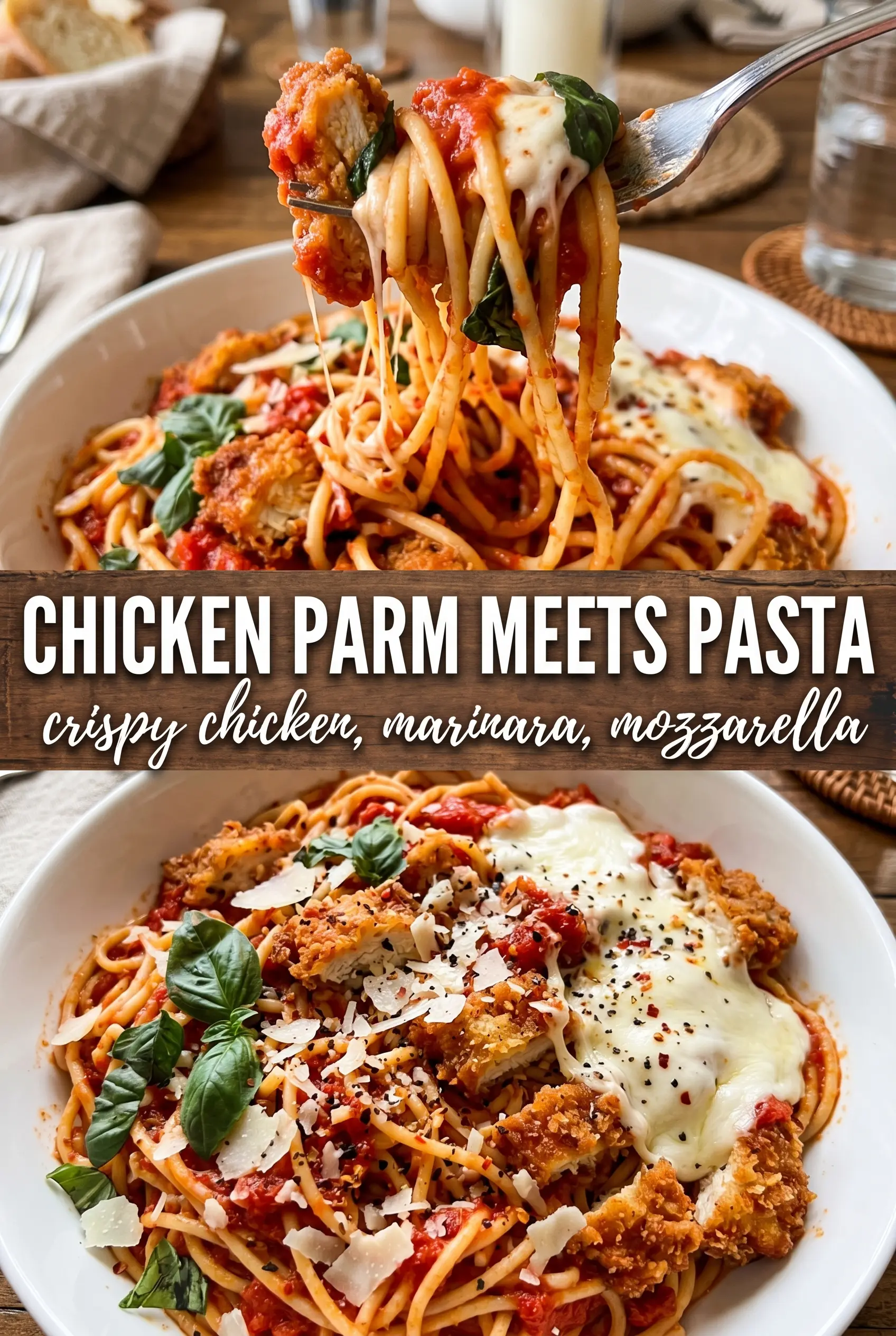
Chicken Parmesan Pasta
Ingredients
Equipment
Method
- Dredge the chicken pieces in all-purpose flour, then dip into the beaten large eggs so every piece is coated. Move to the breadcrumb mixture and press lightly so the coating adheres, using Italian breadcrumbs mixed with 1/2 cup grated Parmesan.
- Heat olive oil in a cast iron skillet over medium-high heat. Pan-fry the breaded chicken for 3-4 minutes per side until golden and cooked through, then drain on paper towels.
- Preheat the oven to 375°F while you assemble. Toss the cooked penne with marinara sauce, then pour into a greased 9x13 baking dish.
- Arrange the crispy chicken pieces over the sauced penne in an even layer. Top with shredded mozzarella cheese and the additional 1/2 cup grated Parmesan for a full, bubbly coverage.
- Bake at 375°F for 20-22 minutes until the cheese is melted and golden. Finish by garnishing with fresh basil right after baking so the leaves stay bright.