Garlic Parmesan chicken skewers hit that sweet spot between weeknight easy and cookout-worthy. The chicken stays juicy inside, the edges get lightly charred, and the Parmesan clings to the meat in little salty, golden bits that taste even better once the melted butter goes over the top. Served hot off the grill with lemon wedges, they disappear fast.
What makes this version work is the marinade. Olive oil carries the garlic and herbs, lemon juice brightens the whole skewer, and a little Parmesan in the marinade gives the surface something to brown without turning heavy. The short marinating time is enough to season the chicken without making the texture soft or mushy.
Below, I’ll walk through the part that matters most: how to get a proper grill char without drying out the chicken, plus the small finishing move that makes the Parmesan stick instead of falling onto the plate.
The chicken picked up so much flavor in just 30 minutes, and the Parmesan got those crisp little browned spots on the grill instead of burning off. I brushed on the butter at the end and it made the whole thing taste restaurant-level.
Save these garlic Parmesan chicken skewers for the next grill night when you want juicy chicken, charred edges, and a buttery Parmesan finish.
The Part Most Grilled Chicken Skewers Get Wrong
The biggest mistake with chicken skewers is pushing them too hard over heat that’s too hot. The outside takes on color before the center has a chance to cook through, which leaves you with dry edges and a pale middle. Medium-high heat gives you the best of both worlds: browned Parmesan bits, light char, and chicken that stays tender.
The second trap is using too much moisture on the surface. Garlic, lemon, and oil are great here, but the chicken still needs a short marinating time and a hot, oiled grate so it sears instead of steaming. If the skewers stick, they’re not ready to move yet. When they release cleanly, they’ve developed enough crust to turn without tearing.
- Boneless skinless chicken breasts — Breasts cook quickly and stay cleanly skewered, which matters when you want a fast grilling time. Cut them into even 1.5-inch pieces so the skewers finish at the same pace.
- Freshly grated Parmesan — Fresh cheese melts and browns in a way pre-shredded cheese can’t match. The bagged kind often has anti-caking agents that keep it from clinging as well.
- Lemon juice — This keeps the garlic and Parmesan from tasting heavy. Bottled juice will work in a pinch, but fresh lemon gives a brighter finish and better balance.
- Olive oil — This carries the seasoning and helps the chicken brown instead of drying out. Use a decent everyday olive oil here; save the expensive finishing oil for another dish.
Building the Garlic Parmesan Coat Before the Grill Hits It
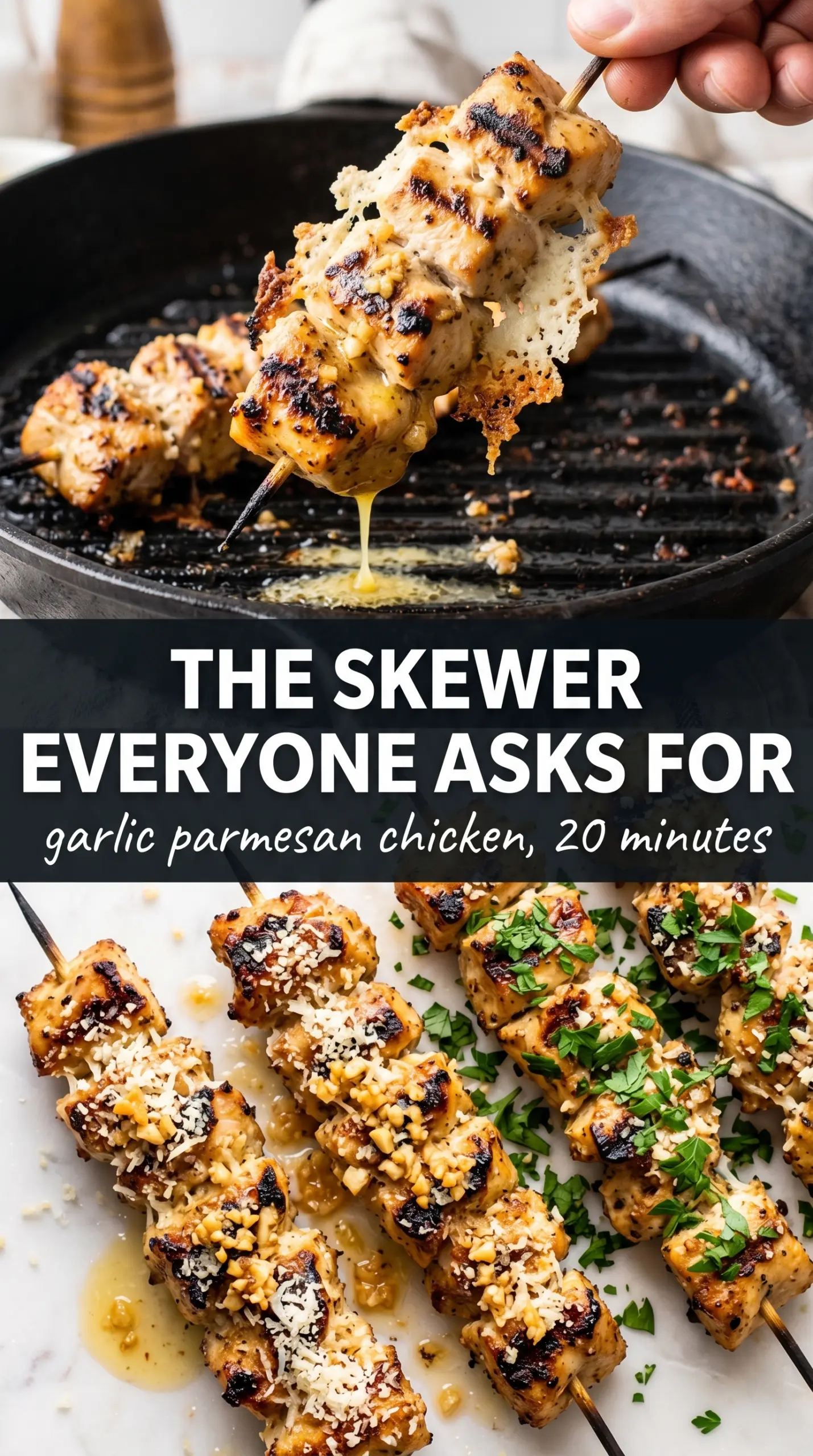
The marinade is doing more than seasoning the meat. Garlic and Italian herbs perfume the chicken, lemon keeps the richness in check, and a little Parmesan in the mix starts the crusting process before the skewers ever hit the grill. That small amount of cheese matters because it gives the surface something to caramelize against.
The melted butter goes on after grilling, not before. If you brush butter onto raw skewers, it can drip through the grates and darken too fast. Added at the end, it lands on the hot chicken, loosens the remaining Parmesan, and creates that glossy finish that makes the skewers taste like they were dressed at the table.
From Marinated Chicken to Charred Skewers Without Drying Them Out
Mixing the Marinade
Whisk the olive oil, garlic, a quarter cup of the Parmesan, lemon juice, Italian seasoning, basil, salt, and pepper until the mixture looks slightly thick and cloudy. That’s the garlic and cheese suspended through the oil, which helps it coat the chicken evenly instead of sliding off. Add the chicken and turn it until every piece is slicked all over. Thirty minutes is enough; much longer and the lemon starts to work on the texture.
Threading and Prepping the Grill
If you’re using wooden skewers, soak them for the full 30 minutes so they don’t scorch before the chicken is done. Thread the chicken with a little space between pieces so the heat can reach all sides; packed-together meat steams, and you lose the char. Oil the grates after preheating so the chicken releases cleanly when it’s ready to turn.
Grilling to the Right Color
Lay the skewers on the grill and let them sit long enough to form a real sear, about 4 to 6 minutes. If you move them too early, the cheese and garlic can smear instead of browning. Turn them once the first side has deep golden marks and lifts without sticking, then cook the second side until the chicken reaches 165°F at the thickest piece.
Finishing With Butter and Parmesan
Pull the skewers off the grill and drizzle the melted butter over them while they’re still hot. The butter grabs onto the rough, grilled surface and helps the remaining Parmesan cling in little savory patches. Finish with parsley and lemon wedges, because the fresh herbs and acid cut through the richness and keep the whole plate balanced.
How to Adjust These Skewers for Different Nights and Diets
Make Them Gluten-Free Without Changing the Flavor
This recipe is naturally gluten-free as written, so the main job is keeping the seasonings and Parmesan free of additives. Check the label on your cheese blend if you’re not grating it yourself, since some pre-shredded products include starches that can dull the coating.
Use Chicken Thighs for a Juicier Finish
Boneless skinless thighs work well if you want a little more forgiveness on the grill. They need a minute or two longer and they won’t firm up quite as neatly on the skewer, but they stay juicy and handle the garlic-Parmesan coating beautifully.
Swap the Grill for a Broiler
If the grill isn’t an option, broil the skewers on a foil-lined sheet pan about 6 inches from the heat source. Turn once for even browning and watch closely near the end, since the Parmesan can go from golden to dark fast under the broiler.
Storage and Reheating
- Refrigerator: Store leftovers in an airtight container for up to 3 days. The cheese coating softens a little, but the flavor stays solid.
- Freezer: These freeze well after cooking. Cool completely, remove from skewers, and freeze in a sealed container for up to 2 months.
- Reheating: Warm in a 325°F oven, covered loosely with foil, just until heated through. High heat dries out the chicken fast, and the microwave can make the cheese coating rubbery.
Answers to the Questions Worth Asking

Garlic Parmesan Chicken Skewers
Ingredients
Equipment
Method
- Whisk together olive oil, garlic, 1/4 cup Parmesan, lemon juice, Italian seasoning, basil, salt, and cracked black pepper until combined, then add chicken cubes and toss to coat.
- Let the coated chicken marinate for 30 minutes so the garlic and herbs cling to the surface.
- Soak wooden skewers in water for 30 minutes, then thread the marinated chicken onto the skewers.
- Preheat the grill to medium-high heat and oil the grates.
- Grill skewers for 4-6 minutes per side until deeply golden with visible char marks and the internal temperature reaches 165°F.
- Remove skewers from the grill and drizzle with melted butter so it pools around the skewer base.
- Scatter the remaining Parmesan over the hot skewers, then garnish with fresh parsley and serve with lemon wedges.