Beef carbonnade stew turns humble chuck roast into fork-tender pieces of beef in a dark, onion-rich gravy that tastes like it simmered all day for a reason. The onions cook down until they almost disappear into the broth, and the beer brings a malty backbone that makes the whole pot taste deeper than the ingredient list looks at first glance.
What makes this version work is the order. The beef gets a hard sear for real flavor, the onions cook slowly enough to sweeten instead of burn, and the flour goes in after the garlic so it can thicken the liquid without tasting raw. The vinegar, mustard, and brown sugar keep the stew from reading heavy or flat, which is where a lot of beer braises miss the mark.
Below, I’ve included the details that matter most: how to build the base without scorching the onions, which beer style gives the best result, and what to do if you want to make it ahead. It’s the kind of stew that gets better with bread on the side and better still the next day.
The onions melted down into the broth and the sauce thickened up beautifully. I used a Belgian ale like you suggested, and the stew had that deep, slightly sweet flavor that tasted even better the next day.
Save this Beef Carbonnade Stew for a night when you want deep Belgian beer flavor, tender beef, and a gravy that begs for crusty bread.
The Trick to Keeping the Beer Braise Deep, Not Bitter
The difference between a rich carbonnade and one that tastes harsh usually comes down to heat and timing. The onions need time to soften and sweeten before the liquid goes in, and the beer should go into the pot only after the flour has cooked for a full minute. That short cook time takes the raw edge off the flour and helps the stew thicken smoothly instead of turning pasty.
Another common failure is using a beer that’s too sharp or too hoppy. Belgian ale or a stout gives you malt and body; an aggressively bitter IPA can dominate the pot and make the final broth taste thin and a little metallic. You want depth, not loudness.
- Beef chuck — This cut has enough fat and connective tissue to break down into tender pieces during the long braise. Lean stew meat won’t give you the same silky texture.
- Dark Belgian ale or stout — The beer is doing more than adding liquid. It gives the stew its signature maltiness and color, so use a beer you’d actually drink. If you need to substitute, choose a brown ale or porter rather than a bitter IPA.
- Onions — Three large onions may look excessive, but they collapse into the sauce and give the stew its sweet, jammy backbone. Slice them thin so they soften evenly and don’t leave sharp pieces behind.
- Dijon mustard and vinegar — These keep the braise from tasting heavy. The mustard adds quiet heat and emulsifying power, while the vinegar brightens the finished pot just enough to keep each bite moving.
What Each Ingredient Is Actually Doing in This Recipe
- Primary ingredient (the star) — Quality matters most. Choose the best you can find.
- Cooking medium (oil, butter, or broth) — This carries flavors and prevents dryness.
- Seasonings (salt, pepper, spices, herbs) — Layer flavors so nothing overpowers. Build depth gradually.
- Aromatics (garlic, onion, herbs) — Cook with fat to bloom flavors. Become the foundation.
- Supporting ingredients — Complement the main ingredient without overpowering it.
- Sauce or liquid (if applicable) — Brings flavors together. Balance richness with acid.
- Acid (lemon, vinegar, wine, or other) — Brightens and prevents flat-tasting results.
- Final finish (garnish, glaze, or sauce) — Prevents one-dimensional taste and adds visual appeal.
Building the Pot So the Onions and Beef Work Together
Getting the Sear First
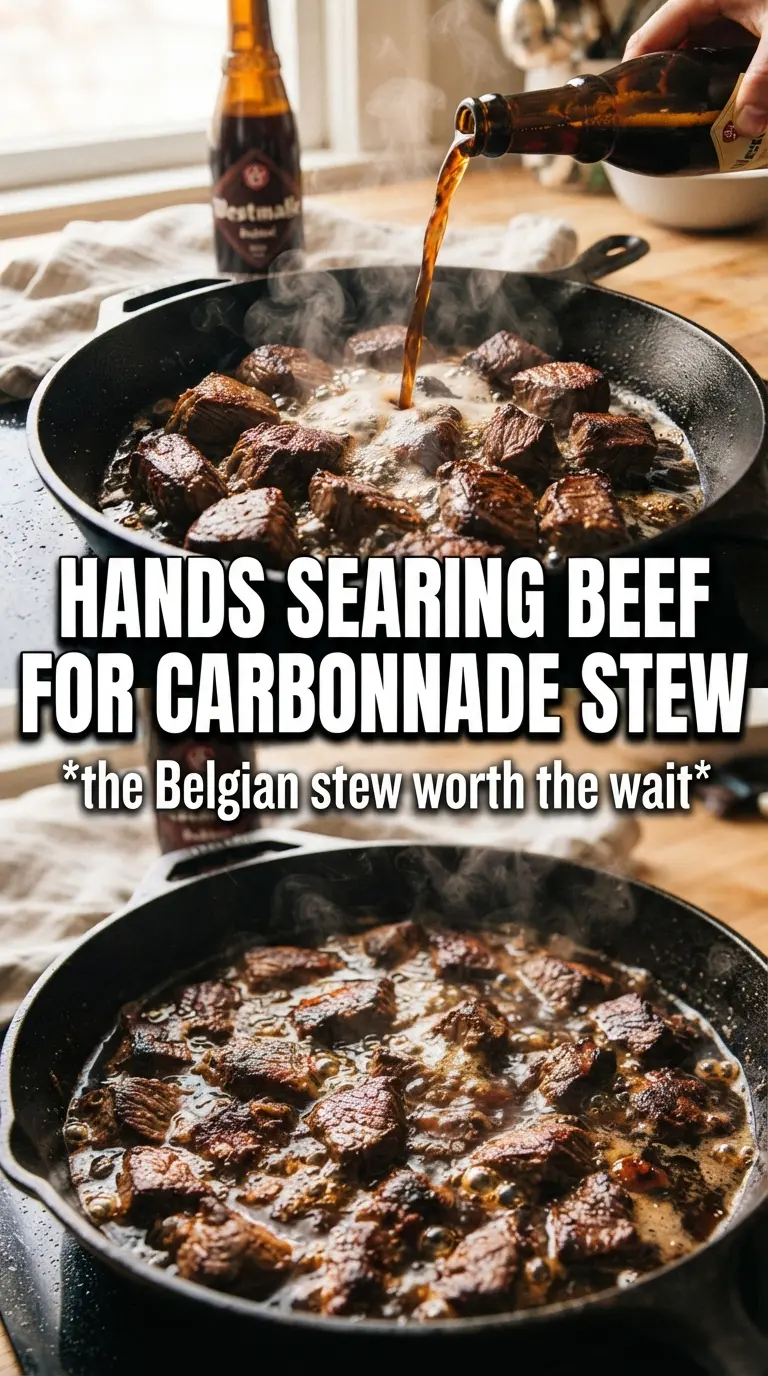
Pat the beef dry and season it well before it hits the hot oil. The surface needs to brown, not steam, so work in batches and leave space between the pieces. If the meat crowds the pot, the bottom temp drops and you end up with gray beef and weak drippings instead of a flavorful base.
Letting the Onions Go Long
Cook the onions over medium heat until they turn soft, golden, and slightly sweet around the edges. This takes patience, but it’s what gives carbonnade its signature depth. If they start sticking too fast, lower the heat and let a splash of the beer loosen the bottom; burnt onion will make the whole stew taste bitter.
Thickening Before the Liquid Goes In
Stir in the garlic, then the flour, and let that mixture cook for about a minute before adding the beer. The flour should coat the onions and smell a little nutty, not raw. Add the liquid slowly while scraping up the browned bits on the pot floor, because that fond is where a lot of the flavor lives.
The Long Braise
Once the pot comes to a boil, reduce the heat, cover it, and let the stew simmer gently until the beef yields easily to a fork. You want a lazy bubble, not a rolling boil. Hard boiling tightens the meat and can make the broth greasy instead of silky.
What to Change When You Don’t Have Belgian Ale
Swap in a brown ale or porter
These beers keep the malty, rounded character this stew needs. A porter will make the sauce a little darker and roastier, while a brown ale stays a touch softer. Both work better than a bitter pale ale.
Make it gluten-free
Use a gluten-free beer and replace the all-purpose flour with a gluten-free flour blend that thickens well. The sauce will still need that minute of cooking after the flour goes in so it doesn’t taste chalky.
Make it dairy-free without changing a thing
This stew is naturally dairy-free as written. The only thing to watch is the bread you serve alongside it if you’re cooking for someone avoiding dairy or gluten.
Make it ahead for better flavor
This stew tastes even deeper the next day after the onions, beer, and beef have had time to settle together. Cook it a day ahead, chill it overnight, and reheat gently before serving.
Storage and Reheating
- Refrigerator: Store in an airtight container for up to 4 days. The sauce thickens as it chills, which is normal.
- Freezer: It freezes well for up to 3 months. Cool it completely first and leave a little space in the container for expansion.
- Reheating: Warm it slowly over low heat on the stove, adding a splash of broth if needed. A hard boil can toughen the beef and break the texture of the sauce.
Answers to the Questions Worth Asking
Beef Carbonnade Stew
Ingredients
Equipment
Method
- Season the beef with salt and pepper, then sear in vegetable oil in a Dutch oven over high heat until deeply browned. Expect dark caramelization on the meat, about 5-8 minutes depending on batch size.
- Remove the beef from the Dutch oven and set aside while you cook the onions. Leave the browned bits in the pot for flavor.
- Cook the onions over medium heat for 20-25 minutes until very soft and golden. Stir occasionally so the edges color without burning.
- Add the minced garlic and cook for 1 minute, stirring so it turns fragrant without browning. You should see steam and a sharp, garlicky aroma.
- Whisk in the all-purpose flour and cook for 1 minute. The mixture should look slightly thickened as it coats the onions.
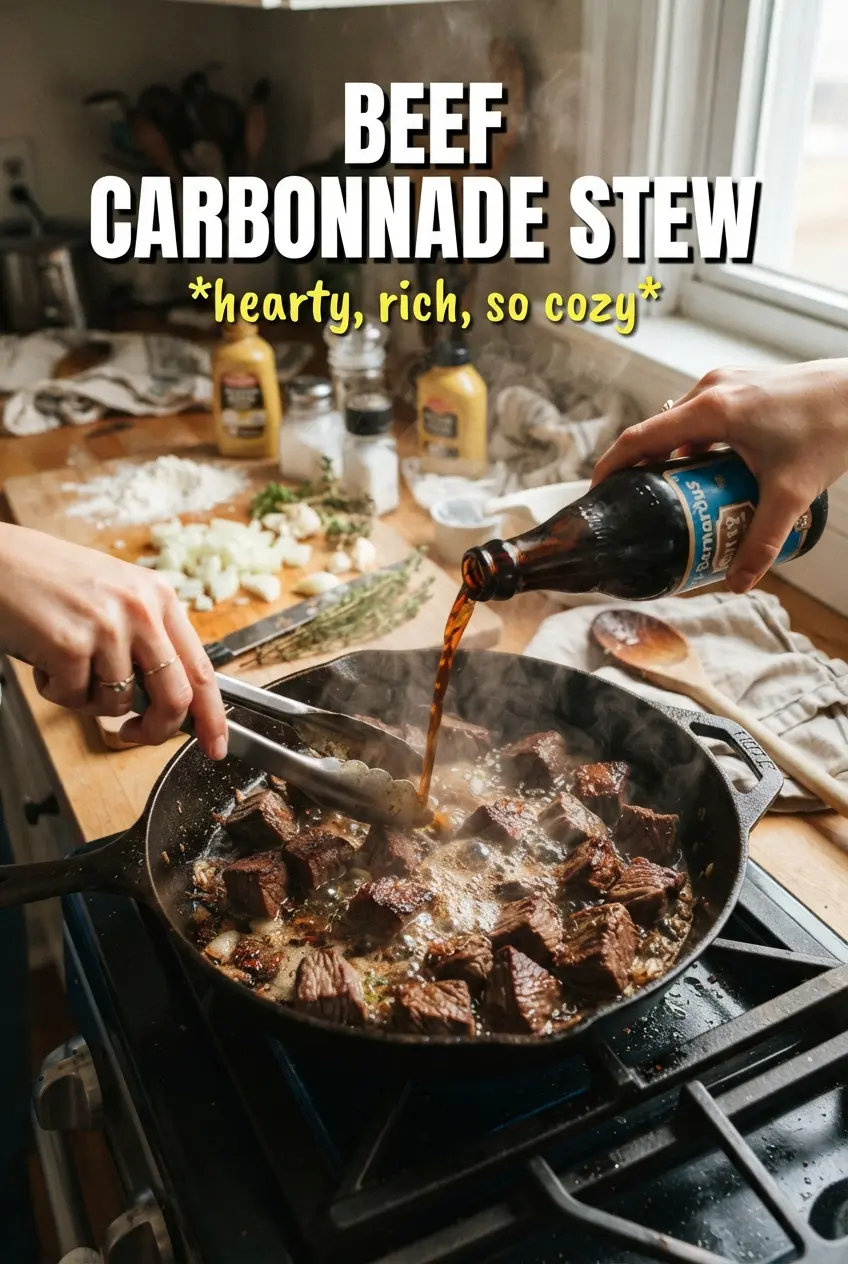
- Deglaze with the dark Belgian ale, scraping up all browned bits from the bottom of the Dutch oven. The liquid should become darker and smell malty as the fond dissolves.
- Add the beef broth, tomato paste, red wine vinegar, brown sugar, Dijon mustard, fresh thyme, bay leaves, and the beef back to the pot. Stir to evenly combine everything.
- Bring the stew to a boil, then reduce heat, cover, and braise for 2 hours until the beef is very tender. Look for gentle bubbling and meat that breaks apart easily with a fork.
- Remove the bay leaves and thyme, then season to taste with salt and pepper. The broth should be rich and thick enough to cling to the beef.
- Serve the beef carbonnade stew with crusty bread on the side. Spoon the sauce and tender beef over the bread for dipping.