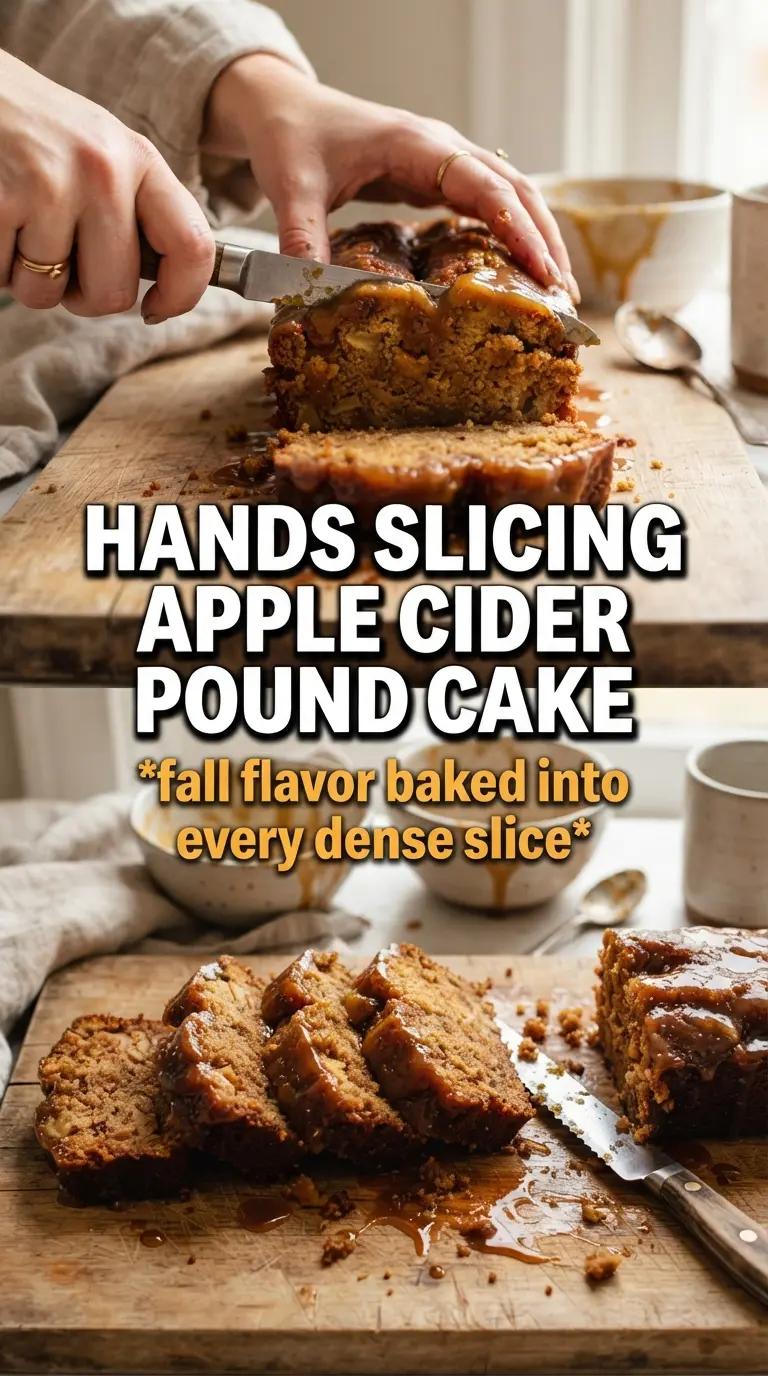
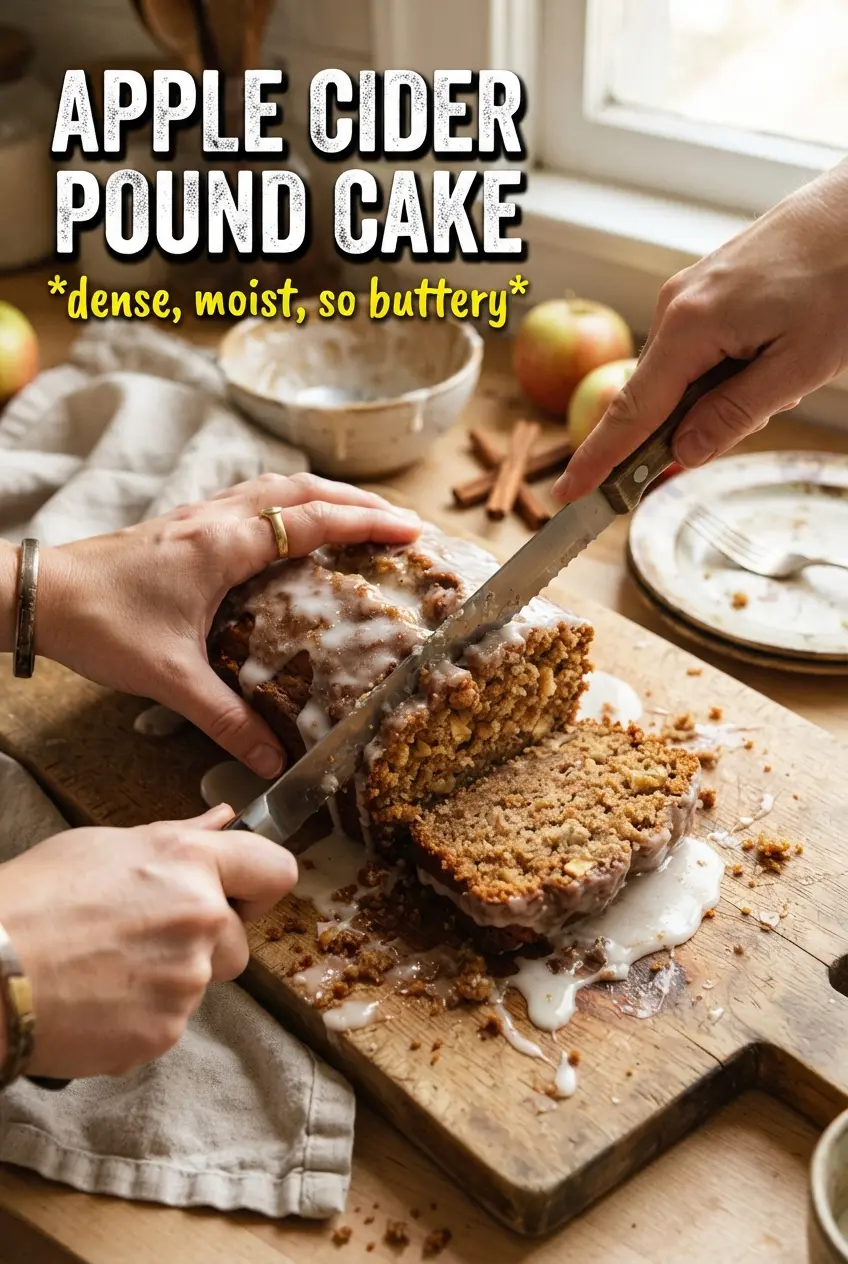
Apple cider pound cake bakes up with a tight, velvety crumb and a deep apple-cinnamon finish that tastes like the cider in the batter worked its way into every slice. The glaze settles into the ridges of the bundt pan and adds just enough sweetness to sharpen the spice without turning the cake sticky or heavy. It’s the kind of cake that slices cleanly, holds together on a plate, and still feels moist on day two.
The trick is reducing the cider before it goes into the batter. That concentrates the flavor and keeps the extra liquid from making the crumb loose or bland. The other thing that matters is the creaming step: butter and sugar need the full beat until the mixture turns pale and fluffy, because that’s what gives this pound cake its lift. Sour cream keeps the texture rich and soft without making it dense in a bad way.
Below, I’m covering the one step that keeps the cake from tasting flat, plus a few substitutions and storage notes that help this one stay just as good the next day.
The cider flavor came through beautifully, and the crumb stayed tender even after two days. Reducing the cider first made a huge difference — mine baked up with a clean slice and that glaze soaked into the ridges just like it should.
Save this apple cider pound cake for a dense, cider-bright bundt with a soft spiced crumb and a glaze that clings to every ridge.
The Step That Keeps This Pound Cake Dense, Not Heavy
Apple cider pound cake can go wrong in two easy ways: the cider gets added too strong and makes the crumb gummy, or the batter is mixed too aggressively after the flour goes in and the cake turns tight instead of tender. Reducing the cider first solves the first problem by concentrating flavor without adding extra water. The second problem is handled by alternating the dry ingredients with the sour cream, which keeps the batter smooth without overworking the gluten.
The batter should look thick and glossy when it goes into the pan, not pourable like a thin cake batter. If it looks loose, the butter was probably too warm or the cider wasn’t fully cooled before mixing. That can affect the structure enough to leave the center underbaked even when the edges are done.
- Reduced apple cider — This is the whole point of the recipe. Boil it down until you have half a cup, then cool it completely before using it. Warm cider can soften the butter too early and throw off the batter.
- Sour cream — It brings moisture and a gentle tang that keeps the cake from tasting flat. Full-fat sour cream works best here because the texture stays rich without turning greasy.
- Cinnamon and nutmeg — These don’t just add spice; they help the cider read as cider once the cake is baked. Fresh nutmeg gives a cleaner aroma, but pre-ground works fine.
- Bundt pan prep — Grease and flour every ridge. This cake has a fine crumb and a sugary glaze, so a well-prepped pan is what keeps the finished cake intact when you invert it.
What Each Ingredient Is Actually Doing in This Recipe
- Primary ingredient (the star) — Quality matters most. Choose the best you can find.
- Cooking medium (oil, butter, or broth) — This carries flavors and prevents dryness.
- Seasonings (salt, pepper, spices, herbs) — Layer flavors so nothing overpowers. Build depth gradually.
- Aromatics (garlic, onion, herbs) — Cook with fat to bloom flavors. Become the foundation.
- Supporting ingredients — Complement the main ingredient without overpowering it.
- Sauce or liquid (if applicable) — Brings flavors together. Balance richness with acid.
- Acid (lemon, vinegar, wine, or other) — Brightens and prevents flat-tasting results.
- Final finish (garnish, glaze, or sauce) — Prevents one-dimensional taste and adds visual appeal.
Building the Batter So It Bakes Evenly
Reducing the Cider First
Pour the cider into a small saucepan and cook it over medium heat until it’s reduced by half. You want the flavor to smell richer and a little sharper, not burnt or syrupy. Let it cool all the way before it touches the butter mixture. If it goes in warm, it can melt the butter at the wrong stage and the batter won’t trap air properly.
Creaming for Lift
Beat the butter and sugar until the mixture looks pale, fluffy, and almost whipped, which usually takes about five minutes. That step isn’t just about mixing; it creates the air pockets that keep a pound cake from eating like a brick. If the mixture still looks grainy and dense, keep going. The change in color and texture matters more than the clock.
Alternating Without Overmixing
Add the flour mixture and sour cream in turns, beginning and ending with flour. This keeps the batter from separating and helps the sour cream disappear evenly into the base. Stop mixing as soon as the last streak of flour is gone. If you keep beating after that point, the cake can turn tough and tunnel through the center.
Baking Until the Center Sets
Pour the batter into the prepared bundt pan and bake until a toothpick comes out clean, usually 70 to 80 minutes. The top should be deeply golden and the edges should pull just slightly from the pan. If the top browns too quickly, tent it loosely with foil near the end. Don’t rush the cooling time in the pan; those 15 minutes help the cake set enough to release cleanly.
How to Adapt This Cake Without Losing the Crumb
Dairy-Free Version With a Small Texture Tradeoff
Use a plant-based butter that works for baking and swap the sour cream for an unsweetened dairy-free yogurt with some body. The cake will still be moist, but the crumb won’t have quite the same richness or tang. Keep the cider reduction and the creaming step the same, since those matter more than the dairy itself.
Gluten-Free Swap for a More Tender Slice
Replace the all-purpose flour with a 1:1 gluten-free baking blend that includes xanthan gum. The cake will bake up a little more delicate, so let it cool fully before slicing. That extra cooling time helps the structure set and keeps the slices from crumbling.
Make It More Apple-Forward Without Watering It Down
Add 1/2 teaspoon of apple pie spice to the dry ingredients or brush the cooled cake with a little extra cider before glazing. What you don’t want is chopped fresh apple inside the batter, since that adds moisture in the wrong place and can make the center bake unevenly. The reduced cider already gives you the clean apple flavor without the extra risk.
Storage and Reheating
- Refrigerator: Store covered for up to 5 days. The crumb stays moist, but the glaze will soften a little on the surface.
- Freezer: This cake freezes well. Wrap individual slices or the whole cake tightly in plastic, then foil, and freeze for up to 2 months.
- Reheating: Warm slices at room temperature or microwave briefly just until barely softened. If you heat it too long, the butter in the crumb can melt out and the cake loses that clean, dense slice.
Answers to the Questions Worth Asking
Apple Cider Pound Cake
Ingredients
Equipment
Method
- Reduce 1 cup apple cider to 1/2 cup over medium heat, stirring occasionally, until thickened; cool completely.
- As the cake batter rests, cool the reduced cider completely so it blends without streaking.
- Preheat oven to 325F and grease and flour a 10-inch bundt pan so it releases cleanly.
- Whisk all-purpose flour, baking powder, baking soda, salt, cinnamon, and nutmeg until evenly combined.
- Beat softened butter and granulated sugar until very light and fluffy, about 5 minutes, scraping the bowl once.
- Add eggs one at a time, beating after each addition until incorporated.
- Mix in vanilla extract and the cooled reduced cider just until combined.
- Alternate adding the flour mixture and sour cream to the batter, beginning and ending with flour.
- Pour batter into the prepared bundt pan and bake 70-80 minutes at 325F until a toothpick comes out clean.
- Cool in the pan for 15 minutes to set the crumb.
- Invert and cool completely before glazing so the glaze stays glossy instead of melting in.
- Stir powdered sugar, apple cider, and cinnamon for the glaze, then drizzle over the cooled cake.