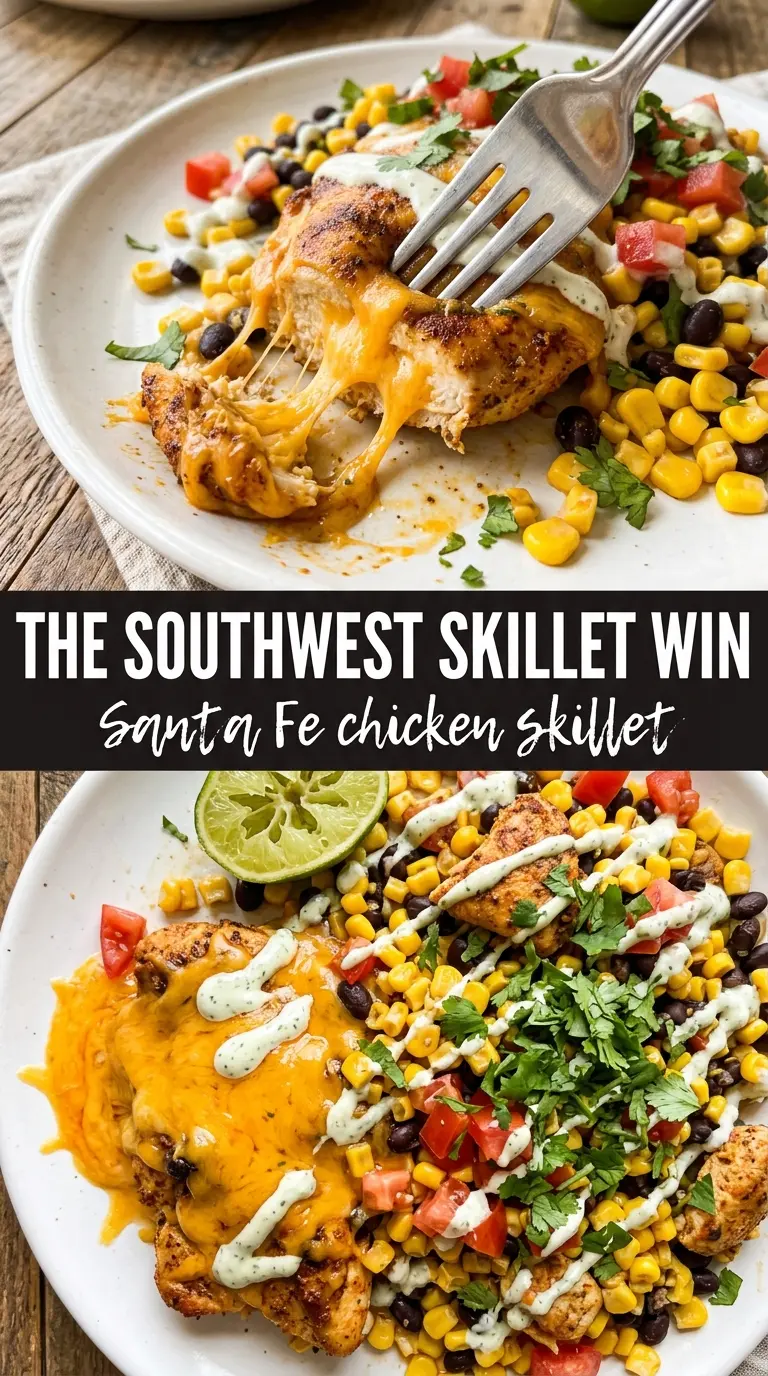
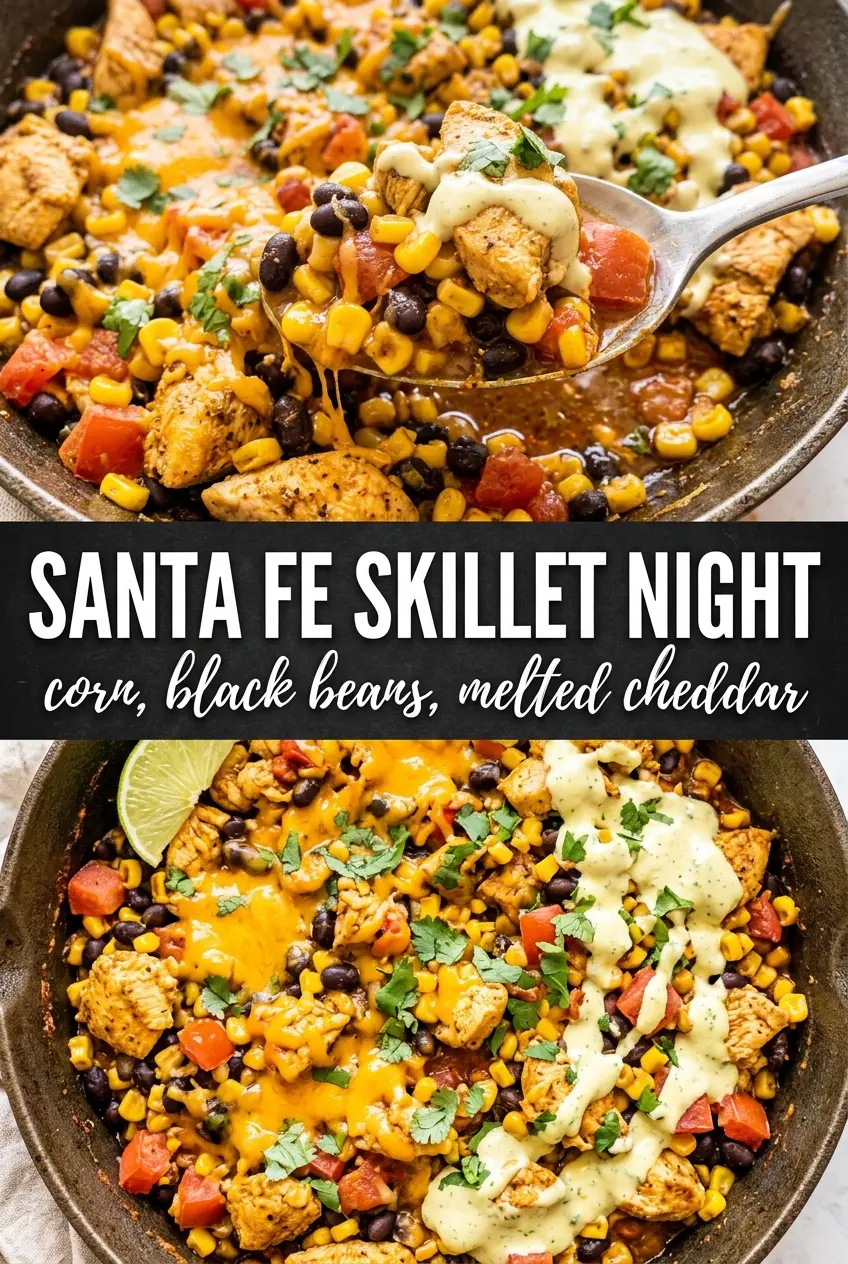
Golden chicken, smoky broth, sweet corn, and melted cheddar make this Santa Fe Chicken Skillet the kind of dinner that lands on the table fast but still tastes like you put in real effort. The chicken sears first, which gives the whole pan a deeper, more savory base before the beans, tomatoes, and broth come together underneath it. When the cheese melts over the top, the skillet turns into a full meal with enough sauce to spoon over rice, tortillas, or just a pile of avocado on the side.
What makes this version work is the order. The chicken gets seasoned before it hits the pan, so the taco spice blooms in the hot oil instead of disappearing into the sauce. The black beans and corn hold their shape, the Rotel adds enough acidity and heat to keep the dish lively, and the broth loosens everything just enough to simmer without turning watery. A cast iron skillet gives you the best sear, but the real key is not crowding the pan or rushing the simmer.
Below, I’ve included the small details that keep the chicken juicy and the sauce balanced, plus a few swaps if you need to work with what’s in the pantry.
The chicken stayed juicy, the sauce thickened up around the beans, and the cheddar melted into the skillet instead of getting greasy. I served it with lime wedges and my husband went back for seconds before I even sat down.
Save this Santa Fe Chicken Skillet for the nights when you want one pan, smoky Tex-Mex flavor, and melted cheddar without a long ingredient list.
The Part That Keeps the Chicken Juicy Instead of Drying Out
The biggest mistake with a skillet chicken dinner is letting the chicken overcook while you wait for the sauce to catch up. Here, the sear does most of the flavor work up front, then the chicken finishes gently in the simmering bean-and-corn mixture. That second stage matters because it keeps the breasts from turning stringy or chalky.
Thickness matters more than people think. If one breast is much larger than the others, pound it to even thickness before seasoning so all four pieces finish at the same time. The target is 165°F in the thickest part, and once you hit that, pull the pan off the heat soon after the cheese melts.
What the Seasoning, Beans, and Rotel Are Each Doing Here
- Taco seasoning — This is the fast path to built-in flavor. It brings chili powder, cumin, garlic, and salt in one step, and it sticks best when rubbed onto the chicken before searing. If your blend is salt-free, add a little extra salt to the chicken before it hits the pan.
- Black beans — They add body and make the skillet feel like a full meal instead of just chicken in sauce. Canned beans are perfect here, but rinse them well so the sauce doesn’t turn muddy or overly thick.
- Frozen corn — Frozen corn works better than canned because it keeps a little snap. No need to thaw it first; it goes straight into the skillet and warms through without losing texture.
- Rotel — The tomatoes with green chiles give you acidity, moisture, and a gentle kick all at once. Regular diced tomatoes won’t taste the same unless you add chopped green chiles and a pinch of extra seasoning.
- Cheddar — Sharp cheddar melts with enough personality to stand up to the cumin and chiles. Pre-shredded works, but freshly shredded melts smoother and covers the top in a cleaner layer.
Building the Skillet So the Sauce Stays Clean and the Chicken Stays Golden
Searing the Chicken First
Heat the olive oil in a large cast iron skillet over medium-high heat until it shimmers, then lay in the seasoned chicken breasts without crowding them. You want a deep golden crust, not pale steamed chicken, so leave them alone for the first few minutes and let the pan do its work. If the seasoning starts to scorch before the chicken browns, the heat is too high.
Making the Bean and Corn Base
After the chicken comes out, add the beans, corn, Rotel, and broth to the same skillet. Stir and scrape up the browned bits from the bottom because that’s where the flavor lives. The mixture should look loose and saucy at this stage; if it already seems thick, the heat is too high or the broth amount got cut back too far.
Finishing Under a Cover
Set the chicken back into the simmering mixture, cover the pan, and cook until the center reaches 165°F. The lid traps steam so the chicken finishes without drying out, and it also helps the beans and corn absorb the smoky broth. Add the cheddar only after the chicken is cooked through; if you put it on too early, it can turn oily instead of melting into a smooth blanket.
The Last Two Minutes
Once the cheese goes on, cover the skillet just until it melts. Then finish with cilantro, sour cream, avocado, and lime wedges while the pan is still hot. The lime matters more than it looks on paper — a quick squeeze lifts the whole skillet and keeps the cheese from feeling heavy.
How to Adapt This When You Need a Different Shortcut or a Lighter Finish
Make It Dairy-Free
Skip the cheddar and finish with avocado, cilantro, and extra lime instead. You’ll lose the creamy melt on top, but the skillet still tastes complete because the broth, chiles, and browned chicken carry enough flavor on their own.
Use Chicken Thighs Instead
Boneless skinless thighs stay even juicier and handle a little extra simmering without drying out. They may need a few more minutes under the lid, so cook to temperature instead of relying on the clock.
Make It Spicier
Use hot Rotel or add a pinch of cayenne to the taco seasoning before rubbing it on the chicken. That keeps the heat layered through the whole dish instead of only living in the sauce.
Stretch It for More Servings
Add an extra can of beans or serve the skillet over rice to feed more people without changing the cooking method. The sauce gets a little looser, which is a good thing if you want it to spoon over grains.
Storage and Reheating
- Refrigerator: Store leftovers in an airtight container for up to 4 days. The chicken stays tender, though the beans will thicken the sauce as it chills.
- Freezer: It freezes well for up to 2 months, but the texture of the tomatoes softens a bit after thawing. Freeze in portions so you can reheat only what you need.
- Reheating: Warm gently on the stovetop over low heat with a splash of broth or water. High heat is the mistake here — it dries the chicken before the center is hot again.
Answers to the Questions Worth Asking
Santa Fe Chicken Skillet
Ingredients
Equipment
Method
- Rub boneless skinless chicken breasts with taco seasoning on both sides until evenly coated. Set aside while you heat the skillet.
- Heat olive oil in a large cast iron skillet over medium-high heat until shimmering, then sear the chicken for 4-5 minutes per side until golden. Remove to a plate.
- Add black beans, frozen corn, diced tomatoes with green chiles (Rotel), and chicken broth to the skillet and stir to combine. Bring to a simmer, then keep it bubbling gently.
- Nestle the chicken breasts into the bean and corn mixture, cover, and cook over medium heat for 8-10 minutes. Cook until the chicken reaches 165°F.
- Sprinkle shredded cheddar cheese over the top evenly, then cover for 2 minutes until melted. Let the skillet rest briefly off heat so the cheese sets.
- Garnish with fresh cilantro, sour cream, avocado, and lime wedges, then serve hot. Finish with extra lime to brighten the smoky broth.