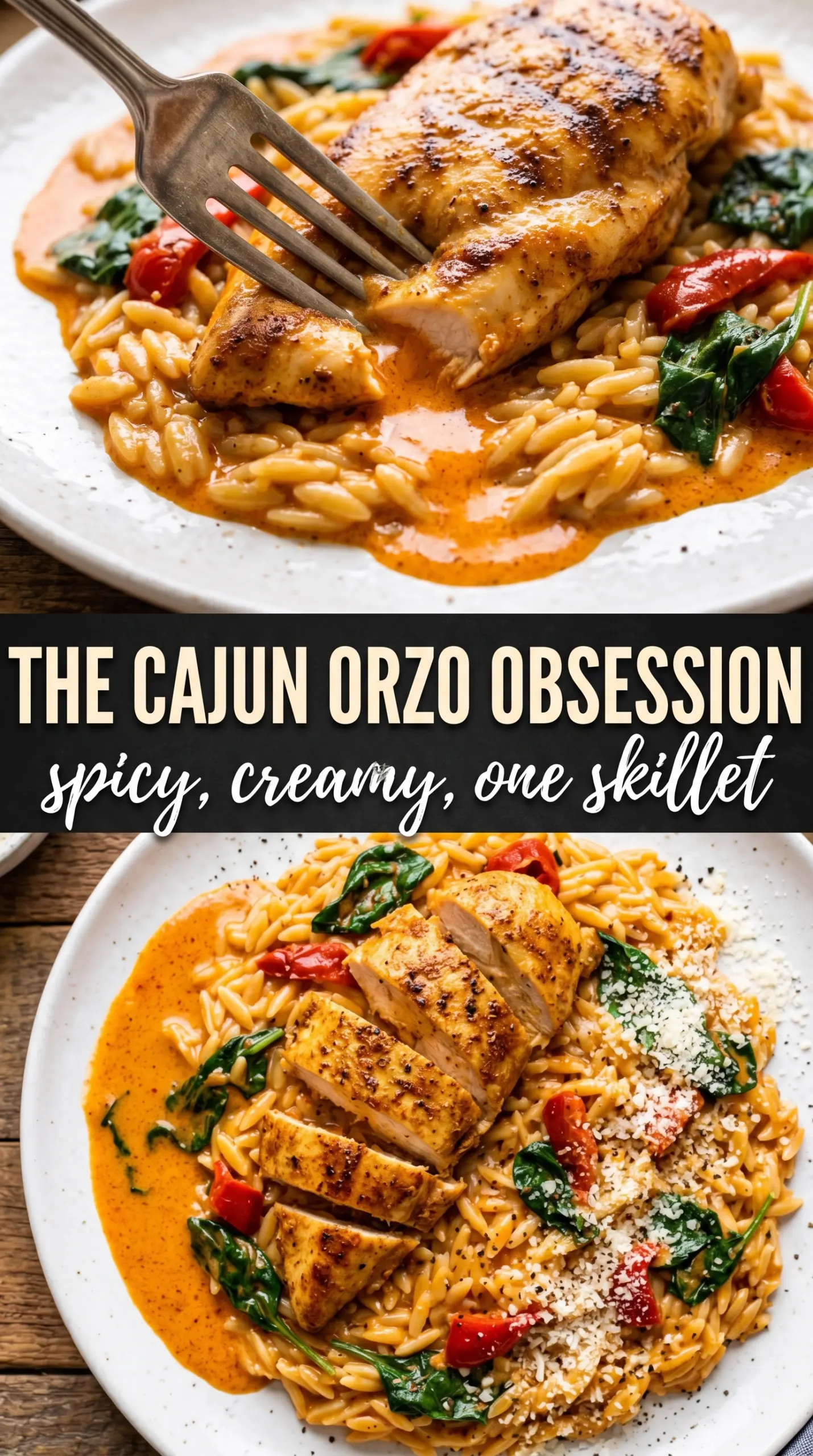
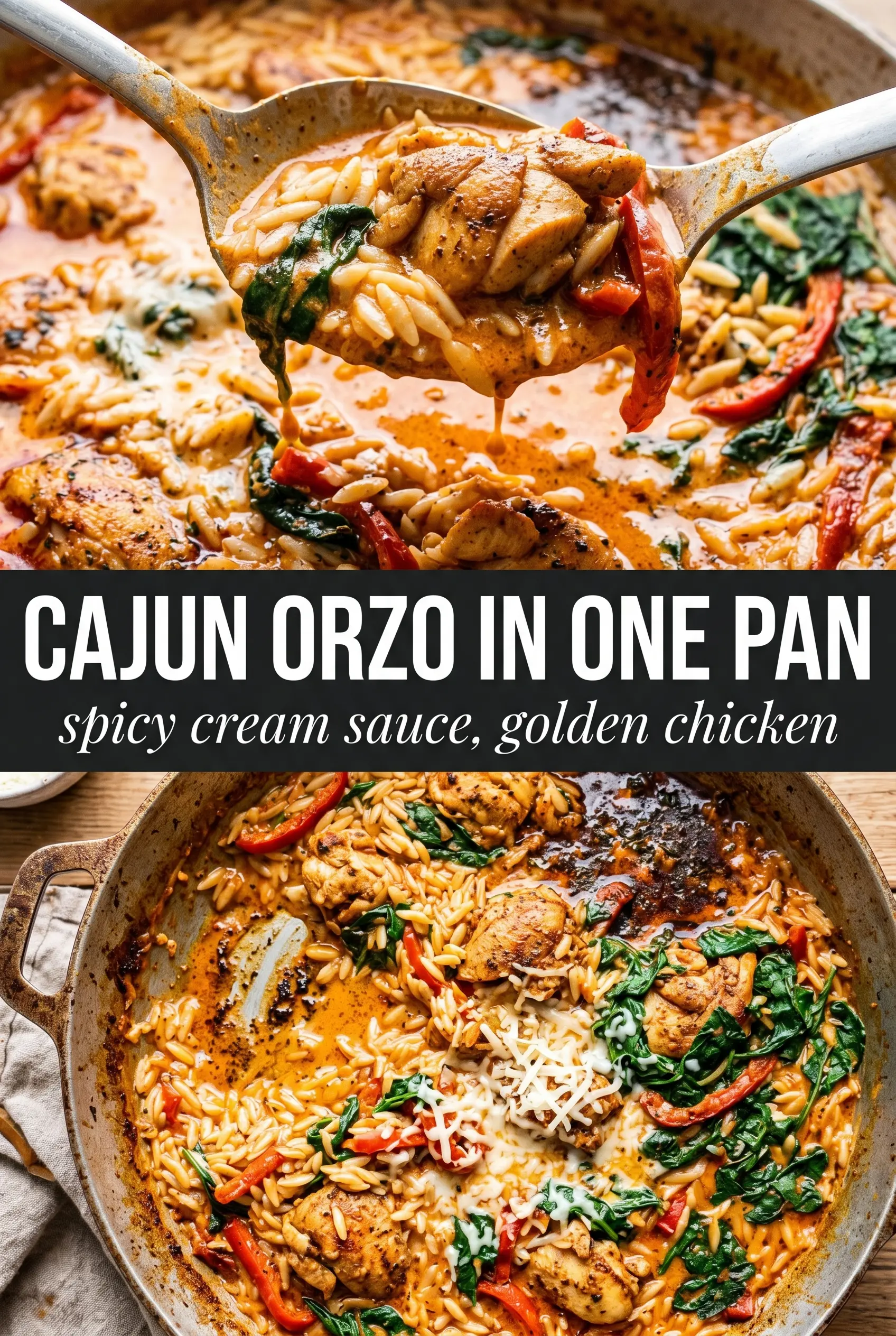
Blackened Cajun chicken thighs over creamy orzo hit the table with the kind of bold, one-pan comfort that keeps people coming back for seconds. The chicken brings smoky heat and a crisp, well-seasoned crust, while the orzo turns silky and rich without losing the punch from the peppers, garlic, and Cajun spice in the pan.
What makes this version work is the way the whole dish builds in layers. The chicken sears first, leaving seasoned drippings behind for the vegetables and orzo, and the pasta gets a quick toast before the broth goes in so it keeps a little bite instead of turning mushy. A splash of cream and Parmesan at the end gives the sauce body, but the lemon at the table keeps it from feeling heavy.
Below, I’m walking through the little timing details that matter, plus the swaps I’d actually use if I needed to stretch the dish, lighten it up, or work with what’s already in the fridge.
The chicken got that dark Cajun crust I was hoping for, and the orzo stayed creamy without turning gluey. The lemon at the end made the whole pan taste brighter.
Save this Cajun Chicken Orzo for the nights when you want blackened chicken, creamy pasta, and one pan to do all the work.
The Reason the Chicken Sear Comes First and Everything Else Builds From It
The chicken has to go in first because that dark crust is where the dish gets its backbone. If you crowd the pan or rush the heat, the thighs will steam instead of blacken, and the Cajun seasoning loses that toasted edge that makes the whole skillet taste finished.
Those browned bits left behind matter. The peppers, onion, garlic, and orzo all pick up flavor from the same pan, which is why this tastes fuller than a version where everything is cooked separately and tossed together at the end. The key is to remove the chicken once it’s cooked through, then move straight into the vegetables before the fond has a chance to burn.
What Each Ingredient Is Actually Doing in This Recipe
- Primary ingredient (the star) — Quality matters most. Choose the best you can find.
- Cooking medium (oil, butter, or broth) — This carries flavors and prevents dryness.
- Seasonings (salt, pepper, spices, herbs) — Layer flavors so nothing overpowers. Build depth gradually.
- Aromatics (garlic, onion, herbs) — Cook with fat to bloom flavors. Become the foundation.
- Supporting ingredients — Complement the main ingredient without overpowering it.
- Sauce or liquid (if applicable) — Brings flavors together. Balance richness with acid.
- Acid (lemon, vinegar, wine, or other) — Brightens and prevents flat-tasting results.
- Final finish (garnish, glaze, or sauce) — Prevents one-dimensional taste and adds visual appeal.
What the Cajun Seasoning, Orzo, and Cream Each Do in the Pan
- Cajun seasoning — This carries the heat, salt, and smoky paprika notes that define the dish. Split it between the chicken and the vegetables so the flavor lands in two places instead of sitting only on the meat.
- Chicken thighs — Thighs stay juicy under high heat better than breasts, which matters here because the sear is aggressive. If you use chicken breast, cut it thinner and pull it earlier so it doesn’t dry out while the orzo finishes.
- Orzo — This pasta acts like a risotto-style base and absorbs the broth fast, which gives you that creamy texture without a separate sauce pan. Don’t swap in a larger pasta shape and expect the same result; the cooking time and liquid balance won’t line up.
- Heavy cream and Parmesan — These finish the sauce and give it body. Half-and-half can work in a pinch, but the sauce will be looser and less plush, so keep the simmer gentle and don’t let it boil hard once the dairy goes in.
- Bell peppers, onion, and garlic — These are not filler. They add sweetness and moisture that balance the spice, and the garlic gets added late so it perfumes the pan instead of turning bitter.
Building the Skillet So the Orzo Stays Creamy, Not Mushy
Blackening the Chicken
Rub the thighs with one tablespoon of Cajun seasoning, then sear them in hot oil over medium-high heat until the outside is deeply browned and the center reaches 165°F. If the seasoning looks like it’s smoking too fast, the heat is too high and the spice will taste burnt instead of bold. Let the chicken rest on a plate while you build the rest of the pan so the juices stay in the meat.
Cooking the Vegetables in the Drippings
Add the peppers and onion to the same skillet and cook until they soften and the edges start to pick up a little color. That’s when the pan has enough flavor for the garlic and remaining seasoning to bloom. Garlic only needs about a minute; any longer and it can turn sharp and bitter, which fights the cream later.
Toasting the Orzo Before the Broth
Stir the dry orzo into the vegetables and let it toast for a minute before pouring in the broth. This tiny step keeps the pasta from tasting flat and helps it hold its shape while it simmers. Stir often once the liquid is in, because orzo settles fast and can stick to the bottom if you walk away.
Finishing With Cream and Parmesan
When the broth is mostly absorbed and the orzo is tender, stir in the cream and Parmesan and let the skillet simmer gently until the sauce turns glossy. If it gets too thick, a splash of broth loosens it right away. The goal is creamy and spoonable, not stiff like a casserole.
How to Adapt This Cajun Chicken Orzo Without Losing What Makes It Good
Make it dairy-free
Swap the heavy cream for full-fat coconut milk and leave out the Parmesan, then finish with a squeeze of lemon and a little extra seasoning. You’ll lose the sharp nutty edge from the cheese, but the sauce still turns rich and spoonable.
Use chicken breasts instead of thighs
Chicken breasts work, but they need a lighter hand. Pound them into even pieces or slice them into cutlets so they cook quickly and don’t dry out while the orzo finishes.
Make it milder
Cut the Cajun seasoning back by a teaspoon and add an extra pinch of smoked paprika for warmth without as much heat. The dish will still taste layered and savory, just with less burn on the finish.
Stretch it with sausage
Add sliced andouille with the vegetables if you want a smokier, heartier pan. It deepens the Cajun flavor and makes the dish feel a little more like a classic skillet supper.
Storage and Reheating
- Refrigerator: Store in an airtight container for up to 4 days. The orzo will thicken as it sits, which is normal.
- Freezer: It freezes, but the cream sauce can turn a little grainy when thawed. If you plan to freeze it, stop before adding the cream and Parmesan, then finish those when reheating.
- Reheating: Warm gently on the stove over low heat with a splash of broth or water. High heat is what makes the sauce split and the chicken dry out, so keep the simmer quiet.
Answers to the Questions Worth Asking
Cajun Chicken Orzo
Ingredients
Equipment
Method
- Rub the chicken thighs with 1 tablespoon Cajun seasoning. Heat the skillet over medium-high heat with 2 tablespoons olive oil and sear the chicken until blackened and cooked through to 165°F, 4-5 minutes per side.
- Remove the chicken from the skillet and slice it. Set it aside so the juices settle before adding it back to the orzo.
- In the same skillet, cook the diced bell peppers and onion over medium heat for 4 minutes. Stir until the onion softens and the peppers begin to turn tender.
- Add the minced garlic, remaining Cajun seasoning, and smoked paprika. Cook for 1 minute, stirring, until fragrant and darkly aromatic.
- Add the uncooked orzo and toast for 1 minute in the skillet. Keep stirring so the pasta lightly toasts instead of clumping.
- Pour in the chicken broth and bring to a simmer. Cook uncovered for 10-12 minutes, stirring often, until the orzo is tender.
- Stir in the heavy cream and grated Parmesan cheese. Simmer for 2 minutes until the sauce is creamy and coats the orzo.
- Top the orzo with the sliced Cajun chicken. Keep it over low heat just until warmed through.
- Garnish with sliced green onions and serve with lemon wedges. Finish with a squeeze of lemon to brighten the Cajun heat.