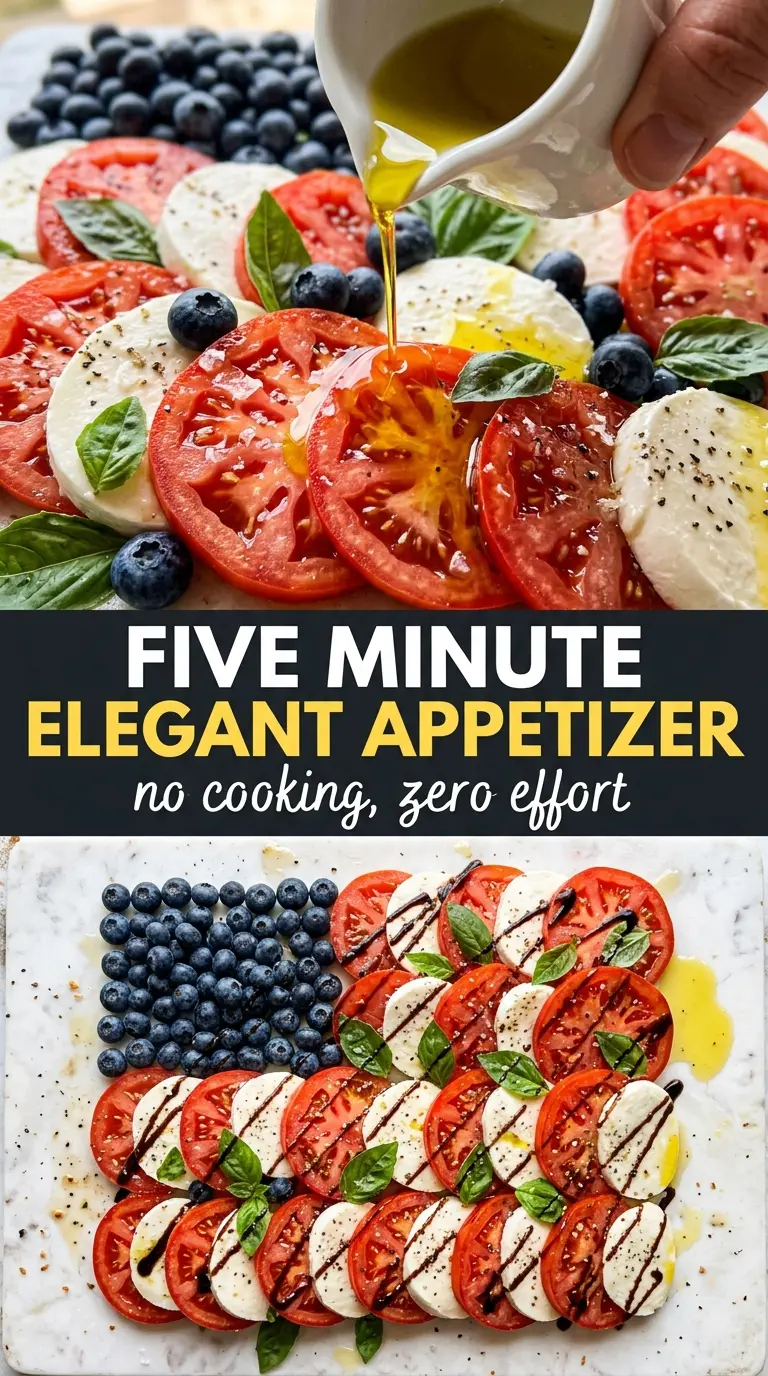
Juicy tomatoes, milky mozzarella, and sweet blueberries make this caprese salad feel bright, balanced, and a little unexpected in the best way. The wreath-style arrangement gives it a festive look without turning it into a fussy centerpiece, and the flavor lands exactly where a good summer appetizer should: fresh, salty, creamy, and just sharp enough from the balsamic glaze.
What makes this version work is the contrast. The tomatoes need to be ripe enough to taste like something on their own, because they carry most of the savory weight. The blueberries aren’t there as a gimmick; they add little bursts of sweetness that play against the basil and balsamic, which keeps the whole plate from tasting flat. Slice the mozzarella and tomatoes evenly so the platter eats cleanly and looks intentional instead of crowded.
Below, I’ve included the one thing that matters most when you’re assembling this salad, plus a few smart swaps for when you want to adjust the look or make it fit what’s in your fridge.
The wreath looked beautiful on the table, and the blueberries actually worked with the tomato and basil instead of tasting odd. I served it right after assembling, and the mozzarella stayed creamy while the balsamic glaze tied everything together.
Save this red, white & blue caprese salad for the day you want a patriotic appetizer that looks polished and comes together in 15 minutes.
The Layering Trick That Keeps This Caprese Looking Clean
The biggest mistake with a composed caprese salad is stacking everything too tightly. Once the tomatoes start sweating, the platter turns watery and the colors blur together. This version works because the slices are overlapped with just enough space for the blueberries and basil to tuck in without crushing the cheese or sliding around in the juices.
Another small but important point: serve it right after assembling. Salt pulls moisture from the tomatoes, and balsamic glaze softens fast as it sits. If you need to prep ahead, slice the cheese and tomatoes first, then build the wreath at the last minute so the platter still looks crisp and the basil stays bright.
What Each Ingredient Is Actually Doing in This Recipe
- Primary ingredient (the star) — Quality matters most. Choose the best you can find.
- Cooking medium (oil, butter, or broth) — This carries flavors and prevents dryness.
- Seasonings (salt, pepper, spices, herbs) — Layer flavors so nothing overpowers. Build depth gradually.
- Aromatics (garlic, onion, herbs) — Cook with fat to bloom flavors. Become the foundation.
- Supporting ingredients — Complement the main ingredient without overpowering it.
- Sauce or liquid (if applicable) — Brings flavors together. Balance richness with acid.
- Acid (lemon, vinegar, wine, or other) — Brightens and prevents flat-tasting results.
- Final finish (garnish, glaze, or sauce) — Prevents one-dimensional taste and adds visual appeal.
What Each Ingredient Is Actually Doing in This Dish
- Heirloom or beefsteak tomatoes — These carry the savory, juicy backbone of the salad. Use the ripest tomatoes you can find; pale, hard tomatoes will make the whole dish taste dull. Slice them evenly so they drape neatly around the platter instead of collapsing.
- Fresh mozzarella — This gives you the creamy, milky contrast that makes caprese feel complete. Cheap mozzarella won’t behave the same way here, so use fresh mozzarella packed in liquid if you can. Pat it dry before slicing so the platter doesn’t get watery.
- Blueberries — They add the blue color and a sweet pop that keeps the salad from tasting like a standard caprese copycat. Use firm, dry berries; soft ones can bleed onto the cheese. If blueberries aren’t available, blackberries work, but the look is darker and less patriotic.
- Fresh basil — Basil is what ties the tomatoes and mozzarella together and keeps the fruit from feeling out of place. Tear larger leaves if they’re floppy, or tuck in whole small leaves for a cleaner look. Dried basil won’t work here.
- Extra virgin olive oil and balsamic glaze — The olive oil rounds out the tomato and cheese, while the glaze adds sweetness and tang in a way plain vinegar can’t. Use a good olive oil because it’s tasted raw. If you only have balsamic vinegar, reduce it briefly until it lightly coats a spoon.
How to Build the Wreath So the Platter Stays Sharp
Start with Even Slices
Cut the tomatoes and mozzarella about 1/4-inch thick so each bite has a similar balance of creamy and juicy. If the slices are too thin, they flop; if they’re too thick, the wreath looks clunky and hard to eat. Keep the tomato slices on paper towels for a minute if they’re especially juicy, because extra surface moisture is what causes the platter to puddle.
Work Around the Platter in Layers
Lay the tomato and mozzarella slices in an alternating circle, overlapping each piece slightly like shingles. Don’t jam them together; the small gaps are where the blueberries and basil belong. The pattern should look full, but you still want to see distinct rounds of red, white, and blue.
Finish With Oil, Glaze, and Salt at the End
Drizzle the olive oil first so it settles into the tomatoes and cheese, then add the balsamic glaze in a light spiral or zigzag. Salt and pepper go on right before serving, since the salt starts drawing moisture out almost immediately. If you season too early, the salad loses its clean edges and the basil wilts faster.
Small Changes That Still Keep the Salad Working
Make It Dairy-Free
Swap the mozzarella for a firm dairy-free mozzarella-style cheese that slices cleanly. You’ll lose a little of the classic milky richness, but the blueberries, basil, and balsamic still give you a fresh, balanced platter.
Use Blackberries Instead of Blueberries
Blackberries give you a deeper, darker blue-purple look and a slightly tarter bite. They’re a little larger and more fragile, so tuck them gently into the gaps instead of piling them on top of the cheese.
Turn It Into a Smaller Starter Plate
Use one tomato, half the mozzarella, and enough berries to fill a small round platter or board. The flavor stays the same, but the presentation feels more intentional for a smaller dinner or a two-person appetizer.
Storage and Reheating
- Refrigerator: Best served immediately. If you need to hold it, keep the components separate for up to 1 day and assemble just before serving; once dressed, the tomatoes release liquid and the basil softens.
- Freezer: Freezing doesn’t work well here. The tomatoes and mozzarella lose their texture and turn watery when thawed.
- Reheating: No reheating needed. If the platter has been chilled, let it sit at room temperature for 10 to 15 minutes before serving so the mozzarella loses its fridge chill and the flavors come forward.
Answers to the Questions Worth Asking
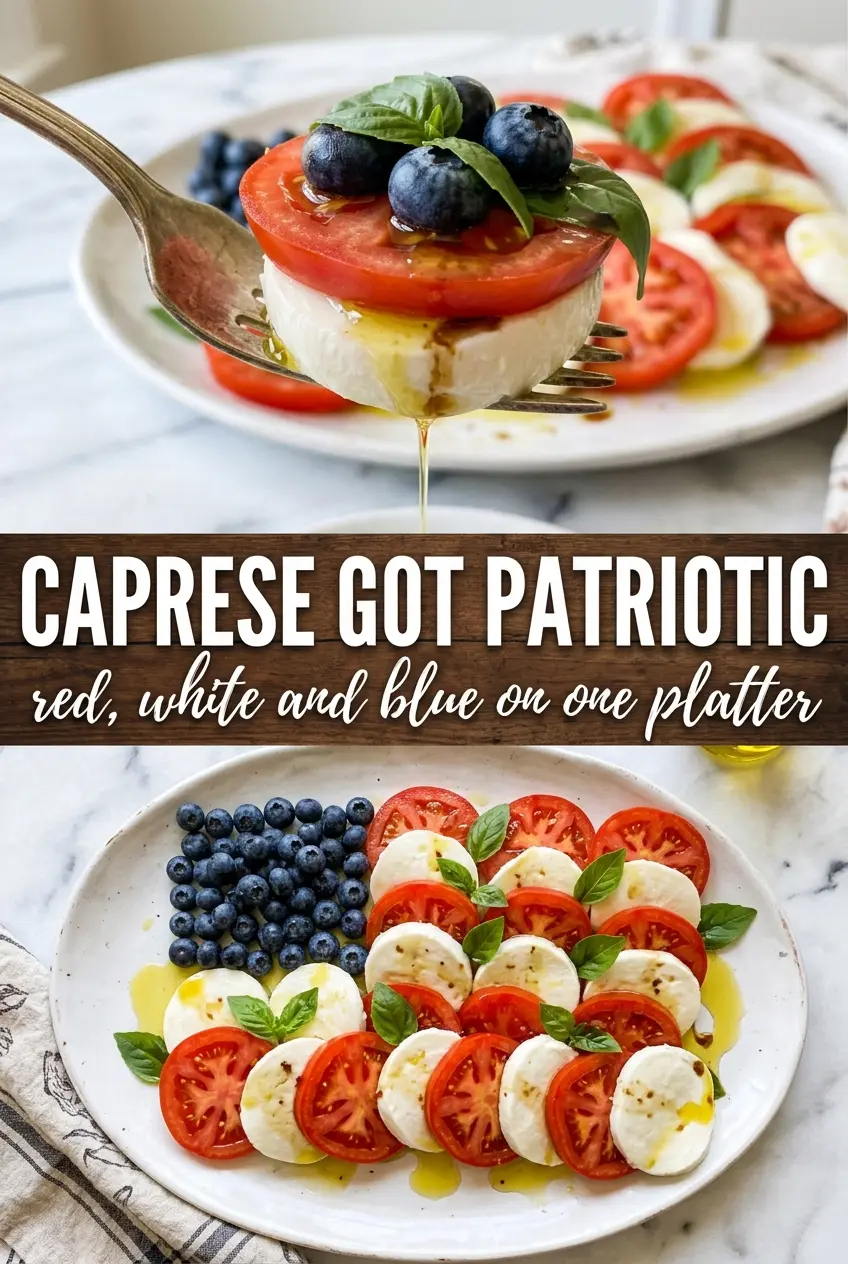
Red, White & Blue Caprese Salad
Ingredients
Method
- Arrange alternating slices of tomato and mozzarella in an overlapping circle or wreath pattern on a large serving platter.
- Tuck fresh blueberries in between and around the slices to fill gaps and add the blue element.
- Scatter fresh basil leaves throughout the wreath, tucking some between layers for pops of green.
- Drizzle extra virgin olive oil and balsamic glaze evenly across the whole platter.
- Finish with flaky sea salt and cracked black pepper to taste, then serve immediately.