Baked sour cream and onion chicken comes out with a crackled, golden top and a juicy center that stays tender under all that crunchy coating. The sour cream layer keeps the chicken moist while the onion soup mix and Parmesan bring in that salty, savory punch that tastes like a weeknight dinner with a little extra effort, even though the prep is fast.
What makes this version work is the double-texture topping. The sour cream mixture acts like glue and a built-in seasoning layer, while the crushed crispy onions mixed with Parmesan bake into a crust that turns puffy and deeply browned instead of slipping off the chicken. Pressing it on firmly matters more than people think; that’s what helps it set into a real crust instead of a loose sprinkle.
Below, I’ve included the small details that keep the coating from turning soggy, plus a few ways to adjust it if you want a lighter version or need to stretch it for a bigger family dinner.
The topping baked up crisp instead of soggy, and the chicken stayed juicy all the way through. I used thin breasts and it was done right on time, with the onion flavor coming through in every bite.
Love the crispy onion crust on this sour cream and onion chicken? Save it to Pinterest for the nights when you want a golden baked chicken dinner with almost no fuss.
The Part Most Baked Chicken Gets Wrong
The biggest mistake with a topping like this is treating it like a breadcrumb crust. It isn’t. The sour cream layer underneath needs to be thick enough to hold the onion mixture in place, and the oven needs enough heat to brown the topping before the chicken overcooks. If the coating looks pale at the end, the chicken may still be fine, but the texture won’t have that crisp, crackly finish that makes this dish worth making.
Chicken breasts are the other place people run into trouble. If they’re uneven or very thick, the edges dry out before the center is ready. Pounding them to an even thickness or using smaller breasts keeps the bake on schedule and gives you more of that juicy middle with a properly set crust.
What Each Ingredient Is Actually Doing In This Dish

- Chicken breasts — Boneless, skinless breasts keep this quick and let the topping do the work. If yours are very thick, split them or pound them a little so the bake time stays in range and the crust doesn’t burn before the center reaches 165°F.
- Sour cream — This is the moisture and tang in one ingredient. Greek yogurt can work in a pinch, but it tastes sharper and can bake up a little less plush, so sour cream gives the most reliable creamy coating.
- Onion soup mix — This brings salt, onion flavor, and a little savory depth all at once. Don’t replace it with plain onion powder unless you also add extra salt and a bit of bouillon-style seasoning, or the topping tastes flat.
- Crispy fried onions — Crushed onions are what turn the topping into a real crust. Leave some pieces slightly larger for texture; if you crush them into dust, you lose the crunch that makes the finish so good.
- Parmesan cheese — Parmesan helps the topping brown and adds a salty edge that balances the sour cream. Grated Parmesan works better than the shaker can here because it melts and clings instead of staying powdery.
- Garlic powder — This fills in the savory gap and rounds out the onion flavor. Fresh garlic is too wet for this topping and can burn before the crust finishes.
Getting the Coating To Stick and Brown
Mixing the Creamy Base
Stir the sour cream and onion soup mix until the mixture looks completely even, with no dry pockets hiding at the bottom. That step matters because any unmixed seasoning tends to clump and bake into harsh little salty spots. Spread it over the chicken in a thick layer, not a thin smear. If the layer is too thin, the onion topping won’t have enough surface to grab onto.
Building the Crispy Top
Combine the crushed fried onions, Parmesan, and garlic powder in a separate bowl, then press the mixture firmly onto the sour cream. Don’t sprinkle it from a height; press it down with your fingers so it actually adheres before the heat starts working. You want an even blanket of topping, but a few uneven ridges are welcome because they brown into extra crisp edges. If the topping looks dry and patchy, it usually means the sour cream layer was too thin.
Baking Until the Center Is Done
Bake the chicken at 375°F until the topping turns deep golden and the thickest part of the chicken reaches 165°F. The crust should look puffed and set, not wet in the middle. If the top browns too quickly, tent it loosely with foil for the last few minutes rather than turning the heat down; lowering the heat can leave you with a pale, soft crust.
Finishing With Fresh Onion Flavor
Let the chicken rest for a few minutes before serving so the juices settle and the topping stays in place. Add the extra crispy onions and chives at the end, not before baking, or they’ll lose their crunch and the fresh flavor will disappear. The chives aren’t just garnish here; they cut through the richness and make the whole plate taste brighter.
How To Adjust It Without Losing The Crunch
Use chicken thighs for a richer finish
Boneless, skinless thighs stay juicier and give you a little more forgiveness if you’re nervous about overbaking. They usually need a few extra minutes in the oven, and the topping can look darker because thighs bring more surface fat to the party.
Swap in Greek yogurt for a lighter coating
Greek yogurt works if you want a tangier, slightly leaner bake. It won’t taste as plush as sour cream, and it can separate a little more easily, so keep the oven at the stated temperature and don’t overmix the base.
Make it gluten-free with certified ingredients
Use a gluten-free onion soup mix and certified gluten-free crispy onions if needed. The flavor stays on track, but the crisp texture can vary by brand, so look for onions that hold their shape after crushing instead of turning sandy.
Stretch it for a bigger dinner
You can tuck the coated chicken into a larger baking dish and keep the pieces from crowding each other. Crowding traps steam, and steam is the enemy of that crisp top, so leave space around each breast if you want the coating to brown properly.
Storage and Reheating
- Refrigerator: Store leftovers in an airtight container for up to 3 days. The crust softens in the fridge, but the chicken stays moist.
- Freezer: It freezes, but the topping loses some crunch after thawing. Freeze cooled portions tightly wrapped, then thaw in the fridge before reheating.
- Reheating: Warm in a 350°F oven until heated through, uncovered, so the coating has a chance to crisp back up. The microwave will work in a pinch, but it turns the onion topping soft fast.
The Things That Trip People Up With This Dish
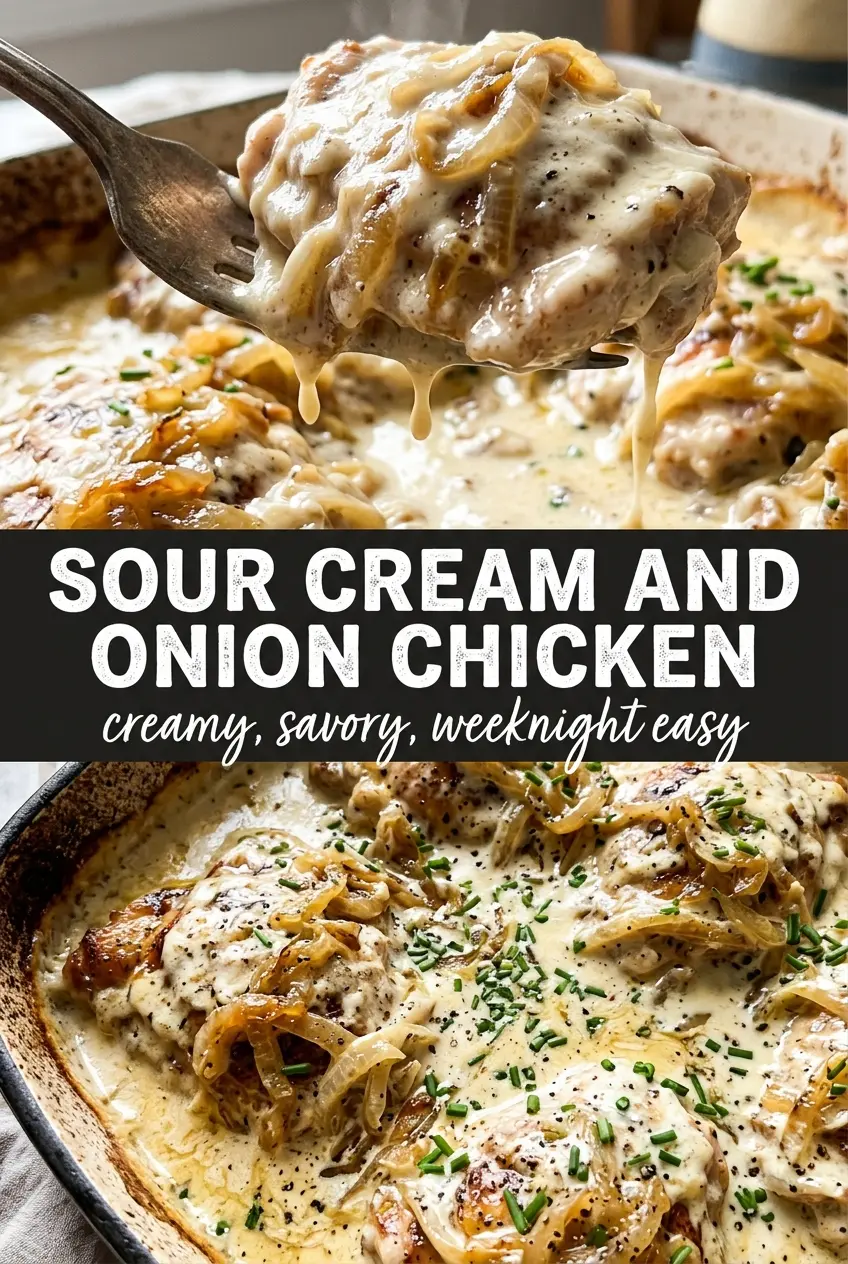
Sour Cream and Onion Chicken
Ingredients
Equipment
Method
- Preheat the oven to 375°F and grease a baking dish.
- Mix the sour cream and onion soup mix until well combined.
- In a separate bowl, combine the crushed crispy fried onions, Parmesan, and garlic powder.
- Season the chicken breasts with salt and pepper, then coat each breast thickly with the sour cream mixture.
- Press the onion-Parmesan mixture firmly onto the top of each sour cream-coated breast.
- Bake for 25-28 minutes at 375°F until the topping is golden and the internal temperature reaches 165°F, with a visibly crackled, puffy crust.
- Garnish with extra crispy fried onions and fresh chives, letting the topping stay crisp as it rests briefly after baking.