Steaming ramen by a campfire has a way of making a fast dinner feel like the best meal of the trip. The noodles soak up the broth, the eggs turn the pot into something closer to a full meal than a late-night snack, and the vegetables bring just enough color and texture to keep every bite interesting. It’s the kind of campsite food that disappears fast because it hits the table hot, salty, and comforting.
This version works because it leans on timing. The vegetables go in while the water is still boiling so they heat through without turning limp, and the eggs are cracked in late enough to poach gently instead of shredding into the broth. Saving the seasoning packets until the end keeps the broth from tasting flat or overly salty while the noodles cook.
Below, I’ll walk through the small details that matter most over an open fire, plus a few practical swaps for when your cooler is limited or you want to stretch the pot a little farther.
The eggs poached right in the broth and the noodles held up better than I expected over the camp stove. Adding the seasoning at the end made the broth taste clean instead of too salty.
Save this campfire ramen for the nights when you want a hot, one-pot dinner with eggs, vegetables, and almost no cleanup.
The Part People Get Wrong: Adding the Eggs Too Soon
Campfire ramen goes sideways when the eggs hit the pot before the noodles have softened. The broth still needs a little time to settle into a steady boil, and if the eggs go in too early, the whites spread into wisps instead of holding soft, poached shapes. You want the noodles and vegetables mostly cooked first, then the eggs get a few minutes in gently bubbling water so they set without turning rubbery.
The other common mistake is seasoning the water from the start. Ramen packets are salty enough on their own, and over an open fire the pot can reduce faster than you expect. Add the seasoning after the eggs are cooked so you can taste the broth and stop at the point where it tastes rich, not harsh.
What the Instant Ramen and Eggs Are Really Doing Here
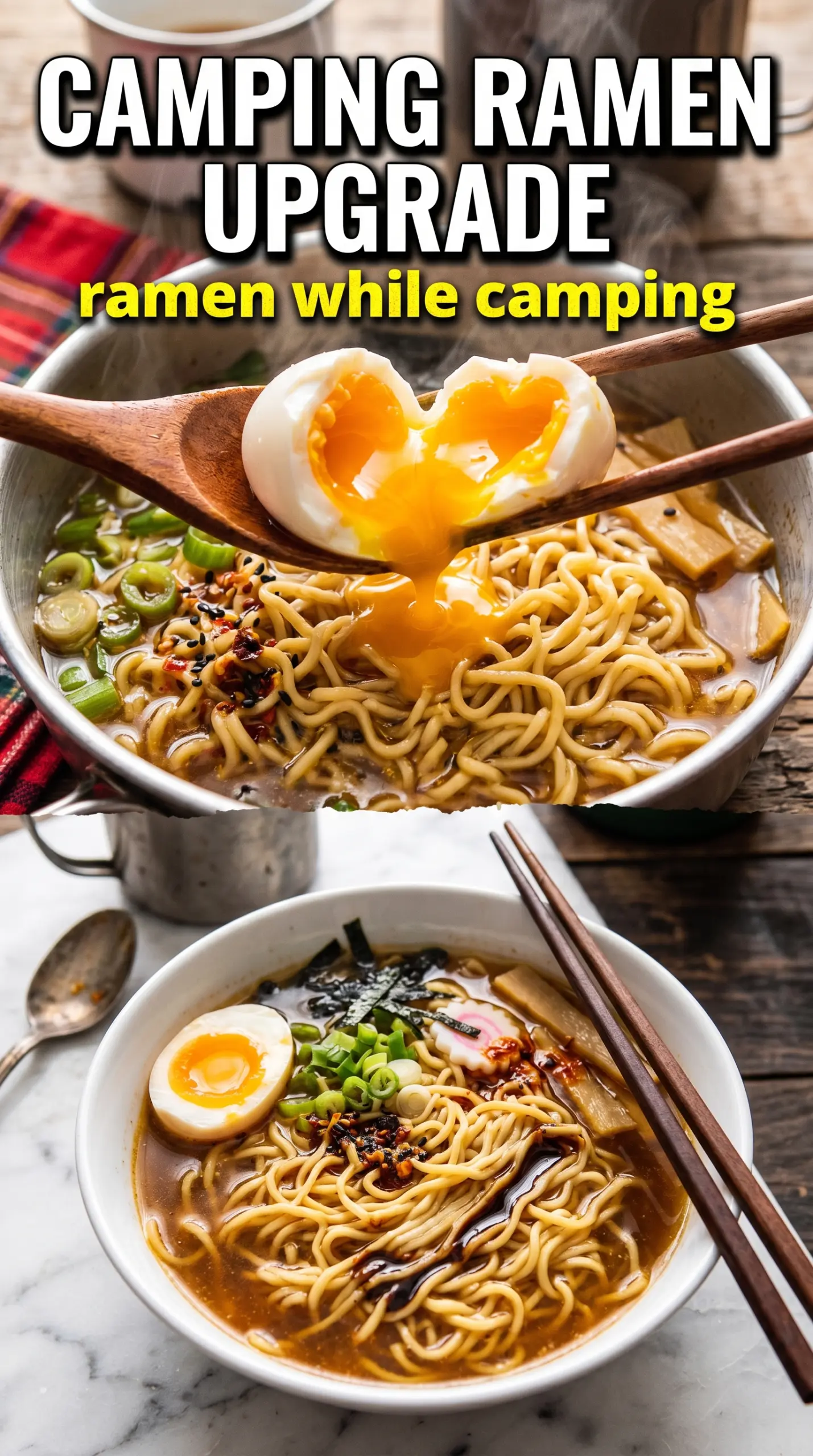
- Instant ramen noodles — These cook fast enough for a campsite and hold their shape better than you might expect if you stop at tender, not mushy. Any basic brand works here, and the seasoning packets are useful even if you don’t use all of them.
- Eggs — This is what turns the pot into dinner. Fresh eggs poach most cleanly, but even standard grocery eggs work if you crack them into the broth one at a time and leave them alone for a minute before stirring.
- Frozen mixed vegetables — Frozen is the smart move for camping because it keeps longer and needs no prep. They add color and a little sweetness, and they go straight into the pot without thawing first.
- Soy sauce — This gives you control at the end. A splash can deepen the broth if you only use part of the seasoning packet, but too much early on can make the whole bowl taste flat and overly salty.
- Hot sauce — This is the easiest way to wake the whole bowl up right before serving. Add it in the bowl, not the pot, so everyone can dial in their own heat.
How to Build Campfire Ramen Without Overcooking the Noodles
Getting the Water to a Real Boil
Start with enough water to give the noodles room to move, then bring it to a full boil over the fire before adding anything else. If the pot only has a lazy simmer, the noodles absorb water unevenly and can turn gummy before the vegetables heat through. A rolling boil gives you the best shot at tender noodles and clean-looking eggs.
Cooking the Noodles and Vegetables Together
Once the water is boiling, add the noodles and the frozen vegetables at the same time. The noodles need the heat right away, and the vegetables just need long enough to lose their icy edge and turn bright and tender. Stir once or twice so nothing clumps at the bottom, but don’t keep fussing with the pot or the noodles will break apart.
Poaching the Eggs in the Broth
After about 3 minutes, crack the eggs directly into the pot and let them sit in the broth without stirring for a minute. The whites will firm up around the yolks and the heat from the soup will finish them gently. If you stir too soon, you’ll lose that soft poached texture and end up with wisps of egg instead of neat, satisfying pieces.
Finishing With the Seasoning Packet
When the noodles are tender and the eggs are cooked through, add the seasoning packets and stir well. This keeps the broth from reducing into something too intense while the noodles cook. Taste before you add soy sauce, because some packets are salty enough on their own and you may only need a small splash at the end.
How to Make This Camp Ramen Fit What You Packed
Make it vegetarian without losing the hearty feel
This recipe is already vegetarian as written, so the main job is building enough interest in the broth. Keep the eggs, use the full amount of vegetables, and finish with soy sauce and hot sauce for depth. If you want it richer, a small drizzle of sesame oil at the end gives it more roundness without changing the campsite-friendly method.
Use shelf-stable ingredients for a longer trip
If your cooler space is tight, swap the frozen vegetables for a shelf-stable mix like dehydrated vegetables and add a little extra water if needed. The result is a lighter broth and a slightly firmer vegetable texture, but it keeps the same fast one-pot structure. The ramen still carries the meal, which is exactly what you want when packing light.
Add protein without changing the cooking time
A handful of cooked rotisserie chicken, leftover grilled chicken, or cubed tofu can go in at the end with the seasoning packet. Cooked protein won’t need extra time, and adding it late keeps it from drying out. Raw meat is a different camp meal entirely and needs separate handling, so don’t try to force it into this quick pot.
Make it gluten-free with a noodle swap
Use gluten-free ramen or rice noodles and check that your soy sauce is gluten-free if that matters for your table. Rice noodles usually cook a little faster and can break if you overdo them, so start checking early. The eggs and vegetables stay the same, which keeps the bowl feeling complete.
Storage and Reheating
- Refrigerator: Store leftovers for up to 2 days. The noodles will continue to soften as they sit, and the eggs are best eaten sooner rather than later.
- Freezer: I don’t recommend freezing this. The noodles turn soft and the eggs change texture in a way that’s hard to fix.
- Reheating: Reheat gently on the stove with a splash of water to loosen the broth. If you boil it hard, the noodles break apart and the eggs get tough.
Questions I Get Asked About This Recipe
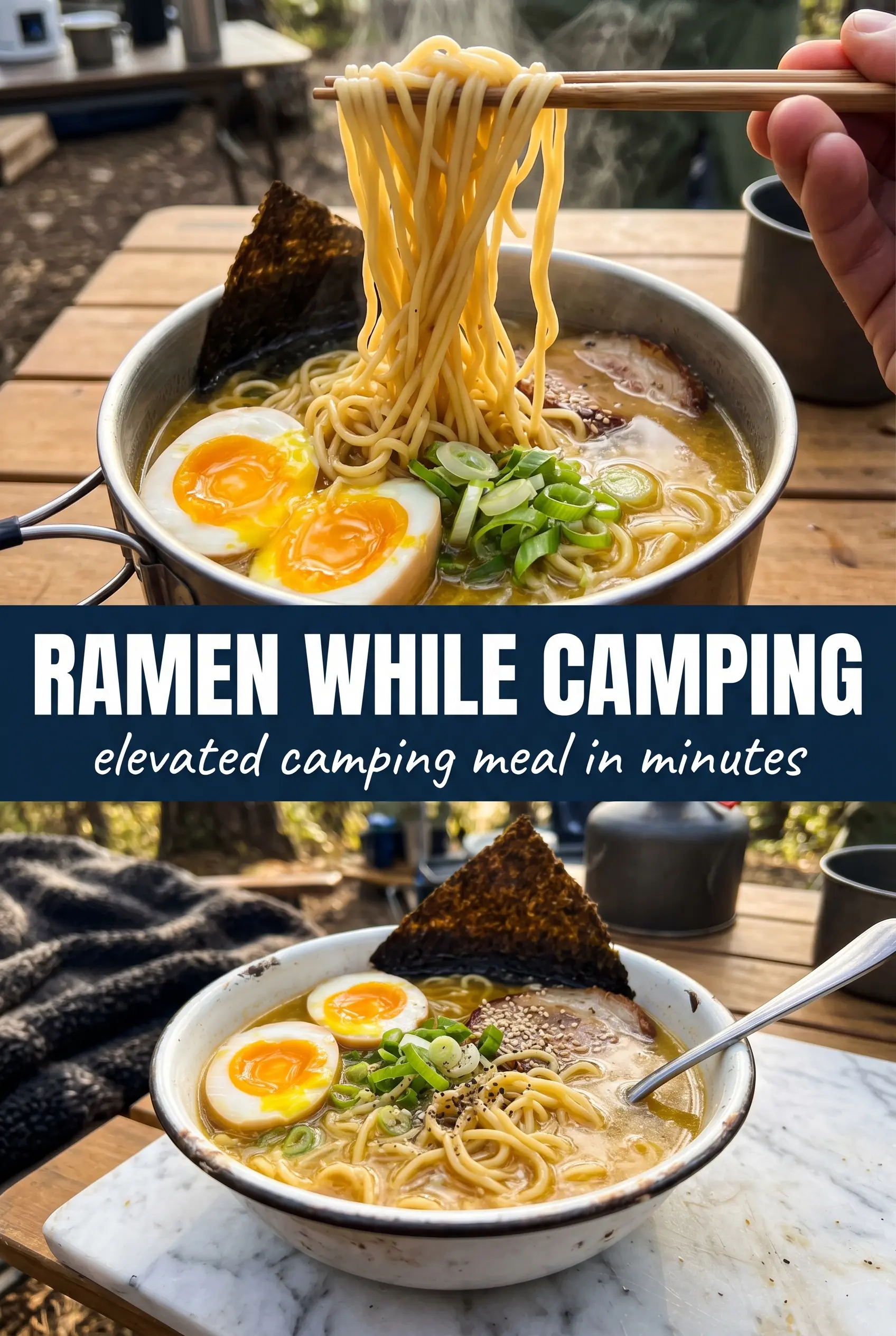
Ramen While Camping
Ingredients
Equipment
Method
- Bring 6 cups water to a boil in a pot over the campfire, keeping it at a rolling boil so everything cooks quickly.
- Add the instant ramen noodles (reserve seasoning packets) and frozen mixed vegetables to the boiling water, then stir to separate the noodles.
- Cook for 3 minutes, stirring once or twice so the noodles soften evenly and the vegetables heat through.
- Crack the eggs directly into the pot, spacing them apart so the whites set into poached-style eggs.
- Continue cooking for 3-4 minutes until the noodles are tender and the eggs are poached to your liking, watching for gentle simmering bubbles rather than a hard boil.
- Add the reserved ramen seasoning packets to the pot and stir to combine until the broth turns fully seasoned and fragrant.
- Divide into bowls and top with green onions, soy sauce, and hot sauce; serve immediately while steaming.