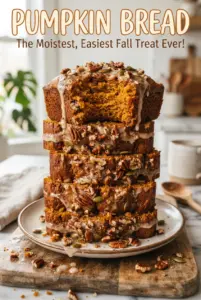
Pumpkin bread should slice cleanly, stay tender for days, and carry that warm spice aroma the second it comes out of the oven. The best loaf is moist without being heavy, with a crackly sugar top and a soft crumb that holds together when you cut it. This version does that without any extra fuss, and it bakes into the kind of loaf that disappears fast once people realize there’s a second slice waiting.
The texture comes from a few smart choices. Oil keeps the crumb plush, pumpkin puree brings moisture and body, and the mix of brown sugar and granulated sugar gives both depth and that lightly crisp top. The trick is stopping the mixing as soon as the flour disappears. Overmixing is what turns quick bread dense and a little rubbery, and it’s the easiest mistake to avoid here.
Below, I’ve included the detail that matters most for a loaf like this: how to tell when it’s baked through without drying it out, plus a few ways to adapt it if you want a different spice level or need to work with what’s already in your pantry.
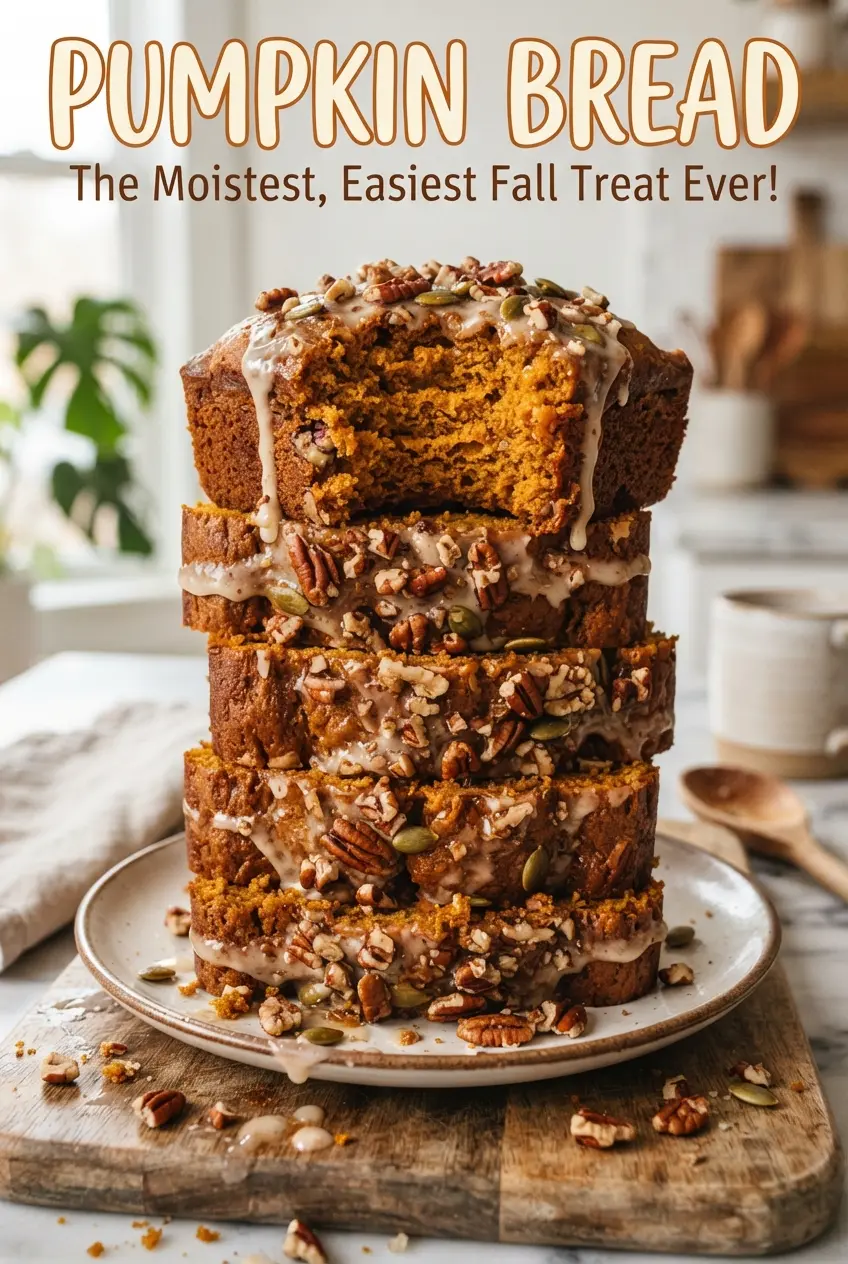
The loaf came out with that crackly sugar top and a really soft center, and it sliced beautifully once it cooled. I’ve made pumpkin bread before, but this one stayed moist for three days without getting gummy.
Save this pumpkin bread for the loaf with the crackly sugar top and the soft, moist crumb.
The Reason Pumpkin Bread Turns Gummy Instead of Tender
The biggest problem with pumpkin bread is that the batter looks thick and tempting, so people keep stirring until it’s perfectly smooth. That’s how you end up with a loaf that bakes up dense and a little gummy in the middle. Once the dry ingredients go in, stop as soon as the flour streaks disappear. A few small streaks are better than overworking the batter.
The other trap is pulling it too early just because the top looks set. Pumpkin bread often browns before the center is fully baked, especially in a dark pan. The toothpick should come out clean or with a few dry crumbs, and the loaf should spring back lightly when you press the center.
What Each Ingredient Is Actually Doing In This Loaf
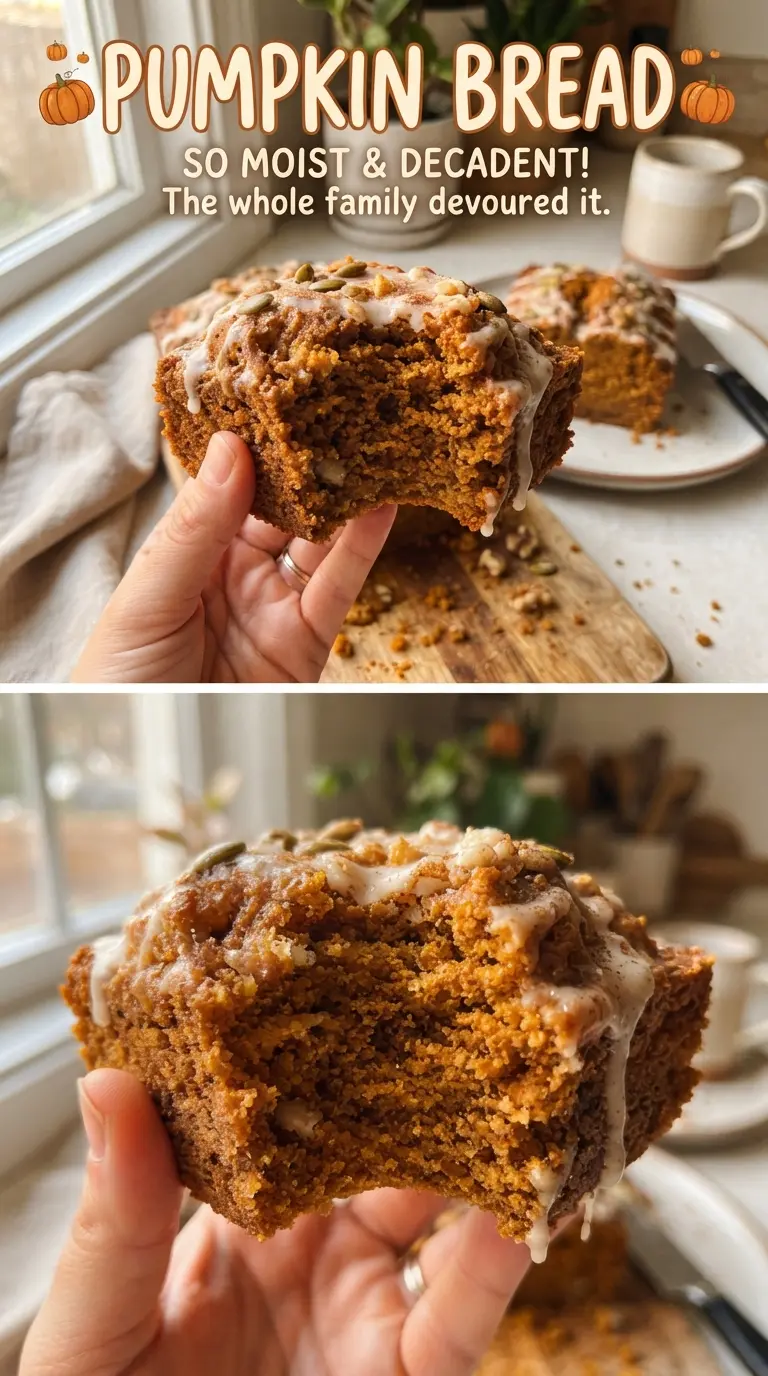
- Pumpkin puree — This gives the bread its moisture, color, and soft crumb. Use plain pumpkin puree, not pumpkin pie filling, or the loaf will be overly sweet and spiced in a way you can’t control.
- Vegetable oil — Oil keeps quick bread tender even after a day or two. Melted butter adds flavor, but it also firms up more as it cools, so the loaf won’t stay as plush.
- Brown sugar and granulated sugar — Brown sugar brings a deeper caramel note and helps the loaf stay moist, while granulated sugar supports the crackly top. That tablespoon on top matters more than it sounds like it should.
- Milk — The milk loosens the batter just enough for even baking. Any neutral milk works here, and if you only have non-dairy milk, unsweetened almond or oat milk both behave well.
- Pumpkin pie spice and cinnamon — This combination gives the bread its warm backbone. If your pumpkin pie spice is old and faded, add a little extra cinnamon so the loaf still tastes awake.
Building The Batter So The Crumb Stays Soft
Mix The Dry Ingredients First
Whisk the flour, baking soda, salt, pumpkin pie spice, and cinnamon together before they ever meet the wet ingredients. This keeps the leavening and spice evenly distributed, which matters in a loaf like this because one bad pocket of baking soda can leave a bitter bite. If your flour has clumps, break them up now so you don’t have to keep mixing later.
Bring The Wet Ingredients Together Smoothly
Whisk the pumpkin puree, oil, eggs, both sugars, milk, and vanilla until the mixture looks glossy and uniform. You’re not trying to whip in a lot of air here; you just want the sugar to dissolve a bit and the eggs to disappear into the batter. If you see streaks of egg white, keep whisking for another few seconds before adding the dry ingredients.
Stop Mixing The Moment The Flour Disappears
Fold the dry ingredients into the wet just until you no longer see dry flour. The batter should look thick and a little rough, not whipped smooth. That small amount of restraint is what keeps the loaf tender instead of bouncy and tough.
Bake Until The Center Has Set
Spread the batter into the pan, sprinkle the top with the tablespoon of sugar, and bake until a toothpick comes out clean from the center. If the top starts browning before the middle is done, loosely tent it with foil for the last 15 minutes. Let the loaf cool in the pan for 15 minutes before moving it to a rack, or it can break while it’s still too soft.
How To Adapt This Pumpkin Bread Without Losing The Good Texture
Dairy-Free Version
Swap the milk for unsweetened almond, oat, or soy milk. The loaf still bakes up moist and tender because the pumpkin and oil do most of the heavy lifting, and the difference is barely noticeable once it’s sliced.
Extra-Spiced Loaf
Add another 1/2 teaspoon cinnamon or a pinch of cloves if you want a stronger spice profile. Don’t push the cloves too far, though, because they can take over fast and make the loaf taste muddy instead of warm.
Less Sweet, More Breakfast-Friendly
Reduce the granulated sugar in the batter by 2 tablespoons if you want a less dessert-like loaf. Keep the sugar on top, though, because that thin layer is what gives the crust its delicate crunch.
Storage and Reheating
- Refrigerator: Store tightly wrapped for up to 5 days. The crumb firms up a little in the fridge, but it stays moist if it’s sealed well.
- Freezer: Freeze the whole loaf or individual slices wrapped in plastic and then foil for up to 3 months. Thaw at room temperature while still wrapped so condensation doesn’t make the crust soggy.
- Reheating: Warm slices in a toaster oven or a 300F oven for a few minutes. The common mistake is microwaving too long, which makes quick bread rubbery instead of soft.
Answers To The Questions Worth Asking
Pumpkin Bread
Ingredients
Equipment
Method
- Preheat oven to 350F, then grease and line a 9x5-inch loaf pan.
- Combine all-purpose flour, baking soda, salt, pumpkin pie spice, and ground cinnamon in a bowl and whisk until evenly mixed.
- In a separate bowl, whisk pumpkin puree, vegetable oil, eggs, brown sugar, granulated sugar, milk, and vanilla extract until smooth.
- Fold the dry ingredients into the wet ingredients just until no flour streaks remain.
- Pour batter into the loaf pan and sprinkle the remaining 1 tablespoon granulated sugar over the top.
- Bake for 55-65 minutes at 350F, until a toothpick comes out clean.
- Cool in the pan for 15 minutes so the loaf sets, then transfer to a rack before slicing.