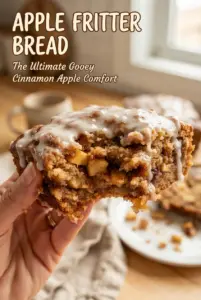
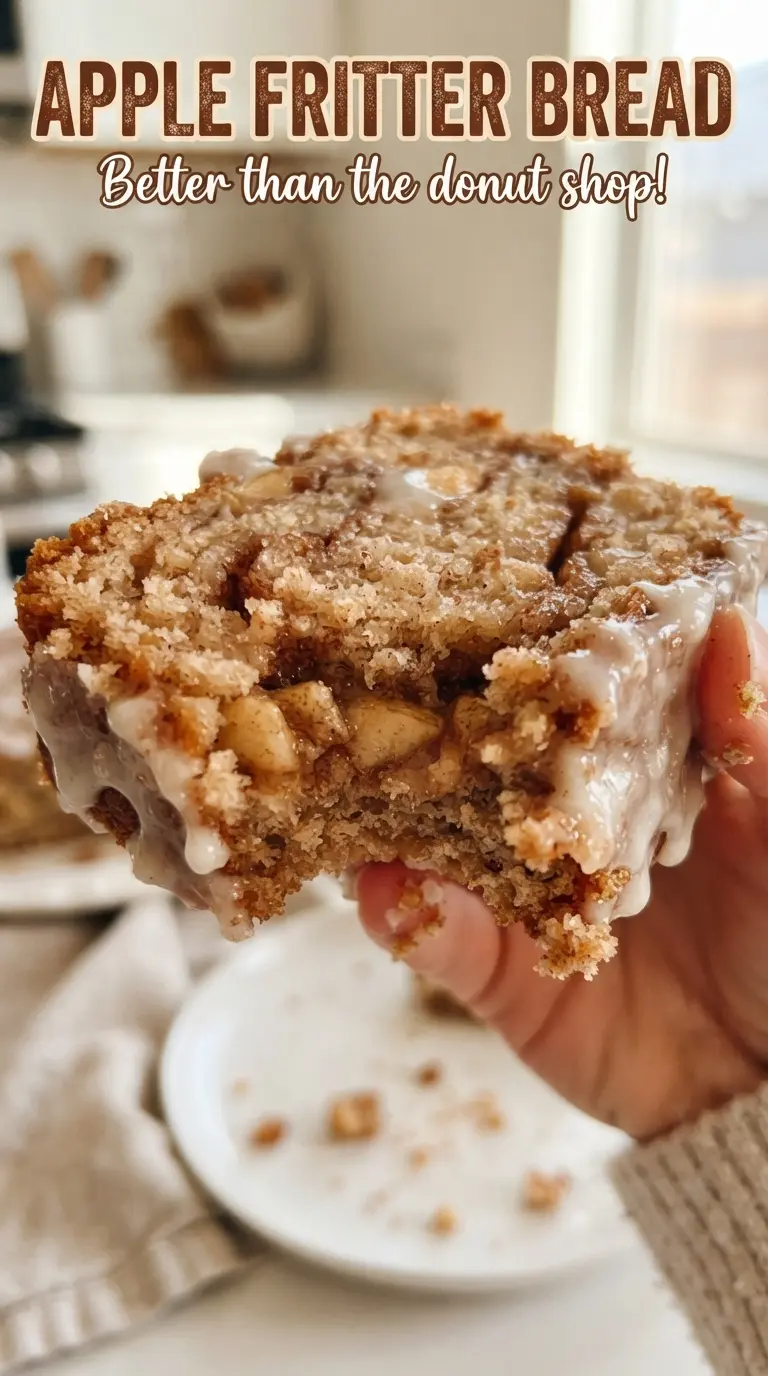
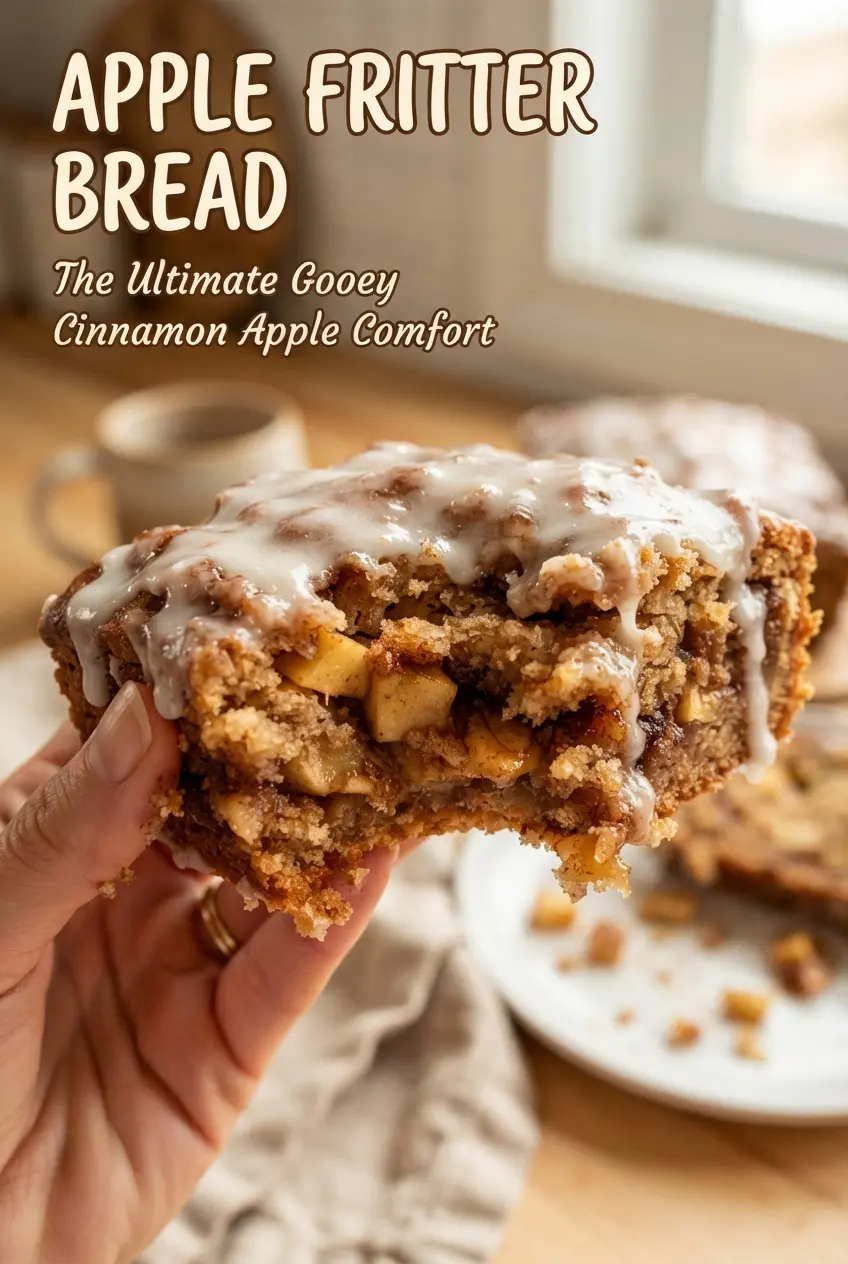
Apple fritter bread gives you the flavor of a bakery apple fritter in a loaf you can slice and serve anytime. The crumb stays soft and buttery, the apples bake into tender pockets, and the cinnamon sugar melts into sweet streaks through the middle instead of disappearing into the batter. A thick vanilla glaze on top finishes it the way a good fritter should: glossy, sweet, and just a little messy.
What makes this version work is the layering. Some of the cinnamon sugar gets tossed with the apples first, which keeps the fruit from sinking and gives every bite a spiced edge. The rest is layered with the batter, so you get those ribboned swirls instead of one flat apple cake. I also use a simple vanilla batter with milk added alternately, which keeps the loaf tender without making it heavy.
If you’ve ever had apple bread turn out bland, dense, or gummy in the center, the notes below will help you avoid that. I’ve also included a few swaps and storage tips, because this loaf is at its best when you know how to keep it soft and how to reheat it without drying it out.
The cinnamon sugar settled into those little apple pockets perfectly, and the glaze soaked into the top without making it soggy. Mine came out with a soft, bakery-style crumb and sliced cleanly after cooling.
Save this apple fritter bread for the days when you want tender cinnamon swirls, baked apples, and a thick vanilla glaze in one loaf.
The Reason Apple Bread Turns Dense Before It Turns Done
The most common problem with apple fritter bread is overmixing once the flour goes in. That develops the gluten and gives you a tight, rubbery loaf instead of a soft one. Add the dry ingredients in stages, stop as soon as the flour disappears, and let the milk loosen the batter just enough to spread without forcing it.
The other failure point is the apples themselves. If they’re cut too large, they stay crunchy and make the loaf collapse around them; if they’re too small, they disappear. Chop them into small, even pieces so they soften in the oven and leave behind juicy little pockets without weighing the bread down.
- Layering matters — the batter and cinnamon sugar need to alternate so the loaf bakes with visible swirls instead of one muddy middle.
- Tossing some sugar with the apples helps them hold their shape and keeps the fruit from bleeding too much moisture into the batter.
- Cooling before glazing keeps the icing on top of the loaf instead of melting straight into it.
What Each Ingredient Is Actually Doing in This Loaf
- Brown sugar — this gives the filling its molasses depth and helps create that sticky fritter-style ribbon through the center. Light or dark brown sugar both work, but dark brown sugar will taste a little deeper.
- Apples — use a firm baking apple if you can, like Granny Smith, Honeycrisp, or a mix. Soft apples break down too much and turn the loaf wet in the middle.
- Butter — softened butter traps air when beaten with the sugar, which gives the bread a lighter crumb. Cold butter won’t cream properly, and melted butter will make the loaf heavier.
- Powdered sugar and milk — this glaze should be thick enough to drizzle slowly. If it runs off like water, add more powdered sugar; if it sits in a lump, add milk a teaspoon at a time.
Building the Swirls Without Losing the Loaf
Mixing the batter until it stays tender
Beat the butter and granulated sugar until the mixture looks pale and a little fluffy before adding the eggs and vanilla. That step gives the loaf a softer crumb, and it matters more here than it does in a quick muffin-style batter. Once the flour goes in, switch to a gentle hand. The batter should look thick and smooth, not elastic.
Layering the apples and cinnamon sugar
Spread half the batter into the prepared pan, then add half the apples and half the remaining cinnamon sugar. Repeat with the rest. This keeps the filling from sinking to the bottom and gives each slice visible streaks of spice and fruit. Don’t stir it together in the pan or you’ll lose the contrast that makes the bread taste like a fritter.
Baking until the center is set
Bake until a toothpick inserted in the center comes out clean or with a few moist crumbs, usually around 50 to 55 minutes. If the top is browning too fast before the middle is done, lay a loose piece of foil over it for the last 10 to 15 minutes. The loaf needs to cool for at least 15 minutes before you glaze it, or the icing will melt straight through the crust.
How to Adapt This Apple Fritter Bread for Different Needs
Make it dairy-free
Use a dairy-free butter substitute and swap the milk for an unsweetened non-dairy milk. The loaf will still bake up soft, though the crumb may be a little less rich than the original. Stick with a neutral milk like almond or oat so the cinnamon and apple stay front and center.
Use pears instead of apples
Firm pears can stand in for the apples if that’s what you have, but they’ll bake softer and taste a little lighter. Dice them a touch larger so they don’t disappear into the loaf, and expect a more delicate fruit bite rather than the sharper apple contrast.
Turn it into muffins
Divide the batter into a lined muffin tin and bake at the same temperature, checking early since muffins finish faster than a loaf. You’ll lose the dramatic swirl effect, but you gain crisp edges and portable portions.
Storage and Reheating
- Refrigerator: Store covered for up to 4 days. The glaze may soak in a bit, but the loaf stays soft.
- Freezer: Freeze slices tightly wrapped for up to 2 months. Thaw at room temperature before warming.
- Reheating: Warm individual slices in the microwave for 10 to 15 seconds or in a low oven until just heated through. Don’t blast it on high heat or the bread will dry out before the center warms.
Answers to the Questions Worth Asking
Apple Fritter Bread
Ingredients
Equipment
Method
- Preheat the oven to 350F, then grease and line a 9x5-inch loaf pan.
- Measure the cinnamon and brown sugar, then set aside for tossing and layering.
- Mix the brown sugar and ground cinnamon, then toss the chopped apples with 2 tablespoons of the mixture so they’re evenly coated.
- Beat the softened butter and granulated sugar until fluffy, then beat in the eggs and vanilla extract.
- Whisk the all-purpose flour, baking powder, and salt, then add them to the batter alternately with the milk, mixing just until combined.
- Spread half the batter into the loaf pan, then top with half the apples and half of the remaining cinnamon sugar.
- Repeat by layering the remaining batter, apples, and cinnamon sugar, keeping the surface covered.
- Swirl gently with a knife to create ribbon-like cinnamon swirls through the loaf.
- Bake for 50-55 minutes at 350F, until a toothpick inserted in the center comes out clean.
- Cool the loaf for 15 minutes, then whisk the powdered sugar with milk to make a thick glaze.
- Drizzle the vanilla glaze over the warm loaf and let it set before slicing.