Chicken marinates better when the mix has enough acid to season the meat, enough oil to carry the garlic and spices, and a little sweetness to help it brown instead of drying out on the grill. This version gives you that balance without turning the chicken mushy or bland. The lemon keeps it bright, the Dijon and Worcestershire add depth, and the honey helps the edges caramelize into those good little charred spots everyone reaches for first.
The trick is keeping the marinating time long enough for flavor but not so long that the lemon starts to work against the texture. Two hours is the sweet spot for most pieces, and overnight is fine as long as you stop around 24 hours. I also like to whisk the marinade until the honey fully disappears, because pockets of unmixed mustard or honey can leave you with uneven seasoning and patchy browning.
Below, I’ve included the one thing that matters most when you’re grilling marinated chicken, plus a few swaps that still keep the flavor bold if you need to adjust for what’s in your kitchen.
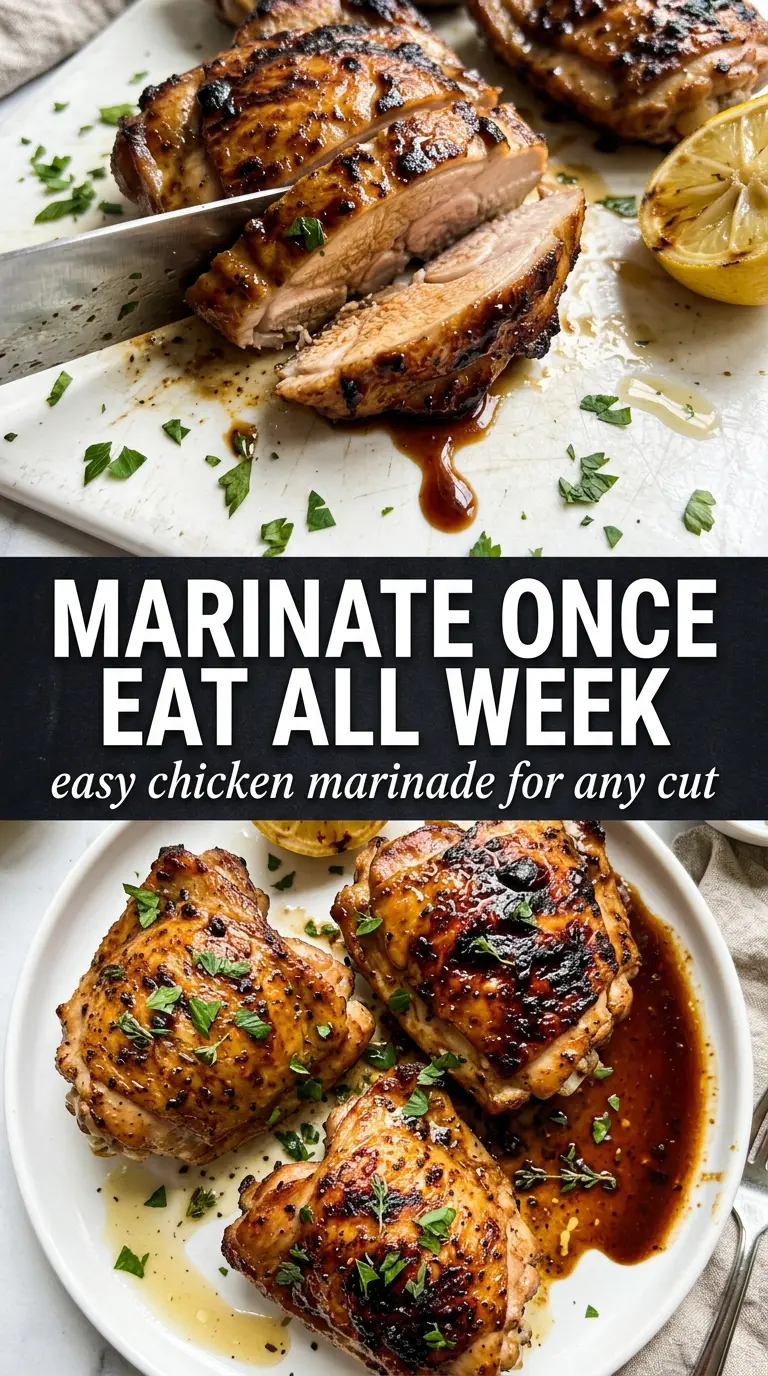
I marinated the chicken thighs for about 4 hours and the flavor went all the way through. The outside got those beautiful lemony char marks on the grill, and the honey kept the edges from drying out.
Save this lemony chicken marinade for grilled chicken with caramelized edges and bright herb finish.
The Part That Stops Chicken Marinade From Tasting Flat
The biggest mistake with chicken marinade is loading it up with acid and salt, then expecting time alone to do the rest. Acid seasons the surface, but the oil, mustard, Worcestershire, and spices are what build the deeper flavor that clings after grilling. If your marinade tastes sharp but thin before it hits the chicken, it will taste worse after cooking, not better.
This recipe avoids that by balancing lemon juice with olive oil and honey. The oil helps carry the garlic and paprika across the meat, while the honey gives the grill something to caramelize instead of letting the chicken dry out at the edges. That balance matters most with boneless breasts, which cook fast and can turn stringy if the marinade is too aggressive.
- Olive oil — This gives the marinade body and helps the seasonings coat the chicken evenly. A neutral oil works in a pinch, but olive oil adds a fuller finish and better browning.
- Lemon juice and zest — The juice brightens the meat, while the zest brings the part of the lemon flavor that doesn’t disappear in the heat. If you only use juice, the marinade tastes sharper and less rounded.
- Dijon mustard — Dijon helps emulsify the marinade so it doesn’t separate into oily and watery layers. Yellow mustard will work, but the flavor is less savory and more obvious.
- Honey — This is what helps the chicken develop those browned, sticky edges on the grill. If you skip it, the chicken still tastes good, but it loses that caramelized finish.
- Smoked paprika and oregano — These give the marinade a warm, grilled backbone. Fresh herbs are fine for serving, but dried oregano holds up better in the marinade itself.
What Each Ingredient Is Actually Doing in This Recipe
- Primary ingredient (the star) — Quality matters most. Choose the best you can find.
- Cooking medium (oil, butter, or broth) — This carries flavors and prevents dryness.
- Seasonings (salt, pepper, spices, herbs) — Layer flavors so nothing overpowers. Build depth gradually.
- Aromatics (garlic, onion, herbs) — Cook with fat to bloom flavors. Become the foundation.
- Supporting ingredients — Complement the main ingredient without overpowering it.
- Sauce or liquid (if applicable) — Brings flavors together. Balance richness with acid.
- Acid (lemon, vinegar, wine, or other) — Brightens and prevents flat-tasting results.
- Final finish (garnish, glaze, or sauce) — Prevents one-dimensional taste and adds visual appeal.
How to Build Flavor Before the Grill Gets Involved
Whisking the Marinade Smooth
Start by whisking the olive oil, lemon juice, zest, garlic, Worcestershire, Dijon, honey, and spices until the mixture looks glossy and unified. The honey should disappear into the liquid, not sit at the bottom in thick ribbons. If the marinade separates in the bowl, it will cling unevenly to the chicken.
Coating the Chicken Evenly
Add the chicken and turn it until every surface is coated. A zip-top bag works well here because you can press out the air and massage the marinade around the meat without making a mess. If you’re using breasts, lay them in a single layer so the thinner edges don’t over-marinate while the thicker center catches up.
Marinating With the Clock, Not Against It
Two hours gives the chicken enough time to pick up flavor without softening the texture. Go up to 24 hours if needed, but don’t push past that, especially with the lemon in the mix. If the chicken starts to look pale and slightly opaque at the edges, it’s picked up plenty and should go straight to the grill.
Grilling to the Right Temperature
Cook over medium-high heat until the chicken has visible char marks and releases from the grates without tearing. Thighs usually need 6 to 7 minutes per side, while breasts are often done in 5 to 6 minutes per side, depending on thickness. Pull the chicken at 165°F in the thickest part, then let it rest for 5 minutes so the juices settle back in instead of running onto the cutting board.
Ways to Adjust the Marinade Without Losing the Point
Use chicken thighs for the juiciest result
Thighs handle the lemon and grill heat better than breasts and stay juicy even if they sit on the flame a minute too long. They also pick up more of the smoky paprika and charred flavor from the grill, which makes them the safest choice if you’re cooking for a crowd.
Make it dairy-free and gluten-free without changing the method
This marinade is naturally dairy-free, and it can be gluten-free if your Worcestershire sauce is labeled that way. That matters because some brands contain barley-derived ingredients, and that’s the one place a hidden gluten problem can sneak in.
Swap honey for maple syrup
Maple syrup gives you the same light sweetness and helps the chicken brown, but the flavor lands a little deeper and less floral. Use the same amount and whisk well, since maple blends more easily but doesn’t have the same thickness as honey.
Turn it into a stovetop or oven chicken marinade
If grilling isn’t an option, bake or pan-sear the marinated chicken and still use the same flavor base. You’ll lose the deep grill marks, but the lemon, garlic, and smoked paprika still build a strong crust as long as the pan or oven is hot enough when the chicken goes in.
Storage and Reheating
- Refrigerator: Cooked chicken keeps for 3 to 4 days in an airtight container. The outside stays flavorful, though the grill marks soften a bit by day two.
- Freezer: You can freeze the raw chicken in the marinade for up to 2 months. Thaw it in the refrigerator overnight before cooking, and don’t refreeze after it’s been marinated.
- Reheating: Warm leftovers gently in a covered skillet over low heat or in a 300°F oven until just heated through. High heat dries out marinated chicken fast, especially breasts.
Questions I Get Asked About This Recipe

Chicken Marinade
Ingredients
Method
- Whisk olive oil, lemon juice, lemon zest, minced garlic, Worcestershire sauce, Dijon mustard, honey, dried oregano, smoked paprika, salt, black pepper, and red pepper flakes until well combined and glossy.
- Add boneless chicken breasts or thighs and toss to coat completely so the surface is evenly coated.
- Marinate at least 2 hours or up to 24 hours in the refrigerator, covered, until the chicken looks more seasoned and slightly opaque.
- Grill chicken over medium-high heat until grill marks form, about 6-7 minutes per side for thighs or 5-6 minutes per side for breasts.
- Continue grilling as needed until internal temperature reaches 165F in the thickest part of the chicken, with juices running clear.
- Rest the chicken 5 minutes before serving so the juices settle, then plate with fresh herbs and lemon wedges.