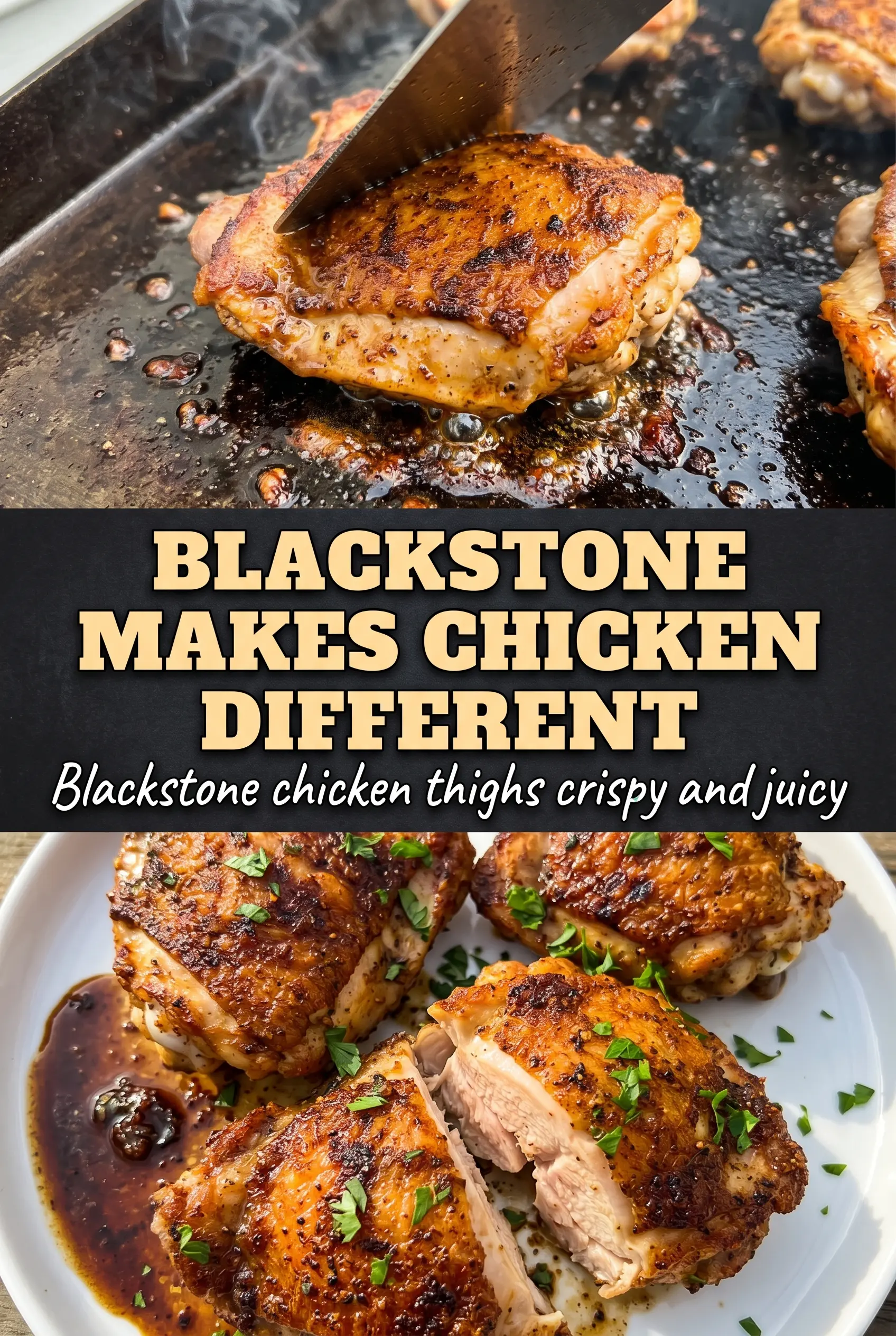
Blackstone chicken thighs earn a permanent spot in the dinner rotation because they hit that sweet spot between crisp edges and juicy centers. The flat-top gives you a deep, even sear fast, and the garlic butter finish turns the whole thing into something that tastes like you spent a lot more effort than you did.
Boneless thighs are the right cut here because they stay tender while still taking on serious browning. The seasoning goes on before the chicken hits the griddle, so the spices have a chance to toast instead of just sitting there tasting dusty. And because the garlic butter gets added at the end, it stays fragrant instead of burning on the hot surface.
Below, I’ll walk through the exact griddle cues that tell you when to flip, how to keep the chicken from steaming, and what to do if you want to change the seasoning without losing that caramelized crust.
The thighs got this gorgeous crust on the Blackstone and stayed juicy all the way through. The garlic butter at the end made them taste like restaurant food, and 6 minutes per side was right on the money.
Save these Blackstone chicken thighs for the nights when you want juicy griddled chicken with a deep crust and garlic butter finish.
The Reason the Crust Works on a Flat-Top Instead of Turning Soggy
A Blackstone gives you steady, wide heat, which is exactly what chicken thighs need to brown properly. The common mistake is crowding the griddle or moving the chicken too soon. If the pieces are touching or you keep flipping to check, the surface never stays in contact long enough to develop that deep golden crust.
These thighs also do better with a short rest after seasoning. Salt pulls a little moisture to the surface at first, then starts working back into the meat, which helps the chicken season evenly without drying it out. The goal is a dry enough surface to sear, not a wet marinade that steams on contact.
- Chicken thighs — Boneless, skinless thighs stay juicy and cook fast enough for the flat-top. Breasts can work, but they need more care because they dry out sooner and don’t forgive overcooking the way thighs do.
- Vegetable oil — Use a neutral oil with a higher smoke point so the seasoning browns instead of burning. Olive oil can handle this heat in a pinch, but it brings flavor that can fight the garlic butter at the end.
- Smoked paprika — This is doing more than adding color. It gives the chicken that warm, grilled note you’d expect from the flat-top even if the seasoning is simple.
- Butter and garlic — Add them after the chicken is cooked through. Garlic burns fast on a hot griddle, and once it goes bitter, there’s no saving it. The butter should foam and smell nutty, not brown hard.
What Each Ingredient Is Actually Doing in This Recipe

- Primary ingredient (the star) — Quality matters most. Choose the best you can find.
- Cooking medium (oil, butter, or broth) — This carries flavors and prevents dryness.
- Seasonings (salt, pepper, spices, herbs) — Layer flavors so nothing overpowers. Build depth gradually.
- Aromatics (garlic, onion, herbs) — Cook with fat to bloom flavors. Become the foundation.
- Supporting ingredients — Complement the main ingredient without overpowering it.
- Sauce or liquid (if applicable) — Brings flavors together. Balance richness with acid.
- Acid (lemon, vinegar, wine, or other) — Brightens and prevents flat-tasting results.
- Final finish (garnish, glaze, or sauce) — Prevents one-dimensional taste and adds visual appeal.
Getting the Chicken Brown Before the Garlic Even Hits the Griddle
Seasoning the Thighs
Pat the chicken thighs dry first, then coat them evenly with the spice mix. Dry chicken browns; wet chicken steams. Letting the seasoned thighs sit for about 30 minutes helps the salt start working and gives the surface a better shot at searing instead of watering down the griddle.
Heating the Blackstone
Preheat the griddle to medium-high until the surface is hot enough that the oil shimmers right away. Spread the oil in a thin film, not a puddle. If the griddle isn’t hot enough, the chicken will sit there absorbing oil and turn pale instead of caramelized.
Letting the First Side Set
Lay the thighs down and leave them alone for 6 to 7 minutes. You’re waiting for a deep golden crust and for the chicken to release more easily from the surface. If it sticks when you try to flip, it usually needs another minute; forcing it will tear off the best part.
Finishing and Basting
Flip the thighs and cook the second side until the centers hit 165°F. Then push the chicken aside, add the butter and garlic directly to the griddle, and let them sizzle just until fragrant. Toss the chicken through that butter for a final minute so every piece gets coated without burning the garlic.
How to Change the Seasoning Without Losing the Griddle Sear
Dairy-Free Version
Swap the butter for more oil or use a plant-based butter that can handle heat. You’ll lose a little of the rich finish, but the garlic still gives you a strong savory note if you keep it off the hottest part of the griddle.
Spicy Chicken Thighs
Add cayenne or red pepper flakes to the seasoning mix. The heat holds up well against the butter finish, and the smoke from the paprika keeps the spice from tasting sharp.
Gluten-Free and Naturally Low-Carb
This recipe is already gluten-free and low-carb as written, which makes it easy to serve with vegetables, salad, or cauliflower rice. Just check your spice blends if you’re using a store-bought Italian seasoning, since a few brands sneak in fillers.
Lemon-Herb Finish
Add a squeeze of lemon over the finished chicken and extra parsley right before serving. That bright finish cuts through the butter and makes the dish taste lighter without changing the cooking method.
Storage and Reheating
- Refrigerator: Store in an airtight container for up to 4 days. The crust softens a bit, but the chicken stays juicy.
- Freezer: Freeze cooked thighs for up to 2 months. Wrap tightly and thaw in the refrigerator before reheating so they warm evenly.
- Reheating: Reheat in a skillet over medium-low heat with a splash of water or broth and a lid. High heat dries the thighs out fast and turns the garlic butter bitter.
Answers to the Questions Worth Asking
Blackstone Chicken Thighs
Ingredients
Equipment
Method
- Season chicken thighs with garlic powder, smoked paprika, onion powder, Italian seasoning, salt, and black pepper. Cover and refrigerate for 30 minutes to marinate so the surface tastes well seasoned.
- Preheat the Blackstone griddle to medium-high heat and add the vegetable oil, spreading it evenly across the cooking surface. Look for a light shimmer in the oil before adding the chicken.
- Place the chicken thighs on the griddle and cook undisturbed for 6-7 minutes until the bottom is deeply golden and caramelized. The edges should look browned and set as they release from the surface.
- Flip the chicken thighs and cook for 6-7 more minutes until cooked through to 165°F. Continue until the thickest part reaches 165°F with no pink inside.
- Add the butter and minced garlic to the griddle beside the chicken and cook for 1 minute until fragrant. Watch for bubbling butter and a strong garlic aroma without browning the garlic too much.
- Toss the chicken in the garlic butter and cook for 1 more minute. The surface should look glossy as the butter coats the caramelized crust.
- Garnish with fresh parsley and serve with lemon wedges. Finish with parsley sprinkled over the top and lemon on the side for brightening.