Chicken thighs take a marinade better than almost any other cut, and this one gives you the kind of result that makes plain grilled chicken feel worth planning for. The meat turns juicy and deeply seasoned, with a caramelized edge from the honey and a sharp, savory backbone from lemon, garlic, and Dijon. When it hits a hot grill or skillet, the exterior picks up those browned spots that taste like you worked a lot harder than you did.
What makes this version reliable is the balance. Olive oil carries the herbs and spices, lemon brightens the meat without making it mushy, and Dijon helps everything cling to the chicken instead of sliding off. Honey is just enough to encourage browning, but not so much that it burns before the thighs cook through. That matters more than people think, especially with boneless thighs, which cook fast and can go from nicely charred to dry if the heat is too high or the marinade is too sweet.
Below, I’ve laid out the ingredient swaps that actually work, the timing that gives you the best flavor, and the small process details that keep the chicken juicy from the first bite to the last.
The marinade coated the thighs evenly, and after two hours the chicken was tender with great lemon-garlic flavor. I cooked it in a skillet and the edges caramelized beautifully without sticking.
Save this chicken thigh marinade for juicy grilled thighs with lemon, Dijon, and those caramelized herb-speckled edges.
The Marinade Trap That Leaves Chicken Bland or Burnt
The biggest mistake with chicken thigh marinade is treating it like a sauce instead of a flavoring system. Too much acid and not enough fat can tighten the meat before it cooks, while too much sugar can scorch the outside before the chicken is done. This marinade stays in the sweet spot: enough lemon for brightness, enough oil to protect the surface, and just a little honey to help the browning along.
Marinating time matters here, but longer is not automatically better. Two hours gives the thighs enough time to pick up the garlic, herbs, and citrus; overnight works too, but once you push much past 24 hours, the lemon starts to dominate and the texture can turn a little dull on the outside. That’s why this recipe tastes seasoned all the way through without coming across as aggressively acidic.
- Olive oil — This carries the seasoning and helps the chicken brown instead of drying out. A good everyday olive oil is fine here.
- Lemon juice and zest — The juice brings brightness, but the zest gives you the part of the lemon flavor that survives the heat. Don’t skip the zest; it’s what keeps the marinade from tasting flat.
- Dijon mustard — It helps emulsify the marinade so it clings to the chicken. Yellow mustard won’t give the same depth or the same gentle tang.
- Honey — Just enough to encourage caramelization. If you leave it out, the chicken will still work, but you’ll lose some of that browned finish.
- Boneless skinless thighs — This cut stays juicy and forgiving on the grill or in a skillet. Chicken breasts can be used in a pinch, but they need less time and dry out faster.
What Each Ingredient Is Actually Doing in This Recipe

- Primary ingredient (the star) — Quality matters most. Choose the best you can find.
- Cooking medium (oil, butter, or broth) — This carries flavors and prevents dryness.
- Seasonings (salt, pepper, spices, herbs) — Layer flavors so nothing overpowers. Build depth gradually.
- Aromatics (garlic, onion, herbs) — Cook with fat to bloom flavors. Become the foundation.
- Supporting ingredients — Complement the main ingredient without overpowering it.
- Sauce or liquid (if applicable) — Brings flavors together. Balance richness with acid.
- Acid (lemon, vinegar, wine, or other) — Brightens and prevents flat-tasting results.
- Final finish (garnish, glaze, or sauce) — Prevents one-dimensional taste and adds visual appeal.
Getting the Chicken to Brown Before the Marinade Starts to Burn
Whisking the Marinade Until It Clings
Start by whisking the oil, lemon juice, zest, garlic, Dijon, honey, oregano, thyme, paprika, salt, pepper, and red pepper flakes until the mixture looks thickened and slightly glossy. That emulsion matters because it helps the spices stay suspended instead of sinking to the bottom of the bowl. If you just stir it loosely, the chicken ends up under-seasoned in spots and overloaded in others.
Letting the Thighs Sit Long Enough
Add the chicken and turn it until every surface is coated. Refrigerate it for at least 2 hours so the seasoning has time to work into the meat; up to 24 hours is the upper limit I’d use for best texture. If you go much longer, the lemon can start to make the outside taste a little cured instead of fresh.
Cooking Over Medium-High Heat
Grill or pan-sear the thighs over medium-high heat for 5 to 6 minutes per side. You’re looking for deep golden edges, light char marks, and juices that run mostly clear when the chicken is pressed with tongs. If the pan starts smoking hard or the outside darkens too fast, the heat is too high and the honey will burn before the center reaches 165F.
Resting Before Serving
Let the chicken rest for 5 minutes after cooking. That short pause keeps the juices inside the meat instead of spilling onto the cutting board the moment you slice in. Finish with fresh herbs for a clean, bright top note that plays well with the lemon and garlic.
How to Change the Flavor Without Losing the Juicy Finish
Make It Dairy-Free and Gluten-Free Without Adjusting the Method
This recipe already lands naturally in both camps as written. Just check that your Dijon mustard is gluten-free if that matters for your kitchen, and the rest of the ingredients do the work without any swaps at all.
Swap in Chicken Breasts for a Leaner Result
You can use boneless skinless chicken breasts, but cut the cook time down and watch them closely. They won’t stay as forgiving as thighs, so pull them as soon as they hit 165F and rest them before slicing. The flavor still works, but the texture will be less rich.
Use Lime Instead of Lemon for a Sharper Finish
Lime juice and zest give the marinade a brighter, slightly more tropical edge. The chicken will still brown the same way, but the flavor shifts from classic grilled lemon-garlic to something a little punchier and less familiar.
Add Heat Without Overpowering the Herbs
Increase the red pepper flakes to 1/2 teaspoon or add a pinch of cayenne if you want a stronger kick. Keep the honey in place so the edges still caramelize instead of turning bitter or harsh over the flame.
Storage and Reheating
- Refrigerator: Cooked chicken thighs keep for 3 to 4 days in the fridge. Slice them only when you’re ready to eat so they stay juicier.
- Freezer: The cooked chicken freezes well for up to 2 months. Wrap tightly or store in an airtight container, then thaw in the refrigerator overnight.
- Reheating: Reheat gently in a covered skillet with a splash of water or broth over low heat, or warm in a 300F oven until heated through. High heat dries out thighs fast and can turn the browned edges tough.
Questions I Get Asked About This Recipe
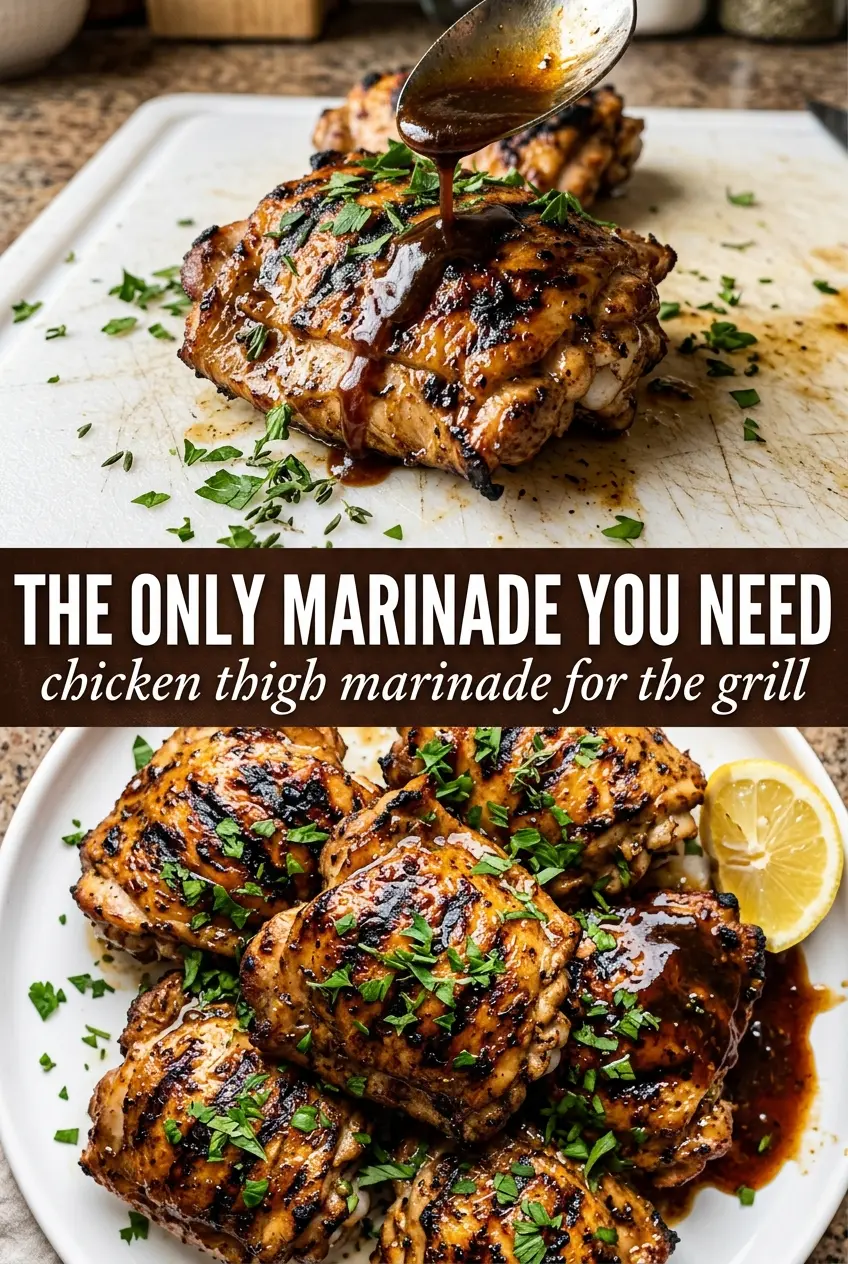
Chicken Thigh Marinade
Ingredients
Equipment
Method
- Whisk olive oil, lemon juice, lemon zest, minced garlic, Dijon mustard, honey, dried oregano, dried thyme, smoked paprika, salt, black pepper, and red pepper flakes together until emulsified.
- Toss the boneless skinless chicken thighs in the marinade until completely coated.
- Transfer the thighs to the refrigerator and refrigerate at least 2 hours or up to 24 hours.
- Preheat the grill to medium-high heat, then grill the chicken thighs 5–6 minutes per side until caramelized char marks appear.
- Or heat a hot oiled skillet over medium-high heat and pan-sear the chicken thighs 5–6 minutes per side until caramelized char marks appear.
- Continue cooking until the internal temperature reaches 165°F.
- Rest the chicken thighs for 5 minutes before serving.
- Top with fresh herbs for serving.