Hot honey baked chicken breasts hit that sweet spot between sticky, savory, and a little bit fiery, and the glaze bakes down into a dark amber coating that clings to every bite. The chicken stays juicy if you pull it at the right moment, and the edges pick up just enough caramelization to give you that lacquered finish without turning the glaze bitter.
What makes this version work is the balance in the sauce. Honey brings the shine and body, hot sauce adds tang and heat, and a little butter smooths everything out so the glaze brushes on easily and bakes into a glossy layer instead of turning grainy. The apple cider vinegar keeps the sweetness from going flat, and the red pepper flakes give you visible heat in the finished dish, not just background warmth.
Below, I’ve included the timing that matters most, the ingredient swaps that still keep the glaze balanced, and the one or two places people usually overcook it. If you’ve had sticky chicken turn dry before, this one is built to avoid that.
The glaze caramelized beautifully and the chicken stayed juicy all the way through. I basted halfway like you said, and the sauce turned sticky instead of running all over the pan.
Sticky, sweet, and spicy hot honey chicken breasts that caramelize to a glossy amber finish.
The Part That Keeps the Glaze Sticky Instead of Burnt
The biggest mistake with honey-based chicken is starting with too much heat and too little control. Honey can go from glossy to scorched fast, especially in a hot oven, so the trick is using a high enough temperature to caramelize the glaze while still pulling the chicken as soon as it hits 165°F. That leaves you with a sticky coating and juicy meat instead of dry chicken with bitter edges.
Basting halfway through does more than add extra flavor. It helps build layers, so the glaze sets in stages instead of sliding off in one thin coat. If you skip that second brush, the chicken will still taste good, but it won’t have that thick, lacquered finish that makes this recipe stand out.
What Each Ingredient Is Doing in the Glaze
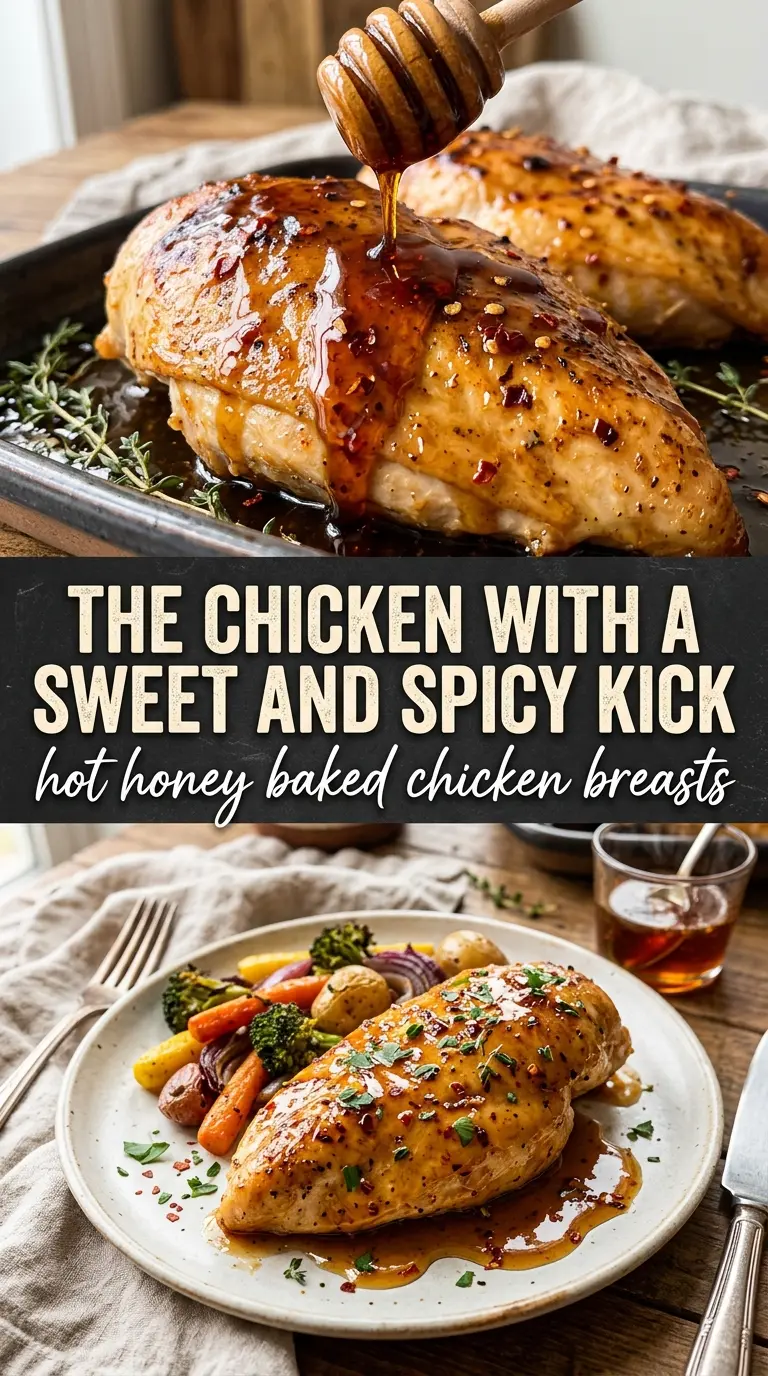
- Chicken breasts — Boneless, skinless breasts are lean, so they depend on careful timing. If yours are very thick on one end and thin on the other, pound them lightly or slice them into even cutlets so the thicker side doesn’t dry out before the glaze finishes.
- Honey — This is the body of the sauce and the part that turns glossy in the oven. A runny supermarket honey works fine here; save the pricey wildflower stuff for finishing, because the hot sauce and spices are what carry the flavor.
- Hot sauce — Frank’s-style hot sauce adds vinegar and heat without overpowering the honey. If you swap in a thicker chili sauce, the glaze will taste sweeter and heavier, and you may need a little extra vinegar to keep it bright.
- Butter — Melted butter helps the glaze cling and gives the finished sauce a smooth, rounded taste. Don’t leave it out if you want the glaze to brush on evenly; without it, the honey mixture can taste sharper and less cohesive.
- Apple cider vinegar — This keeps the glaze from tasting flat. It doesn’t make the chicken tangy; it just wakes up the sweetness and keeps the finish clean after baking.
- Red pepper flakes — These add the visible speckled heat that makes the glaze look as bold as it tastes. If you want a milder result, cut them back to 1/2 teaspoon, but don’t remove them completely unless you’re replacing that heat somewhere else.
Building the Glaze and Baking It Without Losing the Juices
Seasoning the Chicken Evenly
Lay the chicken breasts in a dish or on a board and season both sides with salt, pepper, garlic powder, and smoked paprika. The seasoning should look even, not heavy or patchy, because the glaze is sweet and you need that savory base underneath it. If the breasts are uneven in thickness, press the thickest part lightly with your hand so they cook more evenly in the oven.
Whisking a Smooth Hot Honey Base
Stir the honey, hot sauce, melted butter, vinegar, red pepper flakes, and garlic powder until the mixture looks glossy and uniform. If the butter starts to separate, keep whisking for a few seconds longer; it should look like one cohesive sauce, not oil floating on top. This step matters because a broken glaze won’t brush on as cleanly and won’t bake into the same sticky coating.
Brushing, Basting, and Watching the Color
Brush a generous layer of glaze over the chicken before it goes into the oven, then save enough to baste halfway through. You’re looking for the glaze to darken to deep amber and bubble around the edges, not blacken. If it starts getting too dark before the chicken is done, tent it loosely with foil for the last few minutes so the glaze doesn’t burn while the center finishes cooking.
Resting Before the Final Drizzle
Pull the chicken when it reaches 165°F in the thickest part, then let it rest for 5 minutes before serving. That pause keeps the juices in the meat instead of running onto the plate the second you slice in. Finish with flaky salt and a little thyme, then spoon on any remaining glaze so the top stays shiny and bold.
How to Change the Heat, the Sweetness, or the Pan Dinner Plan
Milder Hot Honey Chicken
Cut the red pepper flakes in half and use 1 tablespoon of hot sauce instead of 2. You’ll still get the sweet-savory glaze and a little warmth, but the finish lands softer and won’t linger on the tongue as much.
Dairy-Free Version
Swap the butter for olive oil or a dairy-free butter alternative. The glaze won’t taste quite as round, but it will still cling well and caramelize nicely, especially if you whisk it until fully emulsified before brushing it on.
Hot Honey Chicken Thighs
Use boneless, skinless thighs and bake until they reach 175°F for the best texture. Thighs take longer to render and stay more forgiving, so you’ll get a juicier, richer result with a slightly deeper browned edge.
Storage and Reheating
- Refrigerator: Store for up to 4 days in an airtight container. The glaze will thicken as it chills.
- Freezer: This freezes well for up to 2 months. Wrap portions tightly and thaw in the refrigerator overnight so the glaze doesn’t turn watery.
- Reheating: Warm gently in a covered baking dish at 325°F until heated through, or reheat slices in a skillet over low heat with a splash of water. High heat dries out the chicken and can scorch the honey again.
Questions I Get Asked About This Recipe

Hot Honey Baked Chicken Breasts
Ingredients
Equipment
Method
- Preheat the oven to 425°F and lightly oil a baking dish or cast iron skillet.
- Season the chicken breasts on both sides with salt, pepper, garlic powder, and smoked paprika.
- Whisk together honey, hot sauce, melted butter, apple cider vinegar, red pepper flakes, and garlic powder until smooth.
- Place the chicken in the prepared dish and brush generously with the hot honey glaze, reserving some for basting.
- Bake at 425°F for 20-22 minutes, basting once at the halfway point with the reserved glaze, until the internal temperature reaches 165°F and the glaze is caramelized and dark amber.
- Rest the chicken for 5 minutes to let the juices settle.
- Finish with flaky sea salt, fresh thyme, and an extra drizzle of hot honey for a sticky-sweet gloss.