Honey glazed apple and sweet potato casserole lands on the table with tender slices, caramelized edges, and a glossy finish that makes it feel a little special without asking for much work. The sweet potatoes soften into a creamy base while the apples hold just enough structure to keep each bite interesting. That mix of soft, sticky, and lightly crisp on top is what keeps people going back for another spoonful.
The trick is the layering. Alternating the sweet potatoes and apples helps everything cook at the same rate, and the foil cover traps steam early on so the slices turn tender before the glaze has a chance to scorch. Once the foil comes off, the honey-butter mixture reduces around the fruit and vegetables, and the pecans get toasted right on top instead of going soft in the oven.
Below you’ll find the small details that matter here: which apples hold up best, how to keep the glaze from separating, and what to change if you want to make it dairy-free or prep it ahead.
The glaze stayed right on the apples and sweet potatoes instead of pooling at the bottom, and the pecans got perfectly toasted in the last 15 minutes. I served it with roasted pork and there wasn’t a bite left.
Save this honey glazed apple and sweet potato casserole for the side dish that bakes into a glossy, caramelized finish.
The Reason the Glaze Stays Glossy Instead of Turning Grainy
Honey can go from silky to sticky in a hurry if it spends too long over high heat. In this casserole, the glaze goes on before baking, then the foil creates enough steam to loosen the honey and help it coat the fruit and sweet potatoes evenly. That early covered bake is what keeps the sugars from tightening up too soon.
The other thing that matters is slice thickness. Sweet potatoes cut too thick stay firm in the center when the apples are already soft. Thin, even slices give you that tender-throughout texture without needing to overbake the top into a dry, dark mess.
- Sweet potatoes — Slice them about 1/4 inch thick so they cook at the same pace as the apples. Thicker slices need more time and can make the finished casserole feel uneven.
- Apples — Choose a firm baking apple that holds its shape, like Honeycrisp, Granny Smith, or Fuji. Softer apples turn mushy under the glaze.
- Honey — This is the main gloss-maker. There’s no perfect swap for the way it clings to the fruit, but maple syrup works if you want a deeper, woodsy sweetness.
- Butter — Melted butter helps the glaze coat evenly and gives the top a richer finish. If you use coconut oil instead, expect a lighter, slightly less rounded flavor.
What Each Ingredient Is Actually Doing in This Recipe
- Primary ingredient (the star) — Quality matters most. Choose the best you can find.
- Cooking medium (oil, butter, or broth) — This carries flavors and prevents dryness.
- Seasonings (salt, pepper, spices, herbs) — Layer flavors so nothing overpowers. Build depth gradually.
- Aromatics (garlic, onion, herbs) — Cook with fat to bloom flavors. Become the foundation.
- Supporting ingredients — Complement the main ingredient without overpowering it.
- Sauce or liquid (if applicable) — Brings flavors together. Balance richness with acid.
- Acid (lemon, vinegar, wine, or other) — Brightens and prevents flat-tasting results.
- Final finish (garnish, glaze, or sauce) — Prevents one-dimensional taste and adds visual appeal.
Building the Layers So the Fruit Bakes Evenly
Setting Up the Dish
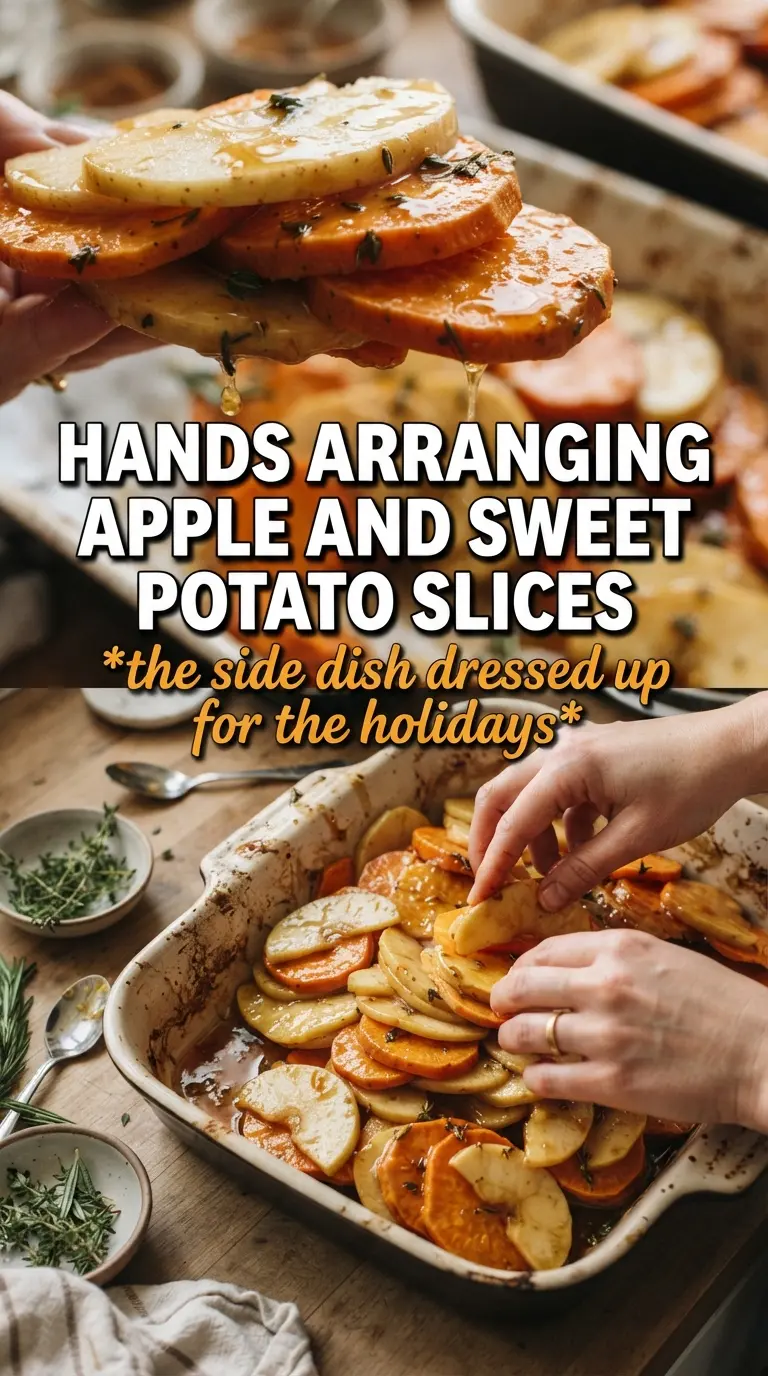
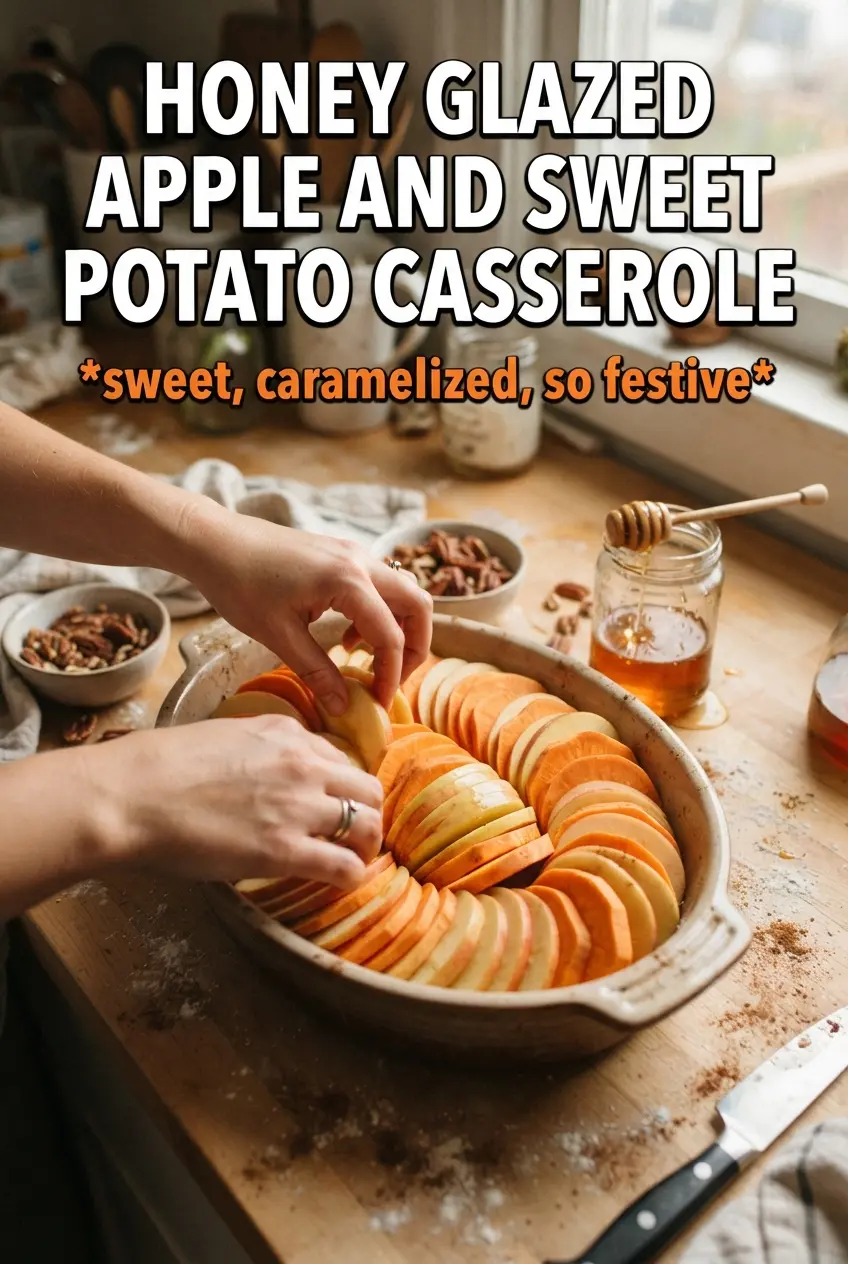
Grease the baking dish well and build the layers in alternating rows, tucking the slices in close so the glaze has something to cling to. If the slices are scattered loosely, the syrup will run straight to the bottom and leave the top patchy. A snug layer is what gives you that cohesive, casserole-style finish.
Whisking the Glaze
Stir the honey, butter, brown sugar, cinnamon, nutmeg, ginger, and salt until the mixture looks smooth and unified. You don’t need to heat it separately; the oven does the work. If the brown sugar seems a little grainy at this stage, that’s fine because it melts as it bakes.
Covered Baking First
Cover the dish tightly with foil and bake for 30 minutes. This stage softens the sweet potatoes before the top has a chance to overbrown. If your foil is loose, too much steam escapes and the potatoes can stay firm while the glaze dries out.
Finishing Without the Foil
Remove the foil, scatter the pecans over the top, and bake until the edges look caramelized and the slices are tender when pierced with a knife, about 15 minutes more. The exposed top should look glossy and lightly bronzed, not dark and sticky. If the pecans go on too early, they’ll overtoast and turn bitter, so save them for the final stretch.
What to Change When You Want It a Little Different
Dairy-Free Version
Swap the butter for melted coconut oil or a neutral plant-based butter. Coconut oil gives the glaze a faint coconut note and a slightly firmer finish as it cools, while plant-based butter stays closer to the original flavor.
Maple-Sweet Version
Replace half or all of the honey with maple syrup for a deeper, less floral sweetness. The glaze will be a touch looser, so keep an eye on the uncovered bake and stop when the fruit is tender and the top has thickened.
Nut-Free Finish
Leave off the pecans and finish with a little extra cinnamon or a handful of toasted pumpkin seeds if you still want crunch. The casserole stays glossy and tender without them.
Storage and Reheating
- Refrigerator: Store covered for up to 4 days. The apples soften a bit more after chilling, but the flavor deepens.
- Freezer: It freezes, but the apple texture turns softer after thawing. Freeze in a tight container for up to 2 months if you don’t mind a more tender result.
- Reheating: Warm in a 325°F oven, covered, until hot through. Microwaving works in a pinch, but it can make the apples collapse and the glaze separate at the edges.
Answers to the Questions Worth Asking
Honey Glazed Apple And Sweet Potato Casserole
Ingredients
Equipment
Method
- Preheat the oven to 375F, then grease a 9x13 baking dish for easy release.
- Layer the sweet potato slices and apple slices in the dish using alternating overlapping rows.
- Whisk honey, melted butter, brown sugar, cinnamon, nutmeg, ginger, and salt together until smooth and fully combined.
- Pour the glaze evenly over the layered sweet potatoes and apples so the surface looks glossy.
- Cover tightly with foil and bake for 30 minutes, until the slices start to soften.
- Uncover, scatter the pecans over the top, and bake 15 more minutes at 375F until tender and caramelized with browned edges.
- Garnish with fresh thyme if desired, then let the casserole stand briefly so the glaze clings to the slices.