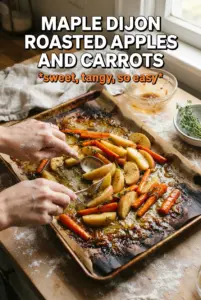
Maple Dijon roasted apples and carrots land on the table with caramelized edges, tender centers, and just enough tang to keep the sweetness in check. The carrots roast until they’re glossy and browned at the tips, while the apples soften into warm wedges that still hold their shape. It’s the kind of side dish that tastes balanced, not sugary, and it works just as well next to a simple roast chicken as it does on a holiday platter.
The trick is in the timing. Carrots need the full head start so they can soften and pick up color before the apples go in. If everything roasts together from the beginning, the apples collapse before the carrots are ready, and you lose that contrast of textures. The maple-Dijon glaze also matters here because the mustard keeps the sweetness lively and the vinegar sharpens the whole dish.
Below, I’m walking through the little details that make this side dish work: how to keep the glaze from burning, when to add the apples, and which apples hold their shape best in the oven.
The carrots came out tender with those browned edges I was hoping for, and adding the apples halfway through kept them from turning to mush. The glaze clung to everything and thickened just enough on the pan.
Save these maple Dijon roasted apples and carrots for a sweet-savory side dish with caramelized edges and a bright glaze.
The Trick to Keeping Apples Tender Without Losing the Carrot Roast
The biggest mistake in a dish like this is adding the apples too early. Apples release moisture fast, and once they soften too much, they stop behaving like wedges and start melting into the pan juices. Carrots, on the other hand, need a longer roast to become tender and take on color, especially when they’re cut into 1/2-inch diagonals that expose more surface area to the heat.
Roasting the carrots first gives the oven time to do the heavy lifting before the apples join in. That short second roast is enough to warm the apples through and let their edges catch a little color without making them fall apart. The glaze also concentrates during that final stretch, so you get a sticky coating instead of a watery pan sauce.
- Carrots — Cut them on the diagonal and keep the pieces fairly even. Thin slices brown too fast and turn soft before the apples are ready.
- Apples — Use a firm variety that holds up in the oven, like Honeycrisp, Pink Lady, or Braeburn. Soft apples turn mushy before the glaze has time to cling.
- Dijon mustard — This keeps the maple from tasting flat. It also helps the glaze emulsify so it coats the vegetables instead of pooling underneath them.
- Apple cider vinegar — The acid keeps the dish from leaning sugary. If you skip it, the glaze tastes heavier and less balanced.
What Each Ingredient Is Doing in the Pan
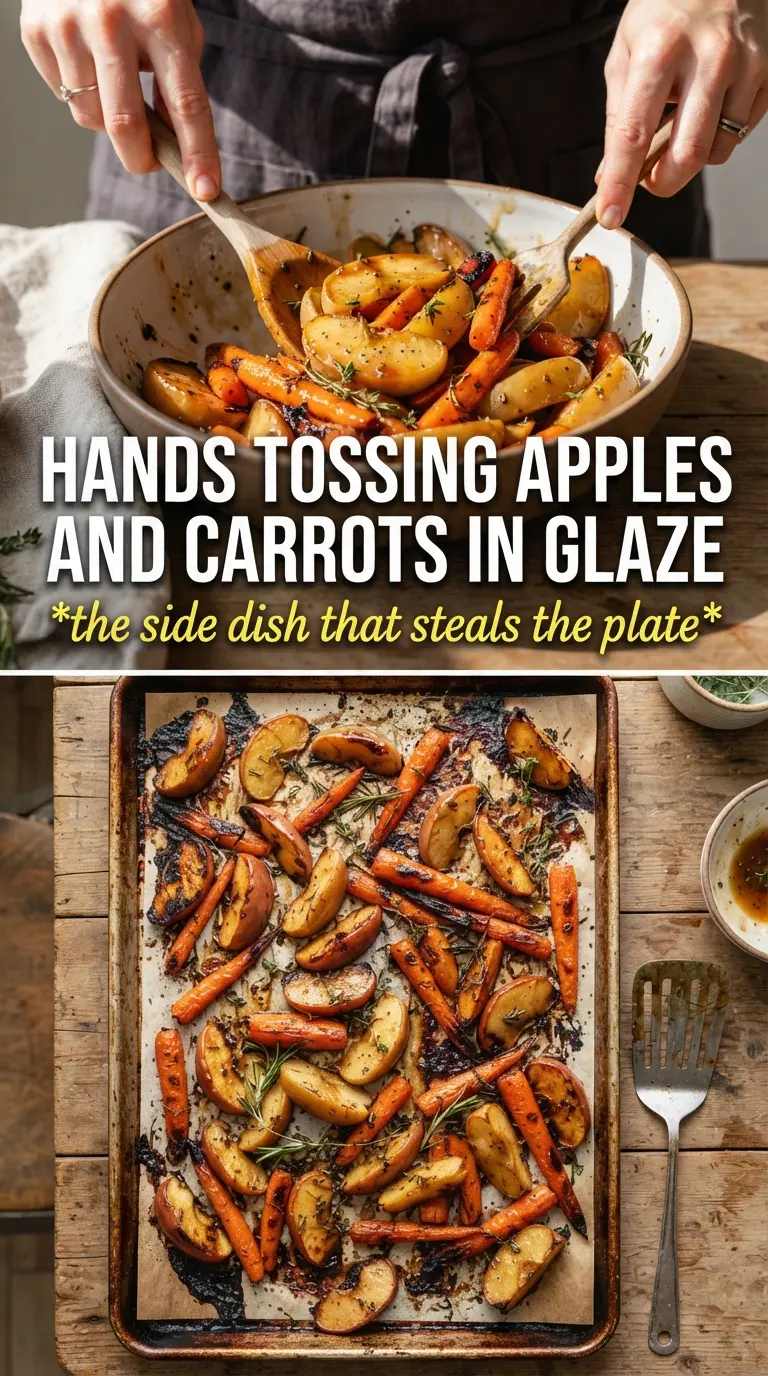
- Maple syrup — It gives the carrots and apples a lacquered finish and helps the edges caramelize. Use real maple syrup here; pancake syrup tastes one-note and won’t reduce the same way.
- Dijon mustard — Dijon brings sharpness and body. Whole-grain mustard works in a pinch, but the texture changes and the glaze won’t look as smooth.
- Olive oil — This carries the glaze across the vegetables and helps them roast instead of drying out. A neutral oil works too, but olive oil adds a little more depth.
- Fresh thyme — Thyme is the herb that makes this side dish taste savory instead of dessert-adjacent. Dried thyme can work, but use less because the flavor lands more aggressively.
- Cinnamon — Just a small amount rounds out the glaze without making the dish taste like pie. More than that and the seasoning takes over the whole pan.
Building the Glaze and Roasting in Two Stages
Whisk the glaze until it looks smooth and loose
Start by whisking the maple syrup, Dijon, olive oil, vinegar, garlic, thyme, salt, pepper, and cinnamon until the mixture looks glossy and fully combined. The mustard should disappear into the liquid instead of sitting in little streaks. If the glaze looks separated, keep whisking for another few seconds; that emulsion is what helps it cling evenly.
Give the carrots the first roast
Toss the carrots with the glaze and spread them across a parchment-lined sheet pan in a single layer. They need direct contact with the hot pan to brown properly, so don’t pile them up. After 15 minutes, the edges should be starting to color and the carrots should look partially softened, not fully cooked.
Add the apples when the pan already has momentum
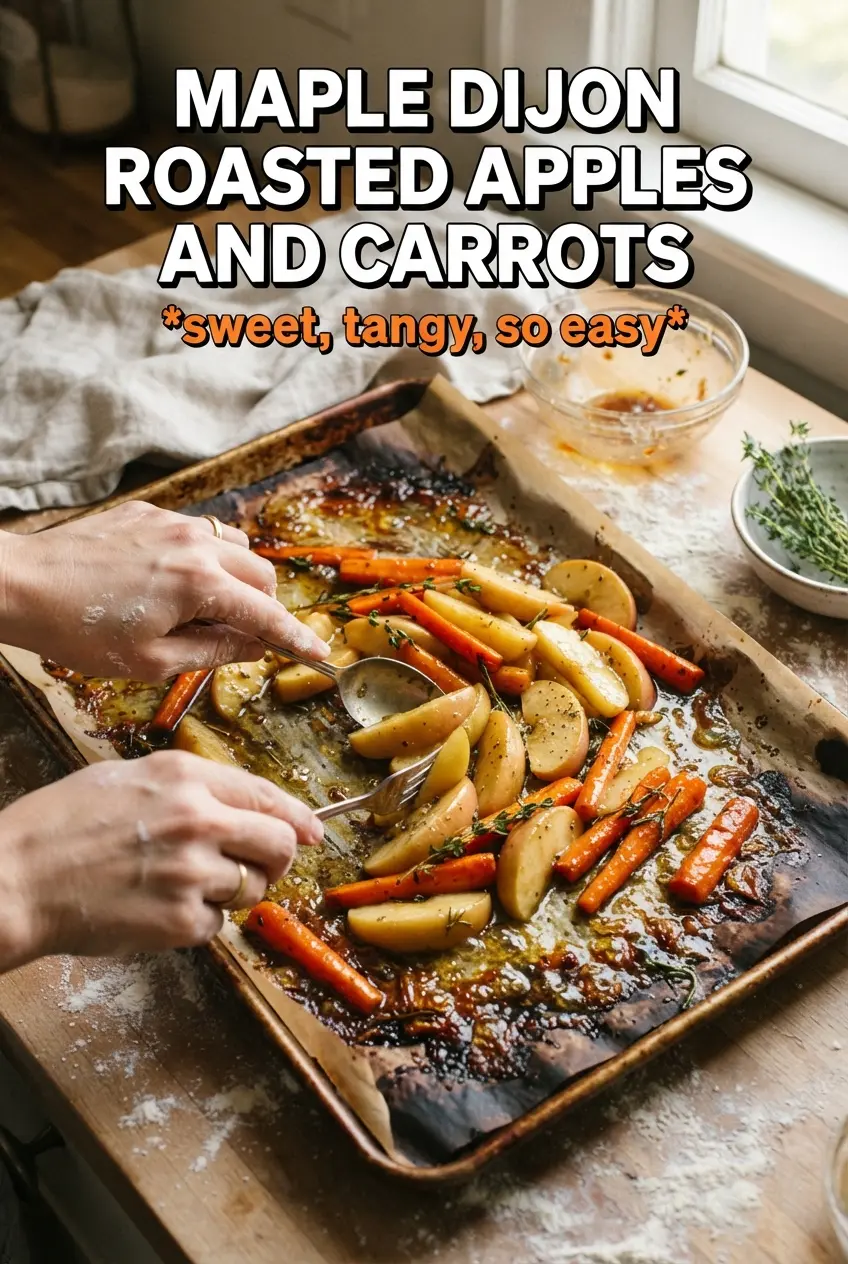
Stir the apple wedges through the remaining glaze and add them to the sheet pan after the carrots have had their head start. This timing keeps the apples from collapsing while still letting them absorb flavor. Roast for about 15 minutes more, until the carrots are tender and the apple edges look golden and lightly sticky.
Serve before the glaze cools and tightens
Pull the pan from the oven and transfer the vegetables to a serving dish right away, then finish with fresh thyme. As the glaze cools, it thickens fast, which is great for coating but not for keeping the dish looking glossy on the pan. If you let it sit too long on the sheet tray, the apples keep softening from the residual heat.
How to Adapt This for Different Tables and Diets
Use pears instead of apples
Firm pears can stand in for the apples if you want a softer, more floral finish. Use them the same way, but keep an eye on the pan because pears can go from tender to overly soft a little faster than apples.
Make it dairy-free and vegan
This dish already fits a dairy-free and vegan table as written, so there’s nothing to replace. That makes it an easy side when you need something that feels special without adding extra label-checking at the table.
Swap in maple balsamic for a deeper edge
Replace the apple cider vinegar with balsamic vinegar if you want a darker, sweeter-tart glaze. The flavor gets richer and a little less bright, which works well next to roast pork or chicken.
Storage and Reheating
- Refrigerator: Store leftovers in an airtight container for up to 4 days. The apples soften a bit more as they sit, but the flavor stays good.
- Freezer: I don’t recommend freezing this dish. The apples lose their texture and turn watery after thawing.
- Reheating: Warm leftovers on a sheet pan in a 375F oven until heated through. The oven helps the carrots perk back up; the microwave makes the apples too soft and can turn the glaze loose.
Questions I Get Asked About This Recipe
Maple Dijon Roasted Apples and Carrots
Ingredients
Equipment
Method
- Preheat oven to 425F and line a large baking sheet with parchment. This creates a hot, nonstick surface for even browning.
- Whisk maple syrup, Dijon mustard, olive oil, apple cider vinegar, garlic, fresh thyme leaves, salt, black pepper, and cinnamon until smooth. The glaze should look glossy and well combined.
- Toss carrots in the glaze and spread them in an even layer on the baking sheet. Roast at 425F for 15 minutes, until the edges start to caramelize.
- Add apple wedges to the pan and toss gently with the remaining glaze. Roast at 425F for 15 more minutes, until carrots are tender and apples are golden.
- Garnish with fresh thyme and serve immediately. The herbs add fresh color right before serving.