Silky garlic Parmesan sauce clings to every strand of pasta here, and the sliced chicken on top stays juicy instead of getting lost in the bowl. What makes this version worth keeping around is the balance: enough garlic to taste it, enough Parmesan to give the sauce body, and just enough pasta water to turn everything glossy without making it heavy.
The biggest difference between a great cream sauce and a grainy one is heat management. The garlic blooms in butter first, the cream and broth simmer long enough to thicken a little before the cheese goes in, and the Parmesan gets stirred in off a gentler burner so it melts smooth instead of clumping. Thin-sliced chicken keeps the cooking fast and gives you more browned surface area, which matters because those pan drippings carry a lot of the dish’s flavor.
Below you’ll find the timing that keeps the chicken tender, the sauce adjustments that save it if it tightens up, and a few smart swaps for when you want to stretch it, lighten it, or use what you already have.
The sauce coated the pasta perfectly and didn’t turn gluey when I added the cheese. My husband asked for seconds before I even sat down.
Pin this garlic Parmesan chicken pasta for a creamy, weeknight pasta dinner with juicy chicken and a sauce that stays silky.
The Reason the Sauce Stays Smooth Instead of Turning Grainy
The sauce in this dish depends on gentle heat and a little patience. Parmesan can go from silky to sandy fast if it hits a bubbling pan, so the cream and broth need time to come together first, and the cheese should go in once the sauce has settled into a steady simmer. If the pan is too hot, the fat separates and the cheese tightens instead of melting cleanly.
The other thing that helps is the pasta water. It isn’t there to thin the sauce like plain water would. The starch in it helps the cream cling to the spaghetti and keeps the sauce looking glossy instead of slick. Start with a small splash and add only enough to loosen the sauce until it coats the noodles in a thick, even layer.
What Each Ingredient Is Actually Doing in This Pasta
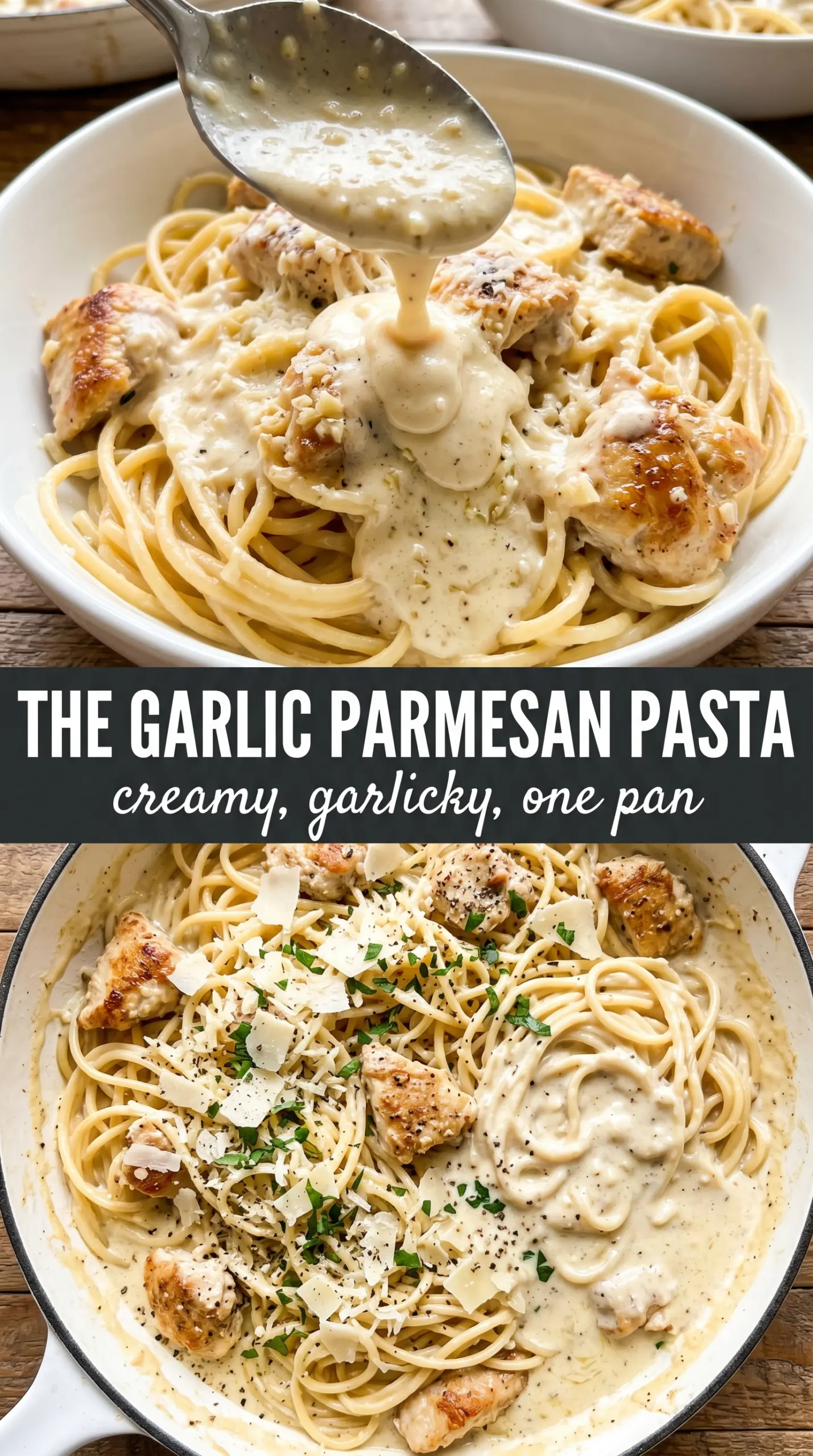
- Chicken breasts — These cook quickly and slice cleanly, which makes them a good fit here. Pound them to an even thickness or slice them in half horizontally if the thick ends are way larger than the thin ones; that keeps the outside from overcooking before the center is done.
- Freshly grated Parmesan — This matters more than almost anything else in the sauce. Pre-shredded cheese often contains anti-caking agents that keep it from melting smoothly, so grate it yourself if you want that silky finish.
- Heavy cream — This gives the sauce its body and helps it stay stable once the cheese goes in. Half-and-half can work in a pinch, but the sauce will be thinner and needs a little more pasta water to feel cohesive.
- Chicken broth — This loosens the cream without making the sauce taste flat. Use a low-sodium broth if you can, since the Parmesan brings plenty of salt on its own.
- Garlic and butter — The garlic gets sweet and fragrant when it cooks briefly in butter. If it browns, it turns bitter fast, so keep the heat at medium and move right on to the cream once it smells aromatic.
- Pasta water — Save it before you drain the noodles. That starch gives the sauce enough grip to coat the pasta instead of pooling underneath it.
Building the Chicken and Sauce in the Right Order
Searing the Chicken First
Season the chicken well and cook it in olive oil over medium-high heat until it picks up a deep golden color and reaches 165°F in the center. If the pan is crowded, the chicken will steam and go pale, so cook in batches if needed. Let it rest before slicing; cutting too soon sends the juices straight onto the cutting board instead of back into the meat.
Waking Up the Garlic
Use the same skillet for the sauce. The browned bits left behind from the chicken are part of the flavor, and they should stay in the pan. Add the butter, then the garlic, and cook only until fragrant, about a minute. If the garlic goes past that point and starts to take on color, the sauce can pick up a bitter edge that doesn’t mellow out later.
Letting the Cream Reduce
Pour in the cream and broth and let them simmer until the mixture looks a little thicker and lightly coats the back of a spoon. This is the stage that gives the sauce structure before the cheese joins in. If you rush it and add Parmesan to a thin liquid, the sauce often feels loose at first and then tightens unevenly once it cools.
Finishing With Pasta and Cheese
Stir in the Parmesan, Italian seasoning, and red pepper flakes, then toss in the cooked pasta. Add pasta water a splash at a time until the noodles look evenly coated and glossy. If the sauce seems too thick, the pasta water loosens it without watering down the flavor. Finish by topping with sliced chicken, basil, and more Parmesan while the pasta is still hot enough to melt the cheese on top.
How to Adapt This Garlic Parmesan Chicken Pasta Without Losing What Makes It Work
Make It Lighter With Half-and-Half
You can swap the heavy cream for half-and-half, but the sauce will be a little less plush and a little more delicate. Let it reduce a touch longer before adding the cheese, and use pasta water carefully so it doesn’t turn thin.
Turn It Gluten-Free
Use your favorite gluten-free spaghetti or fettuccine and cook it just shy of fully tender so it doesn’t break apart when tossed in the sauce. Save extra pasta water if you can, since gluten-free noodles often need a little more help becoming cohesive in the skillet.
Use Chicken Thighs for More Richness
Boneless skinless thighs bring a juicier, richer result and handle a little extra browning without drying out. They may need a minute or two longer in the skillet, but the payoff is chicken that stays tender even if the pasta sits for a few minutes before serving.
Add Spinach or Mushrooms
A handful of spinach or sliced mushrooms folds in easily if you want more vegetables in the pan. Mushrooms should cook before the cream so they can release and evaporate their moisture, while spinach can go in near the end and wilt right into the sauce.
Storage and Reheating
- Refrigerator: Store leftovers in an airtight container for up to 3 days. The sauce will thicken as it chills.
- Freezer: This dish freezes, but cream sauces can separate a bit after thawing. Freeze for up to 1 month and expect a slightly less silky texture.
- Reheating: Warm it gently on the stove over low heat with a splash of milk, cream, or broth. High heat is the mistake that breaks the sauce and makes the chicken feel dry.
Answers to the Questions Worth Asking
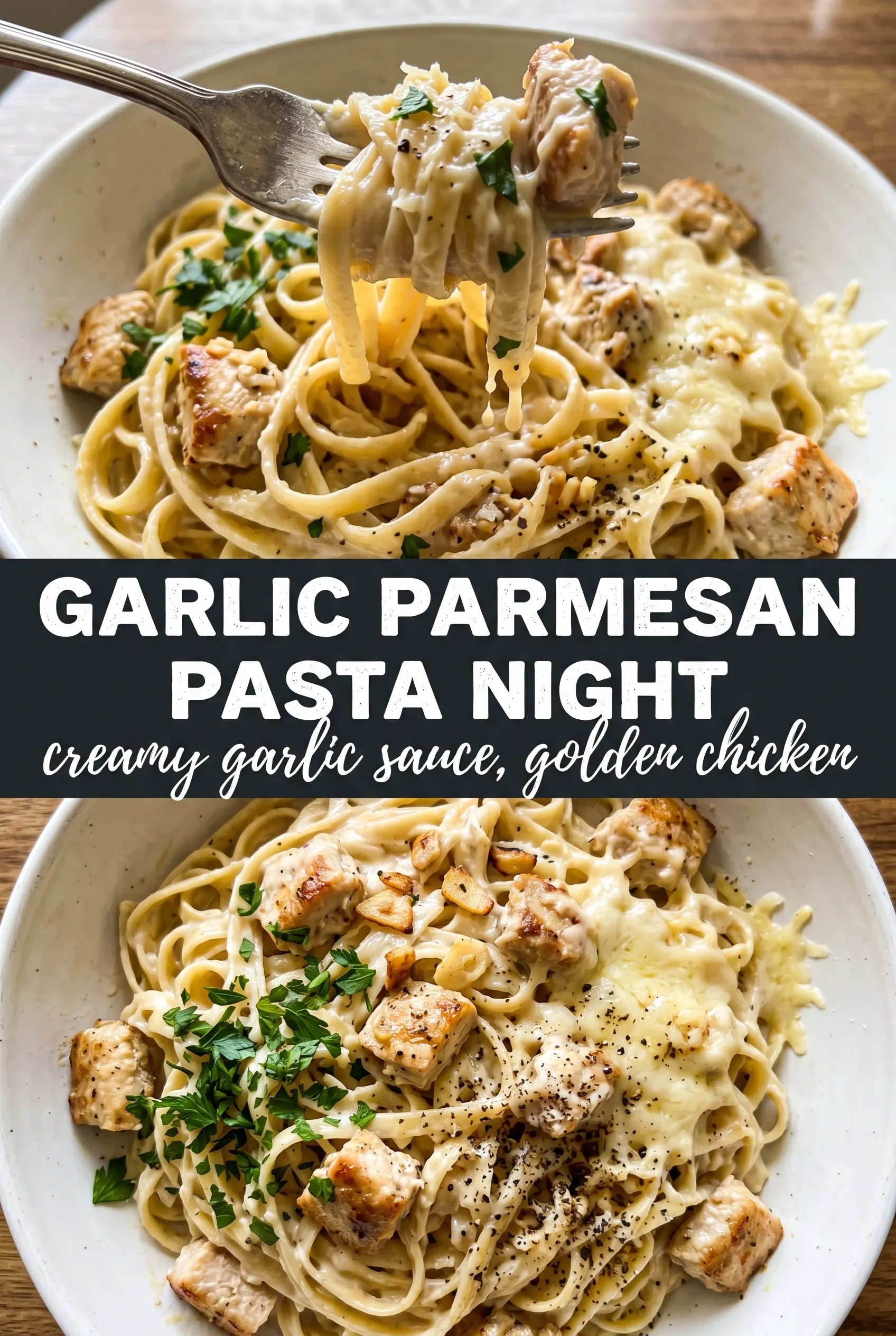
Garlic Parmesan Chicken Pasta
Ingredients
Equipment
Method
- Season the chicken breasts with salt, pepper, garlic powder, and Italian seasoning to taste. Heat olive oil in a large skillet over medium-high heat and cook the chicken for 5-6 minutes per side until golden and cooked through to 165°F, then rest and slice thin.
- In the same skillet, melt the butter and cook the minced garlic over medium heat for 1 minute until fragrant. Pour in the heavy cream and chicken broth and simmer for 4-5 minutes until slightly thickened with a gentle bubbling look.
- Stir in the freshly grated Parmesan, Italian seasoning, and red pepper flakes until the sauce turns smooth and glossy. Add reserved pasta water as needed, a splash at a time, until the sauce easily coats pasta strands.
- Toss the cooked spaghetti or fettuccine directly in the garlic Parmesan sauce until every strand is coated and shining. Divide among plates and top each portion with sliced chicken.
- Scatter fresh basil over the top and finish with extra Parmesan. Serve right away so the sauce stays silky and the Parmesan looks freshly shaved.