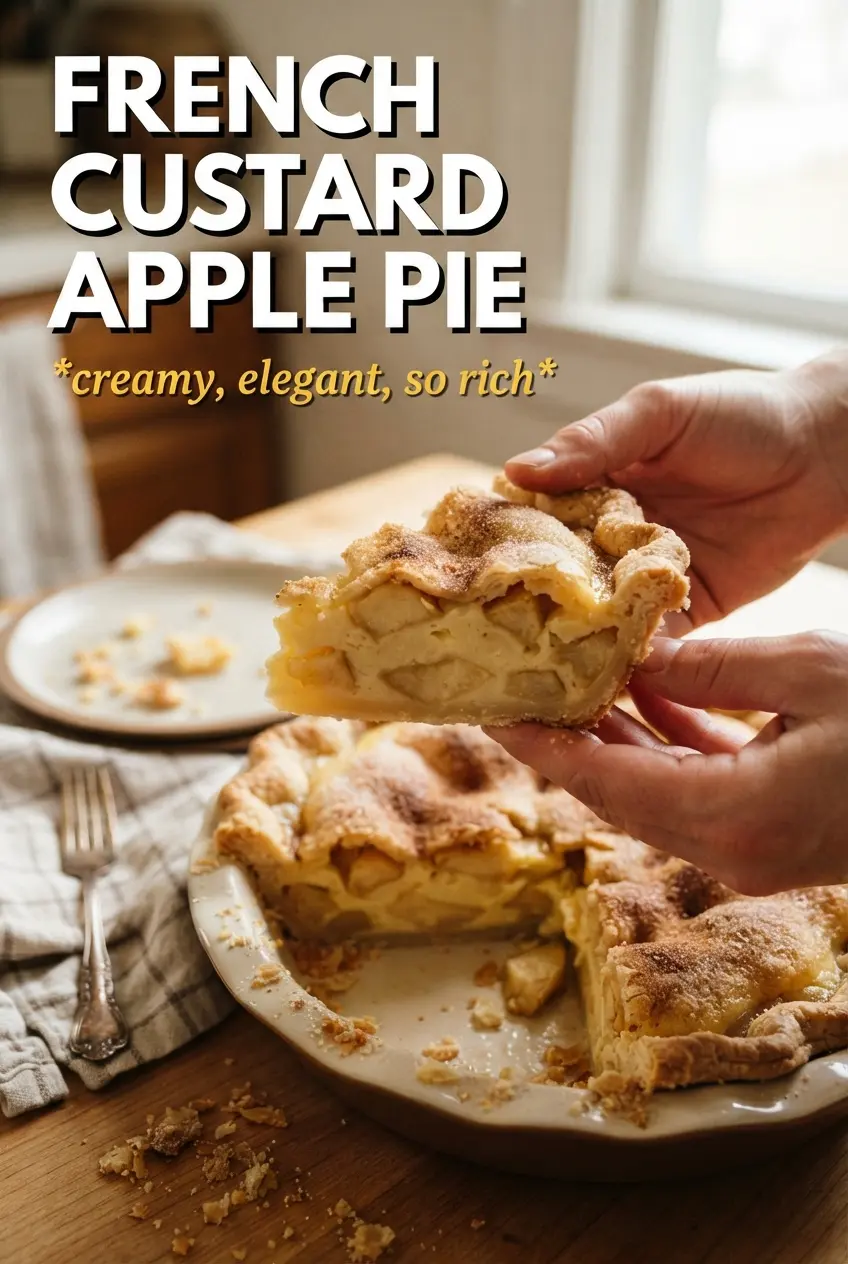
French custard apple pie bakes into something that feels part tart, part cake, and part classic apple pie, with a creamy set in the middle and tender apples layered right through the slice. The crust stays crisp around the edges, the custard turns just firm enough to hold, and the top gets that thin cinnamon-sugar finish that makes each bite taste finished rather than fussy.
What makes this version work is the balance: enough cream and egg to set into a soft custard, but just enough flour to keep it from slicing loose or turning watery around the apples. The apples are arranged before the custard goes in, so they stay visible and concentrated instead of sinking into the filling. That gives the pie a clean look and a better texture all the way through.
Below, I’ve included the small details that matter most: how to keep the custard smooth, why thin apple slices bake better here, and a few smart swaps if you need to work with what’s already in your kitchen.
The custard set up beautifully and didn’t run all over the plate. I loved how the apples stayed in neat layers instead of disappearing into the filling, and the cinnamon sugar on top gave it just enough crunch.
Save this French custard apple pie for the day you want a creamy apple dessert with a crisp crust and a cinnamon-sugar finish.
The Custard Needs Gentle Heat, Not Just Time
The most common failure in a custard pie like this is baking it until the filling looks done on top, then cutting into a loose center. Custard keeps setting after it comes out of the oven, so the pie needs to come out when the center still has a slight wobble and the edges are set. If you wait for a completely firm center in the oven, the eggs can tighten too far and the texture turns rubbery instead of silky.
The apples also matter here. Thin slices soften at the same pace as the custard sets, which keeps the pie from tasting like baked eggs with raw fruit tucked inside. Thick slices need a longer bake, and that usually means overcooked custard. This version works because the fruit and filling finish together.
- Thin apple slices — They soften fast enough to stay tender inside the custard. Slice them evenly so the pie bakes in one consistent layer.
- Heavy cream — This gives the filling its rich, smooth body. Half-and-half works in a pinch, but the custard won’t be quite as lush.
- Flour — Just a small amount helps the custard slice cleanly. Skip it and the filling can weep once cooled.
- Calvados or apple brandy — Optional, but it deepens the apple flavor without making the pie taste boozy. Leave it out if you want a straightforward custard and apple profile.
What Each Ingredient Is Doing in the Pie

- Refrigerated pie crust — This gives you a reliable base without extra work. A homemade crust works too, but the store-bought version is fine here because the custard and apples carry most of the flavor.
- Eggs — They set the filling. Three eggs are enough to hold the cream and fruit together without making the texture eggy.
- Apples — Use a firm baking apple that holds its shape. Soft apples collapse and can water down the custard.
- Vanilla, cinnamon, and nutmeg — These round out the filling and keep it from tasting flat. Fresh nutmeg gives a warmer finish, but pre-ground works if that’s what you have.
- Powdered sugar finish — Added after cooling, it gives the pie that bakery-style look without melting into the top.
Building the Custard So It Sets Cleanly
Arrange the apples before the filling goes in
Fit the crust into the pie dish and crimp the edges first, then layer the apples in overlapping circles. The arrangement matters because it creates pockets for the custard to settle into. If the slices are scattered randomly, the filling can pool in one area and bake unevenly. Keep the apple layer fairly tight so the pie slices neatly later.
Whisk the custard until the flour disappears
Whisk the eggs, cream, sugar, flour, vanilla, cinnamon, nutmeg, and calvados, if using, until the mixture looks smooth and pale. The flour needs to dissolve fully or you’ll get little floury streaks in the finished pie. Don’t rush this part; any lumps will show up after baking. Pour the custard slowly over the apples so it works down between the slices instead of sitting on top.
Bake until the center still has a small wobble
Sprinkle the cinnamon sugar over the top, then bake at 375°F until the custard is set around the edges and the top is lightly golden, about 50 to 55 minutes. The center should jiggle slightly when you move the pan, not slosh. If the crust starts browning too quickly, tent the edges with foil for the last part of baking. Let the pie cool for at least 30 minutes before dusting with powdered sugar so the custard can finish setting.
How to Adapt This Pie Without Losing the Creamy Set
Dairy-Free Version
Use full-fat canned coconut cream in place of heavy cream. The filling will set, but it will taste a little more coconut-forward and less classic French-American. Keep the rest of the method the same so the texture stays smooth.
Gluten-Free Crust Swap
Use a gluten-free pie crust and replace the flour in the custard with 1 tablespoon cornstarch. The pie will still set cleanly, though the custard will feel a little lighter and less bready. Whisk the cornstarch in thoroughly so it doesn’t clump.
No Calvados Needed
Skip the brandy and add an extra 1/2 teaspoon of vanilla or a little more cinnamon. You lose the subtle apple-depth that the spirit adds, but the pie still tastes balanced and warm. This is the easiest version to make for family or guests who prefer no alcohol.
Make-Ahead Timing
Bake the pie a day ahead if you want cleaner slices. Once cooled, cover and refrigerate, then bring it back to room temperature before serving or warm it slightly. The custard firms up overnight, which makes the texture even neater.
Storage and Reheating
- Refrigerator: Store covered for up to 4 days. The crust softens a little, but the custard stays sliceable.
- Freezer: Freeze baked slices tightly wrapped for up to 1 month. Thaw in the refrigerator overnight; the texture will be a little less creamy after freezing, but still good.
- Reheating: Warm slices in a 300°F oven for 10 to 12 minutes. Microwave heat can make the custard weep and turn the crust soggy.
Answers to the Questions Worth Asking
French Custard Apple Pie
Ingredients
Equipment
Method
- Preheat the oven to 375°F. Fit the refrigerated pie crust into a 9-inch pie dish and crimp the edges.
- Arrange the thinly sliced apples overlapping in the crust in concentric circles. Keep the layers even so the custard can seep between slices.
- Whisk the eggs, heavy cream, granulated sugar, all-purpose flour, vanilla extract, cinnamon, nutmeg, and apple brandy or calvados if using until smooth. Stop whisking when the mixture looks fully blended with no flour streaks.
- Pour the custard mixture over the apples until it fills around and between the slices. Pour slowly so the custard settles into the gaps.
- Sprinkle the cinnamon sugar topping over the top of the pie. Aim for an even layer so the surface browns uniformly.
- Bake for 50-55 minutes at 375°F until the custard is set and the top is golden. You should see a lightly browned, set center rather than wobble.
- Cool the pie for 30 minutes. This helps the custard firm up for clean slices.
- Dust with powdered sugar before serving. Finish right before cutting for the best visual contrast.