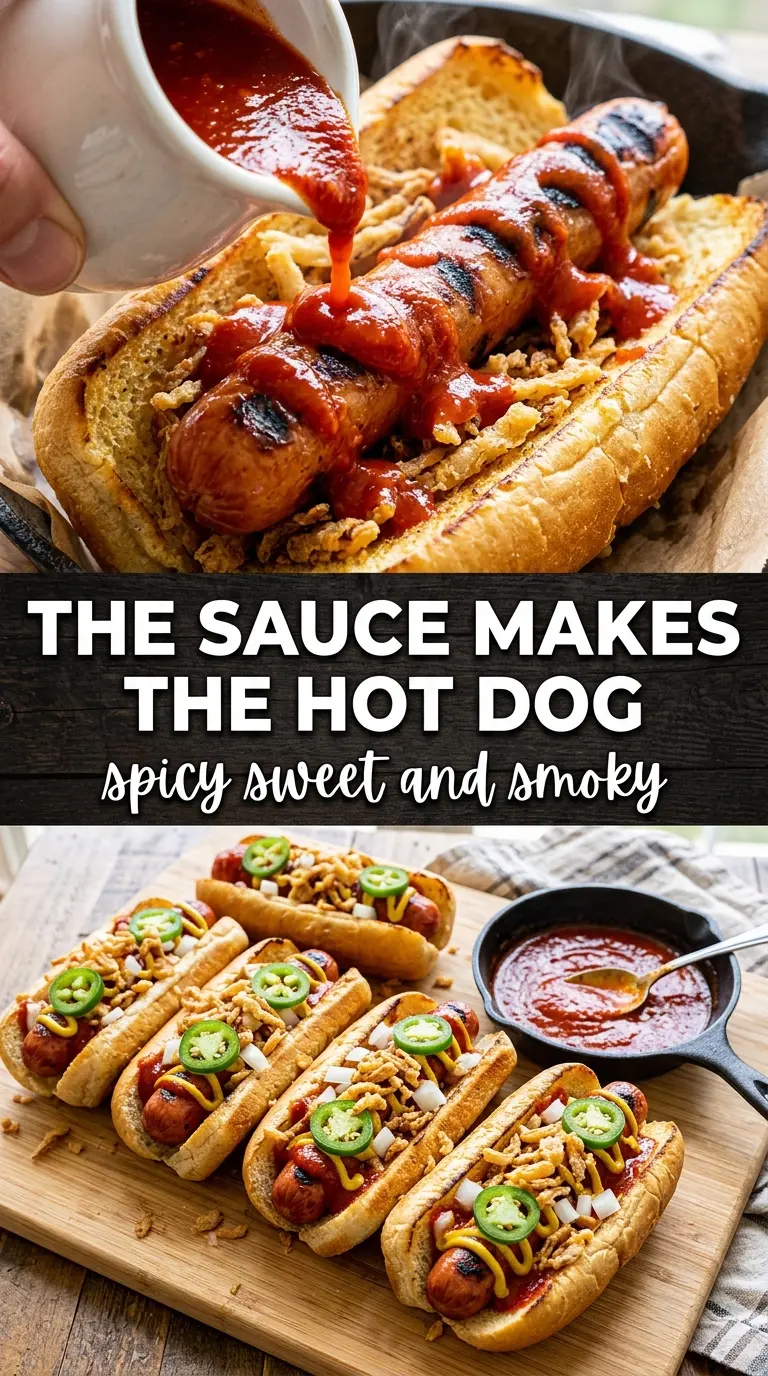
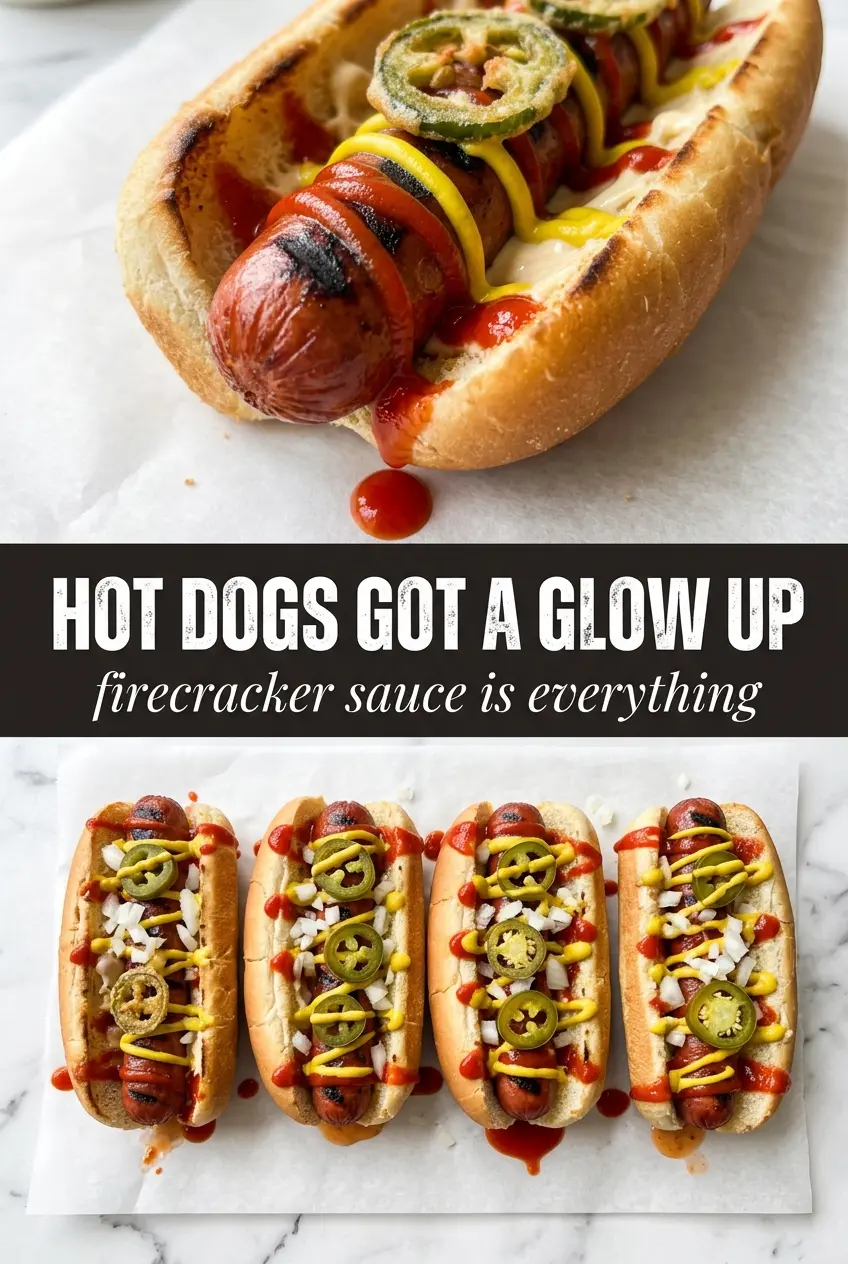
Firecracker hot dogs hit that sweet spot between cookout food and full-on craving food: smoky, charred, a little messy, and loud with heat. The spiral-scored dogs open up on the grill so the edges crisp instead of just warming through, and that little bit of extra surface area gives you better browning in every bite. Piled into toasted buns with jalapeño relish, mustard, sriracha, and crispy onions, they eat like the best kind of backyard chaos.
The scoring matters more than people think. Those cuts help the hot dogs split just enough to pick up char, but they also create pockets for the toppings to cling to instead of sliding off the bun. Buttering and toasting the buns keeps them from going limp under the heat and the juices, which is the difference between a good hot dog and one that holds together long enough to finish.
Below, I’ll walk through the grill timing, the best way to cut the dogs, and a few smart swaps if you want to tone down the heat or feed a bigger crowd without losing the crunch.
The spiral cuts made all the difference — the hot dogs charred beautifully and the relish stayed put instead of sliding off the bun. My son said they tasted like the best part of a cookout in every bite.
Firecracker hot dogs are at their best when the grill marks are dark and the jalapeño topping is piled on hot and fast.
The Cut That Gives You Char Instead of Just Heat
Hot dogs can taste flat when they’re cooked whole, especially on a grill where the outside gets a little color but the inside stays soft and one-note. Scoring changes that. The diagonal cuts or spiral cut expose more surface area, so the fat renders, the edges crisp, and the sausage opens slightly as it cooks instead of puffing up and splitting at random.
The other reason this works is timing. These hot dogs don’t need a long cook; they need steady turning over medium-high heat until the cuts widen and the surface takes on a deep, even char. If the grill is too hot, the outside burns before the score marks can open. If it’s too low, you lose the snap and the texture that makes the topping pile-up worth it.
- Beef hot dogs — Beef dogs hold up best to this kind of high-heat grilling because they stay juicy and pick up stronger browning. Any good all-beef frank works here.
- Jalapeño relish or chopped pickled jalapeños — This gives the recipe its sharp, spicy bite. Relish spreads more evenly; chopped pickled jalapeños give you bigger pops of heat and a little more crunch.
- Sriracha — A drizzle is enough. It adds heat and a garlicky edge without taking over the whole bun. If you want milder heat, cut it with a little ketchup or skip it and use extra mustard.
- Crispy fried onions — These matter for texture. They bring crunch after the grill has done all the softening work, and they keep each bite from feeling one-dimensional.
- Butter for the buns — Don’t skip this if you want the buns to toast instead of just warm up. Softened butter spreads thinly and helps the cut sides brown evenly on the grill.
What Each Ingredient Is Actually Doing in This Recipe
- Primary ingredient (the star) — Quality matters most. Choose the best you can find.
- Cooking medium (oil, butter, or broth) — This carries flavors and prevents dryness.
- Seasonings (salt, pepper, spices, herbs) — Layer flavors so nothing overpowers. Build depth gradually.
- Aromatics (garlic, onion, herbs) — Cook with fat to bloom flavors. Become the foundation.
- Supporting ingredients — Complement the main ingredient without overpowering it.
- Sauce or liquid (if applicable) — Brings flavors together. Balance richness with acid.
- Acid (lemon, vinegar, wine, or other) — Brightens and prevents flat-tasting results.
- Final finish (garnish, glaze, or sauce) — Prevents one-dimensional taste and adds visual appeal.
How to Build the Toppings So the Bun Stays Intact
Scoring the Dogs
Cut shallow diagonal slashes down each hot dog, or run a spiral cut around the length if you want more dramatic char. The cuts should go deep enough to open on the grill, but not so deep that the dog falls apart. A sharp knife helps here; a dull one tears the casing and makes the sausage cook unevenly.
Grilling for Char and Snap
Place the hot dogs on a medium-high grill or grill pan and turn them every couple of minutes. You’re looking for the cuts to widen and the surface to pick up dark grill marks without drying out. If a hot dog starts to blister too fast, move it to a slightly cooler spot; that keeps the outside from scorching before the inside is heated through.
Toasting the Buns
Butter the inside of each bun lightly, then set them cut-side down on the grill just until golden. They should smell toasty and feel crisp at the edges, not brittle. This step protects the bread from the toppings and gives you enough structure to handle the sriracha and relish without the bun collapsing.
Finishing the Build
Slide each hot dog into a toasted bun, then layer on the jalapeño relish, mustard, sriracha, and crispy onions. Add the ketchup on the side instead of loading it on top, since it can soften the fried onions and blur the sharpness of the other toppings. Serve them right away while the bun is warm and the onions still have crunch.
How to Tone the Heat Up or Down Without Losing the Point
Milder Firecracker Dogs
Use chopped pickled jalapeños instead of relish if you want less sweetness and more control over the heat. Swap half the sriracha for ketchup, or leave the sriracha off the finished hot dogs and serve it on the side so everyone can add their own kick.
Gluten-Free Serving
Keep the toppings the same and use gluten-free hot dog buns. The rest of the recipe already works as-is, and the grilled, buttered bun is the part most likely to change texture, so choose a sturdy gluten-free bun that can hold up to the toppings.
Bacon-Laced Version
Wrap each hot dog in a thin slice of bacon before grilling for a smokier, richer version. The tradeoff is a longer cook time and a little more handling, but you get extra crisp edges and a heavier cookout feel.
Storage and Reheating
- Refrigerator: Store the cooked hot dogs and toppings separately for up to 3 days. The buns soften, so keep them wrapped on their own if you want the best texture.
- Freezer: The cooked hot dogs freeze well for up to 2 months, but the buns and fresh toppings don’t. Freeze the dogs plain, then thaw in the fridge before reheating.
- Reheating: Warm the hot dogs in a skillet or on a grill pan over medium heat until hot through and lightly re-charred. Avoid the microwave if you want to keep the outside from going rubbery and the bun from turning soggy.
Answers to the Questions Worth Asking
Firecracker Hot Dogs
Ingredients
Equipment
Method
- Score each beef hot dog with diagonal cuts or a spiral cut to help it char and open on the grill. Keep the cuts shallow so the hot dog still holds together as it cooks.
- Preheat your grill or grill pan to medium-high heat and cook the hot dogs for 8–10 minutes, turning frequently, until charred and split open slightly. Aim for dark grill marks on most sides.
- Butter the inside of each hot dog bun and toast on the grill for 1–2 minutes until golden. Pull them as soon as the color looks even and crisp.
- Place 1 hot dog in each toasted bun and top with jalapeño relish, a squeeze of yellow mustard, and a drizzle of sriracha. Spread the relish lightly so every bite gets heat and tang.
- Finish each hot dog with crispy fried onions and serve immediately with ketchup on the side. The hot dogs should look charred and glossy before the onions land on top.