Silky, rich cauliflower soup has a way of tasting much more luxurious than the ingredient list suggests. When the cauliflower cooks down until spoon-tender and gets blended with broth and cream, it turns into a bowl that feels velvety without being heavy. The roasted cauliflower garnish adds the one thing a smooth soup often misses: contrast. You get soft, creamy spoonfuls and then a little crisp, caramelized bite on top.
The trick here is building flavor in layers instead of relying on the blender to do all the work. Sautéing the onion until sweet, cooking the garlic just long enough to lose its raw edge, and finishing with a little nutmeg and white pepper keeps the soup from tasting flat. A small drizzle of truffle oil goes a long way, so the whole bowl stays elegant instead of overwhelming.
Below, I’ll walk through the step that keeps this soup from tasting watery, what each ingredient is doing, and a few smart variations if you want to lighten it up or change the finish.
The cauliflower blended into the smoothest soup, and roasting the reserved florets made the topping taste like something from a restaurant. My husband kept going back for “just one more bowl.”
Save this creamy cauliflower soup with roasted cauliflower garnish for a silky, cozy bowl that still has a crisp, caramelized topping.
The Reason This Soup Stays Velvety Instead of Watery
Cauliflower carries a lot of water, and that’s where a lot of soups go wrong. If it gets boiled hard for too long, the flavor gets thin and the texture can turn loose after blending. Here, the cauliflower simmers just until tender, then gets blended with enough fat from butter and cream to give the soup body without making it heavy.
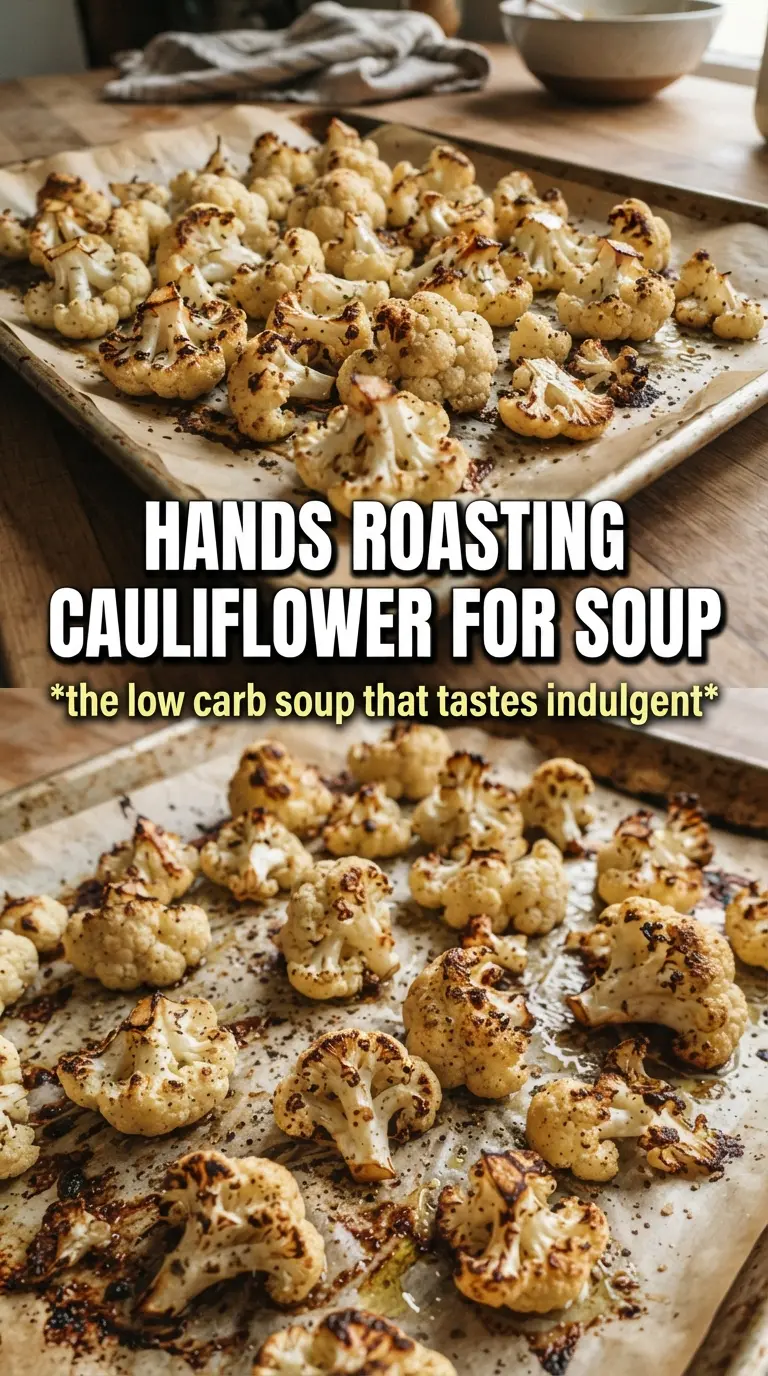
The other quiet win is the garnish. Roasting some of the florets separately concentrates their flavor and gives you a little chew and browning on top. That contrast keeps every bowl from tasting like one smooth note all the way through.
What Each Ingredient Is Actually Doing in This Bowl
- Cauliflower — This is the backbone of the soup. Choose heads that feel heavy for their size with tight, pale florets; older cauliflower can taste bitter. Reserving some florets for roasting gives the finished bowl texture and a deeper, nuttier flavor.
- Onion and garlic — These build the base flavor before the cauliflower goes in. The onion needs enough time to soften and sweeten, and the garlic only needs a minute so it doesn’t turn harsh. If the garlic browns, the soup will taste bitter.
- Broth — Vegetable broth keeps the soup clean and mild, while chicken broth adds a little more savoriness. Use the one that fits your kitchen, but pick a broth you’d actually drink on its own or the soup will taste flat.
- Heavy cream — This is what makes the texture lush and spoon-coating. Half-and-half works in a pinch, but the soup won’t feel as rich or stable. Stir it in after blending, once the soup is off a hard boil, so it stays smooth.
- Butter and olive oil — Butter brings flavor; olive oil helps the cauliflower roast properly without burning. For the best result, use both. The mix handles heat better than butter alone and gives the soup a more rounded finish.
- Nutmeg and white pepper — Nutmeg adds warmth without shouting, and white pepper gives gentle heat without black specks. White pepper is worth using here because it keeps the soup pale and elegant. Black pepper works if that’s what you have, but it changes the look and reads a little sharper.
Building the Soup So It Tastes Rich, Not Flat
Roast the Garnish First
Toss the reserved cauliflower florets with olive oil and roast them at 425°F until the edges are deeply golden and the centers are tender. They should smell sweet and nutty, not burnt. If the florets are crowded on the pan, they’ll steam instead of caramelize, so give them space. Set them aside while you finish the soup so they keep their texture.
Cook the Aromatics Until They Lose Their Sharpness
Melt the butter with the olive oil, then cook the diced onion until it turns soft and translucent with a little color at the edges. Add the garlic after the onion has already softened; garlic burns fast, and burnt garlic will carry through the whole pot. This step should smell sweet and savory, not sharp.
Simmer Until the Cauliflower Gives No Resistance
Add the cauliflower and broth, bring it to a boil, then drop it to a gentle simmer until the florets fall apart when pressed with a spoon. If the cauliflower still has a firm center, the soup will blend up with tiny grainy bits instead of turning silky. Don’t rush this part. The cauliflower needs to be fully tender before the blender goes in.
Blend, Then Finish with Cream
Use an immersion blender to puree the soup until it’s completely smooth. Blend longer than you think you need to; any little lumps will stand out in a soup this pale. Stir in the cream, nutmeg, and white pepper after blending, then taste for salt. If you add cream before the soup is smooth, you can still blend it, but the texture usually ends up less luxurious.
Ways to Adjust the Soup Without Losing the Silky Texture
Dairy-Free Version
Swap the butter for olive oil and use full-fat coconut milk or unsweetened oat cream in place of the heavy cream. Coconut milk brings a slight sweetness that works well with cauliflower, while oat cream keeps the flavor more neutral. The soup will still be rich, but the finish will be a little less plush than the dairy version.
Lower-Carb, Extra-Rich Finish
Keep the recipe as written, then finish each bowl with a little extra olive oil or a small pat of butter instead of adding more cream. That gives the soup more gloss and a fuller mouthfeel without changing the flavor much. The roasted garnish becomes even more important here because it adds texture without carbs.
Make It Thicker
Use a little less broth, then simmer the cauliflower uncovered for the last few minutes so extra moisture can cook off. That gives you a denser soup without needing flour or cornstarch. If it gets thicker than you want after chilling, thin it with a splash of broth when reheating.
Storage and Reheating
- Refrigerator: Store for up to 4 days in an airtight container. The soup thickens as it chills, which is normal.
- Freezer: It freezes well, but cream-based soups can separate slightly after thawing. Freeze without the garnish, then reblend or whisk after thawing if needed.
- Reheating: Warm it gently over low heat and add a splash of broth if it looks too thick. Don’t boil it hard, or the cream can split and the texture will turn grainy.
Answers to the Questions Worth Asking

Creamy Cauliflower Soup
Ingredients
Equipment
Method
- Toss the reserved cauliflower florets with olive oil. Roast on a sheet pan at 425F for 20-25 minutes until golden, then set aside for garnish.
- Melt the unsalted butter in a large pot. Sauté the diced onion for 5 minutes, then add the minced garlic and cook for 1 minute.
- Add the remaining cauliflower florets and the vegetable or chicken broth to the pot. Bring to a boil, then simmer for 20 minutes until very tender.
- Blend the soup completely smooth with an immersion blender. Stir in the heavy cream, nutmeg, and white pepper.
- Season with salt to taste. Serve with the roasted cauliflower, drizzle with truffle oil, and top with chives.