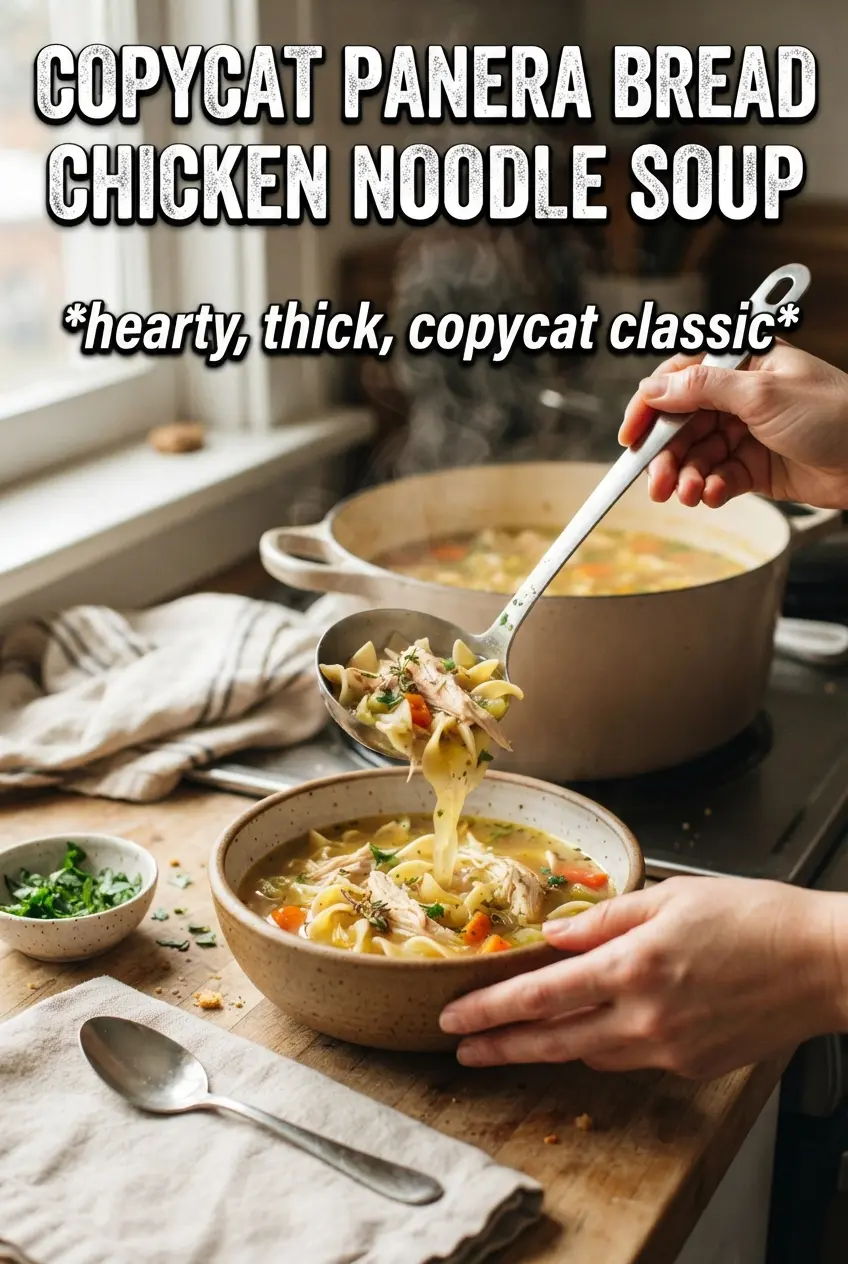
Clear broth, tender chicken, and soft egg noodles make this copycat Panera Bread chicken noodle soup land somewhere between comforting and polished. It tastes light at first spoonful, then builds into something full and savory, with carrots and celery giving each bite that familiar bakery-café feel. The noodles stay pleasantly chewy instead of bloated, and the broth stays clean enough to taste each herb instead of collapsing into one muddy note.
What makes this version work is restraint. The vegetables cook just long enough to soften before the broth goes in, and the chicken simmers gently so it stays juicy instead of stringy. The herbs are subtle, not heavy-handed, because Panera-style soup depends on a clear, well-seasoned broth more than a thick base. Add the noodles near the end and pull the pot as soon as they turn al dente; they keep soaking up liquid after the heat’s off.
Below, I’m walking through the little details that keep the broth bright and the noodles from turning mushy, plus a few swaps if you want to use what’s already in your kitchen.
The broth tasted clean and buttery, and the egg noodles held up perfectly instead of going soft and swollen. My husband said it tasted just like the soup from Panera, only hotter and better.
Love the clear broth and tender egg noodles in this Copycat Panera Bread Chicken Noodle Soup? Save it to Pinterest for an easy, café-style bowl that tastes cozy without feeling heavy.
The Trick Is Keeping the Broth Clear While the Chicken Stays Tender
The biggest difference between a good chicken noodle soup and one that tastes flat is how hard you simmer it. A rolling boil will cloud the broth and dry out the chicken breasts before the noodles even go in. Gentle bubbling is enough here. It keeps the meat juicy and lets the broth stay bright, which matters in a soup like this where there’s nowhere to hide.
The other piece people miss is the timing on the noodles. Egg noodles absorb liquid fast, and if they sit in the pot for too long, they steal the broth and turn soft in a hurry. Cook them just until al dente, then serve the soup right away or plan to store the noodles separately if you want the texture to stay close to restaurant-style.
- Chicken breast — Cut it into 1-inch pieces so it cooks quickly and evenly. Smaller pieces make the soup feel more like the Panera version than whole shredded chunks do. If you only have rotisserie chicken, add it at the end just long enough to warm through.
- High-quality chicken broth — This is the backbone of the soup, so use the best broth you can get. A bland broth will stay bland no matter how much seasoning you add. If yours tastes thin, simmer it for a few minutes before adding the chicken.
- Egg noodles — These give the soup its signature comfort and body. Regular pasta won’t have the same soft, springy bite. Break them shorter so they fit on the spoon and cook evenly in the broth.
- Fresh parsley — Stir it in at the end for a cleaner, fresher finish. Dried parsley won’t give the same lift. If you skip it, the soup will still work, but it’ll taste a little flatter.
What Each Ingredient Is Actually Doing in This Recipe

- Primary ingredient (the star) — Quality matters most. Choose the best you can find.
- Cooking medium (oil, butter, or broth) — This carries flavors and prevents dryness.
- Seasonings (salt, pepper, spices, herbs) — Layer flavors so nothing overpowers. Build depth gradually.
- Aromatics (garlic, onion, herbs) — Cook with fat to bloom flavors. Become the foundation.
- Supporting ingredients — Complement the main ingredient without overpowering it.
- Sauce or liquid (if applicable) — Brings flavors together. Balance richness with acid.
- Acid (lemon, vinegar, wine, or other) — Brightens and prevents flat-tasting results.
- Final finish (garnish, glaze, or sauce) — Prevents one-dimensional taste and adds visual appeal.
Building the Soup in the Right Order
Softening the Vegetables First
Start with the olive oil, onion, carrots, and celery in a large pot and cook them until the onion turns translucent and the vegetables lose their raw edge. You’re not trying to brown them. You’re building the sweet base that makes the broth taste rounded instead of plain. If the heat is too high here, the onion will take on color before the carrots soften, and the soup will taste sharper than it should.
Adding the Herbs Before the Broth
Stir in the garlic for just a minute, then add the broth, thyme, rosemary, and poultry seasoning. Garlic burns fast, and once it does, the whole pot picks up a bitter edge. The herbs need the hot liquid to bloom and spread through the soup, but they don’t need aggressive boiling. A steady simmer is enough to pull everything together.
Cooking the Chicken Without Overdoing It
Add the diced chicken once the broth comes to a boil, then lower it to a simmer until the pieces are cooked through and no longer pink in the center. Because the chicken is cut small, it cooks faster than whole breasts and stays more tender. If you let it boil hard, the edges tighten up and the meat loses that soft, almost silky bite that works so well in this soup.
Finishing with the Noodles and Parsley
Stir in the broken egg noodles and cook them exactly until just al dente, usually 6 to 7 minutes depending on the brand. Taste one before you stop; it should still have a little chew in the center. Turn off the heat, add the parsley, then season with salt and pepper until the broth tastes full and balanced. The last seasoning matters because the noodles and chicken will soak up more salt than you expect.
How to Adjust This Soup for the Pantry You’ve Got
Use Rotisserie Chicken for a Faster Version
Skip the simmered chicken and stir in shredded rotisserie chicken at the end. You’ll lose a little of the clean chicken flavor that comes from cooking the meat in the broth, but you gain speed and a slightly richer texture from the dark-meat pieces that often come mixed in.
Make It Gluten-Free
Use a gluten-free egg noodle or a small gluten-free pasta, but cook it separately if possible. Gluten-free noodles can break down faster in broth, and separating the cooking keeps the soup from turning starchy. Add the cooked noodles to each bowl just before serving for the best texture.
Turn Up the Herb Flavor
If you want a stronger herb presence, add a little extra thyme or a pinch more poultry seasoning, but keep rosemary in check. Rosemary can take over fast and make the soup taste woodsy instead of balanced. The goal is a broth that tastes clean and savory, not aggressively herbal.
Storage and Reheating
- Refrigerator: Store for up to 4 days. The noodles will keep soaking up broth, so expect the soup to thicken a bit as it sits.
- Freezer: The broth and chicken freeze well, but the noodles soften after thawing. For the best result, freeze the soup without noodles and add freshly cooked noodles when you reheat it.
- Reheating: Warm it gently on the stovetop over medium-low heat until hot. A hard boil will overcook the chicken and make the noodles bloated, so keep the heat low and add a splash of broth if needed.
Questions I Get Asked About This Recipe
Copycat Panera Bread Chicken Noodle Soup
Ingredients
Equipment
Method
- Heat the olive oil in a large pot over medium heat and sauté the onion, carrots, and celery for 5 minutes until softened. Keep them moving so the onion turns translucent without browning.
- Add the minced garlic and cook for 1 minute. Stir just until fragrant so it doesn’t burn.
- Pour in the chicken broth and stir in the dried thyme, dried rosemary, and poultry seasoning. Bring the mixture to a boil over high heat.
- Add the diced chicken and reduce to a simmer. Simmer for 12 minutes, stirring occasionally, until the chicken is cooked through.
- Add the egg noodles and cook for 6–7 minutes until just al dente. Keep a close eye to avoid over-soft noodles.
- Stir in the fresh parsley and season generously with salt and pepper. Taste and adjust so the broth is well-seasoned and clear.