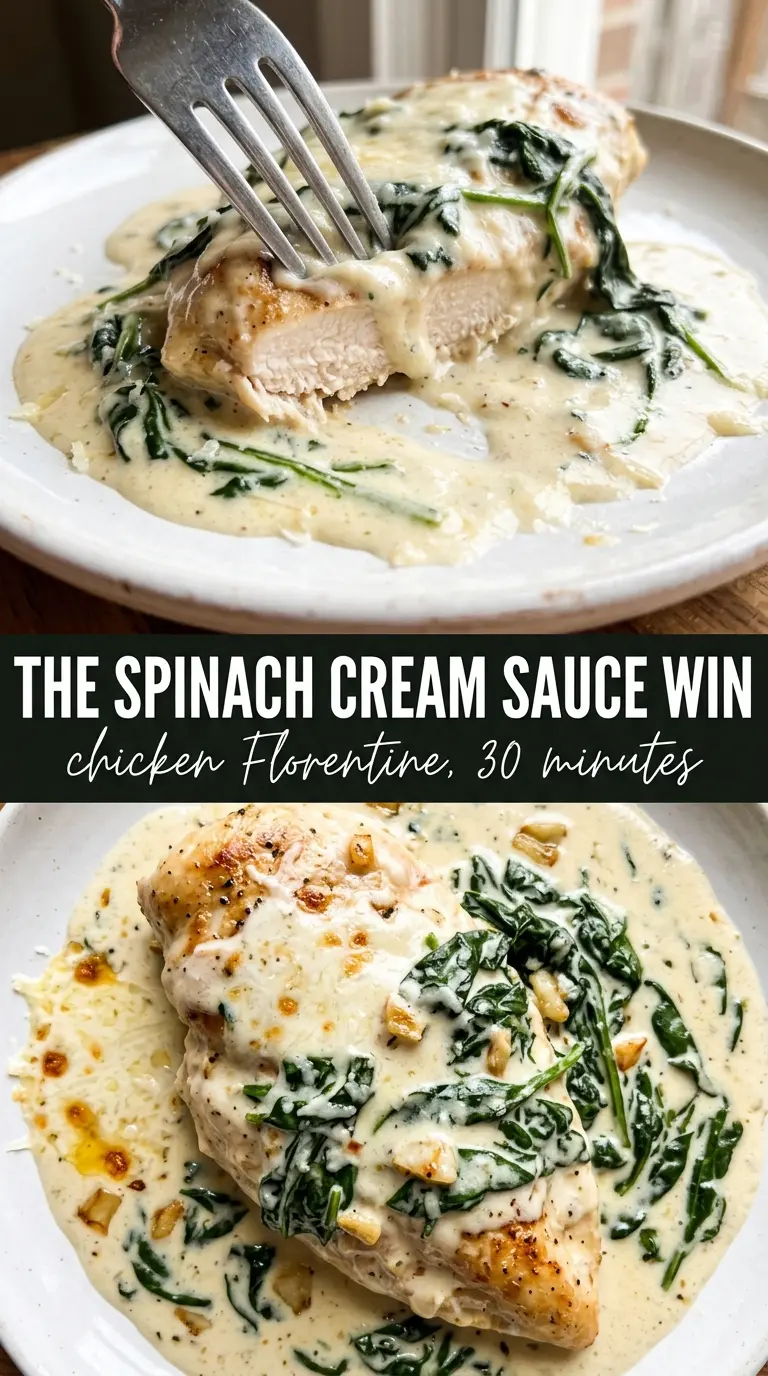
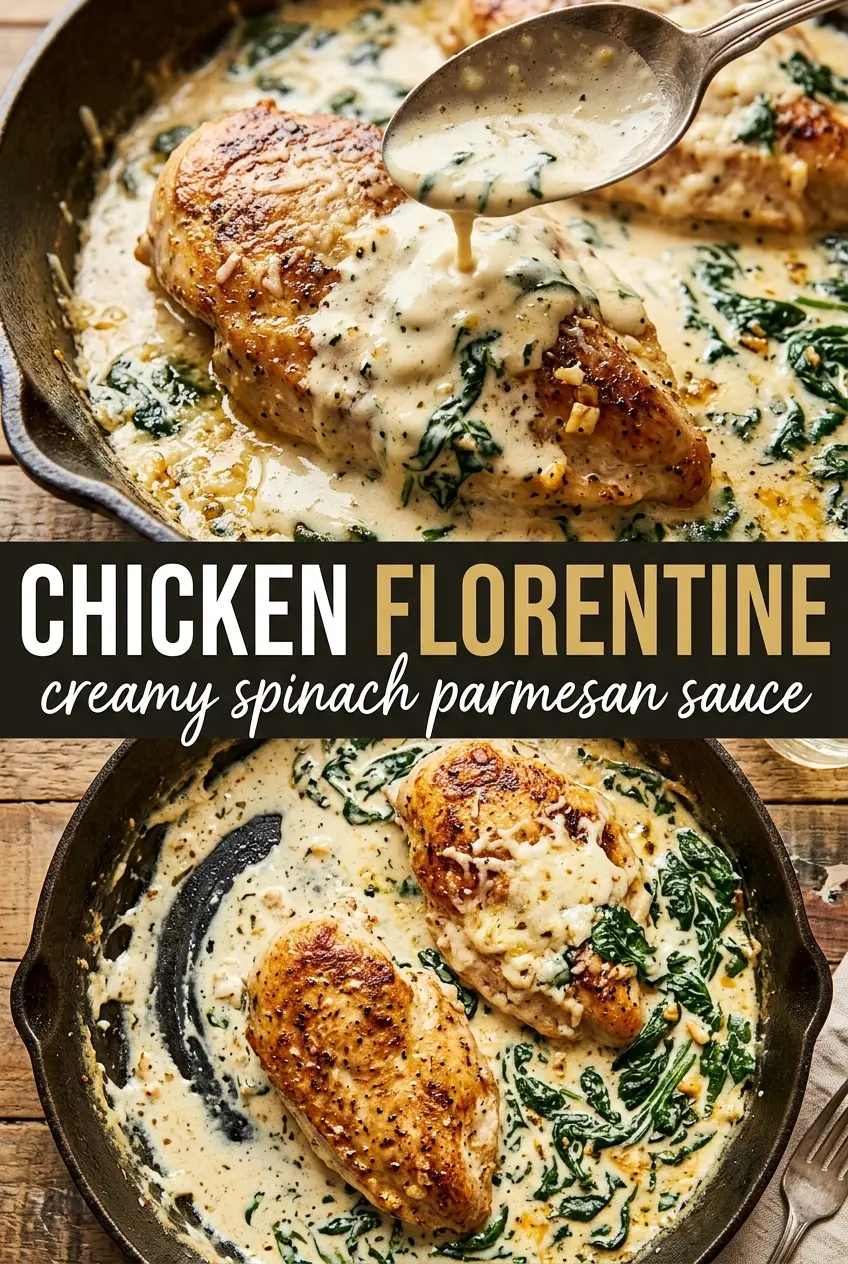
Golden chicken breasts in a silky spinach cream sauce land on the table looking restaurant-worthy, but the real win is how quickly they come together. The chicken gets a proper sear first, which gives the sauce a deeper base than you get from just simmering everything together. Then the pan builds a pale, glossy cream sauce that clings to the chicken instead of running all over the plate.
The trick here is keeping the heat controlled once the cream and Parmesan go in. High heat can push the sauce toward grainy or oily, especially after the wine reduction, so this version keeps the simmer gentle and steady. Fresh spinach goes in at the end and wilts just enough to stay bright, not swampy.
Below, I’ve included the little details that matter most: how to get the chicken browned before the sauce starts, why the lemon belongs in the finish, and what to change if you need to skip the wine without losing the balance of the dish.
The sauce thickened into this beautiful silky coat, and the lemon at the end kept it from feeling heavy. Even my picky eater asked for the leftovers the next day.
Save this Chicken Florentine for the nights when you want seared chicken, a silky Parmesan sauce, and bright spinach without extra fuss.
The Pan Sauce Only Works If You Brown First
The chicken needs a real sear before anything else happens in the skillet. That golden crust isn’t just for looks; it leaves browned bits behind that dissolve into the wine and cream and give the sauce its depth. If you crowd the pan or flip too early, the chicken steams and the sauce ends up flat.
Once the chicken comes out, keep the garlic in the pan for only about 30 seconds. It should smell fragrant, not darken, because burnt garlic will take over the whole dish fast. The wine deglazes the pan, pulls up the fond, and gives the sauce a little sharpness so the cream and Parmesan don’t taste heavy.
- Chicken breasts — Pound them lightly if one side is much thicker than the other. Even thickness matters here because the sauce comes together fast, and uneven pieces cook at different rates.
- Dry white wine — This adds brightness and helps lift the browned bits. If you skip it, use chicken broth plus a small splash of lemon juice, but the sauce will be slightly less layered.
- Heavy cream — This is what gives you the silky texture. Half-and-half can work in a pinch, but it’s more likely to thin out and won’t coat the chicken the same way.
- Parmesan — Grate it fresh if you can. Pre-grated cheese often contains anti-caking agents that can make the sauce less smooth.
- Spinach — Add it at the end and stir only until wilted. Overcooking turns it muddy and soft in the wrong way.
Building the Sauce Without Breaking It
- Chicken broth — This stretches the sauce without thinning the flavor. Use a low-sodium broth if yours is salty, especially if your Parmesan is on the sharp side.
- Lemon juice and zest — These belong at the end, after the Parmesan has melted in. The acid wakes up the cream sauce and keeps it from tasting one-note, but if you add it too early, it can curdle the dairy.
- Fresh parsley — It’s not just garnish. A handful at the end adds a fresh edge that makes the whole dish taste lighter.
Getting the Chicken, Sauce, and Spinach in the Right Order
Searing the Chicken
Season the chicken generously before it hits the pan, then cook it in hot olive oil until the outside is deeply golden and the center reaches 165°F. Don’t move it around once it’s down; that’s how you lose the crust. If the chicken sticks at first, give it another minute — when it’s ready to release, it will.
Making the Pan Sauce
Use the same skillet and keep every bit of browned flavor in it. Add the garlic, then the wine, and let the wine reduce for a couple of minutes so the alcohol cooks off and the flavor tightens up. When the cream and broth go in, lower the heat and let the sauce simmer gently until it thickens enough to coat a spoon.
Finishing with Cheese, Lemon, and Spinach
Pull the pan back from the heat a little before stirring in the Parmesan so it melts smoothly instead of clumping. Then add the lemon juice, lemon zest, and spinach, and stir just until the greens wilt and the sauce turns glossy. Return the chicken to the skillet and spoon the sauce over the top so every piece picks up some of that creamy finish.
Dairy-Free Version
Use full-fat coconut cream or an unsweetened dairy-free cooking cream and swap the Parmesan for a dairy-free hard cheese alternative. The sauce will be a little richer and slightly less sharp, so keep the lemon in place to balance it.
No-Wine Skillet Sauce
Replace the wine with extra chicken broth plus 1 to 2 teaspoons of lemon juice. You lose a little of the wine’s sharp depth, but the sauce still tastes bright and balanced instead of flat.
Extra-Comfort Serving
Serve the chicken over pasta, mashed potatoes, or rice. The sauce is generous enough to dress a starch, and the starch catches the lemony cream instead of letting it pool under the chicken.
Lighter Cut for Weeknights
Use thin-sliced chicken breasts or cutlets and shorten the sear time. They cook faster, which is handy on busy nights, but they can dry out if you leave them in the pan while the sauce finishes, so add them back only at the end.
Storage and Reheating
- Refrigerator: Store leftovers in an airtight container for up to 3 days. The sauce will thicken as it chills.
- Freezer: It’s not my first choice for freezing because cream sauces can separate a little when thawed, but it can be done. Cool it completely, freeze in a sealed container, and thaw in the fridge before reheating.
- Reheating: Warm gently in a skillet over low heat with a splash of broth or cream. Don’t blast it in the microwave on high or the sauce can split and the chicken can turn rubbery.
Questions I Get Asked About This Recipe
Chicken Florentine
Ingredients
Equipment
Method
- Season the chicken breasts generously on both sides with salt, pepper, garlic powder, and Italian seasoning to taste.
- Heat olive oil in a large skillet over medium-high heat, then sear chicken for 5-6 minutes per side until golden and cooked through to 165°F; remove and set aside.
- In the same pan, cook minced garlic for 30 seconds over medium-high heat.
- Deglaze with dry white wine and simmer for 2 minutes.
- Stir in heavy cream and chicken broth, then simmer for 4-5 minutes until slightly thickened.
- Stir in Parmesan, fresh lemon juice, and lemon zest until smooth and pale.
- Add baby spinach and stir until wilted.
- Return the chicken breasts to the pan and spoon the sauce over each breast.
- Garnish with fresh parsley and lemon and serve over pasta or rice.