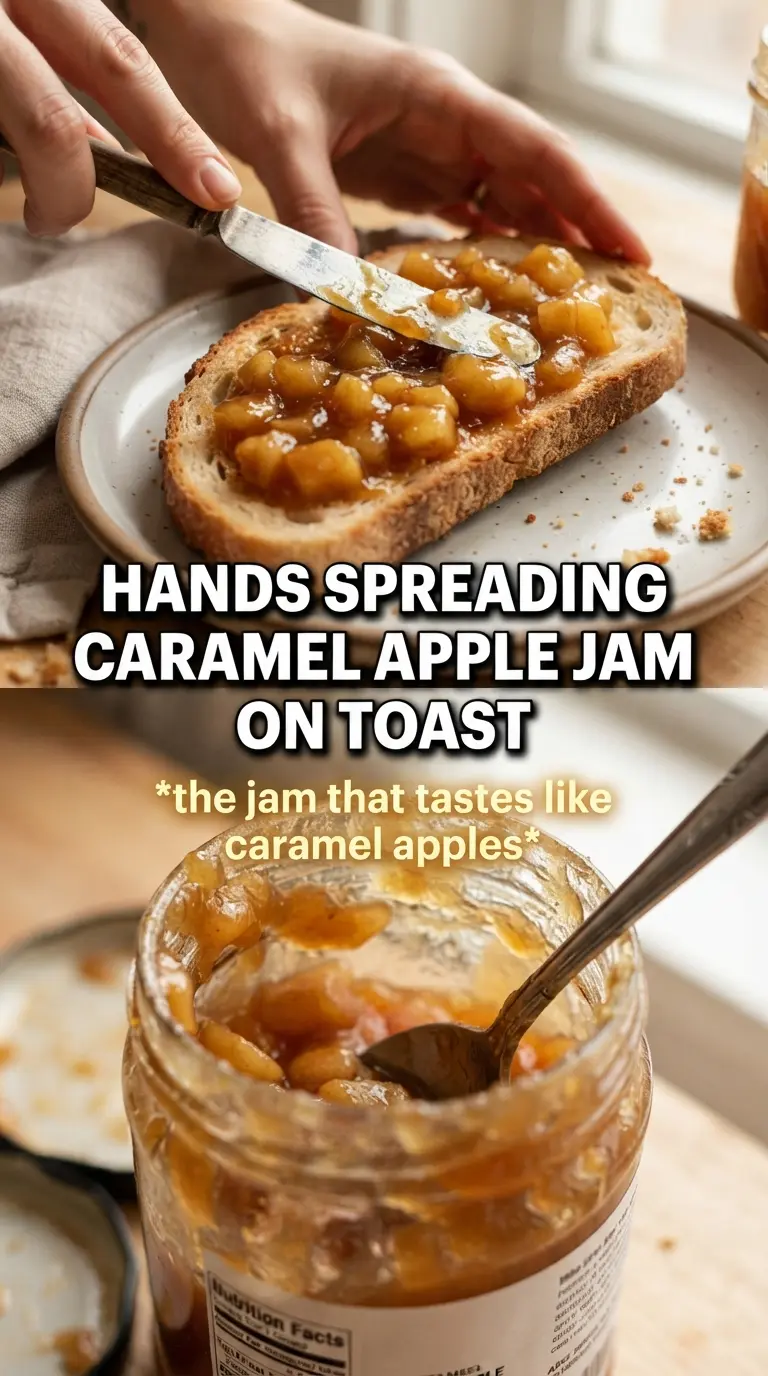
Caramel apple jam lands somewhere between a cozy fruit spread and a jar of homemade dessert topping. It’s thick, glossy, and full of soft apple pieces, with enough brown sugar and spice to make each spoonful taste like baked apples without turning muddy or overly sweet. Spread it on toast, swirl it into yogurt, or spoon it over pancakes and you get that deep caramel-apple flavor in a form you can keep in the pantry or fridge.
The key here is cooking the apples down slowly enough for the moisture to evaporate before the sugar has a chance to scorch. Granulated sugar gives structure, while brown sugar brings the caramel note and a little depth. Lemon juice matters more than it seems; it keeps the sweetness balanced and helps the jam set with a brighter finish. The spices go in near the end so they stay warm and clear instead of getting lost in the boil.
Below, I’ve included the exact texture cues I watch for when the jam is ready, plus the best way to adjust the sweetness if your apples are especially tart.
The jam set up beautifully on the cold plate test, and the little apple pieces stayed tender instead of dissolving. I used it on biscuits the next morning and the cinnamon-brown sugar flavor tasted exactly like caramel apples.
Love the thick, spoonable texture of this caramel apple jam? Save it to Pinterest for toast, biscuits, and gift jars all season long.
The Trick to a Jam That Sets Without Turning Sticky
Jam that looks loose in the pan can still set up perfectly once it cools, but only if enough water cooks off first. With apples, the biggest mistake is pulling the pot too early because the mixture looks thick around the edges while the center is still thin. Keep it at a steady medium simmer and stir often, especially as it starts to thicken, or the sugars at the bottom can catch and give the whole batch a burned note.
The cold plate test matters here because visual cues change fast near the end. A spoonful pushed on a chilled plate should wrinkle instead of sliding cleanly; that’s the moment the pectin and sugar have done their work. If the jam seems a touch loose after cooling, it usually just needed a few more minutes in the pot rather than extra sugar.
What the Sugars, Apples, and Spice Are Each Doing Here
- Apples — Peeled, finely diced apples cook down into soft pieces that still give the jam body. A firm, tart apple holds its shape better than a mealy one, so use something like Granny Smith, Honeycrisp, or a mix if you want more structure and brightness.
- Brown sugar — This is where the caramel note comes from. Dark brown sugar gives a deeper molasses flavor; light brown sugar keeps the jam a little cleaner and less heavy. If you swap in all white sugar, the result will still set, but it won’t taste like caramel apple jam anymore.
- Apple cider or apple juice — This gives the fruit enough liquid to start cooking without watering the jam down. Cider adds more apple flavor, while juice is a fine backup if that’s what you have in the fridge.
- Lemon juice — It brightens the sweetness and helps the jam gel. Bottled lemon juice works here if that’s what you keep on hand, but don’t skip it; the final jam tastes flat without that acid.
- Spices and vanilla — Cinnamon, nutmeg, allspice, and vanilla belong in the final stretch so they stay warm and aromatic. If they cook from the beginning, they lose the high notes and the jam tastes dull instead of layered.
Cooking the Apples Down to the Right Spoonable Texture
Start with the fruit and sugars together
Combine the apples, both sugars, cider, and lemon juice in a heavy saucepan so the fruit starts releasing juice before the heat climbs too high. Bring it to a boil over medium-high heat, stirring until the sugar dissolves completely. If you see dry sugar stuck to the bottom, keep stirring; that’s the part that burns first and leaves a bitter edge in the finished jam.
Let the mixture reduce instead of rushing it
Once it reaches a boil, drop the heat to medium and keep the mixture at an active simmer for 30 to 35 minutes. Stir often, scraping the bottom and corners, because the jam will thicken unevenly before it looks done all across the pan. The apples should soften and start breaking apart, and the liquid should move from watery bubbles to slower, heavier pops.
Finish with spice after the base has thickened
Stir in the cinnamon, nutmeg, allspice, vanilla, and salt for the last 5 minutes of cooking. That short finish keeps the spices vivid and lets the vanilla stay rounded instead of cooked off. If the jam thickens too fast after this point, pull the pan off the heat and stir; the residual heat will carry it the rest of the way.
Use the cold plate test before you jar it
Set a spoonful on a cold plate and push it with your finger after it sits for a moment. It should wrinkle and hold a line, not run back into place like syrup. If it still looks loose, give it a few more minutes and test again rather than guessing, because jam firms up a lot as it cools.
Ways to Adjust the Sweetness, Spice, and Storage for Your Kitchen
Use less sugar for a tarter spread
You can cut the granulated sugar a little if your apples are naturally sweet, but don’t reduce both sugars aggressively or the jam may never set properly. A smaller sugar reduction gives you a brighter, more apple-forward jam with a looser finish.
Make it dairy-free, vegan, and naturally gluten-free
This recipe already fits all three without any changes, which is one reason it’s such a handy gift jam. Just use a clean spoon and properly sterilized jars if you’re planning to store it.
Swap the spice blend to match what you like best
If allspice feels strong to you, replace it with a little more cinnamon and a pinch of clove. That keeps the jam warm and autumnal without pushing it into a heavier spice profile.
Storage and Reheating
- Refrigerator: Store in sterilized jars and refrigerate for up to 3 weeks. The jam will tighten a bit more after chilling.
- Freezer: It freezes well in freezer-safe containers with headspace left at the top. Leave room for expansion so the jars don’t crack.
- Reheating: Warm only the amount you need in a small saucepan over low heat. High heat can loosen the set too much and make the sugar taste sharper than it should.
Answers to the Questions Worth Asking
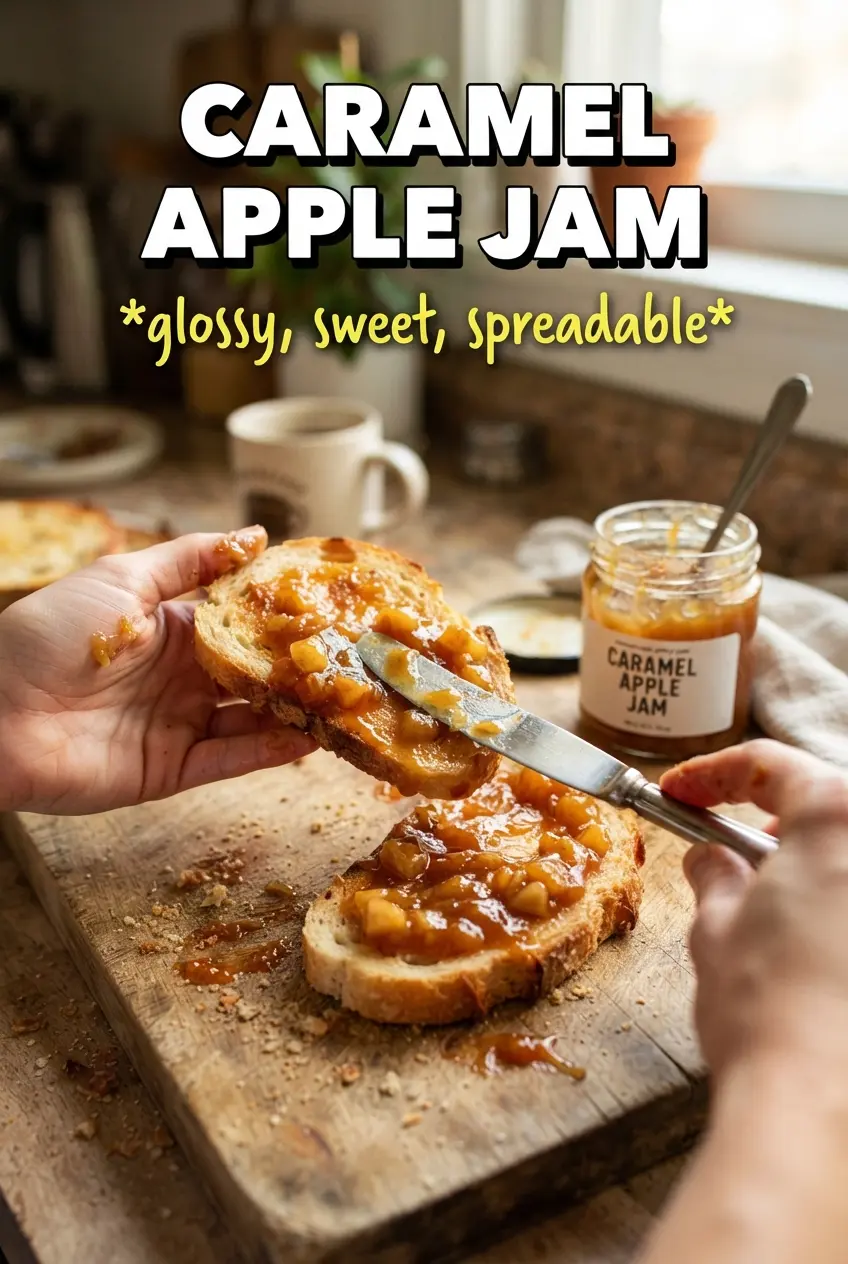
Caramel Apple Jam
Ingredients
Equipment
Method
- Combine diced apples, granulated sugar, brown sugar, apple cider, and lemon juice in a large heavy-bottomed saucepan; stir to coat the apples evenly and dissolve sugar where possible.
- Bring the mixture to a boil over medium-high heat, stirring constantly until all sugar dissolves.
- Reduce heat to medium and cook, stirring frequently, for 30-35 minutes until the mixture thickens and the apples break down into a jammy texture.
- Stir in cinnamon, nutmeg, allspice, vanilla extract, and salt, then cook for 5 more minutes to bloom the spices.
- To test set, place a spoonful on a cold plate and wait briefly; it should wrinkle when pushed to confirm proper thickness.
- Ladle the hot jam into sterilized jars, leaving appropriate headspace and wiping rims for a clean seal.
- Process in a water bath for 10 minutes, or refrigerate for up to 3 weeks if skipping canning.