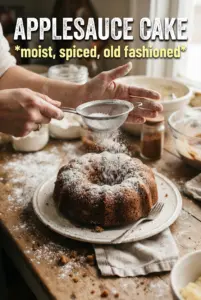
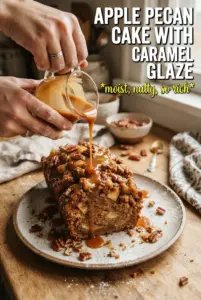
Apple pecan cake settles into that sweet spot between homey and special: tender crumb, pockets of soft fruit, crunchy nuts, and a caramel glaze that runs down the ridges of the bundt pan like it was meant to be there. It slices cleanly, stays moist for days, and tastes even better after the glaze has had time to soak into the cake a little.
The texture comes from a simple batter built on oil instead of butter, which keeps the cake soft without needing any fussing. The apples bring moisture and little bursts of freshness, while the pecans add just enough structure to keep each bite interesting. The glaze is cooked briefly on the stove, so it stays smooth and pourable instead of turning grainy on top of the cake.
Below, I’ve included the handful of details that matter most: how to keep the batter from getting heavy, how to know when the cake is done in the center, and what to do if you want to swap in a different nut or make it ahead.
The cake came out incredibly moist and the caramel glaze soaked into the ridges just enough without making it soggy. I used tart apples and the pecans stayed crunchy even after the second day.
Save this apple pecan cake with caramel glaze for the days when you want a bundt cake that slices neatly and pours on a glossy, buttery caramel finish.
Why This Bundt Cake Stays Tender Instead of Drying Out
Bundt cakes go wrong when the batter is overmixed or the pan is pulled too early. In this cake, the oil does the heavy lifting for tenderness, and the apples keep the crumb from leaning dry even after a full bake. The pecans matter too, because they break up the batter just enough to keep the texture from feeling dense.
The other place people stumble is the pan. A well-greased and floured bundt pan is non-negotiable here because the sugars in the batter and glaze can grab the ridges as the cake cools. Let it rest for 20 minutes only; longer than that and the cake can stick in spots as the sugar sets.
What Each Ingredient Is Actually Doing in the Batter and Glaze
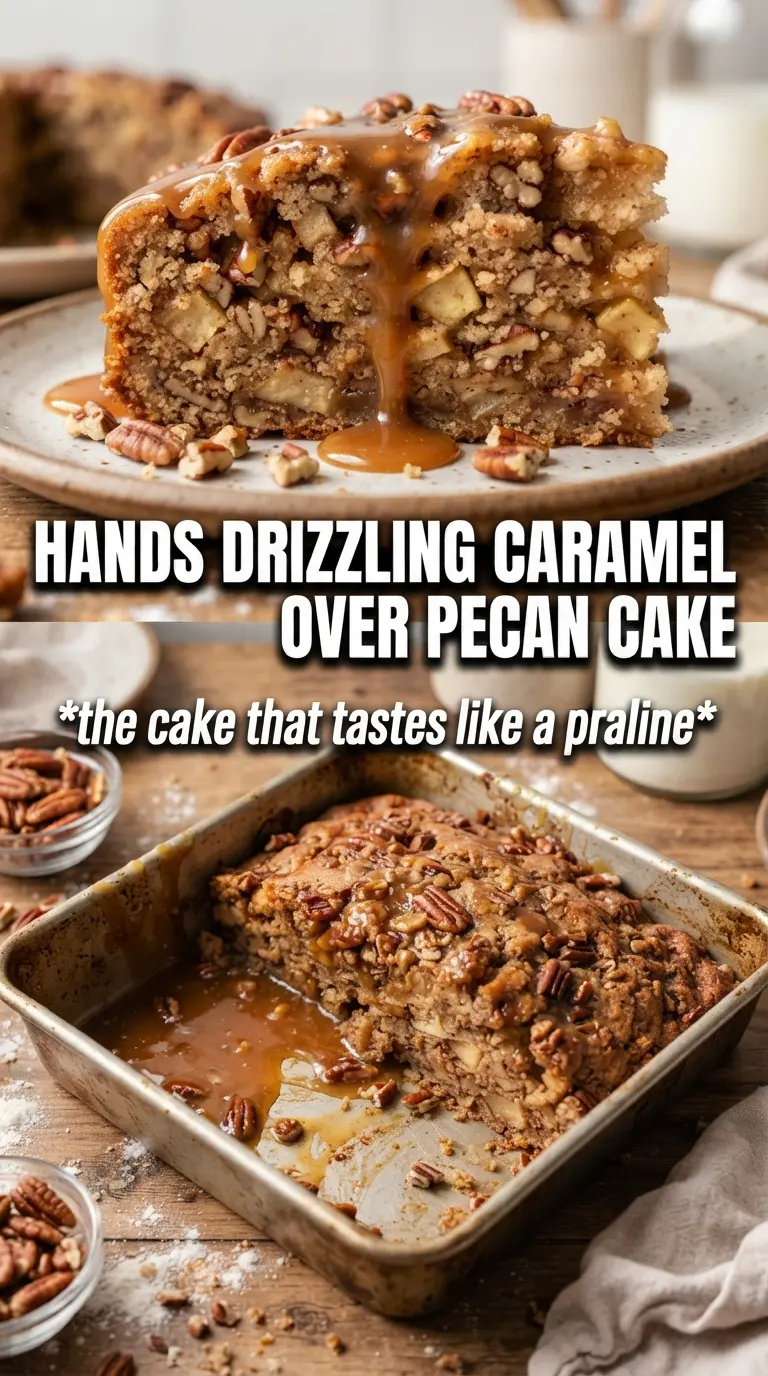
- All-purpose flour — Gives the cake its structure without making it heavy. Cake flour will make the crumb a little softer, but all-purpose holds up better under the weight of the apples and nuts.
- Vegetable oil — This is what keeps the cake plush for days. Butter adds flavor, but oil gives a more reliable, moist texture in a bundt cake like this.
- Apples — Dice them small so they bake through and melt into the crumb instead of leaving raw pockets. Tart apples add the best contrast against the sweet glaze, but any firm baking apple works.
- Pecans — Rough chopping is enough; don’t grind them too fine or you lose the texture that makes each slice interesting. Toasted pecans bring more depth, but raw pecans still work well here.
- Brown sugar in the glaze — This gives the caramel its deep, molasses note and helps it thicken into a pourable sauce. Granulated sugar won’t give the same flavor or body.
- Heavy cream — Just enough to smooth the glaze and keep it glossy. Half-and-half can work in a pinch, but the glaze will be thinner and set up a little less richly.
Building the Batter and Glaze Without Losing the Texture
Whisk the dry ingredients first
Start with the flour, baking soda, cinnamon, and salt so the leavening is evenly distributed before anything wet goes in. That even mix helps the cake rise without random bitter pockets or streaks of soda. If you skip this, the batter can look fine and still bake unevenly.
Mix the wet ingredients just until combined
Beat the sugars, eggs, and oil until they look smooth and glossy, then add the vanilla. You’re not trying to whip in a lot of air here. Too much beating can make the crumb tighter once the flour goes in.
Fold in the apples and pecans at the end
Once the flour mixture is just absorbed, stop stirring and switch to folding. That keeps the batter tender and prevents the apples from breaking down before they hit the oven. If the batter looks thick, that’s normal; it should slump into the pan, not pour like cake mix.
Bake until the center is set, not just the top
The cake is done when a toothpick comes out clean from the thickest part and the top springs back lightly when touched. Bundt cakes can brown early, so don’t chase color alone. If the center still feels soft and the tester comes out with wet batter, give it more time and check again in 5-minute intervals.
Cook the glaze until it turns smooth and glossy
Melt the butter and brown sugar together over medium heat, then add the cream, vanilla, and salt. Let it simmer for about 2 minutes so the sugar dissolves fully and the glaze thickens a bit. If you boil it too hard, the glaze can turn grainy or too thick to pour cleanly over the cake.
How to Adjust This Cake for Different Kitchens and Different Crowds
Gluten-Free Version
Use a cup-for-cup gluten-free flour blend that includes xanthan gum. The cake will still bake up moist from the oil and apples, but it may be a little more fragile when you turn it out of the pan, so let it cool the full 20 minutes before inverting.
Dairy-Free Version
Swap the butter in the glaze for a plant-based butter and use full-fat coconut cream or a rich oat cream instead of heavy cream. The glaze will taste a little different, but it still pours well and gives you that same glossy finish.
Walnut Swap
Walnuts work in place of pecans without changing the method. They bring a slightly more bitter, earthier note, which plays well with the sweet caramel glaze if you want a less buttery nut flavor.
Storage and Reheating
- Refrigerator: Store covered for up to 5 days. The crumb stays moist, and the glaze may soak in a bit more by day two.
- Freezer: Freeze slices tightly wrapped for up to 2 months. I’d freeze the cake without extra glaze on top, then warm and add a fresh drizzle after thawing.
- Reheating: Warm individual slices in the microwave for 15 to 20 seconds or in a low oven until just heated through. Don’t overheat it or the glaze will get sticky and the crumb can turn tough around the edges.
Questions I Get Asked About This Recipe
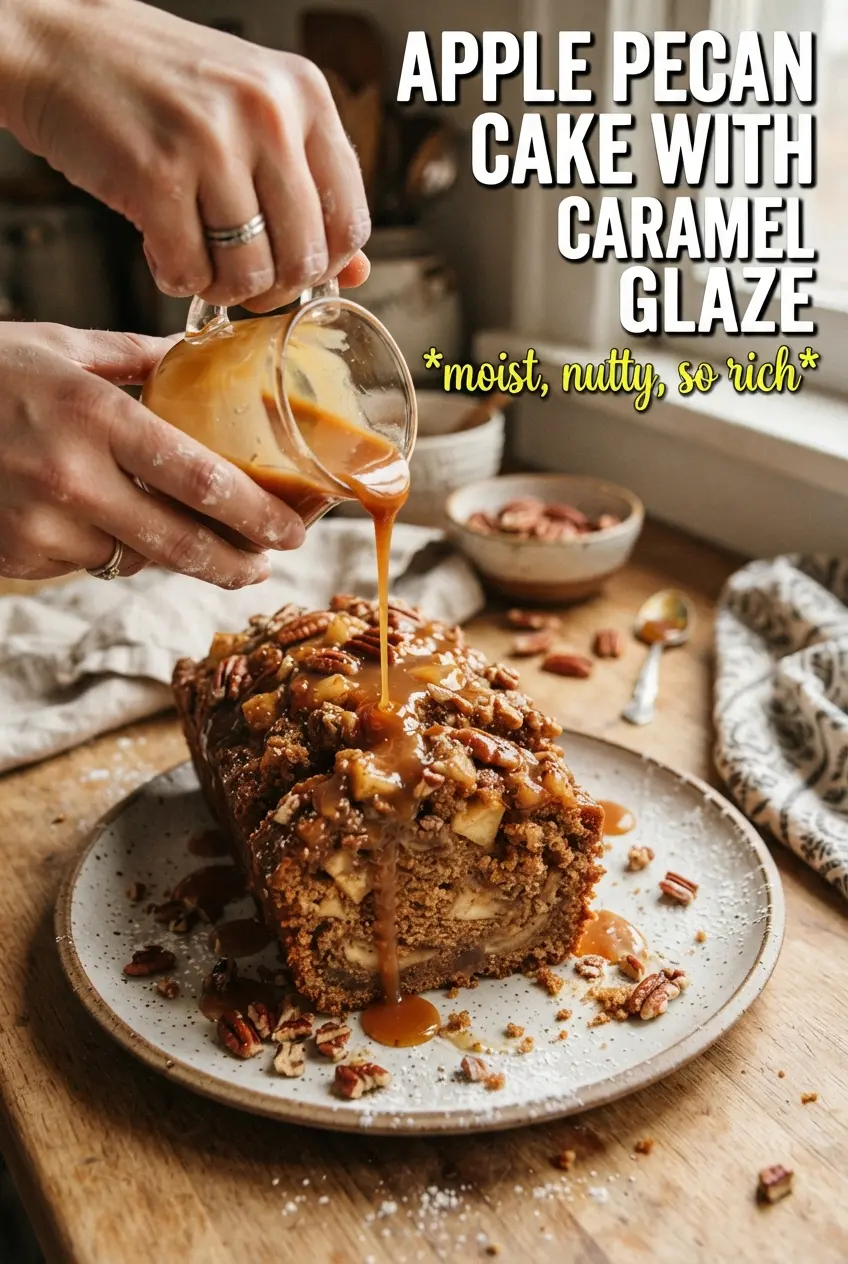
Apple Pecan Cake With Caramel Glaze
Ingredients
Equipment
Method
- Preheat oven to 325°F, then grease and flour a 10-inch bundt pan. Make sure the ridges are coated so the cake releases cleanly.
- Whisk all-purpose flour, baking soda, cinnamon, and salt together in a mixing bowl. Keep whisking until the color looks even with no cinnamon streaks.
- Beat granulated sugar, brown sugar, eggs, and vegetable oil until combined, then add vanilla extract. Mix just until the batter looks smooth and glossy.
- Fold the flour mixture into the batter until just combined. Stop as soon as no dry pockets remain to avoid a tough crumb.
- Fold in apples and pecans. The batter should be thick and studded with fruit and nut pieces.
- Pour the batter into the prepared bundt pan. Tap the pan gently to level the top and settle the apples.
- Bake at 325°F for 65-75 minutes, until a toothpick comes out clean. Look for a deep golden-brown color around the ridges.
- Cool the cake in the pan for 20 minutes. The surface should look set, and the cake should pull slightly from the pan edges.
- Invert the cake onto a rack and let it cool until ready to glaze. The bundt ridges should be intact with no tearing.
- Melt unsalted butter and brown sugar together over medium heat, stirring until smooth. The mixture should turn glossy and slightly thick.
- Add heavy cream, vanilla extract, and salt, then simmer for 2 minutes. Watch for a gentle bubbling and a caramel sheen.
- Pour the warm caramel glaze over the cooled cake so it cascades down the ridges. Let it set briefly before slicing.