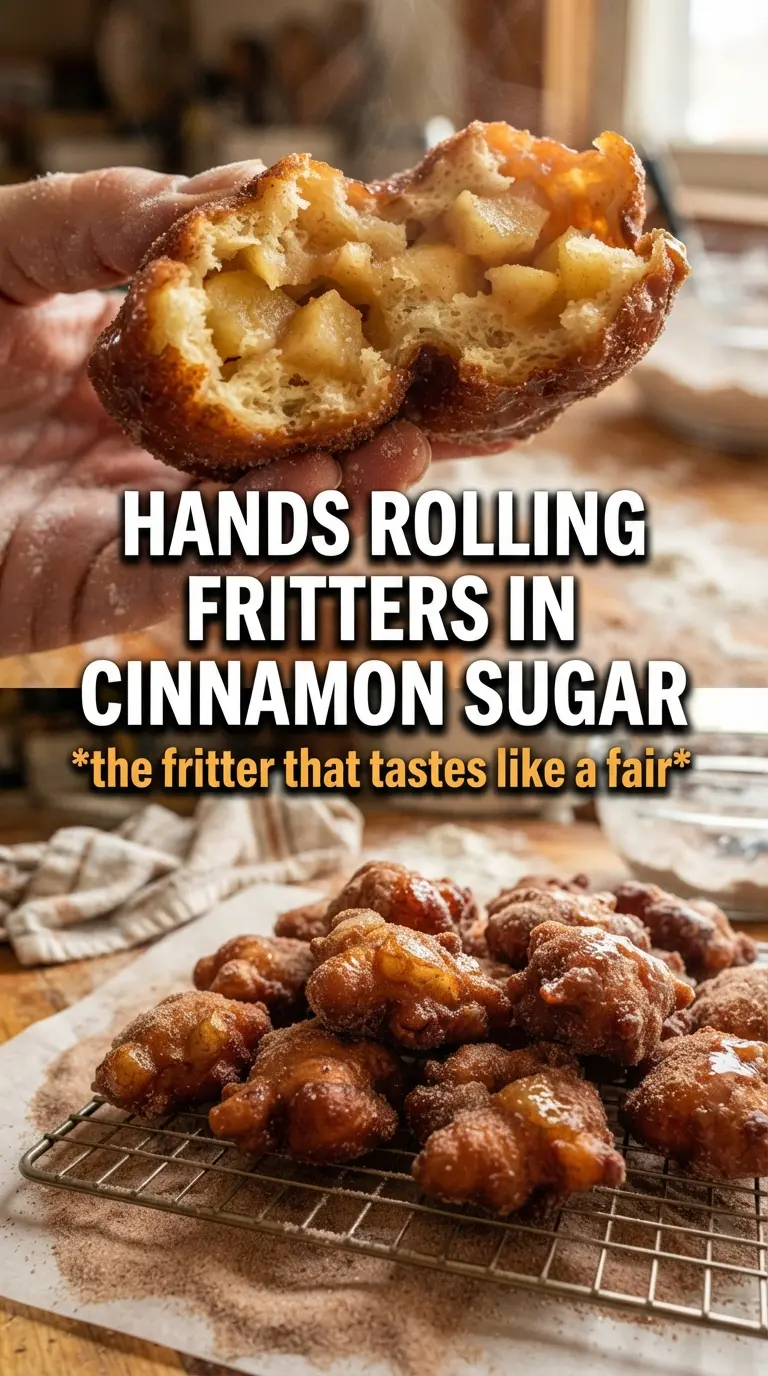
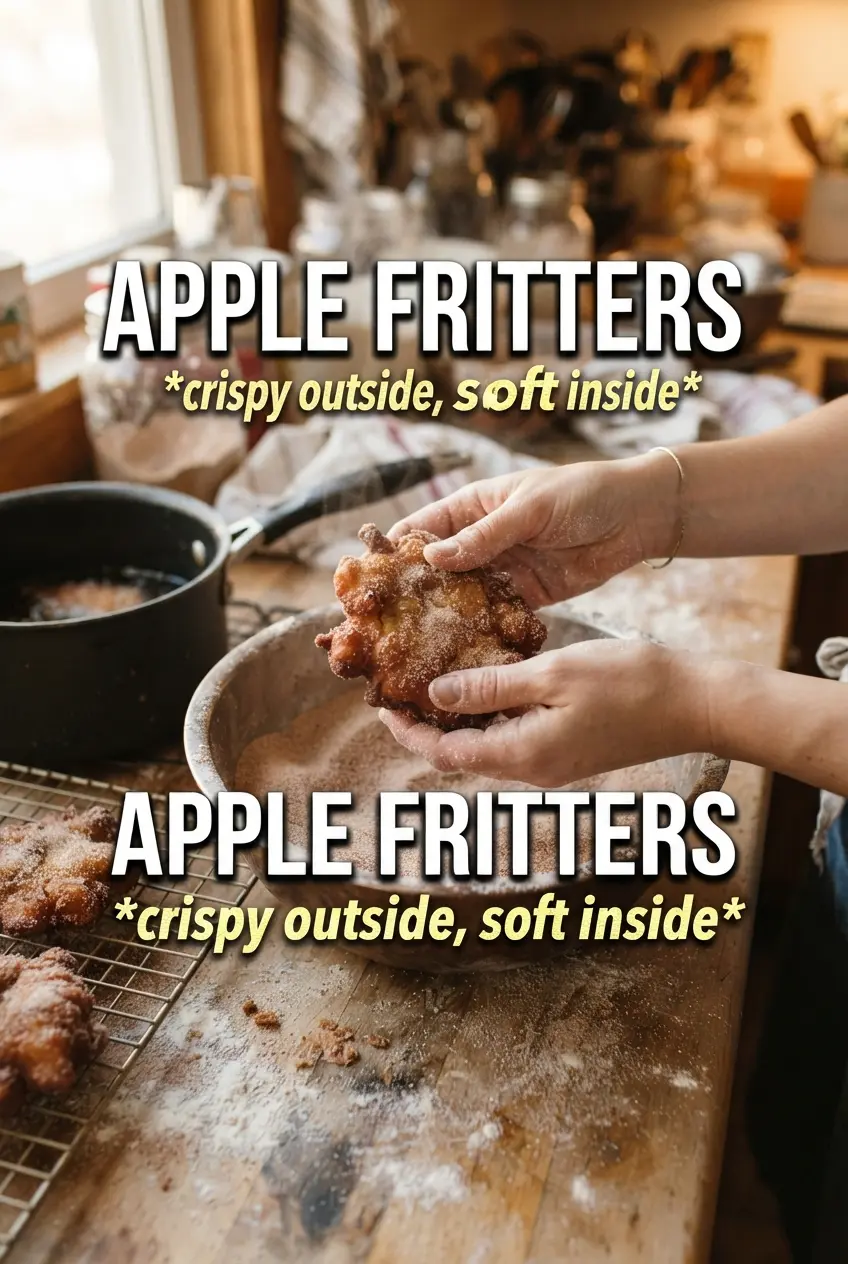
Apple fritters land in that perfect middle place between crisp-edged doughnut and tender apple cake. The outside fries up deeply golden and a little craggy, while the inside stays soft and packed with little pockets of cinnamon-scented apple. A good glaze melts over the warm fritters and sets into a thin shell that cracks when you bite in, which is exactly what keeps these worth making again.
What makes this version work is the balance: enough baking powder to puff the batter without making it taste hollow, enough apples to keep every bite juicy, and a thick batter that holds its shape in the oil instead of spreading into greasy pancakes. The apples are diced small on purpose so they cook through at the same pace as the fritter. If the pieces are too big, you get raw apple in the center and a fritter that falls apart before it’s done.
You’ll also find a few practical notes below on frying temperature, glazing while warm, and the small changes that matter if you want these fritters to taste like the ones you’d happily order twice.
The fritters came out crisp on the outside and fluffy inside, and the little apple bits cooked through perfectly without turning mushy. The glaze set just enough that they weren’t sticky, and my kids ate three before breakfast was even over.
Save these apple fritters for the morning you want crisp edges, tender apples, and a warm vanilla glaze.
The Thing That Keeps Apple Fritters Crisp Instead of Greasy
The biggest mistake with fritters is treating the batter like pancake batter. Apple fritters need to be thick enough to hold those diced apples in place and keep their edges irregular, because those rough little ridges are what fry up into crisp, browned bits. If the batter is loose, the fruit sinks, the fritter spreads, and the oil works its way in before the outside can set.
Oil temperature matters just as much as batter texture. At 375°F, the outside browns fast enough to seal in the center without giving the apples time to release too much moisture. If the oil runs cool, the fritters soak it up. If it runs too hot, the outside darkens before the middle is cooked through.
What Each Ingredient Is Doing in These Apple Fritters
- All-purpose flour — This gives the fritters their structure without making them bready. Bread flour makes them tougher, and cake flour won’t hold the apples as well.
- Baking powder — This is the lift. It helps the batter puff in the hot oil so the fritters stay light instead of dense and heavy.
- Cinnamon and nutmeg — These build the warm spice backbone that makes the apples taste fuller. Don’t overdo either one; you want the fruit to stay front and center.
- Whole milk — The fat in whole milk keeps the batter tender. Lower-fat milk works, but the fritters won’t taste as rich and the glaze will set a little less smoothly.
- Melted butter — This adds flavor and helps the crumb stay soft. Let it cool slightly before mixing so it doesn’t scramble the eggs.
- Apples — Peel and dice them finely. Smaller pieces cook through fast and distribute evenly, which keeps the fritters from breaking apart.
- Powdered sugar glaze — This is more than decoration. It seals in a little warmth and gives the fritters that classic bakery finish.
Frying the Batter So the Centers Cook Through
Mix Just Until the Flour Disappears
Whisk the dry ingredients first, then add the egg, milk, butter, and vanilla mixture. Stir only until the flour is mostly absorbed, because overmixing develops gluten and makes the fritters chewier than they should be. The batter should look thick and shaggy. A few small streaks of flour are better than beating it smooth.
Fold in the Apples at the End
Add the diced apples after the batter comes together. That keeps them from tearing up too much while you mix, and it helps the fruit stay distributed instead of sinking. If the batter looks too loose after the apples go in, let it sit for a minute or two; the flour will hydrate and thicken a touch more.
Watch the Oil, Not the Clock
Heat the oil to 375°F in a heavy pot or Dutch oven and keep a thermometer in it if you can. Drop in a small tester first. It should bubble steadily right away without smoking. If the fritters brown in less than a minute, the oil is too hot; if they just sit there and soak, it’s too cool.
Glaze While They’re Still Warm
Drain the fritters on paper towels, then glaze them while they’re still warm but not dripping hot oil. That’s the sweet spot for the glaze to melt slightly and set with a shiny finish. If they’re steaming hot, the glaze slides right off. If they’re completely cool, it sits on top in a thick layer instead of clinging to the crust.
How to Adapt These Fritters Without Losing the Good Parts
Gluten-Free Apple Fritters
Use a 1:1 gluten-free flour blend with xanthan gum. The fritters will still fry up crisp, but the crumb will be a little more delicate, so let the batter rest for 10 minutes before frying to give the flour time to hydrate.
Dairy-Free Version
Swap the whole milk for unsweetened oat milk or almond milk and use melted coconut oil or a neutral dairy-free butter in place of the butter. The flavor stays close, though coconut oil adds a faint aroma that works especially well with cinnamon.
Tart Apple Swap
Use Granny Smith or another tart baking apple if you want a sharper contrast with the sweet glaze. Sweeter apples like Fuji or Gala work too, but the fritters taste more bakery-style and less bright.
Storage and Reheating
- Refrigerator: Store glazed fritters in an airtight container for up to 2 days. They’ll soften as they sit, especially once the glaze absorbs into the crust.
- Freezer: Freeze unglazed fritters on a baking sheet, then transfer to a freezer bag for up to 2 months. Glaze after reheating for the best texture.
- Reheating: Warm in a 325°F oven for 8 to 10 minutes or until heated through. The common mistake is using the microwave, which makes the fritters soggy and turns the glaze sticky.
Answers to the Questions Worth Asking
Apple Fritters
Ingredients
Equipment
Method
- Whisk all-purpose flour, granulated sugar, baking powder, cinnamon, nutmeg, and salt in a mixing bowl until evenly combined, with no visible streaks. The mixture should look light and fragrant.
- Whisk eggs, whole milk, melted butter, and vanilla extract in a separate bowl until smooth and glossy. Pour it into the dry ingredients.
- Fold the egg mixture into the dry ingredients until just combined, stopping as soon as no dry flour remains. The batter will be thick and cohesive.
- Fold in apples, peeled and finely diced until distributed throughout the thick batter. You should see apple pieces suspended in the mixture.
- Heat 2-3 inches of vegetable oil to 375F in a heavy pot or Dutch oven. Look for steady bubbling around a small drop of batter.
- Drop 1/4 cup portions of batter into the hot oil and gently flatten slightly for even frying. Keep portions spaced so they don’t merge.
- Fry for 2-3 minutes per side until deeply golden, turning once during cooking. Drain on paper towels when the edges are crisp and browned.
- Whisk powdered sugar, milk, and vanilla until smooth, with a thick drizzle consistency. The glaze should flow slowly off the whisk.
- Drizzle the glaze generously over warm fritters right after frying. Let it set for a minute so it lightly clings and sets.