Red, white, and blue snacks laid out as a clean American flag turn any party table into the main event. The best version isn’t just festive — it’s built with enough structure that the rows stay crisp while people help themselves, and every bite gives you a mix of salty, creamy, juicy, and briny in one pass. A board like this earns its place because it looks dramatic without asking for any cooking at all.
The trick is in the placement. Tight packing keeps the blueberries from rolling out of the canton, and the stripes need ingredients that hold their shape long enough to read as a flag before guests start grazing. I like using a mix of sliced cheese, rolled cured meat, and fresh fruit so the board doesn’t feel heavy or one-note. The rosemary isn’t just garnish either; it sharpens the whole board visually and gives the edges a finished look.
Below, you’ll find the easiest way to build the flag so the proportions look right on the first try, plus a few smart swaps if you need to work with what’s already in the fridge.
The stripes held together beautifully and the blueberries stayed put in the corner, which made the whole board look polished even after people started serving themselves.
Building an American flag charcuterie board? Save this red, white, and blue layout for a crowd-pleasing patriotic spread.
The Part That Keeps the Flag Looking Like a Flag
The biggest mistake with a themed board is trying to build it loosely and hoping the shape reads from across the room. It won’t. The American flag only works visually if the canton is compact, the stripes are straight, and the ingredients are packed tightly enough that the board doesn’t collapse into a colorful jumble the second it hits the table.
Start by treating the board like a grid. The upper left corner should be reserved for the blue field, and it needs enough density to look intentional, not scattered. The red and white rows work best when each stripe has one dominant ingredient and a supporting ingredient to fill gaps. That keeps the pattern bold instead of patchy.
- Blueberries — These create the blue canton fast and cleanly. Pack them close together so the top-left corner reads as a solid block of color instead of a loose pile.
- Rolled salami — The rolled slices mimic stars in a playful way and give the corner texture. Dry salami works better than very soft deli meat because it holds its curl.
- White cheese — Mozzarella balls or sliced provolone give you bright, clean stripes that contrast with the reds. If you use mozzarella balls, dry them well first so they don’t water down the board.
- Prosciutto and strawberries — These help reinforce the red stripes with different textures, which keeps the board from looking flat. Strawberries are best when halved and tucked snugly into gaps.
What Each Ingredient Is Doing on the Board
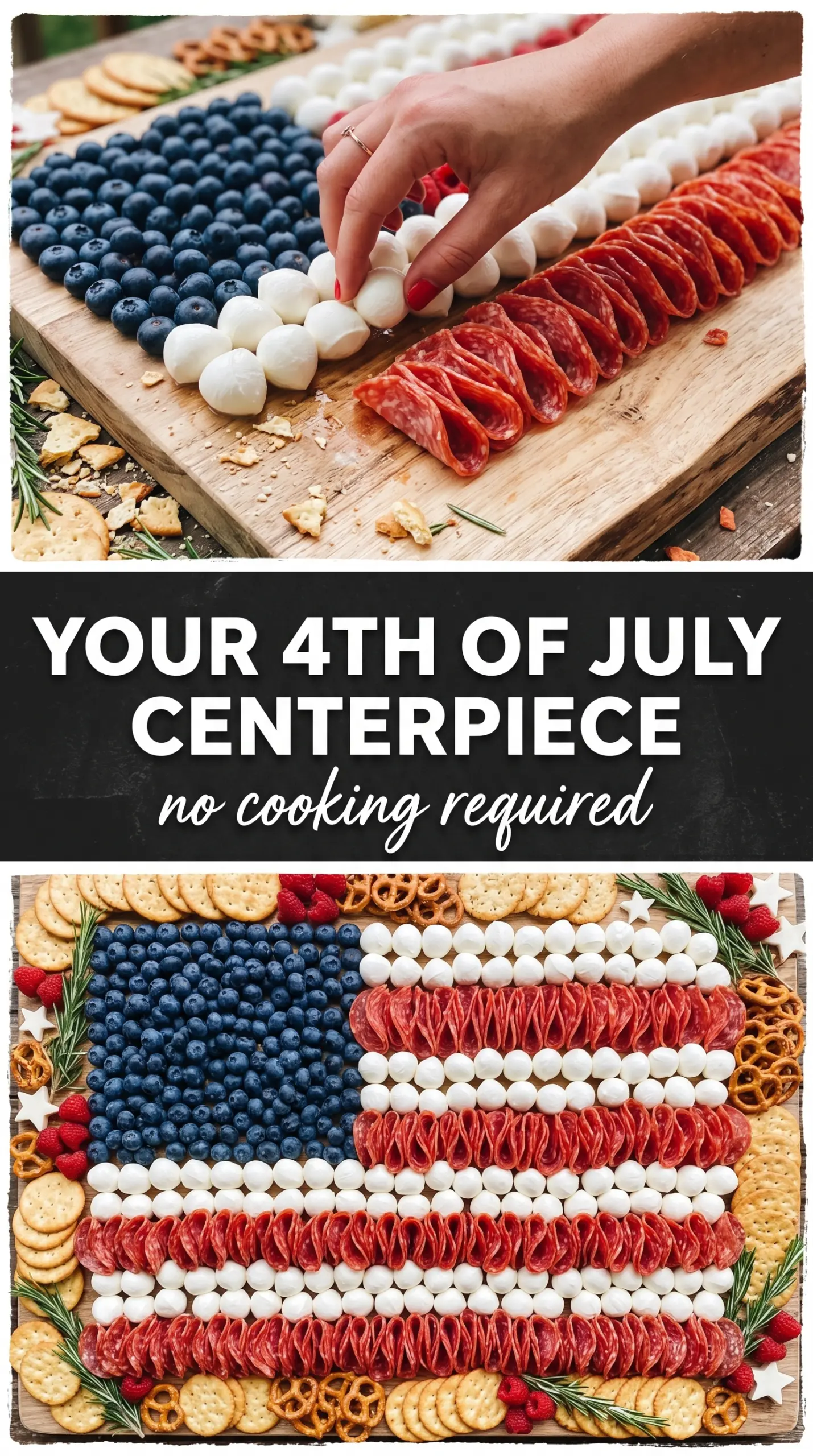
The ingredients here aren’t interchangeable in the same way a normal snack board can be flexible. Each one has a job: color, structure, or a texture that helps the flag hold its shape long enough to serve. If you swap too casually, the board stops reading as an American flag and starts looking like a mixed appetizer platter.
- Pepperoni and salami — Pepperoni gives the red stripes a bold, even color, while rolled salami adds volume and a little movement in the canton. If you only use soft deli slices, the board can look flat and slump as it sits.
- Prosciutto — This is the most delicate meat here, so use it as a filler and texture layer, not the backbone of the stripe. Tear or fold it gently so it doesn’t disappear into loose ribbons.
- White cheddar or provolone — Sliced cheese gives you the strongest white stripe if you want sharp lines. Provolone is milder and softer, while cheddar gives a firmer edge and a little more bite.
- Fresh mozzarella balls — These are best when you want the white stripes to feel rounder and less rigid. Pat them dry before arranging them, or the board will collect moisture.
- Strawberries and blueberries — The fruit does more than add color. It breaks up the saltiness of the cured meats and gives the board a fresher finish, which matters on a large grazing board.
Building the Stripes So They Stay Clean
Marking the Board Before You Start
Lay the board out empty and picture the flag before placing a single ingredient. The canton should sit in the upper left and take up about one-third of the width and a little less than half the height, depending on the board size. If you skip this mental layout, the stripes drift and the whole design loses its shape.
Filling the Blue Canton
Pack the blueberries tightly into the upper-left rectangle first, then tuck the rolled salami pieces in the center so they stand in for stars. Don’t scatter them across the whole corner; the tight cluster is what makes the shape read clearly. If the berries roll around, the corner isn’t packed enough.
Running the Red and White Rows Across the Board
Start at the top right and work across the board in horizontal bands, alternating red and white. Use pepperoni for a strong red stripe, then follow it with cheese or mozzarella for the white stripe. Keep each row snug and consistent in height; uneven rows are what make the board look messy instead of graphic.
Filling Gaps Without Smudging the Pattern
Use prosciutto folds and strawberry halves to patch thin spots in the red stripes, but stop before the board looks crowded. The best flag boards still leave a little breathing room between shapes. Finish with rosemary sprigs around the edges and place crackers on the perimeter so the board stays easy to serve without disturbing the design.
How to Adapt This for Different Crowds and Diets
Dairy-Free Flag Board
Skip the mozzarella and cheddar and build the white stripes with extra fruit, sliced jicama, or cauliflower florets if you want a savory option. The board loses some richness, but the colors stay crisp and the overall layout still reads clearly.
Gluten-Free Serving Setup
The board itself is naturally gluten-free if you choose crackers carefully. Set out certified gluten-free crackers in a separate bowl or ring them around one side of the board so guests can serve themselves without mixing crumbs into the display.
Making It Work on a Smaller Board
Cut the flag proportions down instead of trying to squeeze the full layout onto a board that’s too small. Keep the canton compact and use fewer, thicker stripes so the design still looks intentional. A cramped board loses its impact faster than an incomplete one.
Make-Ahead Assembly Timing
You can slice the cheese, wash the berries, and roll the salami a few hours ahead, then cover everything and chill it separately. Assemble the board close to serving time so the berries stay plump and the cheese doesn’t dry out at the edges.
Storage and Reassembly
- Refrigerator: Store the ingredients separately for up to 2 days. Once assembled, the board is best the same day because the fruit can weep and soften the crackers.
- Freezer: Don’t freeze the finished board. The fruit and cheese won’t hold their texture, and the cured meats lose their clean look after thawing.
- Reheating: Not applicable. If the cheese has been chilled, let it sit at room temperature for 20 to 30 minutes before serving so the flavors open up and the board feels more inviting.
Questions I Get Asked About This Recipe
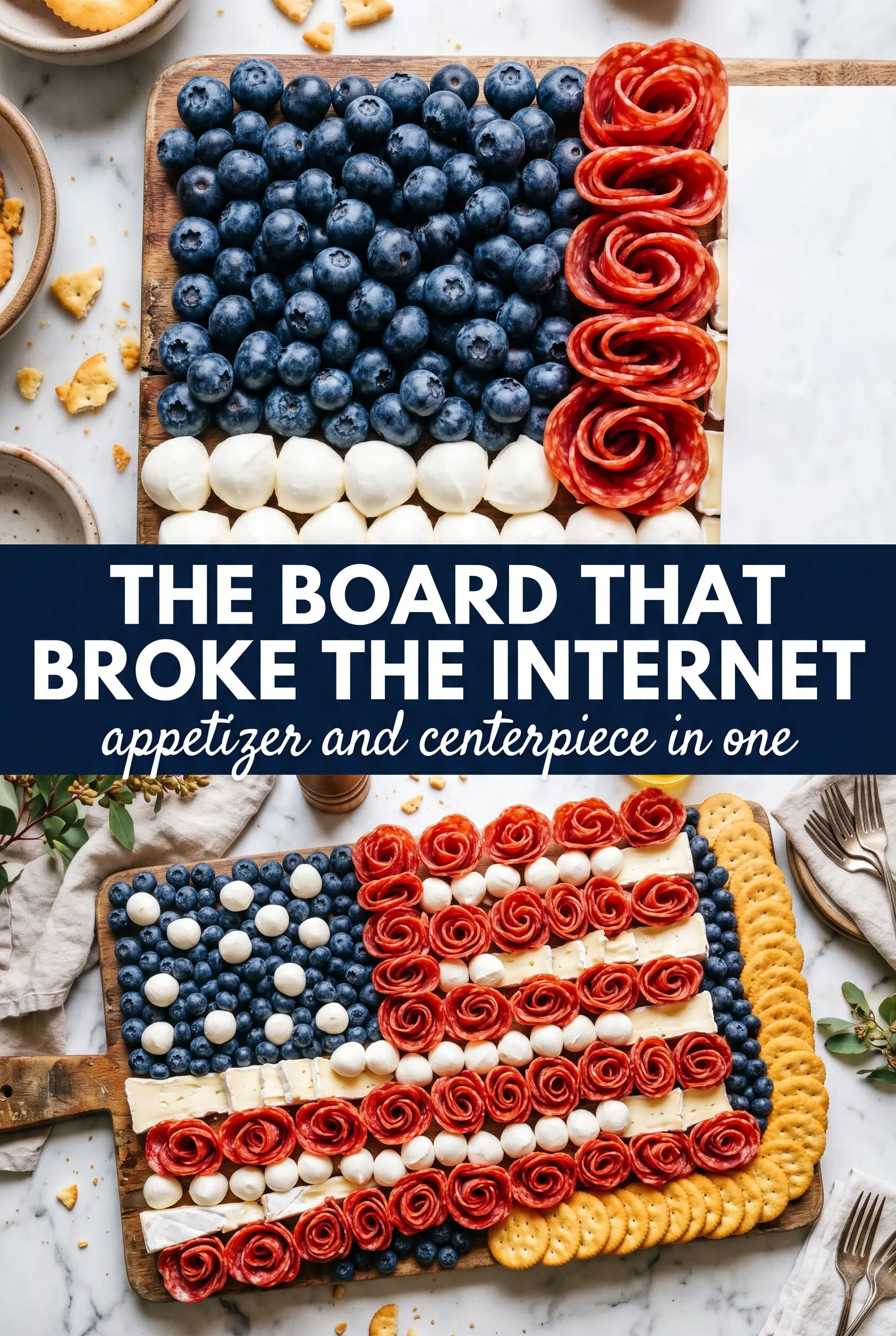
American Flag Charcuterie Board
Ingredients
Equipment
Method
- Use a large rectangular wooden board or serving tray and mentally divide the upper left into a canton rectangle.
- Fill the canton with blueberries packed tightly together, then tuck rolled salami pieces in the center to resemble stars.
- Starting from the top right of the board, create a red stripe by layering pepperoni slices in a clean row across the full width of the board.
- Create the white stripes using rows of sliced white cheddar or mozzarella balls, alternating with the red stripes down the full board.
- Add prosciutto folds or strawberry halves to reinforce the red stripes and fill any gaps.
- Tuck rosemary sprigs at the corners and edges, then arrange crackers around the perimeter and serve.