Deep caramelized onion broth gives this wild mushroom soup its backbone, and the result is layered instead of muddy. The mushrooms stay earthy and meaty, the kale softens just enough to take the edge off the richness, and the sherry plus balsamic keep the whole pot tasting bright rather than heavy. It’s the kind of soup that tastes like it simmered all afternoon, even though most of the work is just giving the onions the time they need.
The trick is patience at the start. Onions need steady heat until they turn mahogany, not just soft and sweet, because that deep browning is what builds the soup’s flavor. The porcini soaking liquid adds another dose of mushroom intensity, but it has to be strained so any grit stays out of the pot. Once those pieces are in place, the rest of the soup comes together in a way that feels almost effortless.
Below, I’ve included the timing cues that matter most, the swaps that still keep the soup balanced, and the storage notes that help it reheat without losing that silky, savory broth.
The onions went all the way to that deep brown stage and the broth tasted like it had been simmering for hours. The porcini liquid gave it a rich mushroom depth, and the kale stayed tender instead of turning mushy.
Save this wild mushroom caramelized onion and kale soup for nights when you want a deep, savory bowl with real mushroom flavor and a silky broth.
The Trick to Keeping the Broth Deep, Not Watery
The flavor in this soup comes from building layers in the pot, not from dumping everything in and hoping time fixes it. Caramelized onions give you sweetness and depth, but only if you let them go far enough to turn brown all the way through. If they’re still pale gold, the soup will taste flat, and the mushrooms won’t have enough support to taste like more than garnish.
The other mistake that flattens this kind of soup is skipping the porcini soaking liquid or adding it unstrained. That liquid carries a huge amount of mushroom flavor, but it can also carry grit. Strain it through a fine mesh sieve or a coffee filter if needed, then add it to the pot with the broth so the base stays clean and rich.
- Caramelized onions — These are the backbone of the soup. Lower heat and time matter more than speed here; if the onions start to brown too fast at the edges, the pot is too hot and they’ll taste burnt instead of sweet.
- Dried porcini mushrooms — They add concentrated mushroom depth that fresh mushrooms can’t fully match. The soaking liquid is part of the soup, not waste, but strain it well before using it.
- Dry sherry or white wine — This deglazes the browned bits from the pan and lifts the flavor off the bottom of the pot. Dry sherry gives the soup a slightly rounder, nutty edge, while white wine keeps it lighter.
- Balsamic vinegar — A small amount sharpens the broth and keeps the onions from reading too sweet. Add it near the broth so it blends into the base instead of tasting like a separate note.
What Each Ingredient Is Actually Doing in This Recipe
- Primary ingredient (the star) — Quality matters most. Choose the best you can find.
- Cooking medium (oil, butter, or broth) — This carries flavors and prevents dryness.
- Seasonings (salt, pepper, spices, herbs) — Layer flavors so nothing overpowers. Build depth gradually.
- Aromatics (garlic, onion, herbs) — Cook with fat to bloom flavors. Become the foundation.
- Supporting ingredients — Complement the main ingredient without overpowering it.
- Sauce or liquid (if applicable) — Brings flavors together. Balance richness with acid.
- Acid (lemon, vinegar, wine, or other) — Brightens and prevents flat-tasting results.
- Final finish (garnish, glaze, or sauce) — Prevents one-dimensional taste and adds visual appeal.
Building the Pot in the Right Order
Slowly Caramelizing the Onions
Melt the butter with the olive oil in a heavy pot, then add the sliced onions and let them cook over medium heat until they soften, collapse, and slowly turn deep golden brown. Stir often enough that nothing sticks, but not so much that the onions never get a chance to sit against the heat and color. If the pot starts to look dry before the onions are done, add a small splash of water and keep going. The onions are ready when they smell sweet and almost jammy, with no raw edge left.
Getting the Mushrooms Brown, Not Soggy
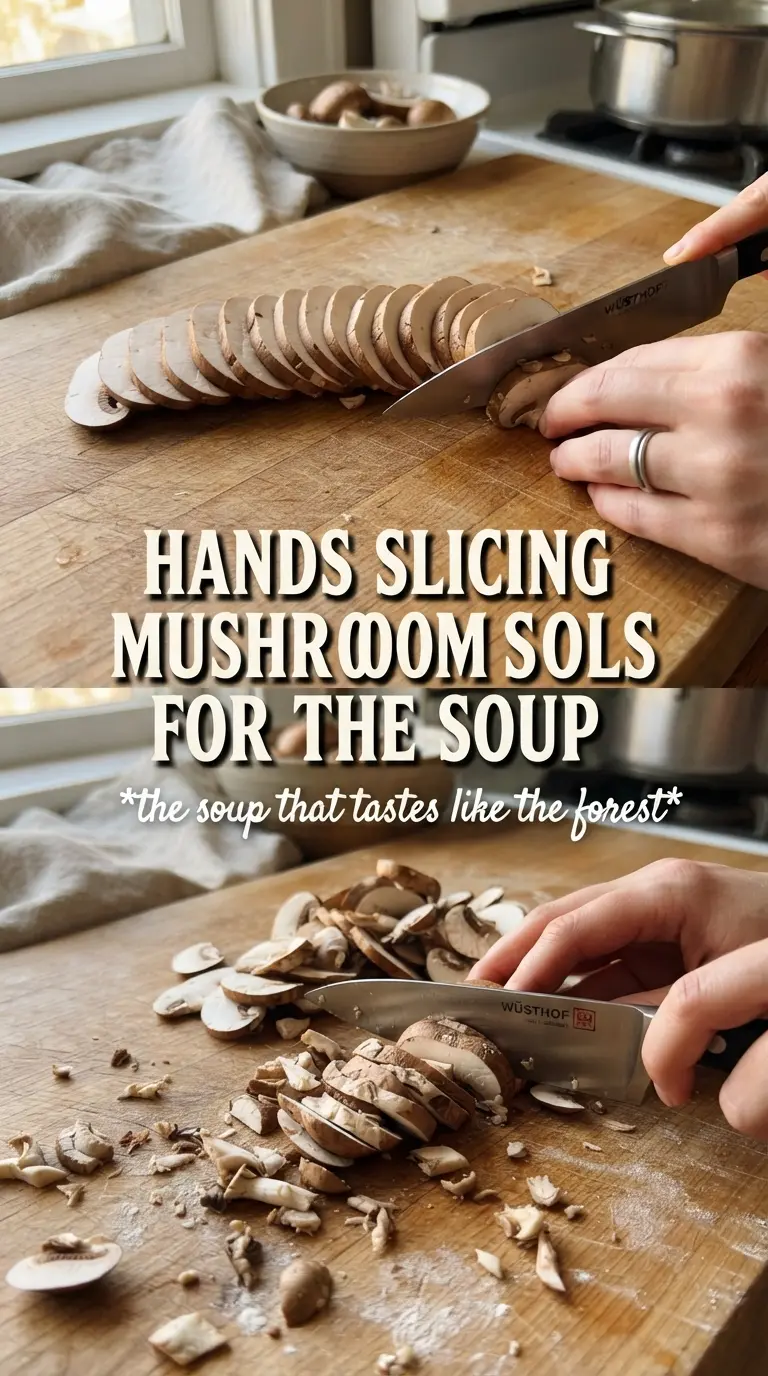
Add the garlic and the fresh mushrooms, then cook until the mushrooms release their moisture and that liquid cooks off. The pan should stop looking wet before the mushrooms start browning. If you crowd them too much or turn the heat down too low, they’ll steam instead of sear, and the broth will lose that savory mushroom depth. You want browned edges and a drier pan before you move on.
Using the Wine, Porcini, and Broth as a Single Base
Pour in the sherry or wine and scrape up every browned bit from the bottom of the pot. That’s where a lot of the flavor lives. Add the strained porcini liquid, the chopped porcini, broth, thyme, and balsamic, then simmer long enough for the broth to pick up the mushroom flavor and settle into one cohesive taste. If the soaking liquid looks cloudy or sandy, strain it again before it goes in.
Finishing with Kale at the Last Minute
Stir in the kale near the end and cook just until it wilts and turns dark green. Kale goes from sturdy to soft quickly, and overcooking it makes the leaves lose their shape and taste tired. Season with salt and pepper after the soup has simmered so you can judge the broth accurately, then ladle it into bowls and finish with Parmesan shavings and a small drizzle of truffle oil.
How to Adapt This Soup Without Losing the Depth
Make it vegetarian
Use a good vegetable broth with actual body, not a thin one that tastes mostly like salt. The porcini, caramelized onions, and balsamic still build enough depth to keep the soup satisfying, and the Parmesan on top can stay if you’re not making it fully dairy-free.
Make it dairy-free
Swap the butter for extra olive oil and skip the Parmesan garnish or use a dairy-free alternative. You’ll lose a little roundness, but the onions, mushrooms, and sherry still carry the soup, and the truffle oil can add back a touch of richness at the end.
Swap the greens
Lacinato kale holds its shape best, but Swiss chard or spinach will work if that’s what you have. Add spinach in the last minute because it collapses fast, and expect a softer, less rustic texture than kale gives you.
Storage and Reheating
- Refrigerator: Store for up to 4 days. The flavors deepen overnight, and the broth may thicken slightly as it sits.
- Freezer: This soup freezes well for up to 2 months, though the kale will soften a bit after thawing. Freeze in portions and leave a little space at the top of the container.
- Reheating: Warm it gently on the stove over medium-low heat until steaming. Don’t boil it hard, or the mushrooms can turn rubbery and the broth can lose its clean, savory finish.
Questions I Get Asked About This Soup
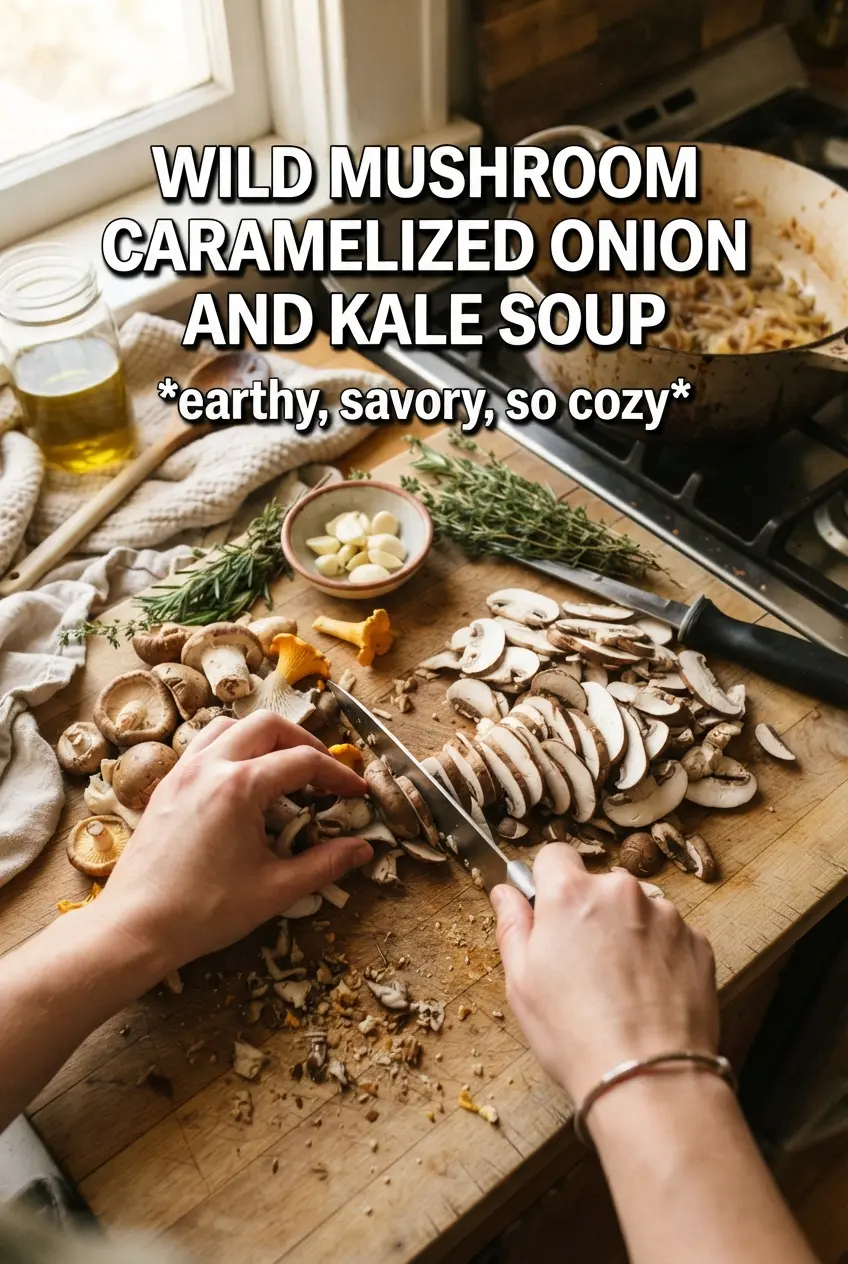
Wild Mushroom Caramelized Onion and Kale Soup
Ingredients
Equipment
Method
- Melt butter with olive oil in a large heavy pot over medium heat, then add the thinly sliced onions and stir to coat.
- Cook onions 35–40 minutes, stirring occasionally, until deeply golden and caramelized, scraping any browned bits from the pot.
- Add minced garlic and sliced mixed wild mushrooms, then cook 8 minutes until the mushrooms are browned.
- Pour in the dry sherry (or white wine) to deglaze, then cook 2 minutes to reduce slightly.
- Drain the soaked porcini, then add them to the pot along with the strained soaking liquid.
- Add broth, fresh thyme, and balsamic vinegar, then simmer 15 minutes to meld the flavors.
- Add chopped kale and cook 5 minutes until wilted.
- Season with salt and pepper to taste, then ladle into bowls.
- Top with parmesan shavings and drizzle with truffle oil before serving.