Silky garlic soup earns its place in the rotation because it turns a long-cooked, mellow garlic base into something warm, brothy, and deeply satisfying without feeling heavy. The cloves soften in olive oil until sweet and almost custardy, then the broth picks up that flavor and carries it all the way through the bowl. Topped with a soft egg and crusty toast, it eats like a full meal.
What makes this version work is restraint. The garlic cooks low and slow first, so it never turns sharp or bitter, and a little smoked paprika plus cayenne adds warmth without taking over. Blending only part of the soup keeps it silky while leaving a few cloves intact for texture. The egg goes in at the end, right in the simmering soup, so the yolk stays rich and the white stays tender.
Below you’ll find the timing that keeps the garlic sweet, the one blending move that gives the best texture, and a few swaps if you need to work with what’s already in the pantry.
The garlic went soft and sweet instead of sharp, and the egg poached right in the soup made it feel like a full dinner. My husband kept dunking the bread until the bowl was clean.
Save this garlic soup for the nights when you want a brothy main dish with sweet roasted garlic, a soft egg, and crusty bread for dipping.
The Secret to Sweet Garlic Instead of Bitter Garlic
Garlic soup only works when the garlic is softened gently enough to turn mellow before the broth goes in. If the cloves brown too fast, they get harsh and the whole pot tastes thin and acrid instead of round and sweet. Medium-low heat is doing the heavy lifting here, not high heat.
That first stage changes the whole bowl. You want the cloves pale gold, soft enough to smash with the back of a spoon, and fragrant in a way that smells nutty rather than sharp. Once they reach that point, the broth can build on top of them instead of trying to cover up a burnt edge.
What Each Ingredient Is Doing in the Pot

- Garlic — Two whole heads give the soup its body and its sweetness. Peeled cloves cook more evenly, and whole heads are worth using here because the long, gentle sauté takes the bite out of them. If your cloves are smaller, just watch the color closely so they don’t overcook.
- Olive oil — This carries the garlic flavor and gives the finished soup a soft, rounded mouthfeel. Use a decent one if you can, because the soup is simple enough that the oil comes through. Butter will work, but it changes the flavor toward richer and less French-Spanish.
- Broth and water — The broth provides savoriness while the water keeps the garlic from feeling too dense or salty. If you use a very salty broth, cut back on added salt until the end. Vegetable broth keeps this vegetarian without losing the silky texture.
- Eggs — The poached egg turns the soup into a full meal and adds richness that blends into the broth when the yolk breaks. Fresh eggs hold together better in the pot. Older eggs are harder to poach neatly.
- Crusty bread — Toasted bread is more than garnish; it gives the soup structure and catches the yolk. Day-old bread works beautifully because it stays sturdy instead of turning mushy too fast.
Building the Soup So the Garlic Stays Sweet
Softening the Garlic Slowly
Warm the olive oil over medium-low and add the peeled cloves. Stir them often enough that they color evenly, and keep the heat low enough that the oil barely shimmers. After 12 to 15 minutes, they should look soft and lightly golden, not browned at the edges. If they start to darken quickly, pull the pan off the heat for a moment; burnt garlic will dominate everything that follows.
Spicing the Base
Stir in the smoked paprika and cayenne for one minute, just long enough to bloom them in the oil. This step wakes up the spice without letting it scorch, which is important because dry spices go bitter fast in a hot pan. The soup should smell warm and smoky, not sharp.
Blending for a Silky Bowl
Add the broth and water, then simmer until the garlic is fully tender. Use an immersion blender to puree most of the soup, but stop before it turns completely smooth. Leaving a few cloves whole gives the bowl some texture and keeps it from eating like cream of garlic paste. If the soup looks too thick after blending, splash in a little more broth or water until it feels spoonable.
Poaching the Eggs in the Finished Soup
Season with thyme, salt, and pepper, then keep the soup at a gentle simmer before sliding in the eggs. A hard boil will tear the whites apart; a calm simmer sets them neatly in 3 to 4 minutes. Pull the eggs when the whites are set but the yolks still wobble. That runny center is what makes the bread and broth taste even richer.
How to Adapt This for Different Pans, Diets, and Leftovers
Vegetarian Garlic Soup
Use a good vegetable broth and the soup stays every bit as full-bodied. The garlic and olive oil carry most of the flavor anyway, so you’re not losing much. If your vegetable broth tastes thin, simmer the finished soup a few extra minutes before poaching the eggs.
Dairy-Free and Naturally Gluten-Free
This recipe already fits both without any special changes, as long as the broth you use is gluten-free. The only thing to watch is the bread: choose a loaf that’s sturdy enough to toast well and hold up in the broth. A soft sandwich bread will collapse too fast.
No Immersion Blender
Mash the garlic with a potato masher for a more rustic soup, or transfer a couple of ladles to a countertop blender and return it to the pot. Don’t puree the entire batch until perfectly smooth unless that’s the texture you want, because the contrast between smooth broth and whole cloves is part of what makes this bowl interesting.
Storage and Reheating
- Refrigerator: Store the soup without the eggs and toast for up to 3 days. The garlic flavor deepens overnight, and the texture stays smooth.
- Freezer: The soup base freezes well for up to 2 months. Freeze before adding eggs or bread, then thaw in the fridge overnight.
- Reheating: Reheat gently over low heat until steaming, not boiling. A hard boil can make the garlic taste flat and can overcook the blended broth before you’ve added fresh eggs.
Answers to the Questions Worth Asking
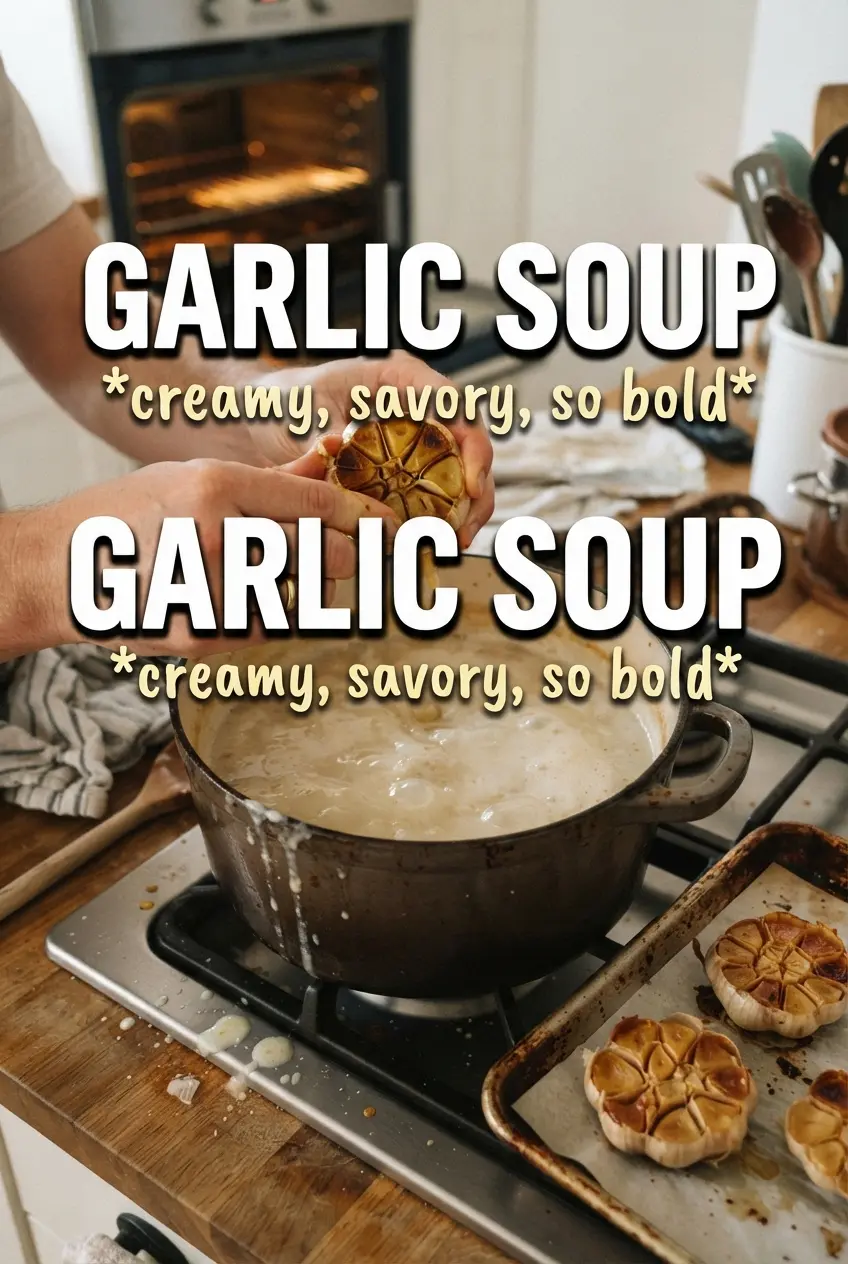
Garlic Soup
Ingredients
Equipment
Method
- Heat the olive oil in a large saucepan over medium-low heat, then add the garlic cloves and cook for 12-15 minutes until soft and golden but not brown. Keep the heat gentle so the garlic turns silky instead of bitter.
- Add the smoked paprika and cayenne and cook for 1 minute, stirring so the spices bloom. You should smell warm, smoky aroma right away.
- Add the chicken or vegetable broth and water, bring to a boil, then simmer for 15 minutes. The garlic should be very tender and the broth lightly reduced.
- Use an immersion blender to blend most of the garlic smooth, leaving a few cloves whole. Blend until the broth looks thick, silky, and lightly golden with visible soft chunks.
- Season the soup with salt, pepper, and fresh thyme leaves. Taste and adjust until the flavor is balanced and fragrant.
- Poach the eggs directly in the simmering soup for 3-4 minutes. The whites should be set and the yolks should remain soft in the center.
- Serve the soup hot with toasted crusty bread, the poached egg, and fresh parsley garnish. The bread should stay crisp against the silky broth.