Vegetable beef soup earns its place in the rotation when the broth turns deep and savory, the beef goes tender without falling apart, and the vegetables still hold their shape instead of fading into mush. The best bowls have a little bit of everything in each spoonful: browned beef, soft potatoes, sweet corn, and tomatoes that give the broth body without making it heavy.
The difference in this version starts with the sear. Browning the beef in batches builds the kind of flavor you can’t get from dumping everything into a pot at once, and cooking the tomato paste for a minute or two takes the edge off its raw taste while thickening the broth. Adding the potatoes later keeps them from breaking down before the soup is done, and the green beans and corn go in near the end so they stay bright.
Below, I’ve included the timing that keeps the vegetables from overcooking, the ingredient swaps that still give you a solid pot of soup, and the storage notes that make leftovers taste even better the next day.
The broth turned out rich and dark, and the potatoes stayed intact instead of dissolving like they do in some soups. I also liked that the green beans still had a little bite at the end.
Save this vegetable beef soup for the nights when you want a deep, hearty broth with tender beef and vegetables that still have texture.
The Reason the Beef Stays Tender Instead of Chewy
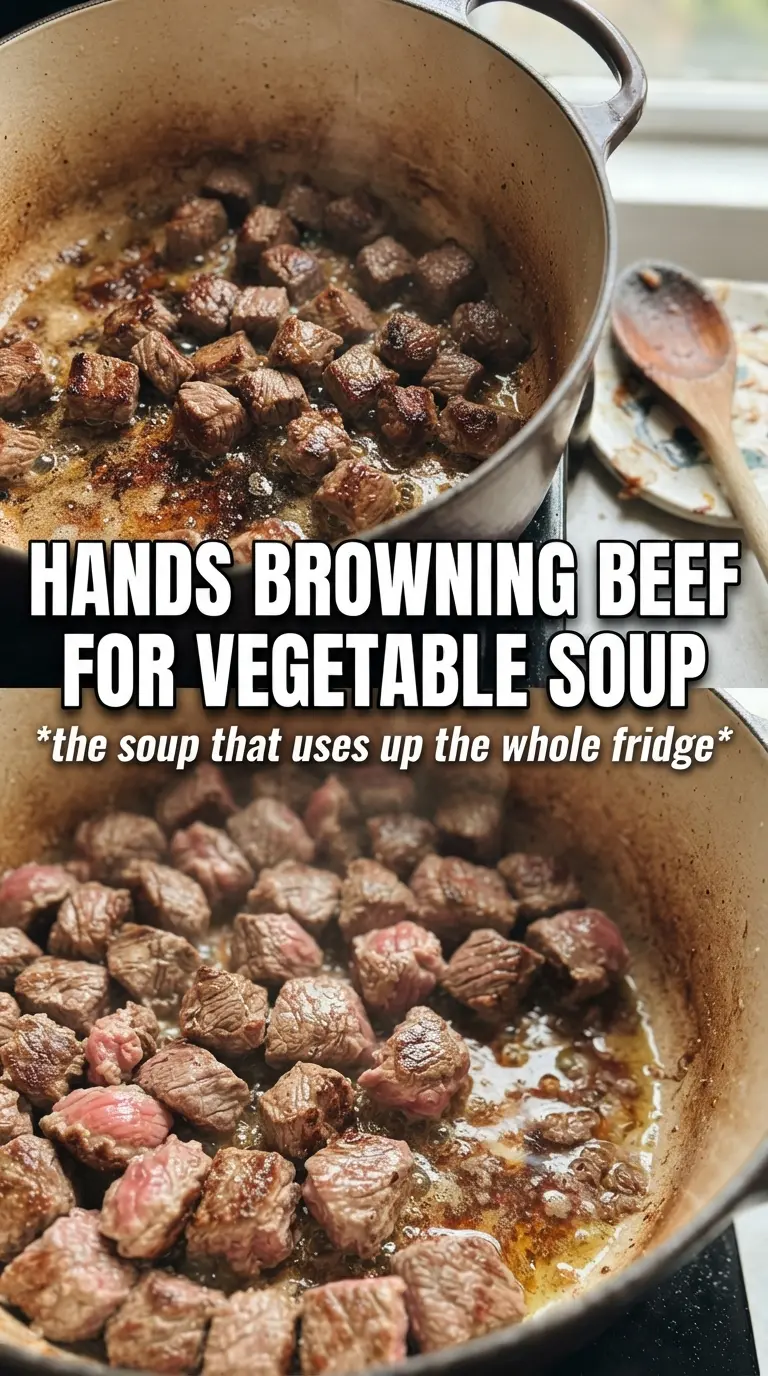
The beef in this soup needs a good sear, then a slow simmer. If you crowd the pot, the meat steams and turns gray before it browns, and that leaves the broth flat. Work in batches and let each side develop a deep brown crust before you move on. That crust is where the flavor starts.
The other thing that matters is the simmer. A hard boil tightens stew meat and can make it feel stringy even after it’s cooked long enough. Once the broth comes up to a boil, drop it to a low simmer where you’ll still see small bubbles rising, not a rolling boil that bangs the lid and throws the meat around.
- Beef stew meat — This cut is built for slow cooking. If you can only find a larger chuck roast, cube it yourself; the result is usually better because you control the size and can trim away extra hard fat.
- Tomato paste — Cooking it with the onions and garlic deepens the broth and takes away that sharp canned taste. Skip that step and the soup tastes thinner.
- Worcestershire sauce — It adds the savory, almost meaty backbone that makes the broth taste rounded. There isn’t a perfect substitute, but a splash of soy sauce works in a pinch.
What Each Vegetable Is Doing in the Pot
Potatoes give the soup body and make each bowl feel complete, but they need to go in after the beef has already had time to soften. Add them too early and they’ll break apart before the meat is ready. Waxy potatoes hold their shape best, but Yukon Golds are a reliable middle ground if that’s what you have.
Carrots and celery build the base flavor in the first sauté. Don’t rush this part; you want the onions to soften and the carrots to lose their raw edge before the broth goes in. Green beans and corn belong near the end so they stay sweet and a little crisp instead of turning dull and overcooked.
Diced tomatoes bring acidity that keeps the broth from tasting heavy. If you want a softer, less tomato-forward soup, use fire-roasted diced tomatoes for more depth or reduce the amount slightly and add a bit more broth.
Building the Soup Without Overcooking the Vegetables
Getting the Beef Brown
Heat the oil until it shimmers, then lay the beef in a single layer and leave it alone long enough to brown. If it sticks at first, that’s normal; once a crust forms, it will release more easily. Browned bits left in the pot are good news, not a mess to clean up.
Softening the Aromatics
Cook the onion, carrots, and celery until the onions turn translucent and the carrots lose their raw look. Add the garlic and tomato paste after that, not before, because garlic burns fast and tomato paste needs direct heat to deepen. When the paste darkens slightly and starts to smell sweet, you’re ready for the broth.
Simmering in Stages
Once the broth, tomatoes, Worcestershire, thyme, and bay leaf go in, let the soup simmer until the beef starts to turn tender. Add the potatoes next so they cook through without collapsing. The green beans and corn only need the last few minutes; they should look bright and taste fresh when the soup is done.
How to Adapt This Pot of Soup to What You Have
Make It Gluten-Free Without Losing Body
This soup is naturally close to gluten-free as written, but check your Worcestershire sauce and broth labels. Some brands sneak in wheat or malt vinegar. Use certified gluten-free versions and the soup will still taste rich and full.
Swap the Fresh Vegetables for Frozen in a Pinch
Frozen corn is already built into the recipe, and frozen green beans work too. Add them near the end without thawing first. The texture won’t be quite as crisp as fresh, but the soup will still land with good color and flavor.
Use Chuck Roast Instead of Pre-Cut Stew Meat
Chuck roast often tastes better because you can cut it into even cubes and trim it the way you want. The cooking time stays about the same, but the texture tends to come out more consistent. If you use it, cut the pieces into similar sizes so they finish together.
Storage and Reheating
- Refrigerator: Store covered for 4 days. The potatoes soften a bit more as it sits, and the broth gets even deeper by day two.
- Freezer: It freezes well for up to 3 months. Cool it completely first, then freeze in portions. The potatoes can become a little softer after thawing, but the soup still reheats well.
- Reheating: Reheat gently on the stove over medium-low until hot. A hard boil can make the beef tougher and push the vegetables past their best texture. If the broth thickens in the fridge, add a splash of water or broth.
Questions I Get Asked About This Recipe
Vegetable Beef Soup
Ingredients
Equipment
Method
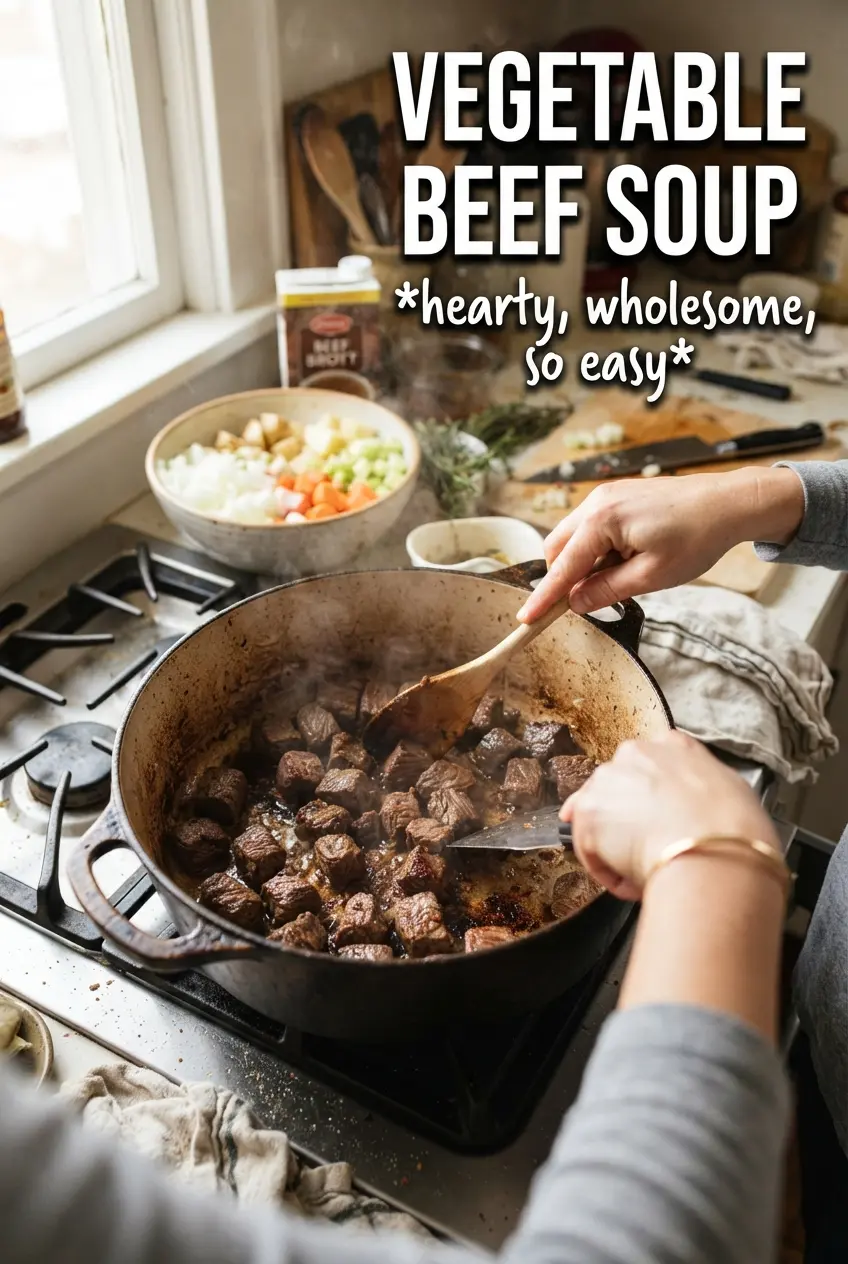
- Heat the olive oil in a large Dutch oven over medium-high heat. Sear the beef in batches until browned on all sides, about 3-5 minutes per batch, then remove to a plate (you should see deep brown edges).
- Add the onion, carrots, and celery to the Dutch oven and sauté over medium heat for 5 minutes. Stir until the onion turns translucent and the carrots soften slightly, with a gentle sizzle.
- Add the garlic and tomato paste and cook for 2 minutes. Stir continuously until fragrant and darkened slightly, about 1-2 minutes (keep it from burning).
- Return the beef to the Dutch oven. Add the beef broth, diced tomatoes, Worcestershire sauce, dried thyme, and bay leaf, then stir to combine.
- Bring the mixture to a boil over high heat, then reduce to a steady simmer. Simmer for 30 minutes with occasional stirring (bubbles should be active but not rolling).
- Add the potatoes and cook at a simmer for 15 minutes. Cook until the potato cubes are tender when pierced with a fork.
- Add the green beans and frozen corn for the last 8 minutes of cooking. Cook until the green beans are bright and crisp-tender and the corn is hot.
- Remove the bay leaf. Season with salt and pepper to taste, stirring until evenly distributed and glossy in the broth.