Golden-seared chicken breasts tucked into a bright tomato basil sauce are the kind of skillet dinner that earns repeat status fast. The chicken stays juicy, the tomatoes burst into their own sauce, and the basil gets folded in at the end so it still tastes fresh instead of cooked down and dull. Shaved Parmesan on top pulls the whole pan together with just enough salt and richness to round out the tomatoes.
What makes this version work is the order. The chicken browns first, then the garlic gets just enough time to bloom before the tomatoes go in and release their juices. A splash of white wine or broth loosens the browned bits on the bottom of the pan, and a little balsamic vinegar sharpens the sauce without making it taste sweet. If you’ve ever ended up with dry chicken and thin tomato liquid, this method fixes both problems.
Below, I’ve included the small details that matter: when to pull the chicken so it doesn’t overcook, what to do if your tomatoes aren’t bursting fast enough, and a few smart swaps if you need to work with what you’ve got.
The tomatoes burst right on cue and the sauce clung to the chicken instead of turning watery. I added a little extra basil at the end and it tasted like it came from a restaurant skillet.
Save these tomato basil chicken breasts for the nights when you want a bright skillet dinner with juicy chicken and a fast pan sauce.
The Trick to Keeping the Chicken Juicy While the Tomatoes Turn Saucy
Chicken breasts dry out when they’re left in a pan too long after browning, especially once a thin sauce starts simmering around them. The fix here is to treat the sear and the sauce as two separate jobs: get color on the chicken first, then pull it out while the tomatoes do their work. The chicken finishes gently in the sauce for the last couple of minutes, which is enough to warm it through without squeezing out the juices.
The other thing that matters is heat control. If the pan is screaming hot when the garlic goes in, it can turn bitter in seconds. If the tomatoes are crowded and never touch the pan surface, they’ll soften without bursting, and you’ll miss the saucy texture that makes this dish feel finished.
What Each Ingredient Is Actually Doing in This Skillet

- Chicken breasts — Boneless, skinless breasts keep this quick and lean, but they need even thickness to cook well. If one end is much thicker, pound it lightly so the whole piece reaches 165°F at the same time. That’s the difference between juicy and stringy.
- Cherry tomatoes — These are the backbone of the sauce. They burst into a sweeter, thicker pan sauce than chopped regular tomatoes usually do, and their skins help hold shape until the juices release. If you only have grape tomatoes, they’ll work too, though they’re a little firmer.
- Dry white wine or chicken broth — Wine adds brightness and helps lift the browned bits from the skillet; broth gives you the same deglazing function without the sharper finish. Use broth if you want a milder sauce, but don’t skip the liquid completely or the sauce will taste flat.
- Fresh basil — Basil belongs at the end. If it goes in too early, the heat dulls it and you lose that clean, sweet-herbal finish. Chiffonade gives you soft ribbons that cling to the chicken instead of disappearing into the sauce.
- Balsamic vinegar — This is the small amount of acid that makes the tomatoes taste fuller. It doesn’t turn the dish into balsamic sauce; it just tightens the edges of the flavor so the pan tastes balanced instead of one-note.
- Parmesan cheese — Shaved Parmesan melts just enough over the warm chicken to add salt and richness without weighing the sauce down. Pre-grated cheese won’t melt as cleanly, so shave it if you can.
Building the Pan Sauce in the Right Order
Season and Sear the Chicken First
Pat the chicken dry, season it well, and lay it into the hot olive oil without crowding the skillet. You want a steady sizzle right away; if the pan is too cool, the chicken steams and turns pale instead of picking up color. Leave it alone long enough to form a deep golden crust before turning it, because moving it too early tears the surface and steals the sear.
Let the Garlic Wake Up Before the Tomatoes Go In
Once the chicken comes out, drop the garlic into the same pan for just 30 seconds. It should smell fragrant almost immediately. If it starts browning, the heat is too high and the flavor turns sharp, so pull the pan off the burner for a few seconds before adding the tomatoes.
Wait for the Tomatoes to Burst on Their Own
Use the side of a spoon to nudge the tomatoes around the pan and keep them in contact with the hot surface. After a few minutes, their skins split and the juices run out, creating the base of the sauce. If they’re soft but still holding together, give them another minute; the sauce should look glossy and lightly thickened, not watery.
Finish Gently So the Chicken Stays Tender
Return the chicken and spoon the sauce over the top, then let it simmer just long enough for the chicken to absorb the juices. This final stage is about warming, not cooking from scratch. Add the basil and Parmesan at the end so the basil stays bright and the cheese softens instead of sinking into the pan.
How to Adapt This Tomato Basil Chicken Without Losing the Good Part
Make It Dairy-Free
Skip the Parmesan and finish with a drizzle of good olive oil instead. You’ll lose the salty, savory edge from the cheese, so season the sauce a little more boldly at the end. The dish still tastes complete because the tomatoes, garlic, and basil do most of the work.
Use Chicken Thighs Instead
Boneless skinless thighs work well here and give you a richer, more forgiving result. They usually need a few extra minutes in the pan, and they can take a slightly harder sear without drying out. The sauce stays the same, but the finished dish will taste a little deeper and meatier.
Make It Gluten-Free
This recipe is naturally gluten-free as written if your broth is certified gluten-free. That’s an easy one, but it’s worth checking labels on the broth and Parmesan if cross-contact matters in your kitchen.
Turn It Into a Fuller Meal
Serve the chicken over pasta, polenta, or crusty bread to catch the sauce. If you want more body in the pan itself, add a handful of baby spinach during the final simmer and let it wilt into the tomatoes. It won’t change the core flavor, but it makes the skillet feed four a little more generously.
Storage and Reheating
- Refrigerator: Store leftovers in an airtight container for up to 3 days. The basil will darken a bit, but the flavor holds up well.
- Freezer: The chicken and tomato sauce freeze reasonably well for up to 2 months, though the tomatoes soften more after thawing. Freeze without the fresh basil and add that after reheating.
- Reheating: Reheat gently in a covered skillet over low heat with a splash of broth or water. High heat dries out chicken breasts fast, so warm them just until heated through.
Answers to the Questions Worth Asking
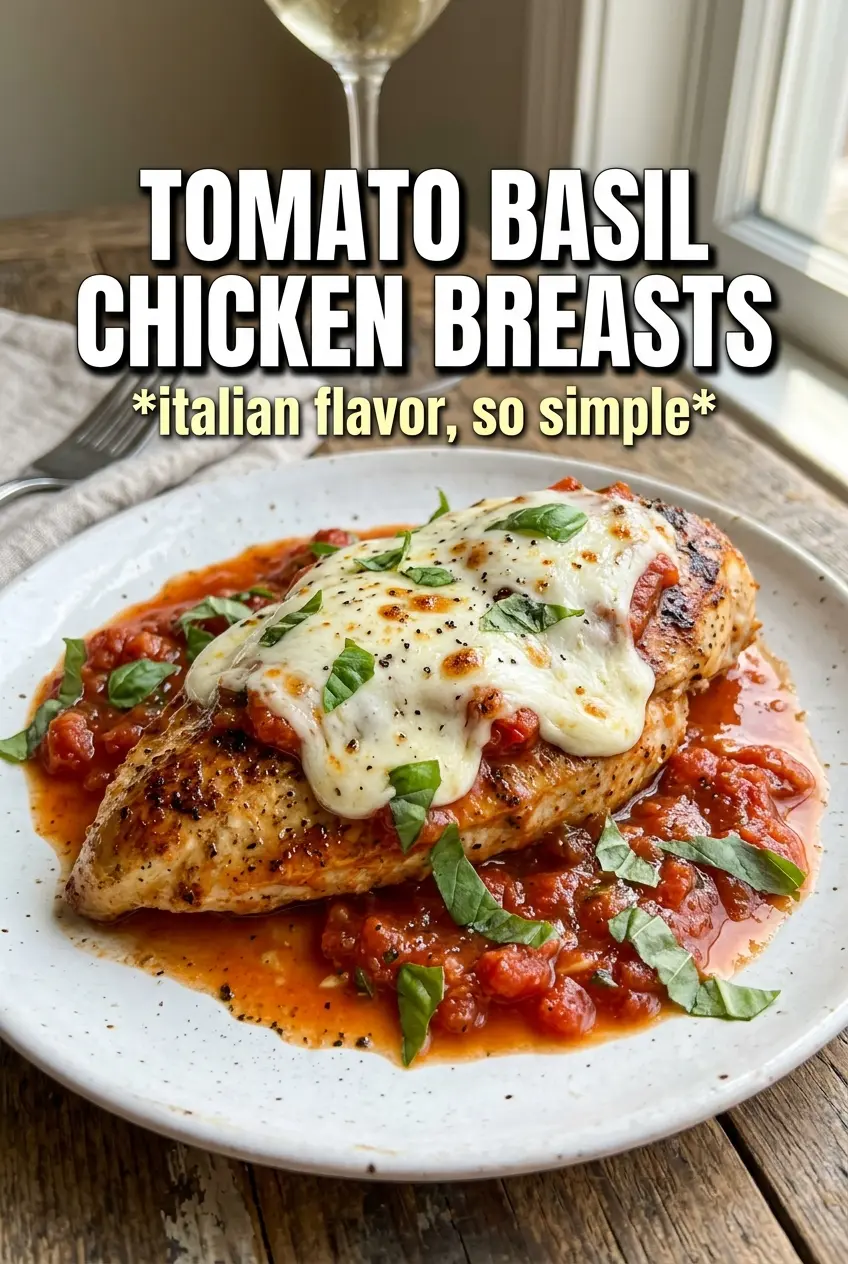
Tomato Basil Chicken Breasts
Ingredients
Equipment
Method
- Season the chicken breasts with salt, pepper, garlic powder, and Italian seasoning to taste. Heat olive oil in a large skillet over medium-high heat until shimmering, then add chicken and sear 5-6 minutes per side until golden and the internal temperature reaches 165°F; remove to a plate.
- In the same pan, cook minced garlic for 30 seconds. Add halved cherry tomatoes and cook 3-4 minutes until they burst and release their juices.
- Pour in dry white wine and let it bubble for 1 minute, then stir in dried Italian seasoning, red pepper flakes, and balsamic vinegar.
- Return the chicken to the pan and spoon the tomato sauce over each breast. Simmer for 2 minutes.
- Scatter fresh basil over the top, then finish with shaved Parmesan and extra olive oil before serving.