Spiced apple butter turns soft apples into a thick, glossy spread with deep caramel notes and a warm spice finish that clings to toast, biscuits, and pancakes. The texture is what makes it worth the long cook: smooth, velvety, and spoonable, with none of the watery looseness you get when apples are only halfway reduced.
The trick is patience on two fronts. First, the apples need enough time to break down completely before blending, or you’ll end up with a grainy spread that never quite smooths out. Second, the puree has to cook uncovered long enough for the moisture to evaporate and the sugars to concentrate. That final reduction is where the color deepens and the flavor turns from sweet apples into something much richer.
Below, I’ve included the exact stage where most apple butter goes wrong, plus the one finish that keeps the cinnamon and cloves tasting balanced instead of muddy.
The apple butter turned out thick and smooth, and it set up beautifully once it cooled. I spread some on warm biscuits and the spice balance was spot on, not too clove-heavy like some recipes can be.
Save this spiced apple butter for toast, biscuits, and gifting jars that taste like fall without the extra fuss.
The Slow Reduction That Gives Apple Butter Its Depth
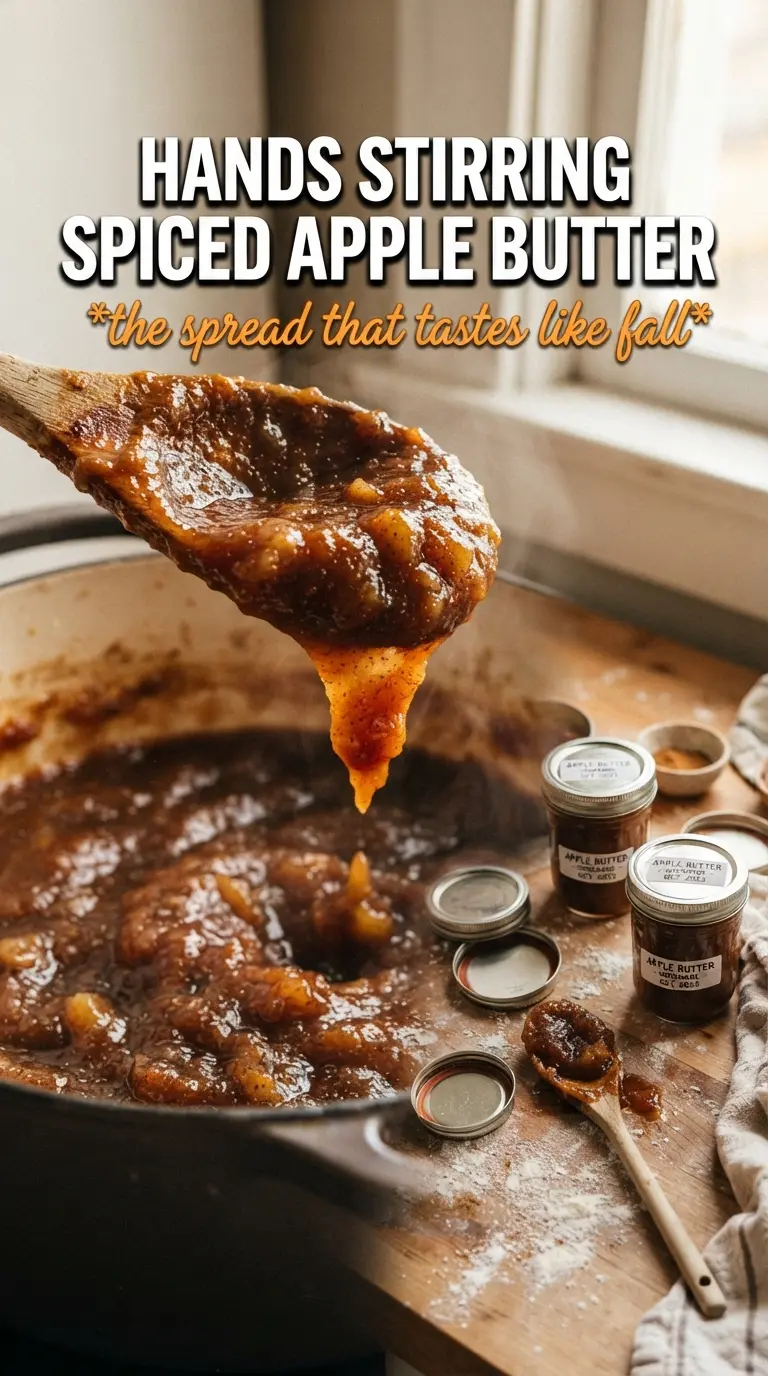
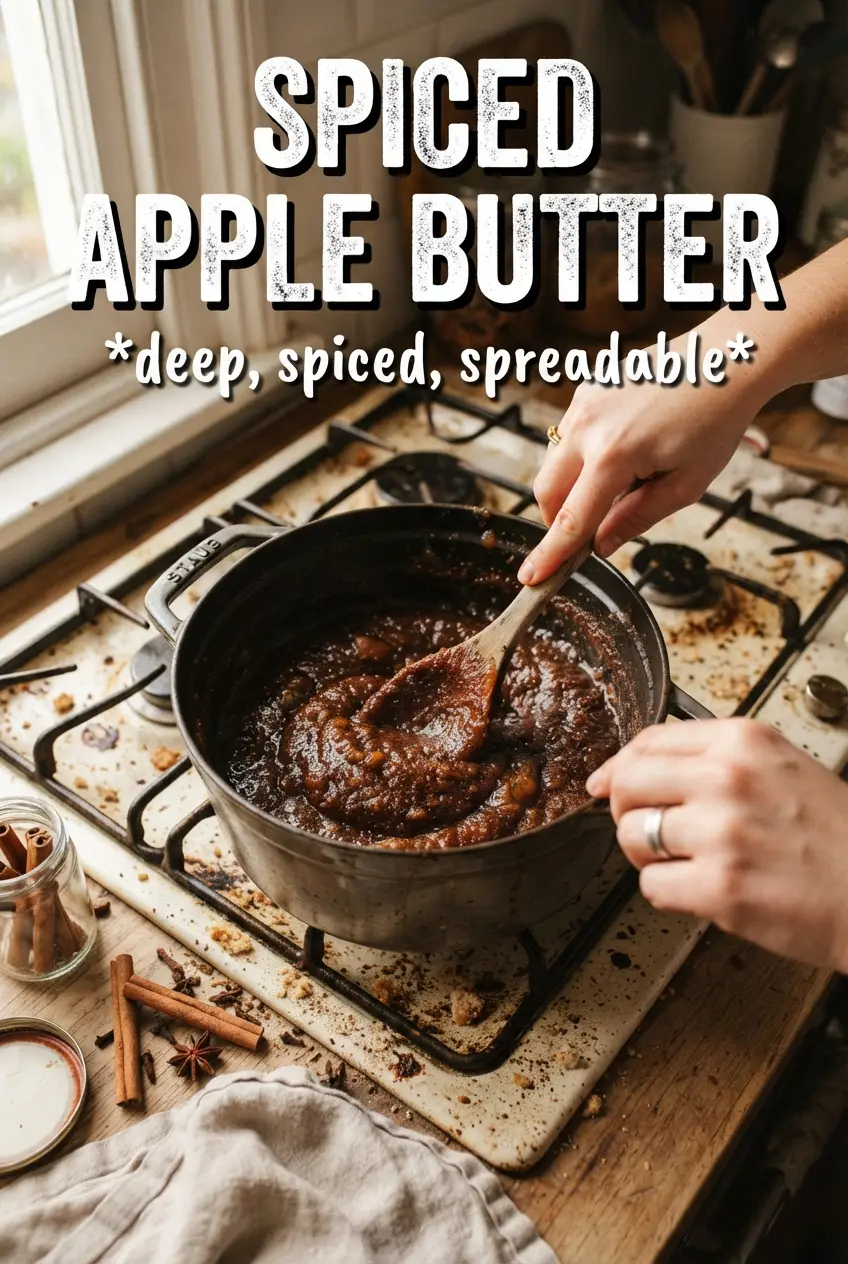
Apple butter isn’t about cooking the apples until they’re merely soft. It needs a true reduction after blending, and that’s where the texture and color develop. If you stop too soon, the spread stays loose and tastes like sweetened applesauce with spice on top. Keep it uncovered and stir often so the bottom doesn’t scorch while the top is still thin.
The heat should stay gentle. Fast bubbling can fling puree and leave you with hot splatter on the stove, but it also pushes the sugars toward a cooked, bitter edge before the apples have had time to mellow. Low and slow gives the fruit time to darken evenly, which is what turns the finished butter into something rich and almost caramel-like.
What Each Ingredient Is Actually Doing Here
- Apples — A mixed variety gives the best balance of sweetness, tartness, and natural pectin. Softer apples help everything break down, while a few firmer or tarter ones keep the flavor from going flat. If you use only sweet apples, the finished butter can taste one-note and a little dull.
- Brown sugar and granulated sugar — The granulated sugar keeps the sweetness clean, while the brown sugar adds molasses depth that shows up after the long cook. If you want a slightly less sweet spread, you can reduce each by 1/4 cup, but don’t cut them too far or the butter will taste thin and sharp instead of rounded.
- Apple cider vinegar — This is the quiet ingredient that wakes everything up. It doesn’t make the apple butter taste sour; it keeps the sweetness from turning heavy and helps the spices stay bright after hours of cooking.
- Cinnamon, allspice, cloves, nutmeg, and ginger — These spices work like layers, not decoration. Cinnamon gives the base, allspice and cloves add warmth, nutmeg adds a little depth, and ginger keeps the finish from feeling dusty. The cloves are the easiest to overdo, so measure them carefully.
- Vanilla — Stir it in at the end, not at the start. Long cooking can flatten vanilla, and adding it late keeps the flavor soft and fragrant instead of cooked out.
Turning Soft Apples Into a Thick, Spreadable Butter
Building the Base
Start by combining the chopped apples, both sugars, all the spices, and the apple cider vinegar in a slow cooker or heavy pot. The mixture will look dry at first, then quickly turn glossy as the sugar pulls out the fruit’s juices. That’s normal. If you’re using the stovetop, keep the heat at medium-low so the apples soften without sticking before they release enough liquid.
Cooking Until the Apples Collapse
In the slow cooker, cook on Low until the apples are completely falling apart and look jammy, not chunky. On the stove, simmer until the fruit mashes easily with a spoon and the liquid smells concentrated instead of raw. If the mixture starts catching on the bottom, the heat is too high or the pot is too thin. Stir more often and lower the temperature.
Blending to a True Silky Texture
Blend the mixture until it’s completely smooth. An immersion blender is the easiest path because you can do it right in the pot, but a food processor works too if you let the mixture cool first. Don’t leave any apple bits behind if you want that classic velvety finish, because they’ll stay noticeable after the final reduction.
The Uncovered Finish
Return the puree to low heat and cook uncovered, stirring frequently, until it’s thick, dark, and mounds on a spoon. This is the stage that takes time, and it’s also the one that builds the deep brown color. If it looks done in the pot but still runs when you drag a spoon through it, give it more time; apple butter thickens further as it cools.
The Final Flavor Check
Stir in the vanilla once the butter has thickened, then taste. The spices should read warm and balanced, not sharp. If the flavor tastes flat, it usually needs a tiny pinch more salt or another few minutes of reduction, not more cloves or cinnamon.
How to Adapt This for Different Jars, Sweetness Levels, and Storage Plans
Less-Sweet Apple Butter
Cut each sugar by 1/4 cup if you want a sharper apple flavor and a less dessert-like spread. The butter will still thicken, but it may take a little longer to reach that deep, glossy finish because sugar helps with concentration.
Vegan and Naturally Dairy-Free
This recipe is already dairy-free and vegan as written, so there’s nothing to swap. That’s part of why it stores well and works for gifting — the texture comes from reduction, not butter or cream.
Stovetop Instead of Slow Cooker
The stovetop method is faster, but it asks for more stirring and a heavier pot. Use the lowest steady simmer you can manage so the sugars don’t scorch before the apples break down. The final texture is the same when you cook it down enough.
Storage and Reheating
- Refrigerator: Store in sterilized jars or airtight containers for up to 3 weeks. It thickens a bit more in the fridge, so expect a firmer spread the next day.
- Freezer: Apple butter freezes well. Leave headspace in freezer-safe containers and thaw overnight in the refrigerator before using.
- Reheating: If you want it soft again, warm only the amount you need on low heat or let it sit at room temperature. Don’t boil it, or the sugars can darken too far and the texture can turn sticky instead of smooth.
Questions I Get Asked About This Recipe
Spiced Apple Butter
Ingredients
Equipment
Method
- Place chopped apples in a large slow cooker or heavy pot, then stir in granulated sugar, brown sugar, cinnamon, allspice, cloves, nutmeg, and ginger along with apple cider vinegar.
- For slow cooker, cook on Low for 8-10 hours until very soft; for stovetop, simmer over medium-low heat for 45-60 minutes, stirring frequently.
- Blend until completely smooth using an immersion blender or food processor, scraping down as needed for an even texture.
- Return to heat and cook uncovered over low heat for 30-60 more minutes, stirring frequently, until thickened and deep brown.
- Stir in vanilla extract, then taste and adjust spices as needed for your preference.
- Ladle into sterilized jars and refrigerate up to 3 weeks, or water-bath can for 10 minutes for shelf stability.